
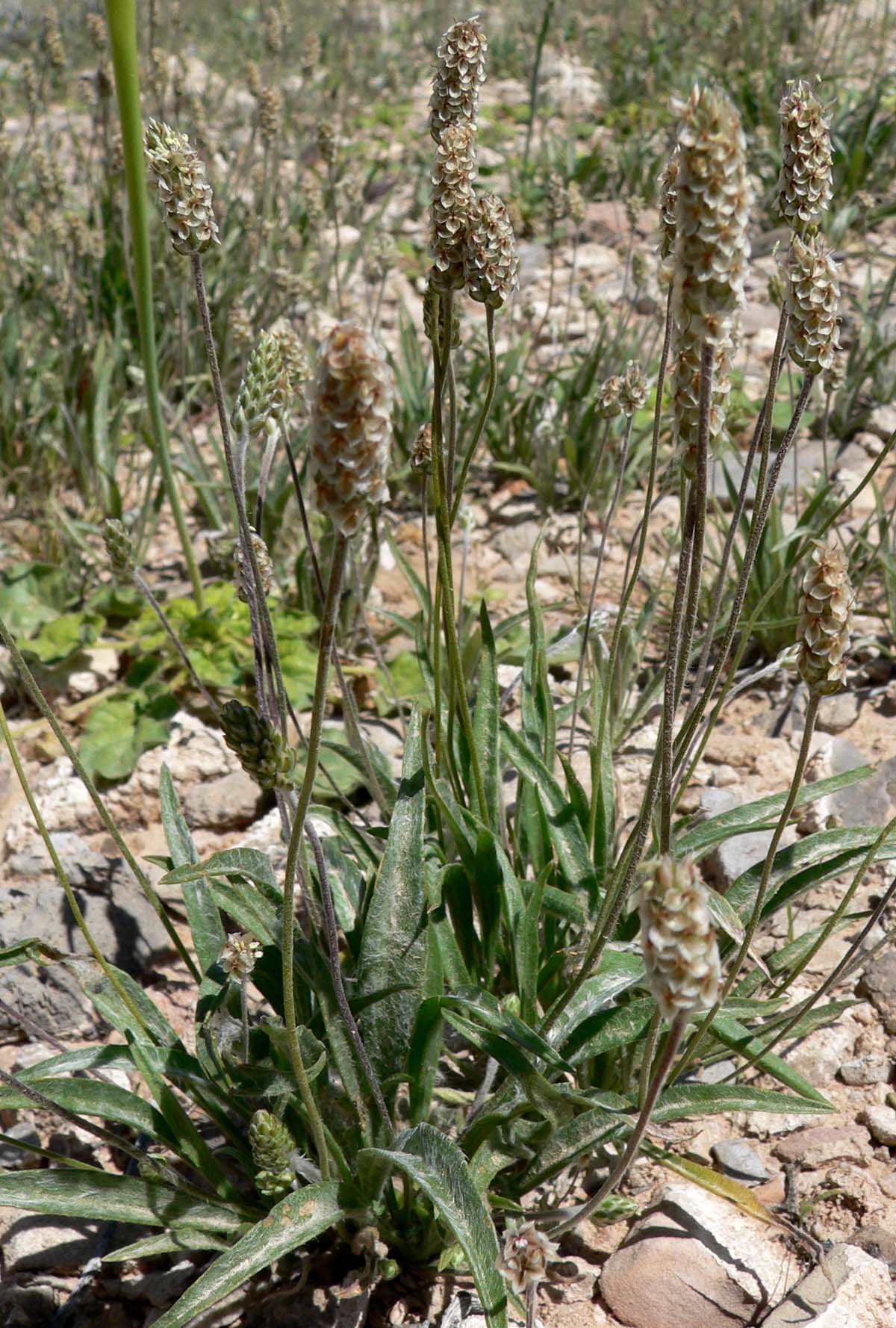
Psyllium (Plantago ovata) is a stemless annual herb native to the Mediterranean basin and South Asia. It produces narrow, woolly leaves and compact flower spikes that yield mucilage-rich seeds.
Farmers and herb growers cultivate psyllium for its seed coats, which are processed into dietary fiber. Success depends on providing warm soil during spring sowing and dry weather during the seed harvesting phase.
Key Facts
- Light: Full sun required
- Water: Low; keep dry during seed harvest
- Maturity: 90 to 120 days from sowing
- Soil: Sandy, light loams with high drainage
- Height: 10 to 45 cm (4 to 18 in)
- Temperature: Prefers 15 to 30 °C (59 to 86 °F)
Is Psyllium Easy to Grow?
Growing psyllium requires full sunlight and minimal rainfall during the final seed ripening period. This fast-growing annual suits dryland gardens and agricultural plots with sandy, poor-nutrient soils. It completes its entire life cycle within 90 to 120 days from initial seed germination.
You will succeed with psyllium if your climate offers warm spring temperatures and predictable dry spells in early summer. Rain during seed maturity causes the mucilaginous husks to swell prematurely on the plant, ruining the harvest. Keep plants spaced appropriately and avoid heavy clay ground.
What Does Plantago ovata Look Like?
Blond plantain is a low-growing, rosette-forming annual that reaches 10 to 45 cm (4 to 18 in) in mature height. The leaves are linear, narrow, and covered in soft white hairs that give the foliage a silvery-green cast. Each leaf measures 3 to 25 cm (1 to 10 in) long and under 1 cm (0.4 in) wide.
In spring, erect flowering scapes rise from the center of the leaf rosette. The flower heads are dense, cylindrical spikes measuring 1 to 4 cm (0.4 to 1.6 in) long, bearing tiny cream-to-yellowish flowers. After pollination, each spike produces small, boat-shaped pinkish-brown seeds enclosed in transparent husks.
Ideal Sun and Soil Conditions for Psyllium
Psyllium requires at least 6 hours of direct sun each day to grow sturdy flower stalks and mature seeds. Shaded locations result in weak, floppy foliage and significantly lower seed yields. Plant in open beds free from tall companion species.
Select light, sandy loam or gravelly soil with a neutral to slightly alkaline pH between 6.0 and 7.8. Good drainage is essential, as waterlogged soil rots the root system within days. Prepare the site by removing weeds and loosening the top 15 cm (6 in) of earth without adding heavy organic manure.
- Light level: Full sun all day
- Soil type: Sandy, loamy, or light alluvial soil
- Soil pH range: 6.0 to 7.8
- Drainage requirement: Exceptional, zero standing water
How to Sow Psyllium Seeds
Direct sow psyllium seeds outdoors when soil temperatures reach at least 15 to 20 °C (59 to 68 °F). Because the seeds are tiny, mix them with fine sand at a 1:3 ratio to achieve uniform distribution across your garden bed.
Sow seeds shallowly at a depth of 0.5 to 1 cm (0.2 to 0.4 in). Press the seed-sand mixture lightly into the topsoil and keep the bed damp until shoots emerge. Seedlings usually sprout within 5 to 10 days under warm weather conditions.
- Sowing depth: 0.5 to 1 cm (0.2 to 0.4 in)
- Row spacing: 30 cm (12 in) apart
- Plant spacing after thinning: 10 to 15 cm (4 to 6 in)
- Germination time: 5 to 10 days at 20 °C (68 °F)
Watering and Feeding Psyllium
Water psyllium lightly during germination, providing roughly 25 mm (1 in) of water every 10 days until flowering begins. Once flower spikes form, reduce watering frequency to encourage deep root development. Stop irrigation entirely when the seed heads begin to change colour from green to light brown.
This crop requires little fertilizer and suffers if given high nitrogen inputs. Excessive nitrogen produces lush leaf growth while reducing seed production and making stalks prone to lodging. A light application of balanced fertilizer or thin layer of dry compost at planting time provides all necessary nutrients.
Harvesting Psyllium Seeds and Husks
Harvest psyllium when 60% of the seed heads turn reddish-brown, usually 90 to 120 days after sowing. Cut the flower stalks early in the morning when dew reduces seed shattering on ground contact.
Spread harvested spikes on dry cloth trays in a warm, shaded, well-ventilated space for 3 to 5 days. Once fully dry, crush the spikes gently by hand or thrash them inside a bag to release the seeds. Separate the light seed husks from the dark inner seeds using winnowing techniques or fine wire screens.
Psyllium Uses and Fiber Benefits
Seed husks from Plantago ovata contain up to 70% soluble fiber and absorb up to 10 times their weight in water. Historically, cultures in India and North Africa used these husks to treat mild gastrointestinal conditions and ease digestion.
In modern kitchens and supplements, ground psyllium husk powder serves as a gluten-free binding agent and daily fiber additive. Common commercial preparations include brands like Metamucil, Signature Care psyllium, and Top Care psyllium. Compared to black psyllium from fleawort (Plantago psyllium) or broadleaf plantain (Plantago major), blond psyllium offers superior swelling capacity and milder flavor.
Psyllium Plant Pests and Diseases
Downy mildew caused by Peronospora plantaginis is the primary disease affecting crops when temperatures drop below 15 °C (59 °F) under high humidity. Affected plants display pale yellow patches on leaf tops and greyish mold underneath.
Prevent disease outbreaks by maintaining plant spacing of 15 cm (6 in) and avoiding overhead watering. Aphids and cutworms occasionally feed on young leaves; control them using neem oil spray or manual removal. Avoid planting psyllium in fields previously used for other plantains such as Spanish psyllium (Plantago indica) to lower pest accumulation.
How to Store Harvested Psyllium Seeds
Dry harvested seed spikes until moisture content falls below 12% before threshing and winnowing. High seed moisture leads to mold contamination and spoils the mucilage quality during storage.
Store clean, dry psyllium seeds and husks in airtight glass jars or sealed plastic containers. Keep containers in a cool, dark cupboard at 15 to 20 °C (59 to 68 °F) with low humidity. Correctly dried seeds remain usable for up to 2 years without loss of fiber content.
Psyllium Through the Seasons
| Spring | Sow seeds outdoors when soil reaches 15 °C (59 °F). Keep topsoil consistently moist for 10 days until germination occurs, then thin seedlings to 10 cm (4 in) apart. |
|---|---|
| Summer | Monitor flowering spikes and taper off irrigation as heads mature. Cut stalks in early morning when brown, then dry spikes on trays in a shaded area. |
| Autumn | Thrash dried spikes to separate seeds from chaff. Winnow husks from seeds and store in airtight containers in a cool, dark room. |
| Winter | Clear spent plant debris from growing beds to reduce overwintering downy mildew spores. Test stored seeds for moisture and store dry. |
Common Psyllium Growing Problems
| What you see | Likely cause | What to do |
|---|---|---|
| Shedding seed heads prior to harvest | Late rainfall or overhead watering during seed maturation | Stop all overhead irrigation once flower spikes form and harvest promptly in early morning. |
| Yellow patches with white mold under leaves | Downy mildew infection caused by wet foliage and low temperatures | Space plants 15 cm apart and water only at soil level to keep leaves dry. |
| Lanky plants falling over | Excess nitrogen fertilizer or lack of full sunlight | Avoid nitrogen-heavy fertilizers and grow in a position with full sun. |
| Failure of seeds to germinate | Soil temperature below 15 °C or seeds planted too deep | Sow seeds shallowly at 0.5 cm depth when soil warms up in spring. |
Psyllium Cultivars and Strains
- 'GI-2' – high seed yield strain selected in Gujarat, India
- 'RI-89' – drought-tolerant selection suited to dryland soils
Frequently Asked Questions
How do you pronounce psyllium husk?
Psyllium is pronounced 'SIL-ee-um'. The 'p' at the beginning is silent.
How is psyllium husk used for constipation?
Psyllium husk is traditionally consumed by mixing one tablespoon of powder into a full glass of water. It absorbs fluid in the digestive tract to form a soft stool, aiding regular bowel movements.
What is the difference between psyllium husk and psyllium seed?
Psyllium husk is the clear outer coating removed from the seed, containing concentrated soluble fiber. The inner seed contains protein and oils with less water-binding capacity.
What are Signature Care or Top Care psyllium products?
Signature Care and Top Care psyllium are store-brand over-the-counter dietary fiber supplements. They contain purified psyllium husk powder or capsules derived from Plantago ovata.
Can I grow psyllium in a home garden container?
Yes, psyllium grows well in wide, shallow pots at least 15 cm (6 in) deep with sandy potting soil. Place the container in full sun and avoid overwatering.
Information about traditional or historical uses is provided for educational interest only and is not medical advice. Do not use any plant to treat a condition without speaking to a qualified professional.
Sources & Verification
Taxonomy and distribution are checked against the databases below. Care guidance is written for cultivated species only and reviewed by our editor. How We Build Plant Profiles →


