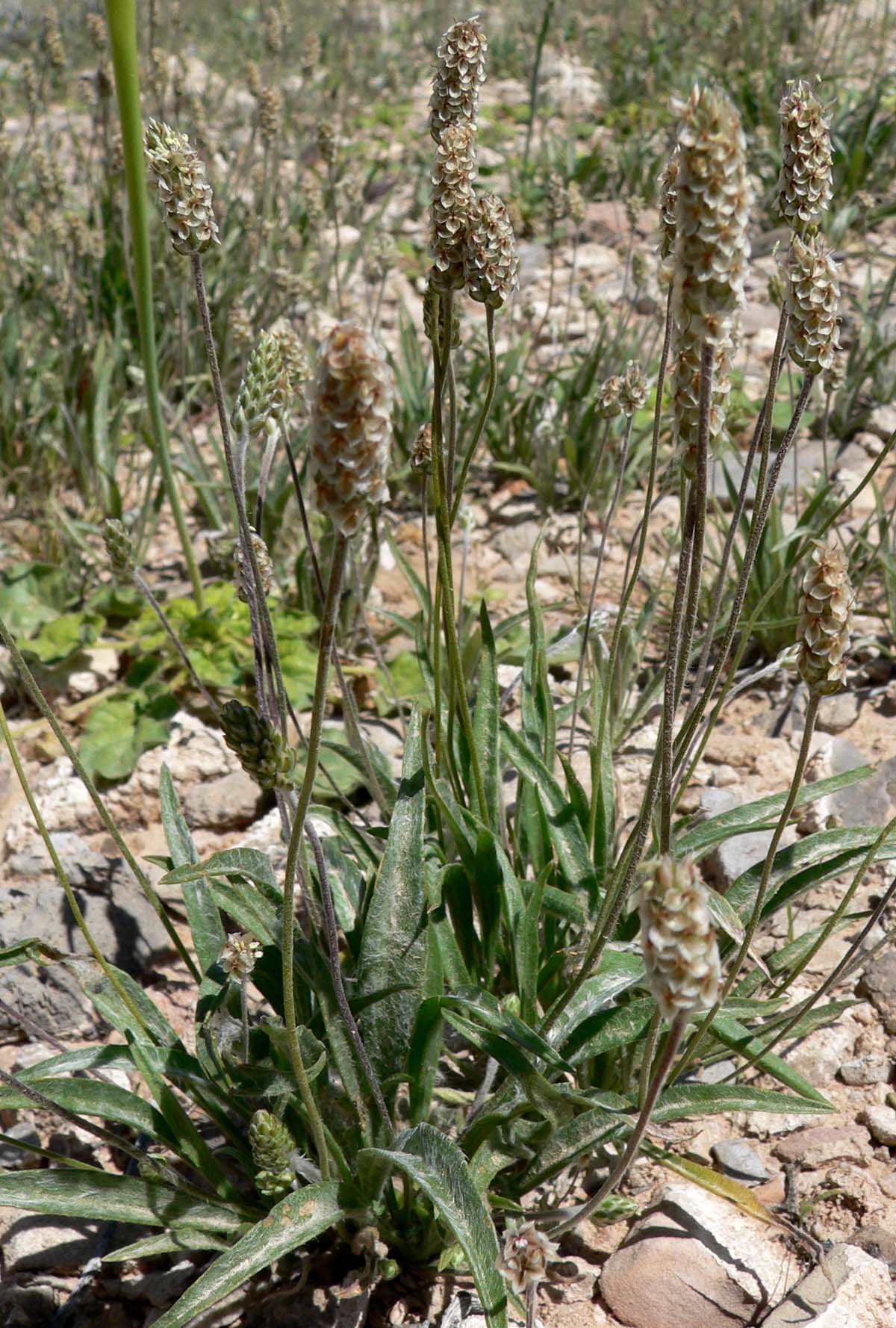
Asian plantain (Plantago asiatica) is a perennial rosette herb native to East Asia, recognised by its broad, ribbed basal foliage and slender upright flower spikes.
Unlike the starchy cooking bananas also called plantains, this leafy herbaceous plant yields tender greens for spring cooking and seed capsules used in traditional infusions. It establishes readily in garden beds where other greens struggle with compacted soil.
Key Facts
- Plant type: Perennial herbaceous leafy green
- Edible parts: Young spring leaves and mature autumn seeds
- Sowing depth: 3 mm (0.1 in) in early spring
- Light: Full sun to partial shade
- Seed yield: 4 to 9 dark seeds per capsule
- Hardiness: USDA Zones 5 to 9
Growing Asian Plantain in Home Gardens
Asian plantain suits small vegetable beds, container plots, and damp walkways where its low-maintenance foliage thrives under moderate foot traffic.
Confusion frequently occurs with the tropical cooking banana (Musa paradisiaca), which produces large starchy fruits for frying. In contrast, Plantago asiatica is a compact ground herb that produces edible rosettes and grain-like seeds. It spreads primarily via self-sowing, so growing it in defined beds prevents it from naturalising in lawn areas.
Asian Plantain Leaf and Spike Identification
Asian plantain forms a stemless basal rosette measuring 20 to 35 cm (8 to 14 in) wide with thick fibrous roots.
Leaves are ovate to broadly elliptic, measuring 6 to 15 cm (2.4 to 6 in) long and 3 to 8 cm (1.2 to 3.1 in) wide, supported by channeled petioles that are often reddish-purple at the base. Each blade features 5 to 7 distinct parallel veins running from the base to the blunt tip.
- Flower stems: Slender, arching to erect scapes rising 15 to 40 cm (6 to 16 in) high.
- Inflorescence: Dense cylindrical spike packed with tiny, greenish-white 4-lobed flowers.
- Fruit capsule: Ellipsoid pyxis that splits circumscissilely near the middle.
- Seeds: 4 to 9 dark brown, oval, mucilage-coated seeds per capsule, each 1.5 to 2 mm (0.06 to 0.08 in) long.
Sunlight and Soil Requirements
Asian plantain produces the most succulent foliage in full sun to light partial shade with consistent moisture.
The plant tolerates heavy clay, disturbed ground, and compacted dirt better than most leafy crops. For high-yielding culinary leaves, amend heavy garden soil with 3 to 5 cm (1 to 2 in) of organic compost to encourage rapid vegetative growth and reduce leaf bitterness.
How to Sow Asian Plantain Seeds
Sow seeds outdoors in early spring after the final frost, or cold-stratify them at 4 °C (39 °F) for 14 days to improve germination.
Sow seeds on finely raked soil and cover with a 3 mm (0.1 in) layer of fine grit or vermiculite, as seeds require light to trigger uniform germination. Keep the soil evenly moist at 18 to 22 °C (64 to 72 °F) until seedlings emerge within 10 to 14 days. Thin young rosettes to a final spacing of 20 to 25 cm (8 to 10 in) apart.
Routine Care and Bed Maintenance
Provide 2.5 cm (1 in) of water per week during dry weather to stop foliage from toughening.
- Apply a 3 cm (1.2 in) layer of straw mulch to maintain soil cool and prevent soil splash on the leaves.
- Feed every four weeks during spring with a balanced liquid seaweed or organic nitrogen fertiliser.
- Remove emerged flower scapes promptly if your primary goal is leaf harvesting, which directs energy into tender foliage.
- Pull competing annual grasses early, as young rosettes suffer under dense weed cover.
When and How to Harvest Leaves and Seeds
Harvest leaves when they are under 10 cm (4 in) in length, snapping outer stems at the base to let the crown regenerate.
Early spring leaves have minimal fibrous stringing and mild flavor. For seed collection, let the flowering spikes bloom through midsummer and turn dull brown by late summer or early autumn. Cut mature spikes on a dry afternoon and invert them in paper collection bags to catch the loose seeds.
Asian Plantain Dishes and Culinary Uses
Young leaves require blanching in boiling salted water for 1 to 2 minutes before being used in stir-fries, soups, and seasoned salads.
In East Asian cooking, blanched leaves are squeezed dry and dressed with sesame oil, soy sauce, and garlic for Korean namul or Japanese ohitashi. Do not attempt to make ‘plantain chips’ with this species; those popular fried snacks are prepared from unripe fruits of the cooking banana tree. The seeds, known as Che Qian Zi in Chinese herbalism, produce a gel-like mucilage when steeped and were traditionally used in digestive decoctions.
Pest Management and Plantago asiatica Mosaic Virus
Check regularly for slugs, snails, and mosaic virus symptoms, which constitute the primary threats to Asian plantain plantings.
Asian plantain is a documented natural host of Plantago asiatica mosaic virus (PlAMV), a potexvirus that causes leaf mottling, systemic chlorosis, and stunted rosettes. If foliage displays yellow striping or ring spots, dig up and destroy the infected crowns immediately. Hand-pick slugs in damp mornings or place iron phosphate bait pellets around bed borders.
Drying and Storing Leaves and Seeds
Store cleaned seeds in airtight glass containers kept in a cool, dark cupboard for up to two years.
Rub dried flower spikes between your palms over a fine mesh colander to thresh the seed coats from the chaff. For herbal tea storage, lay mature, unblemished leaves flat on dehydrator racks at 35 to 40 °C (95 to 104 °F) until crisp, then seal them away from direct sunlight.
Year-Round Asian Plantain Bed Management
| Spring | Sow seeds directly outdoors after frost; thin emerging rosettes to 20 cm (8 in) and harvest the tender young leaves for culinary greens. |
|---|---|
| Summer | Supply 2.5 cm (1 in) of water weekly; clip off flower spikes if leaf production is desired, or let spikes mature if growing for seeds. |
| Autumn | Cut dried brown seed spikes into paper sacks for seed harvesting; clear collapsed foliage to minimize fungal spore overwintering. |
| Winter | Apply a light 5 cm (2 in) organic straw mulch over root crowns in USDA zones 5 and 6 to protect the perennial root system from freeze-thaw heaving. |
Troubleshooting Common Asian Plantain Problems
| What you see | Likely cause | What to do |
|---|---|---|
| Yellow mosaic striping and stunted leaf size | Plantago asiatica mosaic virus (PlAMV) | Remove and discard affected plants immediately to prevent the virus spreading to nearby plants. |
| Irregular holes chewed in young leaves | Slugs and snails feeding at night | Apply iron phosphate bait pellets around plant bases or trap with beer trays. |
| Tough, stringy, and bitter-tasting leaves | Harvesting leaves that are too old or heat-stressed | Harvest only young leaves under 10 cm (4 in) and provide light afternoon shade in hot climates. |
| White powdery coating on foliage | Powdery mildew in crowded or humid conditions | Thin plants to improve air circulation and water at the soil line without wetting foliage. |
Frequently Asked Questions
What is the difference between Plantago asiatica and Plantago major?
Asian plantain (Plantago asiatica) has leaves with winged petioles that are often purplish at the base and produces 4 to 9 seeds per capsule, whereas broadleaf plantain (Plantago major) produces 8 to 18 smaller seeds per capsule and generally has greener petiole bases.
Can you make plantain chips from Asian plantain?
No, you cannot make plantain chips from this plant. Popular plantain chips are made from the green, starchy fruits of banana hybrids (Musa paradisiaca), not the herbaceous leaves or seeds of Plantago asiatica.
Is Asian plantain the same as the banana plantain?
No, they belong to entirely different botanical families. Asian plantain is a low-growing wild and cultivated herb in the plantain family (Plantaginaceae), while culinary cooking plantains are giant monocot trees in the banana family (Musaceae).
What are the traditional benefits of Asian plantain seed and leaves?
Asian plantain leaves and seeds, known as Che Qian Cao and Che Qian Zi, were traditionally used in East Asian herbal decoctions as mild diuretics and digestive aids due to their rich soluble mucilage and polysaccharide content.
Is Asian plantain safe for dogs and cats?
Yes, Plantago asiatica contains no known systemic toxins for dogs or cats. However, pets should not ingest large quantities of raw foliage to avoid mild stomach irritation.
Information about traditional or historical uses is provided for educational interest only and is not medical advice. Do not use any plant to treat a condition without speaking to a qualified professional.
Sources & Verification
Taxonomy and distribution are checked against the databases below. Care guidance is written for cultivated species only and reviewed by our editor. How We Build Plant Profiles →