
The California black oak, known scientifically as Quercus kelloggii, is a large deciduous tree native to the mountains and foothills of California and southern Oregon. It is easily distinguished from other western oaks by its dark, furrowed bark and its deeply lobed leaves that terminate in sharp, needle-like bristles.
While many oaks in its native range are evergreen, this species provides a distinct seasonal change by turning yellow or orange-brown in the autumn. It serves as a vital ecological anchor, providing heavy acorn crops that sustain over 80 species of local wildlife.
Key Facts
- Growth Rate: moderate, reaching 30-60 cm (1-2 ft) per year when young
- Mature Height: typically 9-25 m (30-80 ft) depending on elevation
- Water: requires deep, infrequent summer water for the first 3 years
- Soil: thrives in well-drained, acidic to neutral loamy soils
- Hardiness: suitable for USDA zones 7 through 10
Is the California Black Oak Right for Your Landscape
You should only plant California black oak if you have a large, open space with excellent drainage and full sun exposure. This tree is a long-term commitment, often living for over 200 years and reaching a spread of up to 20 m (65 ft). It is particularly suited for properties in fire-prone areas of the American West, as it has evolved a thick lignotuber that allows it to resprout from the base after a wildfire.
Avoid planting this tree near foundations or swimming pools, as the root system is expansive and the seasonal leaf drop is significant. It is an excellent choice for restoration projects or large rural gardens where you want to provide habitat for woodpeckers and squirrels. Because it requires a period of winter dormancy, it will not thrive in tropical or subtropical regions that lack a frost period.
How to Identify California Black Oak Leaves and Bark
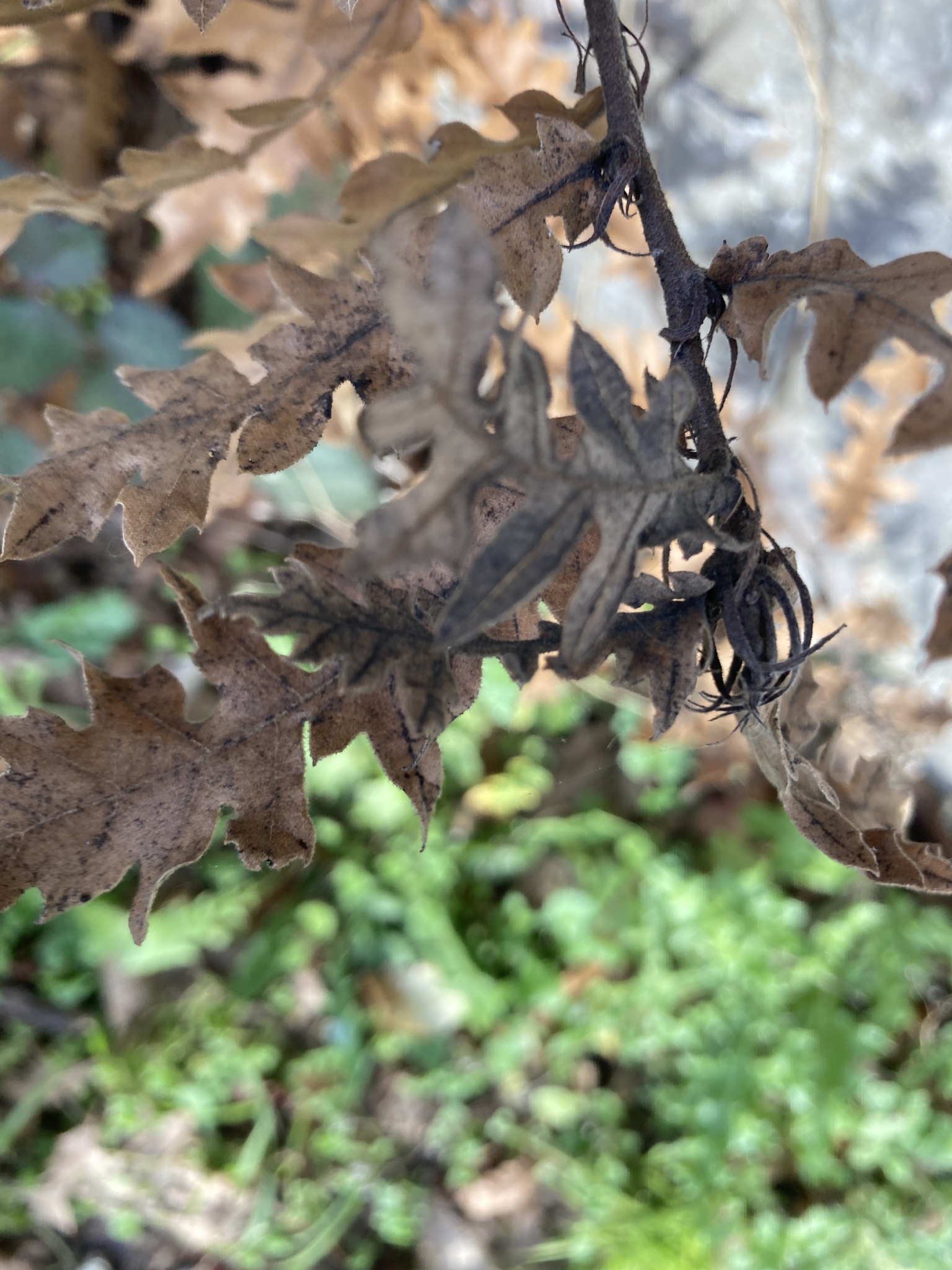
You can identify the California black oak by its deeply lobed leaves that measure 10-20 cm (4-8 in) long and feature 7-11 lobes tipped with sharp bristles. These bristles are a hallmark of the red oak group and help distinguish it from the rounded lobes of white oaks. The leaves emerge a bright, translucent green in spring, maturing to a dark, glossy green before turning yellow or rust-coloured in November.
The bark of a mature California black oak is dark grey to nearly black, which is how the tree earned its common name. It is deeply furrowed and checked into small, hard plates that feel rough to the touch. The acorns are relatively large, 2.5-3.8 cm (1-1.5 in) long, and sit in a deep, scaly cup that covers about half of the nut.
California Black Oak Growth Rate and Mature Size
A healthy California black oak grows at a moderate rate, typically adding 30-60 cm (12-24 inches) of height per year under optimal conditions. In the wild, mature specimens usually reach 18-25 m (60-80 ft), though trees growing at high elevations or on poor, rocky soils may remain stunted at 9 m (30 ft). The trunk can grow to a diameter of 60-120 cm (24-48 in) over several decades.
Growth is fastest during the first 20 years of the tree’s life, provided it receives adequate moisture during the dry summer months. Once established, the growth rate slows as the tree invests more energy into its massive canopy and acorn production. In urban settings, soil compaction and limited root space can significantly reduce these growth figures.
Where Does California Black Oak Grow Naturally
The natural range of the California black oak extends from Lane County, Oregon, south through the Sierra Nevada and Coast Ranges to the San Jacinto Mountains near the Mexican border. It is most common at elevations between 300 and 2,400 m (1,000-8,000 ft). While the city of Oakland is named for the coast live oak (Quercus agrifolia), the California black oak was historically a dominant feature of the higher East Bay hills.
This tree is strictly a western species and does not naturally occur in the central or eastern United States; it should not be confused with the eastern black oak (Quercus velutina). Its range stops in northern Oregon, and it does not extend into British Columbia, Canada, as it requires the specific Mediterranean-style rainfall patterns of the Pacific slope. It is frequently found growing alongside Ponderosa pines (Pinus ponderosa) and incense cedars (Calocedrus decurrens).
Planting and Young Tree Care
Plant your California black oak in the late autumn or early winter to allow the roots to establish before the summer heat arrives. Dig a hole twice as wide as the root ball but no deeper, ensuring the root flare is slightly above the soil line to prevent rot. Because this species is susceptible to root fungus, avoid adding heavy organic amendments or fertilisers to the planting hole; native soil is usually sufficient.
Young trees require protection from deer and rodents, which find the tender new growth and bark highly palatable. Use a sturdy wire cage at least 1.5 m (5 ft) tall to protect the leader until the tree is large enough to withstand browsing. Mulch the base with 5-10 cm (2-4 in) of wood chips to retain moisture, but keep the mulch at least 15 cm (6 in) away from the trunk to prevent fungal infections.
Watering and Soil Requirements
Established California black oaks are drought-tolerant and should not be watered during the summer months once they reach five years of age. Overwatering established trees, especially near the trunk, can lead to fatal infections of oak root fungus (Armillaria mellea). For young saplings, provide a deep soak once every 2-3 weeks during their first three summers to help them survive the dry season.
The tree prefers soil that is well-drained and slightly acidic, reflecting its mountain habitat. It can tolerate thin, rocky soils but will grow much larger in deep, loamy ground. Avoid planting in heavy clay areas that stay waterlogged during the winter, as this will lead to root rot and eventual tree failure.
Pruning and Maintenance
You should only prune California black oak during the dormant winter months (December to February). Pruning during the growing season creates open wounds that attract bark beetles and increase the risk of spreading diseases like Sudden Oak Death. Focus on removing dead, damaged, or crossing branches to maintain a strong central leader and an open canopy that allows for air circulation.
Avoid heavy thinning or “lion-tailing,” which leaves the ends of branches heavy and prone to snapping in high winds. Because the wood is dense and heavy, large limbs should be managed by a certified arborist. Regular monitoring for structural integrity is important, as older trees can develop heart rot if large wounds are left unmanaged.
California Black Oak Wood and Lumber Uses
The wood of the California black oak is a high-density hardwood that is comparable in strength and appearance to eastern red oak. It features a beautiful grain and a warm, reddish-brown hue, making it suitable for high-end furniture, flooring, and interior panelling. However, the lumber is notoriously difficult to season, as it tends to warp, check, and shrink significantly if not dried slowly and carefully in a kiln.
Historically, the wood was used extensively for barrel staves and mine timbers due to its durability. Today, much of the harvested California black oak is used for industrial pallets or as high-quality firewood, as it burns hot and leaves little ash. Native American tribes, such as the Miwok and Pomo, also utilised the wood for tools and relied on the acorns as a primary food source after leaching out the bitter tannins.
Common Pests and Sudden Oak Death
The most significant threat to this species is Sudden Oak Death, caused by the pathogen Phytophthora ramorum. Symptoms include bleeding cankers on the trunk that ooze a dark, syrupy liquid, followed by a rapid browning of the entire canopy. There is currently no cure for infected trees, so prevention through proper sanitation and avoiding the transport of infected wood is essential.
Other common problems include:
- Goldspotted Oak Borer: an invasive beetle that kills trees by mining the cambium layer.
- Oak Pit Scale: small, circular insects that cause pitting on twigs and dieback.
- Gall Wasps: cause various swellings on leaves and stems, usually harmless to the tree.
- Powdery Mildew: a white fungal coating on leaves, common in humid or crowded conditions.
California Black Oak vs Valley Oak and Other Species
To tell the difference between California black oak and Valley oak (Quercus lobata), look at the leaf tips. California black oak has pointed, bristle-tipped lobes, while the Valley oak has rounded, blunt lobes. Furthermore, the Valley oak is typically found in low-elevation valley floors, whereas the black oak prefers the cooler, higher elevations of the mountains.
When comparing it to the Oregon white oak (Quercus garryana), note that the white oak has much lighter, almost white bark and rounded lobes. The California black oak is also distinct from the eastern black oak (Quercus velutina) primarily by geography; they do not overlap in the wild. Finally, unlike the evergreen coast live oak (Quercus agrifolia), the California black oak is fully deciduous and will be bare throughout the winter.
Year-Round Care for California Black Oak
| Spring | Monitor for the emergence of new leaves and check for signs of gall wasp activity. Apply a layer of fresh mulch around young trees, ensuring it does not touch the bark. |
|---|---|
| Summer | Provide deep, infrequent watering for saplings under 5 years old. Avoid watering established trees entirely to prevent root rot pathogens. |
| Autumn | Collect fallen acorns for propagation or wildlife support. Enjoy the yellow and orange foliage before the tree enters dormancy in late November. |
| Winter | Perform structural pruning while the tree is dormant. Remove any fallen leaf litter if the tree has shown signs of fungal leaf spots or powdery mildew. |
Common California Black Oak Problems
| What you see | Likely cause | What to do |
|---|---|---|
| Oozing dark liquid from trunk | Sudden Oak Death (SOD) | Consult an arborist immediately; ensure no wood is moved off-site to prevent spread. |
| Yellowing leaves in summer | Overwatering or poor drainage | Stop all supplemental irrigation and check soil moisture depth. |
| White powdery coating on leaves | Powdery mildew | Increase air circulation and avoid overhead watering of young trees. |
| Dieback of upper branches | Goldspotted oak borer | Check for D-shaped exit holes in bark and contact local forestry extension. |
California Black Oak Forms
- Quercus kelloggii (Species) – the standard wild form found in nurseries.
- ‘Gualala’ – a rare selection noted for its specific coastal adaptation.
Frequently Asked Questions
Is California black oak deciduous?
Yes, California black oak is a deciduous tree that drops all its leaves in late autumn after turning yellow or orange-brown. It remains bare throughout the winter months.
Are California black oak acorns poisonous?
The acorns contain high levels of tannins, which are mildly toxic to humans and pets if eaten raw, causing digestive distress. Traditionally, Native American tribes processed them by leaching with water to make them edible.
Can California black oak be grown as a bonsai?
Yes, it is used for bonsai, but it is considered difficult because its naturally large leaves are hard to reduce in size. It requires a cold winter dormancy to survive long-term as a miniature tree.
How can I tell a California black oak from a Valley oak?
The easiest way is the leaf shape: California black oak has sharp, bristle-tipped lobes, while Valley oak (Quercus lobata) has smooth, rounded lobes.
How fast does a California black oak tree grow?
It has a moderate growth rate of 30-60 cm (1-2 ft) per year when young, eventually slowing down as it reaches its mature height of 18-25 m (60-80 ft).
Information about traditional or historical uses is provided for educational interest only and is not medical advice. Do not use any plant to treat a condition without speaking to a qualified professional.
Sources & Verification
Taxonomy and distribution are checked against the databases below. Care guidance is written for cultivated species only and reviewed by our editor. How We Build Plant Profiles →
More in Quercus

Southern Live Oak
Quercus virginiana
☀️ Full Sun 💧 Moderate

Lebanon Oak
Quercus libani
☀️ Full Sun 💧 Low

Caucasian Oak
Quercus macranthera
☀️ Full Sun 💧 Moderate

Brant’s Oak
Quercus brantii
☀️ Full Sun 💧 Low

Garry Oak
Quercus garryana
☀️ Full Sun 💧 Low
European Turkey Oak
Quercus cerris
☀️ Full Sun 💧 Moderate