Oak Tree Species and Types (Quercus)
22 plant profiles · Explore 16 major oak tree species in the Quercus genus, from deciduous white oaks to evergreen live oaks. Learn to identify and select the right oak.
The genus Quercus contains over 500 species of hardwood trees and shrubs native to the Northern Hemisphere, spanning cold temperate zones across North America and Eurasia down to tropical mountain ranges. All true oaks belong to the beech family (Fagaceae) and share the unifying characteristic of producing acorns, which are single-seeded nuts held inside a protective cupule. Selecting an oak for your property depends on winter hardiness, soil moisture, available canopy space, and whether you need evergreen wind protection or summer shade.
Oaks fall primarily into deciduous and evergreen categories across several distinct subgenera. Deciduous species like the English Oak (Quercus robur) and White Oak (Quercus alba) develop broad, lobed foliage that turns copper or brown in autumn, preferring deep, moist soils across USDA zones 3 to 8. Fast-growing options such as the Northern Red Oak (Quercus rubra) reach mature heights of 25 m (80 ft) relatively quickly and tolerate acidic, well-draining soils better than white oak group members.
In warm, arid, or coastal microclimates, evergreen live oaks provide year-round foliage. The Southern Live Oak (Quercus virginiana) forms wide, horizontal canopies in warm southern regions, while the California Live Oak (Quercus agrifolia) thrives in summer-dry Mediterranean conditions. Specialized species like the Cork Oak (Quercus suber) produce thick, spongy bark harvested for commercial cork, whereas the Holm Oak (Quercus ilex) accepts heavy salt spray and handles regular pruning for dense hedges.

Algerian Oak
Quercus canariensis
☀️ Full Sun 💧 Moderate

Brant’s Oak
Quercus brantii
☀️ Full Sun 💧 Low
California Black Oak
Quercus kelloggii
☀️ Full Sun 💧 Low

California Live Oak
Quercus agrifolia
☀️ Full Sun 💧 Low

Caucasian Oak
Quercus macranthera
☀️ Full Sun 💧 Moderate
Chinese Cork Oak
Quercus variabilis
☀️ Full Sun 💧 Moderate

Cork Oak
Quercus suber
☀️ Full Sun 💧 Low

English Oak
Quercus robur
☀️ Full Sun 💧 Moderate
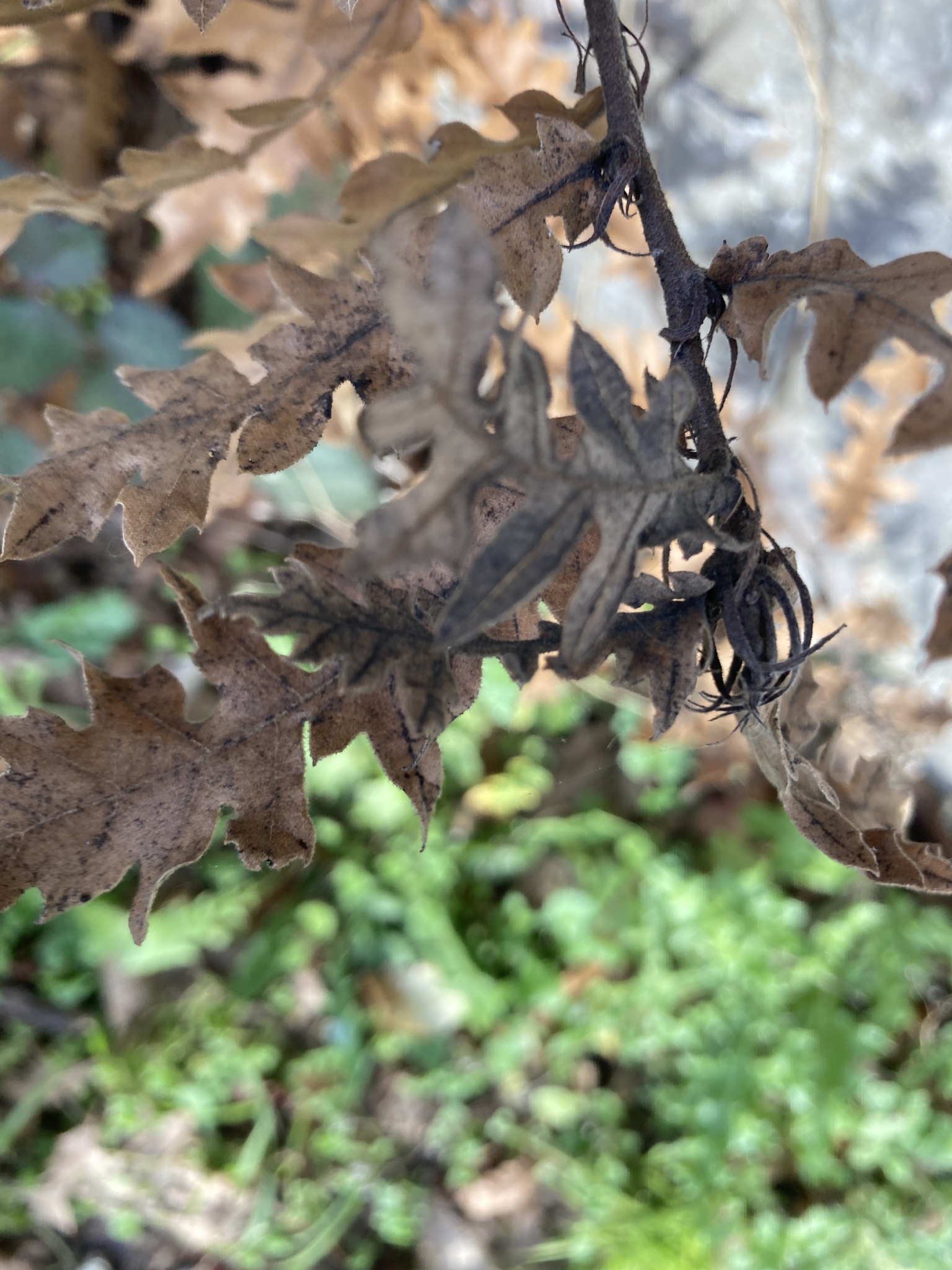
European Turkey Oak
Quercus cerris
☀️ Full Sun 💧 Moderate

Garry Oak
Quercus garryana
☀️ Full Sun 💧 Low

Holm Oak
Quercus ilex
☀️ Full Sun 💧 Low
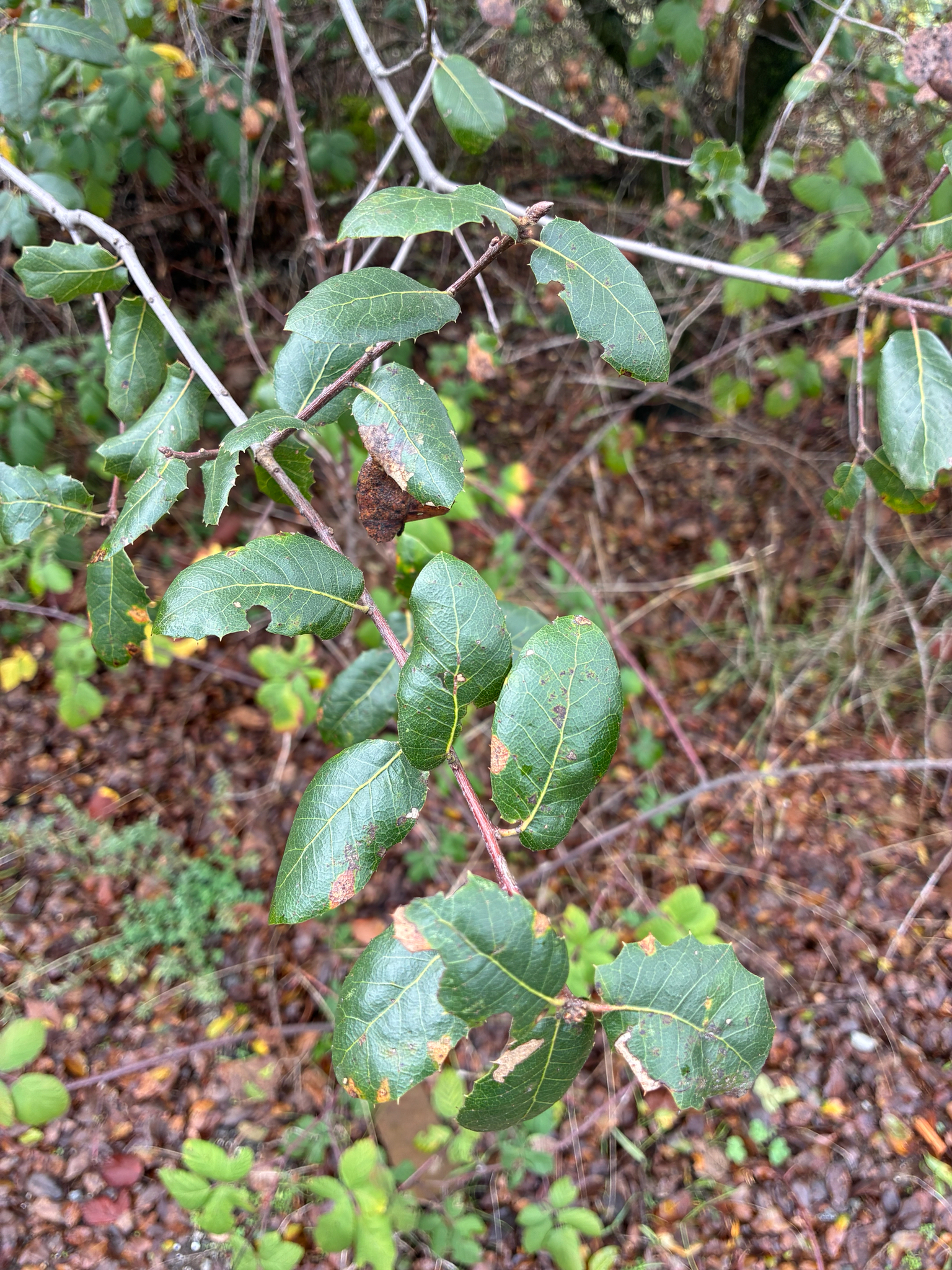
Interior Live Oak
Quercus wislizeni
☀️ Full Sun 💧 Low

Jolcham Oak
Quercus serrata
☀️ Full Sun 💧 Moderate

Lebanon Oak
Quercus libani
☀️ Full Sun 💧 Low
Northern Red Oak
Quercus rubra
☀️ Full Sun 💧 Moderate

Pin Oak
Quercus palustris
☀️ Full Sun 💧 High

Portuguese Oak
Quercus faginea

Sessile Oak
Quercus petraea
☀️ Full Sun 💧 Moderate

Southern Live Oak
Quercus virginiana
☀️ Full Sun 💧 Moderate

Swamp Chestnut Oak
Quercus michauxii
☀️ Full Sun 💧 Moderate

Valley Oak
Quercus lobata
☀️ Full Sun 💧 Low

White Oak
Quercus alba
☀️ Full Sun 💧 Moderate
Common Questions
How do you tell the difference between white oak and red oak species?
White oak species have leaves with rounded lobes without bristles and produce acorns that mature in one season, while red oaks feature leaf lobes tipped with small bristle points and set acorns that require two years to ripen.
How fast do oak trees grow per year?
Most oak species grow at a moderate pace of 30 to 60 cm (12 to 24 in) per year once established in appropriate soil and sunlight.
Are oak trees evergreen or deciduous?
The Quercus genus includes both deciduous and evergreen species, ranging from drop-leaf cold-hardy oaks to warm-climate live oaks that keep their foliage year-round.
How far from a house should you plant an oak tree?
Plant large oak species at least 6 to 9 m (20 to 30 ft) away from building foundations to provide room for wide branch spreads and lateral roots.