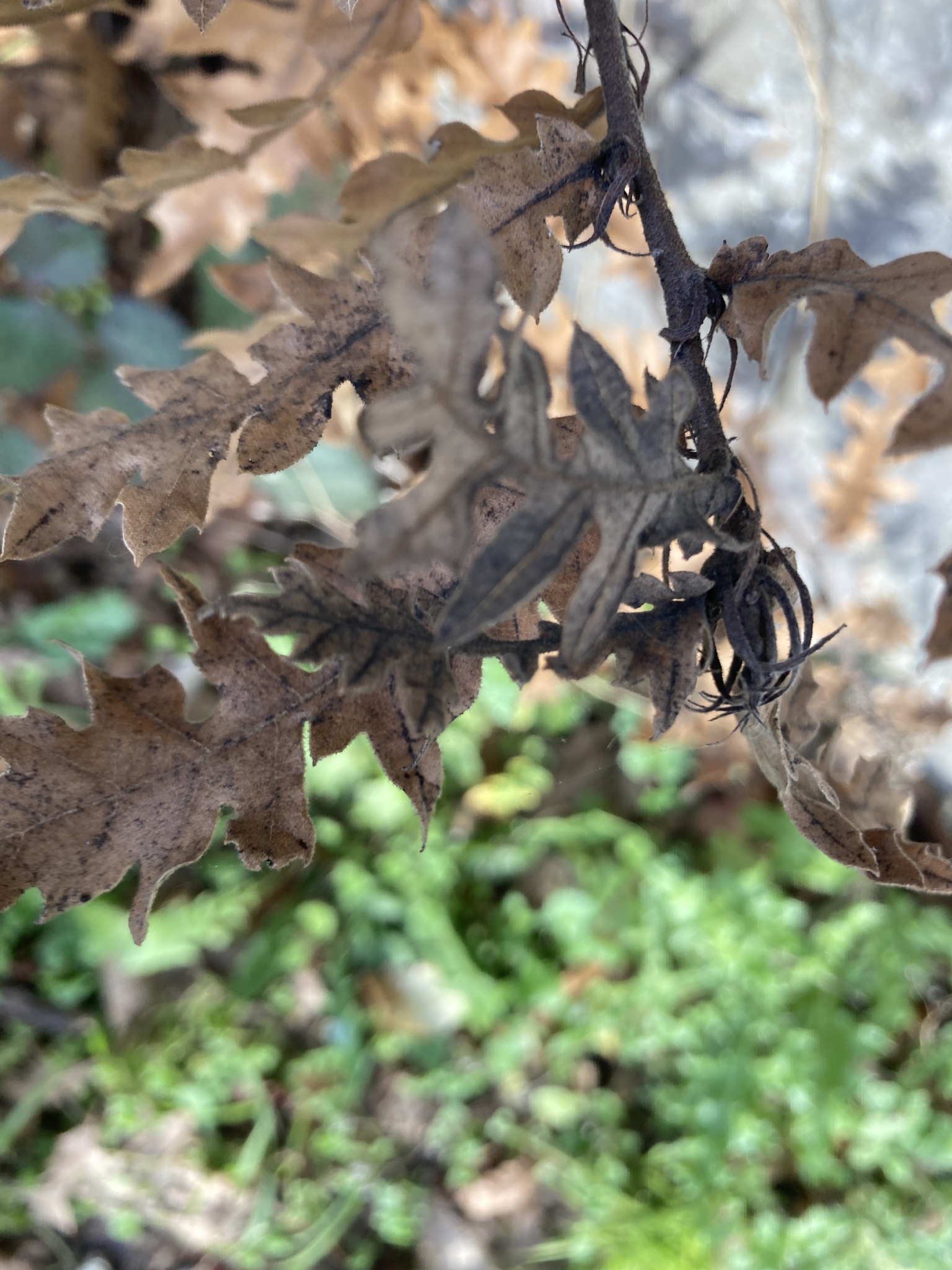
Sessile oak, known scientifically as Quercus petraea, is a long-lived deciduous tree native to western, central, and southern Europe, as well as Anatolia and northern Iran. It forms a high, rounded canopy and serves as the national tree of Ireland.
You need a wide landscape space to accommodate its 25 m (82 ft) crown spread over a lifespan exceeding 300 years. Unlike English oak (Quercus robur), sessile oak tolerates upland, acidic, and rocky soils with higher rain exposure.
Key Facts
- Light: Full sun to light partial shade
- Water: Deep soaking during the first 3 years
- Soil: Well-drained, acidic to neutral soil (pH 4.5–6.5)
- Mature Height: 20–40 m (65–130 ft)
- Hardiness: USDA Zones 4 through 8
Is Sessile Oak Suitable for Your Property
Sessile oak requires a minimum planting distance of 15 m (50 ft) from nearby structures to accommodate its massive root system and sprawling canopy. It suits large private gardens, parks, windbreaks, and rural acreage where trees can grow for centuries without space restriction.
This species is native to Great Britain, Ireland, and continental Europe, making it fully adapted to maritime and cool temperate climates. It handles elevated sites better than most broadleaf hardwoods.
- Requires a root zone free of paved surfaces for at least 10 m (33 ft)
- Thrives in high-rainfall regions receiving over 800 mm (31 in) annually
- Resists strong coastal wind better than European beech (Fagus sylvatica)
How to Identify Sessile Oak
Sessile oak is identified by leaves with distinct petioles measuring 1–2.5 cm (0.4–1.0 in) and acorns attached directly to twigs without stems. The word ‘sessile’ specifically describes stalkless acorns sitting flush against the branch.
The leaf blades measure 7–14 cm (2.8–5.5 in) in length with 5 to 8 rounded lobes on each side. The upper leaf surface is dark green and smooth, while the underside bears fine, star-shaped hairs visible under magnification.
- Acorns: Ovoid, 1.5–2.5 cm (0.6–1.0 in) long, held in short cups lacking long stalks
- Leaves: Obovate shape with symmetric rounded lobes and a yellow-tinged stalk
- Bark: Greyish-brown with shallow vertical fissures running up the trunk
Sessile Oak Size and Growth Rate
A mature sessile oak reaches a typical height of 20–30 m (65–100 ft), though exceptional forest specimens top 40 m (130 ft). The trunk diameter at breast height often reaches 1.5–2 m (5–6.5 ft) after 150 years.
Young saplings grow at a moderate pace, adding roughly 30–60 cm (12–24 in) of vertical growth per year until they reach 30 years of age. Growth slows as the tree matures and widens its crown.
- Annual extension: 30–60 cm (12–24 in) in good soil
- Canopy spread: 15–25 m (50–82 ft) broad at maturity
- Lifespan: Frequently reaches 300–500 years in stable conditions
Best Light and Soil Requirements for Sessile Oak
Sessile oak grows best in full sunlight receiving at least 6 hours of direct sun daily. Saplings survive under light overhead shade but grow thin and lean toward canopy openings.
This tree prefers acidic to neutral soils with a pH between 4.5 and 6.5. It accepts shallow, rocky, and infertile ground much better than English oak (Quercus robur) or sweet chestnut (Castanea sativa).
- Soil texture: Sand, loam, clay, or rocky upland slopes
- Drainage: Needs good drainage; avoids waterlogged boggy ground
- pH target: Ideal growth occurs around pH 5.5
How to Plant a Young Sessile Oak
Plant container-grown or bare-root sessile oak saplings between November and March while the tree is dormant. Dig a hole twice as wide as the root ball and equal to its depth.
Keep the root collar perfectly level with the surrounding soil surface, as burying it causes trunk decay. Backfill with native soil without adding rich soil amendments or synthetic fertilizer.
- Space young trees 10–12 m (33–40 ft) apart for timber or estate planting
- Install a 1.2 m (4 ft) tree shelter to protect against rabbit and deer browsing
- Apply a 7–10 cm (3–4 in) layer of woodchip mulch around the base
Watering and Soil Care for Young Trees
Young trees require deep watering once per week with 20–30 L (5–8 gal) of water during their first two summers. Established trees older than 5 years develop deep taproots and rarely require supplemental water.
Mulch the drip line annually with composted bark to retain soil moisture and suppress grass competition. Avoid applying high-nitrogen lawn fertilizers within 5 m (16 ft) of the trunk.
- First summer: Water every 7–10 days during dry spells
- Year 3 onward: Rainfed except during severe heatwaves above 30 °C (86 °F)
- Mulch gap: Keep mulch 10 cm (4 in) away from trunk bark
Pruning Rules for Sessile Oak
Prune sessile oak only during full winter dormancy between November and February to prevent oak wilt infection and sap bleeding. Never remove more than 20 percent of the canopy in a single season.
Establish a single straight leader on young trees by removing competing vertical stems. Clear lower lateral branches gradually over 5–10 years to raise the canopy clear of walkways.
- Remove crossing, rubbing, or dead branches cleanly at the branch collar
- Avoid flush cuts that damage the trunk collar tissues
- Never top or pollard mature sessile oak specimens
Common Sessile Oak Pests and Diseases
Keep an eye out for powdery mildew caused by Erysiphe alphitoides, which coats late-summer leaves in white film but rarely kills mature trees. Oak processionary moth (Thaumetopoea processionea) larvae defoliate branches in late spring and pose a health hazard.
Acute oak decline (AOD) causes dark stem bleeding and dieback in stressed mature trees. Avoid soil compaction around the root zone to maintain tree health.
- Powdery mildew: Affects summer lammas growth; no chemical fix needed for large trees
- Gall wasps: Knopper and artichoke galls form on acorns and buds without hurting tree vigor
- Root rot: Caused by Armillaria honey fungus in compacted, poorly drained sites
Sessile Oak Winter Hardiness and Cold Care
Sessile oak withstands winter frost down to -25 °C (-13 °F) without bark splitting or bud damage. It sheds its leaves cleanly in late autumn after turning a muted golden-brown.
Mature trees require no winter wrap or frost protection. Young saplings in severe exposures benefit from a mulch layer to protect young roots from freeze-thaw soil heaving.
- Hardiness range: USDA Zones 4 to 8 (RHS H7)
- Autumn leaf drop: November in temperate Northern Hemisphere zones
- Frost tolerance: Spring late frost may burn early leaf buds, but secondary buds recover
Traditional Uses and Wildlife Benefits
Sessile oak timber is prized for furniture, flooring, barrel staves, and heavy structural beams due to its straight grain and durability. Historically, oak bark was harvested and ground to extract tannins for leather tanning.
A single mature sessile oak supports over 300 insect species, providing food for blue tits, jay birds, grey squirrels, and wood mice. High-tannin acorn crops yield valuable forage for wildlife every 2–4 mast years.
- Timber: Dense hardwood weighing approximately 720 kg/m³ (45 lbs/ft³) dry
- Tannins: Bark traditionally harvested in spring for leather production
- Ecology: Supports native lichens, mosses, and mycorrhizal fungi
Sessile Oak Through the Seasons
| Spring | Inspect young leaves for caterpillar damage and powdery mildew. Check tree shelters on young saplings and loosen tie straps if the trunk is thickening. |
|---|---|
| Summer | Provide 30 L (8 gal) of deep water weekly to trees planted within the past 2 years during dry periods. Maintain a 10 cm (4 in) layer of woodchip mulch over the root zone. |
| Autumn | Collect fallen leaves for leafmold compost if leaf spot or mildew was present. Clear leaf litter from immediate lawn areas while leaving leaf piles near the trunk base for wildlife. |
| Winter | Prune structural deadwood or competing leaders between November and February while the tree is fully dormant. Check stakes and protection tubes after winter storms. |
Sessile Oak Health Issues Explained
| What you see | Likely cause | What to do |
|---|---|---|
| White powdery coating on late summer leaves | Oak powdery mildew fungus during dry spells with high humidity | No action required; mature trees tolerate seasonal mildew without structural harm. |
| Dark liquid oozing from cracks in trunk bark | Acute oak decline or bacterial wetwood strain | Alleviate soil compaction around roots and consult an arborist for structural assessment. |
| Deformed, spiky galls on acorns in autumn | Knopper gall wasp larvae | Ignore galls as they do not harm the long-term health of the parent oak tree. |
| Yellowing foliage with premature leaf drop | Waterlogging or root rot in heavy, poorly drained soil | Improve surface drainage around the drip line and remove excess mulch stacked against the stem. |
Notable Cultivars of Sessile Oak
- ‘Inis Mór’ – columnar selection originating in Ireland
- ‘Laciniata’ – deeply cut, fern-like leaf lobes
- ‘Purpurea’ – young spring leaves emerge dark purple before turning green
- ‘Colurna’ – slow-growing dense habit suitable for parkland
Frequently Asked Questions
Is sessile oak native to the UK and Ireland?
Yes, sessile oak is native to Great Britain, Ireland, and most of continental Europe. It is Ireland's national tree and forms ancient oak woodland across upland western Britain.
What is the difference between common oak and sessile oak?
Sessile oak (Quercus petraea) has acorns sitting directly on twigs without stems and leaves with long 1–2.5 cm stalks. Common English oak (Quercus robur) has acorns on long stalks (peduncles) and leaves with almost no stalks.
Is sessile oak evergreen?
No, sessile oak is a deciduous tree that sheds all its leaves every autumn. Leaves turn yellow-brown before dropping in October and November.
How can I identify a sessile oak leaf?
Look for a yellow leaf stalk 1–2.5 cm (0.4–1.0 in) long supporting a blade with 5 to 8 smooth, rounded lobes on each side. The leaf base narrows smoothly into the stalk rather than making small ear-like lobes.
How fast does sessile oak grow?
Young trees grow at a moderate rate of 30–60 cm (12–24 in) per year in full sun and well-drained soil. Growth slows significantly after 30 to 50 years as the tree broadens.
Information about traditional or historical uses is provided for educational interest only and is not medical advice. Do not use any plant to treat a condition without speaking to a qualified professional.
Sources & Verification
Taxonomy and distribution are checked against the databases below. Care guidance is written for cultivated species only and reviewed by our editor. How We Build Plant Profiles →