

Pin oak (Quercus palustris) is a deciduous wetland tree native to eastern and central North America, recognized by its pyramidal crown and drooping lower limbs. It grows naturally in poorly drained floodplains and river valleys from Ontario down to Tennessee.
This species is exceptionally fast for an oak, adding 60 cm (24 in) of height per year, but alkaline soil above pH 6.8 will quickly cause severe, debilitating leaf yellowing.
Key Facts
- Soil pH: strictly requires acidic soil below 6.8
- Growth rate: fast, up to 60 cm (24 in) annually
- Sunlight: needs at least 6 hours of direct sun daily
- Moisture: tolerates flooding, standing water, and heavy clay
- Hardiness: USDA zones 4 through 8
- Root system: shallow fibrous network, easy to transplant
Pin Oak Tree Pros and Cons
Pin oak suits large open properties with acidic, wet soils where most large shade trees struggle with drainage. Unlike white oak (Quercus alba), which takes decades to establish a taproot, this species transplants reliably because of its shallow, fibrous root structure.
Before choosing a location, evaluate whether the structural habits fit your yard:
- Pro: Tolerates seasonal flooding, waterlogged silt, and compacted clay.
- Pro: Rapid establishment and dense summer canopy.
- Con: Lower branches droop downward toward the ground, requiring regular clearance over walkways and driveways.
- Con: Severe susceptibility to iron chlorosis in limestone or alkaline urban fills.
Pin Oak Leaf, Acorn, and Bark Identification
You can identify pin oak by its deep, U-shaped leaf sinuses that cut almost all the way to the central midrib. Each leaf measures 8-15 cm (3-6 in) long with 5 to 7 pointed lobes, each tipped with a delicate bristle characteristic of the red oak group.
The canopy exhibits a distinctive three-tier branch habit: upper branches point upright at 45 degrees, middle branches spread horizontally, and the lowest branches sweep downward toward the soil. Persistent dead branchlets linger on the trunk like pins, giving the tree its common name.
Acorns are nearly hemispherical, measuring 10-13 mm (0.4-0.5 in) across, enclosed in a thin, saucer-like cap with fine scales covering only the top quarter of the nut. The bark remains smooth and greyish-brown for decades before developing shallow fissures and dark, tight ridges on mature trunks.
Mature Size and Growth Rate
A healthy pin oak reaches an average height of 18 to 25 m (60 to 80 ft) with a crown spread of 12 to 18 m (40 to 60 ft). In deep bottomland soils, exceptional specimens occasionally exceed 30 m (100 ft).
Young saplings grow at a rapid pace of 45-60 cm (18-24 in) annually during their first two decades when moisture is plentiful. The growth rate moderates as the tree reaches mature canopy volume, typically around 35 to 40 years of age.
Best Soil and Sun Requirements
Pin oak requires full sun and a soil pH between 5.0 and 6.5 to thrive. It performs poorly in shaded forest understories, needing at least 6 hours of unfiltered daylight to maintain vigorous foliage.
While northern red oak (Quercus rubra) prefers porous upland loams, pin oak excels in poorly aerated soils:
- Thrives in heavy clay, alluvium, and bottomland muck.
- Withstands weeks of springtime standing water without root rot.
- Shows severe interveinal leaf chlorosis if soil pH climbs above 6.8.
- Suffers stunted growth and canopy dieback in drought-prone, shallow limestone shelves.
How to Plant Pin Oak Saplings
Plant container-grown or balled-and-burlapped saplings in early spring or late autumn while the tree is dormant. Dig the planting hole two to three times wider than the root ball, but no deeper than the height of the root flare.
Pin oak produces a broad, mat-like root system rather than a deep taproot, making correct planting depth critical. Follow these key steps:
- Expose the natural root flare at the base of the trunk before placing the root ball.
- Set the top of the root flare 2-5 cm (1-2 in) above the surrounding grade to avoid burying stem tissue in settling clay.
- Backfill using the native soil without added amendments to prevent water-trapping basins.
- Apply a 7 cm (3 in) layer of shredded bark mulch across the root zone, keeping it 10 cm (4 in) clear of the trunk.
Pin Oak Care and Watering Guide
Water young pin oaks with 40 litres (10 gallons) weekly during the first two growing seasons whenever rainfall drops below 2.5 cm (1 in). Mature trees have extensive root systems that rarely need supplemental water in native bottomland conditions.
During extended midsummer droughts on upland sites, provide a slow soak across the dripline once every two to three weeks. Pin oaks do not require routine fertilizer in naturally acidic soils; avoid general high-phosphorus fertilizers, as high phosphorus levels can interfere with iron uptake.
Pruning Lower Branches and Deadwood
Prune pin oaks exclusively during dormant winter months between December and February to prevent the spread of oak wilt disease. Avoid making any cuts between April and July when sap-feeding nitidulid beetles actively transmit fungal pathogens to fresh wounds.
Because the lowest limbs naturally angle downward, urban trees frequently require gradual limbing up to provide clearance:
- Remove only the lowest tier of downward-hanging branches, cutting just outside the branch bark collar.
- Never remove more than 20% of the total live canopy in a single winter.
- Prune out the small, dead interior twig “pins” to open airflow and reduce decay pockets.
- Avoid shearing or topping, which destroys the strong central leader.
Common Pin Oak Problems: Chlorosis and Pests
The most common and destructive problem on pin oak is iron chlorosis caused by high soil pH. In alkaline soils, iron remains chemically locked and unavailable to roots, causing leaves to emerge pale yellow while veins remain bright green.
Watch for these documented pests and diseases:
- Iron chlorosis: Leaves turn yellow to papery white; treat with soil-injected chelated iron (EDDHA) or sulfur to lower soil pH.
- Oak wilt (Bretziella fagacearum): Causes sudden summer leaf wilting, bronze browning from leaf margins inward, and defoliation within weeks.
- Gouty oak gall and horned oak gall: Woody swellings caused by tiny cynipid wasps that encircle twigs; prune small galls out before twigs are girdled.
- Bacterial leaf scorch (Xylella fastidiosa): Marginal leaf browning separated from green tissue by a yellow band, appearing late in summer.
Winter Hardiness and Cold Tolerance
Pin oak tolerates winter cold down to -35 °C (-30 °F), matching USDA hardiness zone 4a. It withstands heavy ice storms better than fast-growing silver maple (Acer saccharinum), though old drooping lower branches can bend under snow accumulation.
Young trees retain brown, withered leaves throughout winter—a trait known as marcescence. These dead leaves shield juvenile buds from desiccation and late frosts until swelling green buds physically push them off in April.
Landscape Uses and Bonsai Culture
Pin oak serves primarily as a large canopy shade tree for public parks, suburban lawns, and stormwater retention basins. Its tolerance of saturated ground makes it effective along bioswales and retention ponds where seasonal water levels fluctuate.
Bonsai growers also cultivate pin oak for its fine twigging and autumn colour. In bonsai cultivation, keepers pinch new growth tips in late spring and use heavy branch wiring in autumn to duplicate the characteristic tiered branch silhouette.
Frequently Asked Questions
How can you tell a pin oak from a scarlet oak?
Pin oak has shallower acorn caps that cover only the upper quarter of the nut and drooping lower limbs, whereas scarlet oak (Quercus coccinea) features acorn caps covering half the nut, deep cup-like sinuses, and horizontal or ascending lower branches.
How do you treat yellow leaves on a pin oak?
Yellow leaves indicate iron chlorosis from alkaline soil; apply soil-injected iron chelate formulated as Fe-EDDHA and incorporate elemental sulfur into the root zone to lower pH below 6.5.
Why do pin oaks keep dead leaves all winter?
Pin oaks exhibit marcescence, a juvenile genetic trait where leaf stems do not form complete abscission layers in autumn, holding dry leaves until new spring growth pushes them off.
Are pin oak acorns poisonous to dogs?
Acorns contain high concentrations of gallotannins that can cause vomiting, diarrhoea, abdominal pain, and intestinal blockage if consumed in large amounts by dogs.
How close can you plant a pin oak to a house?
Plant pin oak at least 9 to 12 m (30 to 40 ft) away from houses and power lines to accommodate its 18 m (60 ft) mature canopy spread and avoid descending lower limbs.
Sources & Verification
Taxonomy and distribution are checked against the databases below. Care guidance is written for cultivated species only and reviewed by our editor. How We Build Plant Profiles →
- Missouri Botanical GardenSpecies overview, cultivation, and chlorosis details.
- USDA Forest ServiceSilvics of North America: Quercus palustris range and ecology.
- NC State ExtensionPlant identification characteristics, dimensions, and soils.
- GBIF — Global Biodiversity Information Facilitytaxonomy, synonyms, occurrence records
- Plants of the World Online (Kew)accepted name, native range
- Wikipediageneral reference
More in Quercus

Brant’s Oak
Quercus brantii
☀️ Full Sun 💧 Low
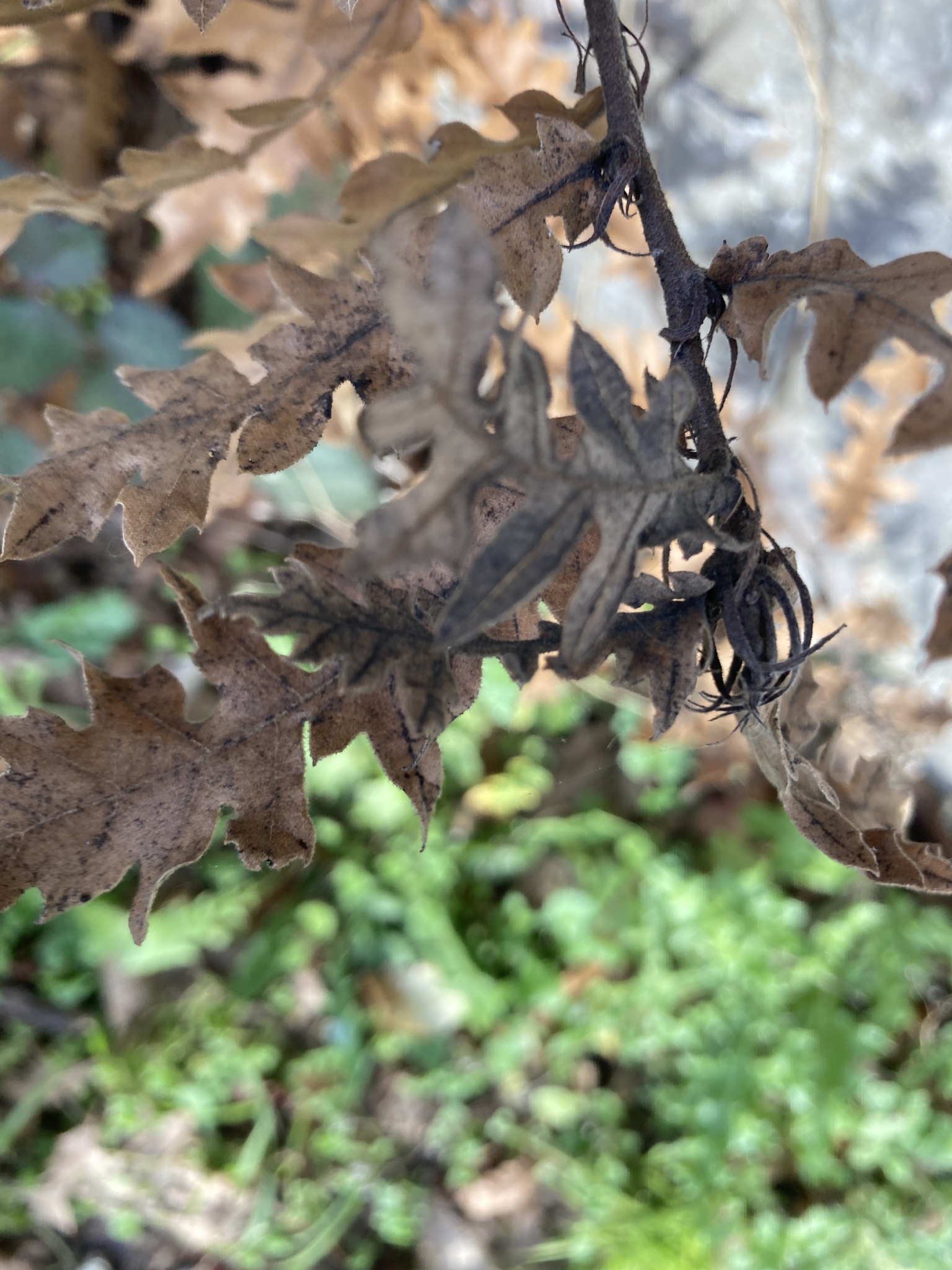
European Turkey Oak
Quercus cerris
☀️ Full Sun 💧 Moderate

Southern Live Oak
Quercus virginiana
☀️ Full Sun 💧 Moderate

Algerian Oak
Quercus canariensis
☀️ Full Sun 💧 Moderate

Jolcham Oak
Quercus serrata
☀️ Full Sun 💧 Moderate

Sessile Oak
Quercus petraea
☀️ Full Sun 💧 Moderate