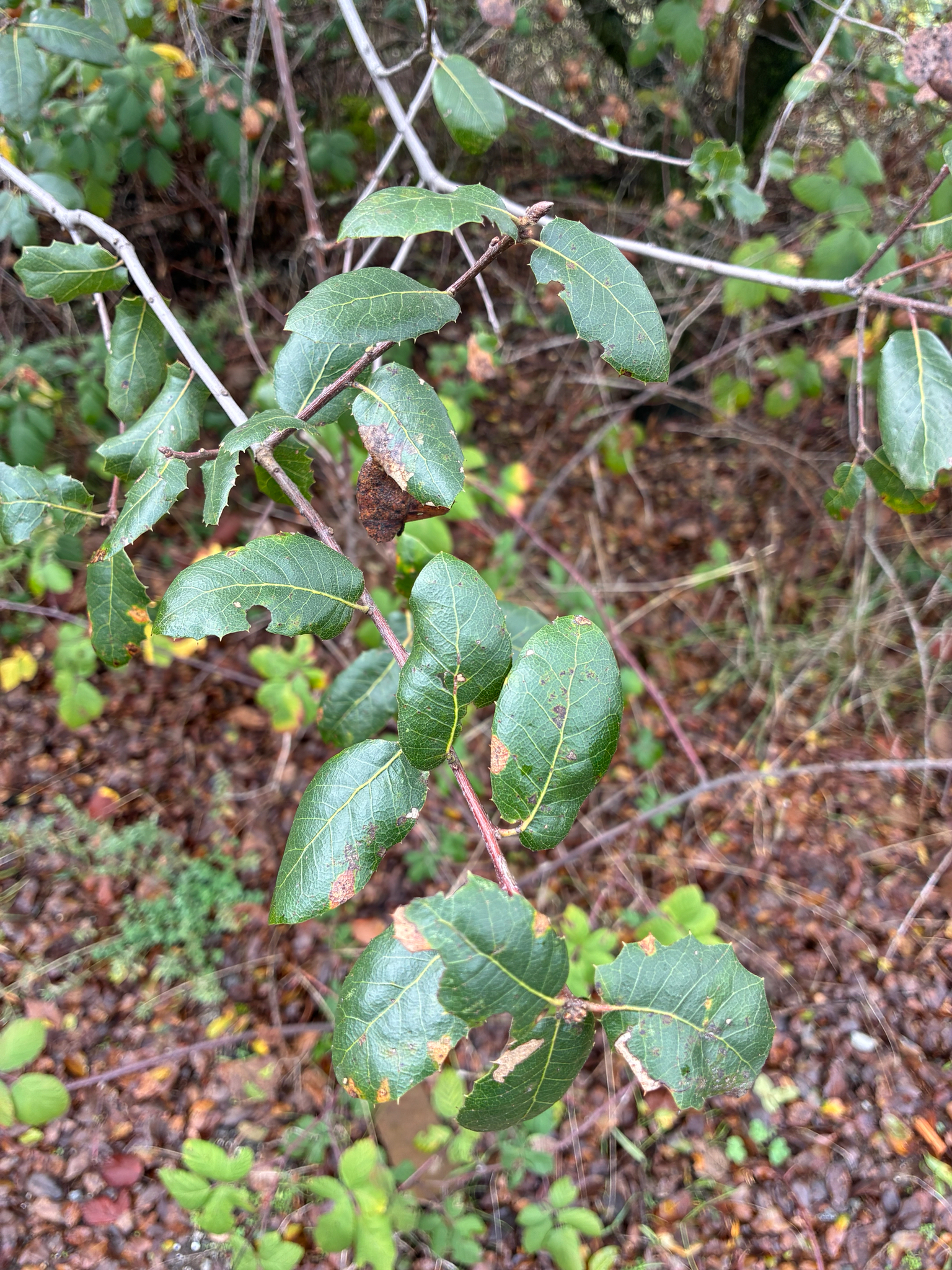
Algerian Oak (Quercus canariensis) is a substantial, broad-leaved tree native to the humid forests of North Africa and the Iberian Peninsula. Despite its scientific name, this species is not found naturally in the Canary Islands, but it thrives in Mediterranean climates and temperate regions with mild winters.
This species is often selected for public parks and wide avenues in Australia and Southern Europe because it retains its foliage much longer than the English oak (Quercus robur). It serves as a reliable shade provider that reaches its full stature only in deep, fertile soils.
Key Facts
- Height: reaches 20-30 m (65-100 ft) at maturity
- Foliage: semi-evergreen, remaining green until mid-winter
- Light: requires full sun for optimal crown development
- Hardiness: suitable for USDA zones 7 through 10
- Soil: prefers deep, acidic to neutral loams
Is the Algerian Oak Right for Your Garden?
The Algerian Oak requires a large, open space to accommodate its broad, spreading canopy and deep root system. It is best suited for acreages, large suburban gardens, or public landscapes where it can grow for decades without interference from power lines or foundations.
This tree is particularly successful in regions with hot, dry summers and cool, wet winters, such as the Mediterranean or parts of Australia like Melbourne and Canberra. It is more drought-tolerant than many other European oaks once it has established a deep taproot, which usually takes three to five years.
- Choose this tree for wide-scale shade in parks.
- Avoid planting within 10 m (33 ft) of buildings.
- Ensure your climate has a minimum winter temperature above -15 °C (5 °F).
- Expect a lifespan that can exceed 150 years in ideal conditions.
Identifying Algerian Oak Leaves and Acorns
You can identify the Algerian Oak by its thick, leathery leaves that measure 10-15 cm (4-6 in) in length and feature 6-12 pairs of shallow, rounded lobes. The foliage is dark, glossy green on the upper surface and a paler, slightly felted green underneath, often persisting on the branches until late winter.
The acorns are another key identifier, typically appearing in pairs or small clusters on very short stalks. Each acorn is roughly 2.5 cm (1 in) long, sitting in a shallow cup covered in small, overlapping scales that resemble a shingled roof. The bark of mature specimens becomes deeply fissured and dark grey, providing a rugged texture that contrasts with the smooth, greyish-brown twigs of younger growth.
- Leaf margins are regularly toothed with blunt points.
- Acorn cups cover approximately one-third of the nut.
- The tree maintains a dense, rounded crown shape.
- Winter foliage often turns a coppery brown before falling.
How Big Does Quercus canariensis Grow?
In a landscape setting, the Algerian Oak typically reaches a height of 20-30 m (65-100 ft) with a spread of 15-20 m (50-65 ft). It grows at a moderate rate, adding approximately 30-60 cm (1-2 ft) of height per year during its first two decades if soil moisture is consistent.
The trunk can eventually reach a diameter of 1.5 m (5 ft) or more, requiring significant subterranean space for its lateral roots. In its native North African habitat, specifically in the Atlas Mountains, some old-growth specimens have been recorded even taller, though garden-grown trees usually stabilize at the 25 m (82 ft) mark. Because of this scale, it is frequently used as a landmark tree in historic botanic gardens.
Sun and Soil Requirements for Mirbeck’s Oak
For the best growth, plant your tree in full sun where the canopy can receive at least six to eight hours of direct light daily. While it can tolerate partial shade when very young, a lack of light will lead to a sparse, leggy crown and increased susceptibility to fungal leaf diseases.
The soil should be deep and well-drained, as the tree develops a significant taproot that dislikes hitting hardpan or bedrock. It performs best in slightly acidic to neutral soils (pH 5.5 to 7.0) and may show signs of yellowing leaves (chlorosis) in highly alkaline or chalky environments. It is remarkably adaptable to different soil textures, including heavy clays, provided they do not remain waterlogged during the summer months.
Planting and Establishing Young Trees
The best time to plant is in late autumn or early spring while the tree is in its dormant or semi-dormant phase. Dig a hole twice as wide as the root ball but no deeper, ensuring the root flare stays level with the surrounding soil surface to prevent trunk rot.
Young trees require a sturdy stake for the first two years, especially in windy sites, as their heavy canopy can act like a sail before the roots are anchored. Mulching with a 10 cm (4 in) layer of organic matter helps retain moisture and suppress weeds that compete for nutrients. Avoid piling mulch against the bark, as this encourages pests and fungal infections.
- Water deeply twice a week during the first summer.
- Remove any grass within a 1 m (3 ft) radius of the trunk.
- Check ties regularly to ensure they aren’t strangling the bark.
- Avoid using high-nitrogen fertilizers in the first year.
Algerian Oak vs English Oak: How to Tell the Difference
The most reliable way to distinguish them is by the leaf stalks and lobes; the Algerian Oak has a distinct petiole (leaf stalk), whereas the English oak (Quercus robur) has almost no stalk. Furthermore, the lobes on an Algerian Oak leaf are much shallower and more regular than the deep, irregular indentations found on the English species.
Another major difference is their winter behavior. The English oak is fully deciduous and drops all leaves in autumn, while the Algerian Oak is semi-evergreen, often holding green or bronze leaves until January or February in milder climates. The acorns of the English oak also hang on long, slender stalks (peduncles), while Algerian Oak acorns sit directly against the twig or on very short, thick stalks.
Common Pests and Leaf Problems
The most frequent issue for this species is powdery mildew, which appears as a white, flour-like dusting on the leaves during humid summers. While usually cosmetic on mature trees, it can stunt the growth of saplings by reducing their ability to photosynthesize. Ensuring good air circulation by avoiding overcrowding is the best preventative measure.
You may also notice small, woody growths on the twigs or leaves known as galls, caused by tiny wasps. These are generally harmless to the tree’s health and are a natural part of the oak’s ecosystem. Oak aphids may occasionally cluster on new spring growth, but these are typically controlled by ladybirds and other predatory insects without the need for chemical intervention.
- Yellowing leaves often indicate high soil pH or iron deficiency.
- Sudden leaf drop in summer usually suggests extreme water stress.
- Brown, crispy leaf edges can be a sign of salt spray in coastal areas.
- Check for borers if you see small holes in the trunk with sawdust-like frass.
Historical and Modern Uses
Traditionally, the bark of the Algerian Oak was harvested for its high tannin content, which was used in the leather tanning industry across North Africa and Portugal. The wood is hard, heavy, and durable, making it suitable for construction and barrel making, though it is less common in the global timber trade than other white oaks.
In modern landscapes, its primary value is ornamental. It is a staple of 19th-century parklands in Australia, where it was planted extensively in cities like Kingston and Melbourne to provide shade in a climate that mimics its native range. The acorns are a significant food source for local wildlife, including jays and squirrels, which help disperse the seeds across the landscape.
Year-Round Maintenance for Algerian Oak
| Spring | Apply a balanced slow-release fertilizer to young trees before new growth begins. Monitor for aphids on emerging leaves and ensure consistent watering if the spring is unusually dry. |
|---|---|
| Summer | Water young specimens deeply once a week during heatwaves. Maintain a thick mulch layer to cool the root zone and check for signs of powdery mildew during humid spells. |
| Autumn | This is the ideal time for planting new trees. Collect fallen acorns if you wish to propagate them, and clear away any diseased leaf litter from the base of the tree. |
| Winter | Perform structural pruning while the tree is dormant to remove crossing or damaged branches. Check stakes and ties on young trees to ensure they can withstand winter storms. |
Common Algerian Oak Problems and Solutions
| What you see | Likely cause | What to do |
|---|---|---|
| White powdery coating on leaves | Powdery mildew fungus | Improve air circulation and avoid overhead watering in the evening. |
| Yellow leaves with green veins | Iron chlorosis due to high pH | Apply chelated iron to the soil and use acidic mulches like pine bark. |
| Small brown lumps on twigs | Oak gall wasps | No action required as these are generally harmless to the tree’s health. |
| Wilting or drooping new shoots | Lack of water or root damage | Increase deep watering frequency and check for soil compaction. |
Algerian Oak Types and Cultivars
- Quercus canariensis (Species) – The standard form used in large-scale landscaping.
- ‘Mirbeckii’ – A name often applied to the species in the nursery trade, referring to its discovery by Mirbeck.
Frequently Asked Questions
Is Algerian oak deciduous or evergreen?
It is semi-evergreen, meaning it holds its green leaves much longer than fully deciduous oaks, often only dropping them in late winter just before the new buds open.
How fast does Quercus canariensis grow?
It has a moderate growth rate, typically adding 30-60 cm (1-2 ft) per year when young, eventually slowing as it reaches its mature height of 20-30 m (65-100 ft).
Can you grow Algerian oak in Australia?
Yes, it is a very successful street and park tree in southern and highland Australia, where the climate matches its native Mediterranean environment.
Are Algerian oak acorns edible?
While not commonly eaten today, they were traditionally processed to remove tannins; however, raw acorns are bitter and can cause digestive upset if consumed.
How do I identify an Algerian oak leaf?
Look for a leathery, dark green leaf with a clear stalk and 6-12 pairs of shallow, rounded lobes along the edges.
Information about traditional or historical uses is provided for educational interest only and is not medical advice. Do not use any plant to treat a condition without speaking to a qualified professional.
Sources & Verification
Taxonomy and distribution are checked against the databases below. Care guidance is written for cultivated species only and reviewed by our editor. How We Build Plant Profiles →