

Portuguese oak (Quercus faginea) is a resilient tree native to the western Mediterranean, thriving across mountain ranges up to 1,900 m (6,233 ft) above sea level. It is widely recognized for its dense canopy and tendency to host characteristic leaf galls caused by wasps.
You will encounter this species in Mediterranean scrublands and oak woodlands where it provides vital habitat for local invertebrates. It demands well-drained soils and plenty of direct sun to establish its deep root system.
Key Facts
- Type: Deciduous tree
- Native: Iberian Peninsula and NW Africa
- Elevation: Sea level to 1,900 m
- Habitat: Mediterranean woodlands and scrub
- Taxonomy: Fagaceae family
What Is the Portuguese Oak?
The Portuguese oak is a medium-sized tree that typically reaches heights between 10 m to 20 m (33 ft to 66 ft) in its native range. It suits wild Mediterranean landscapes and rough terrain rather than manicured suburban gardens. The single most important trait of this tree is its high ecological value, supporting exceptional endemism among local spider and insect populations.
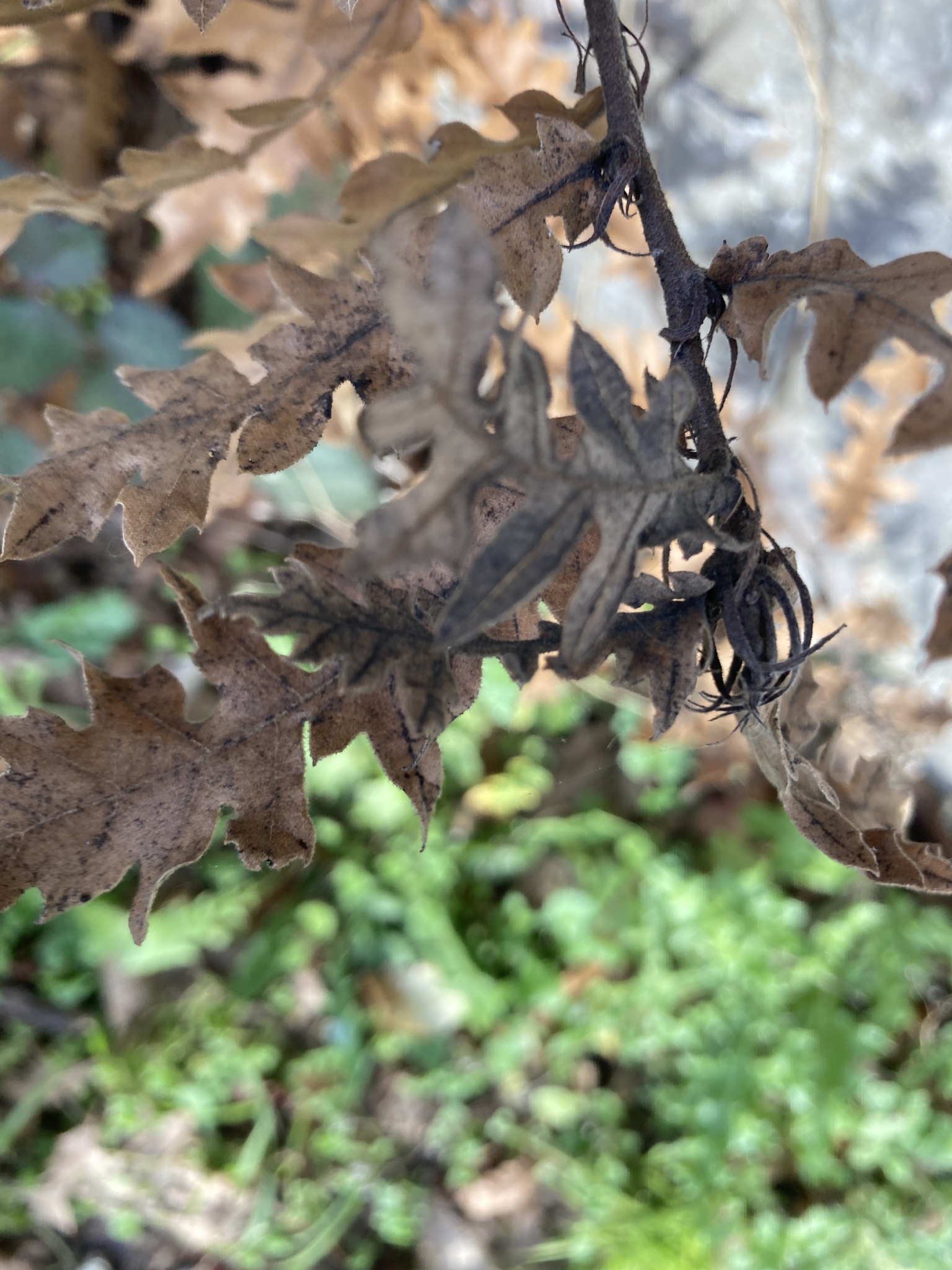
When you live near its natural distribution, you will notice its distinct semi-evergreen or marcescent foliage. Leaves often hang onto the branches through part of the winter before dropping as new spring growth pushes them off. The wood is dense, and the tree naturally forms a broad, rounded crown when given adequate space to mature.
How to Identify the Gall Oak Tree Leaf
You can identify the gall oak tree leaf by its leathery texture and distinct teeth along the margin. Leaves measure 3 cm to 10 cm (1.2 in to 3.9 in) long and feature a greyish-green upper surface with downy hairs beneath. The veins are straight and prominent, running directly to the leaf edge.
- Leaf shape is oblong to obovate with 6 to 12 pairs of shallow lobes.
- Young leaves emerge with a dense felt of grey hairs that partially shed by summer.
- Marcescent leaves turn brown in autumn but remain attached to the twig until late winter.
Natural Habitat and Distribution
This tree grows naturally across the Iberian Peninsula and extends into the Atlas Mountains of northwest Africa. It flourishes from sea level up to 1,900 m (6,233 ft) in elevation across diverse climatic zones. It tolerates hot, dry summers and chilly mountain winters with frost.
You will find it coexisting with other Mediterranean flora on limestone ridges as well as acidic slopes. It adapts well to rocky outcrops and degraded soils where moisture is seasonally restricted. Southern populations in the Iberian region exhibit the highest genetic and invertebrate diversity.
Ecology and Wasp Galls on Oak Trees
Gall wasps frequently induce abnormal plant growths known as galls on the leaves and branches of this tree. These galls do not harm the health of a mature tree in the wild. The wasp uses the tissue to lay eggs, creating a protective nursery for the developing larvae.
- Leaf galls appear as spherical, woody, or spongy ball-like growths by midsummer.
- Branch galls can distort twig growth slightly but rarely threaten the tree’s survival.
- Predatory insects and spiders thrive in high numbers within these southern oak forests because of the complex habitat structures provided by the galls.
Conservation Status
The species maintains stable wild populations across Spain, Portugal, and parts of North Africa without immediate global extinction threats. Local habitats face pressure from agricultural expansion, overgrazing, and intense summer wildfires. Conservation efforts focus on protecting intact cork and oak woodlands from fragmentation.
Forest management in its native range prioritizes preserving old-growth specimens. These older trees sustain rare invertebrate communities that cannot survive in young secondary scrub. Field surveys continue to monitor isolated North African populations in the Atlas Mountains.
Traditional Uses and Timber
Historically, rural communities used the dense wood of the Portuguese oak for heavy construction, tool handles, and charcoal production. Acorns served as traditional forage for free-range pigs in Iberian dehesa-style agroforestry systems. Bark extracts were sometimes utilized in tanning leather due to high tannin content.
While rarely planted as a commercial timber crop today, it remains valued in ecological restoration projects. Its deep taproot helps stabilize erodible mountain slopes. The canopy shields fragile understory soils from baking summer sunlight and torrential autumn rains.
Similar Trees in the Mediterranean
You might confuse the Portuguese oak with several other Mediterranean oak species sharing the same rugged terrain. Distinguishing features include leaf lobe depth, acorn cup scale morphology, and hair density on the underside of the foliage.
- Cork oak (Quercus suber) features thick, spongy bark harvested commercially for cork products.
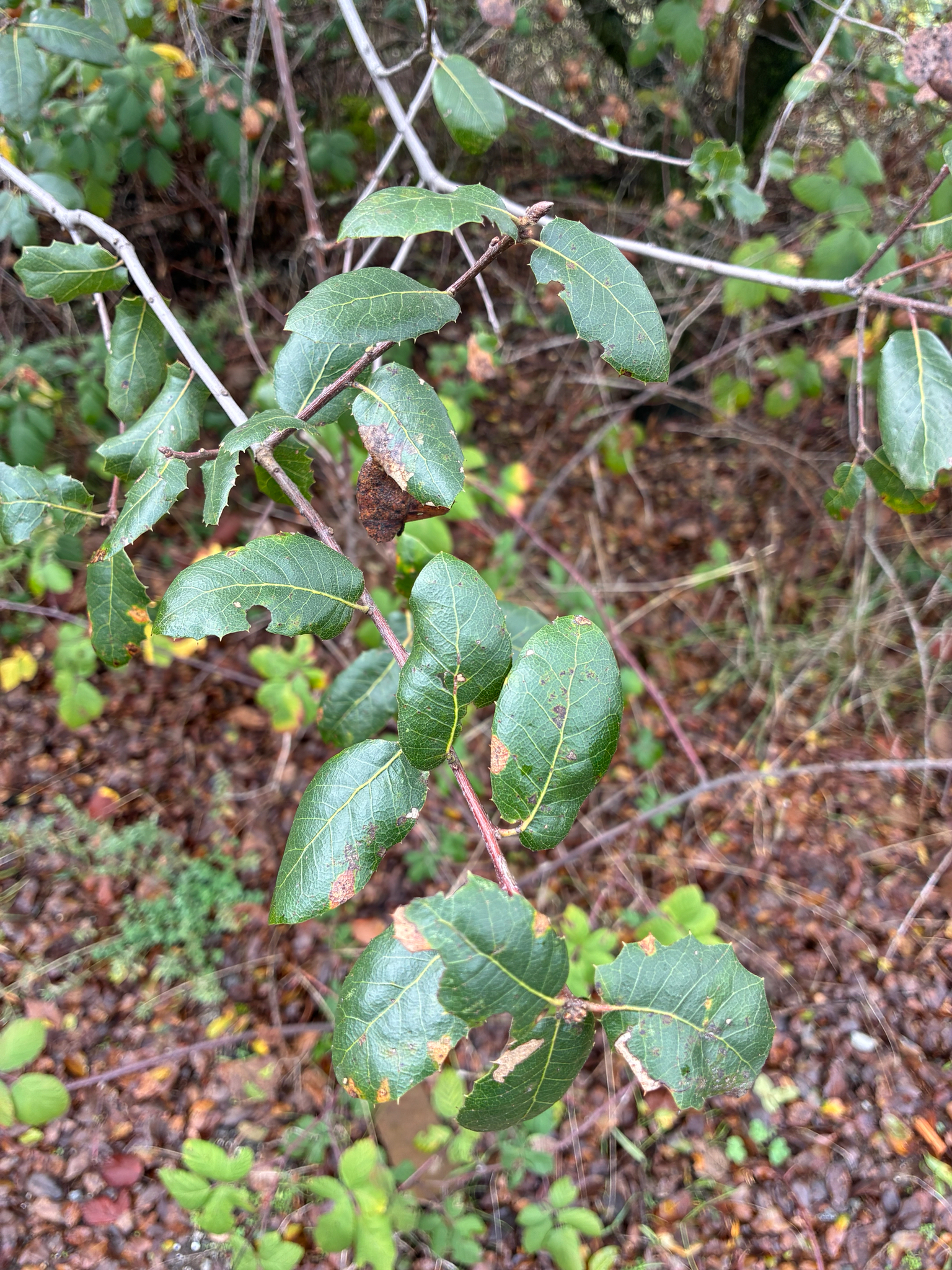
- Holm oak (Quercus ilex) has rigid, spiny-margined evergreen leaves that are dark green above and felted white below.
- Pyrenean oak (Quercus pyrenaica) displays deeply lobed, velvety leaves with prominent orange-brown hairs.
- Valonia oak (Quercus macrolepis) is distinguished by exceptionally large acorn cups with elongated scales.
Frequently Asked Questions
Are oak galls harmful to the tree?
Oak galls are rarely harmful to the tree and do not require chemical treatments. The growths are simply a biological reaction to wasp egg-laying activity and do not threaten the overall health of a mature specimen.
How do you get rid of gall wasps on oak trees?
You cannot effectively or safely eliminate gall wasps on wild forest trees using insecticides. Chemical sprays fail to reach the larvae hidden inside the gall tissue and often destroy beneficial predatory insects instead.
Can you grow Quercus faginea as a bonsai?
You can grow Portuguese oak as a bonsai because its small leaves and woody trunk respond well to wiring and pruning. It requires a bright outdoor position and protection from hard freezing winds during winter dormancy.
What causes gall balls on oak tree leaves?
Gall balls are caused by tiny cynipid wasps injecting fluids into the leaf tissue that force the plant to build a protective shelter. The larvae feed and develop safely inside this spherical structure until they chew their way out.
Sources & Verification
Taxonomy and distribution are checked against the databases below. Care guidance is written for cultivated species only and reviewed by our editor. How We Build Plant Profiles →
More in Quercus

Southern Live Oak
Quercus virginiana
☀️ Full Sun 💧 Moderate

California Live Oak
Quercus agrifolia
☀️ Full Sun 💧 Low

Pin Oak
Quercus palustris
☀️ Full Sun 💧 High
European Turkey Oak
Quercus cerris
☀️ Full Sun 💧 Moderate
Interior Live Oak
Quercus wislizeni
☀️ Full Sun 💧 Low

Sessile Oak
Quercus petraea
☀️ Full Sun 💧 Moderate