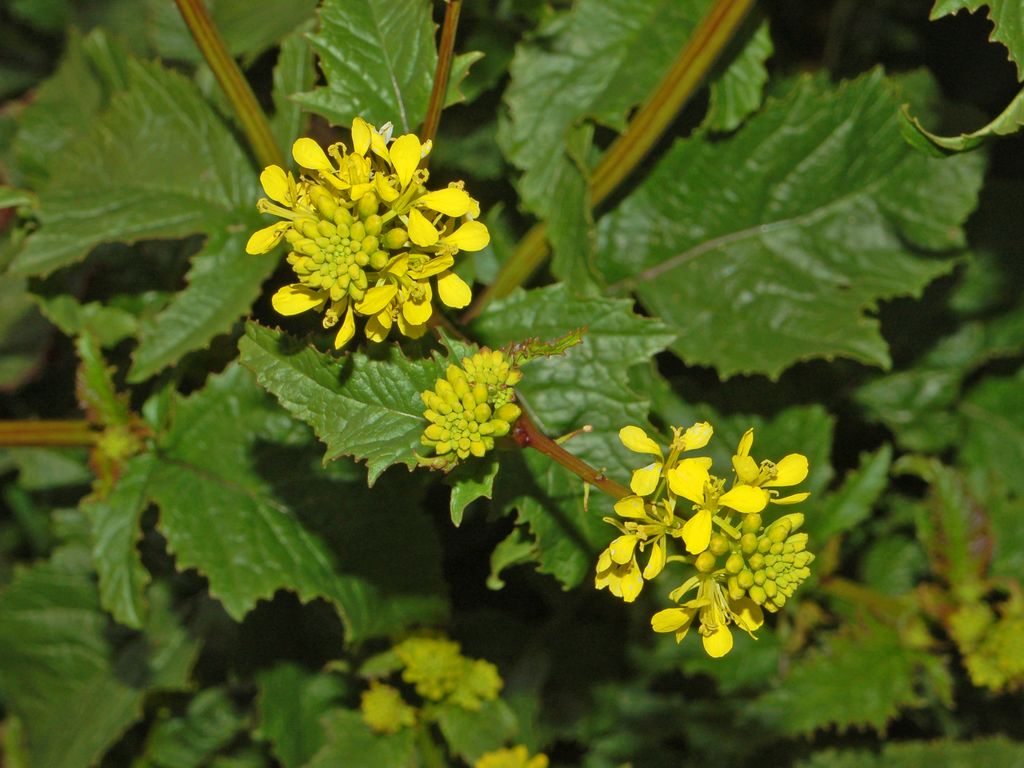
White mustard (Sinapis alba) is a fast-growing annual herb native to the Mediterranean region, primarily cultivated for its pungent seeds and as a nutrient-rich green manure. It is the primary ingredient in the mild yellow mustard condiment found in kitchens globally.
This species matures in just 80 to 100 days, making it a reliable choice for gardeners who need a quick-turnaround crop. While it thrives in cool weather, it will bolt rapidly if temperatures exceed 27 °C (80 °F) before the plant is established.
Key Facts
- Growth Cycle: Matures from seed in 80-100 days
- Light: Requires at least 6 hours of full sun
- Sowing: Plant seeds 1 cm (0.4 in) deep in spring
- Soil: Prefers well-drained loam with pH 6.0-7.5
- Hardiness: Frost-tolerant annual suited to most climates
Fitting White Mustard into Your Garden
White mustard suits gardeners who want a dual-purpose crop that provides edible seeds while simultaneously improving soil health. It is an ideal choice for filling gaps in a vegetable rotation because its deep taproot breaks up heavy clay and its rapid growth suppresses competing weeds. You can grow it in containers at least 20 cm (8 in) deep or in open ground, provided the site receives ample sunlight.
Because it is a member of the Brassicaceae family, you must plan your rotation carefully to avoid following it with broccoli or cabbage. This prevents the buildup of soil-borne diseases that affect the entire family. It is particularly useful for growers in temperate regions who need a crop that can handle light spring frosts without damage.
Identifying the White Mustard Plant
The white mustard plant features bright yellow flowers with four petals arranged in a distinctive cross shape. The stems reach a height of 30 to 100 cm (1 to 3.3 ft) and are covered in stiff, downward-pointing hairs that feel rough to the touch. The leaves are lyrate-pinnatifid, meaning they have a large terminal lobe and several smaller side lobes along the stalk.
You can distinguish this species from other mustards by its seed pods, known as siliques, which are 2 to 4 cm (0.8 to 1.6 in) long. These pods are bristly and end in a flat, sword-shaped beak that is often as long as the seed-bearing part of the pod. Each pod typically contains 4 to 8 light-colored, spherical seeds that are roughly 2 mm (0.08 in) in diameter.
Best Growing Conditions for Sinapis alba
This species thrives in temperatures between 10-25 °C (50-77 °F) and requires a position in full sun to produce a high seed yield. While it is not fussy about soil type, it performs best in loamy, well-drained soil with a pH between 6.0 and 7.5. Avoid waterlogged areas, as the roots are prone to rotting if the ground remains saturated for extended periods.
In regions with hot summers, you should plant white mustard as early as the soil can be worked in spring. High heat causes the plant to flower prematurely, a process known as bolting, which reduces the quality of the edible leaves. If you are growing it specifically for green manure, it can tolerate slightly poorer soils and partial shade, though its growth will be less vigorous.
Sowing White Mustard Seeds
Sow white mustard seeds 1 cm (0.4 in) deep directly into the soil from early spring through late summer. For a dedicated seed crop, space your rows 30 cm (12 in) apart to allow for bushy lateral growth and maximum flower production. If you are using the plant as a cover crop or green manure, broadcast the seeds thickly across the surface and rake them in lightly.
- Water the soil thoroughly before sowing if the weather has been dry
- Germination typically occurs within 3 to 5 days in moist soil
- Thin seedlings to 15 cm (6 in) apart once they reach 5 cm (2 in) tall
- Avoid transplanting, as the taproot is sensitive to disturbance
- Sow in batches every 2 weeks for a continuous harvest of young leaves
Ongoing Care and Maintenance
Keep the soil consistently moist until the plants are roughly 15 cm (6 in) tall and have established a firm root system. Once the taproot has developed, white mustard is moderately drought-tolerant, but regular watering during dry spells is necessary to prevent the seeds from becoming overly bitter. You do not need to apply heavy fertilizers; a light application of balanced compost before sowing is sufficient.
Weeding is essential during the first three weeks of growth, as young seedlings can be easily smothered by faster-growing grasses. Once the mustard canopy closes, it will naturally shade out most weeds. Monitor the plants for the presence of caterpillars, which can quickly defoliate the crop if left unchecked.
- Hand-weed the rows early to prevent competition for nutrients
- Mulch with straw or bark to retain moisture in sandy soils
- Avoid high-nitrogen feeds which can reduce the pungency of the seeds
- Support taller plants with light stakes if growing in a windy, exposed site
Harvesting and Using White Mustard Seeds
Harvest young leaves after 21 to 30 days for use in salads, or wait 80 to 100 days for the seeds to mature. For seed production, watch for the pods to turn from green to a straw-colored tan and feel brittle to the touch. You should hear the seeds rattling inside the pods when you shake the plant, indicating they are ready for collection.
To harvest, cut the entire plant at the base and place it upside down in a paper bag or over a clean sheet. As the plants dry further, the pods will shatter and release the seeds. You can then rub the pods between your hands to release any remaining seeds and winnow away the chaff by pouring the mixture in front of a small fan.
- Pick leaves when they are 5-8 cm (2-3 in) long for the best flavor
- Harvest seeds before the pods split open naturally to avoid self-seeding
- Expect a yield of approximately 50-100 grams of seed per square meter
- Use seeds whole in pickling or grind them for homemade mustard paste
White Mustard vs Yellow Mustard: Key Differences
White mustard and yellow mustard are the same species, Sinapis alba, and the names are used interchangeably in most contexts. The term “white” refers to the light tan color of the dried seeds, while “yellow” refers to the bright flowers or the color of the prepared condiment. This species is distinct from brown mustard (Brassica juncea) and black mustard (Brassica nigra).
White mustard seeds are significantly larger than those of brown or black mustard but contain less volatile oil, resulting in a milder heat. The heat in white mustard comes from the compound sinalbin, which does not travel through the air to the sinuses like the sinigrin found in hotter mustards. This makes it the preferred choice for the mild, bright yellow mustard popular in North America.
Common Pests and Problems
The most frequent problem for white mustard is the flea beetle, which creates small “shotholes” in the leaves of young seedlings. While mature plants can usually survive this damage, heavy infestations can kill young crops. You can manage these pests by using row covers immediately after sowing or by applying neem oil to the foliage.
White mustard is also susceptible to clubroot, a soil-borne fungus that causes swollen, distorted roots and stunted growth. To prevent this, ensure your soil is not too acidic and follow a strict four-year crop rotation with other brassicas. Cabbage white butterflies may also lay eggs on the leaves; their green caterpillars can be removed by hand or treated with Bacillus thuringiensis (Bt).
Storing and Preparing Your Harvest
Store thoroughly dried seeds in airtight glass jars kept in a cool, dark place to preserve their flavor for up to three years. If the seeds retain any moisture, they will mold quickly, so ensure they are bone-dry before sealing the container. You can test dryness by biting a seed; it should crack cleanly rather than squashing.
In culinary applications, white mustard seeds are often used in British cuisine to create a creamy white mustard sauce traditionally served with corned beef. To make your own condiment, soak the ground seeds in cold water, vinegar, or cider for several hours to activate the enzymes that produce the characteristic sharp flavor. Adding a pinch of turmeric will give the mixture the classic bright yellow color associated with commercial varieties.
Managing White Mustard Through the Year
| Spring | Sow seeds directly into the garden as soon as the soil is workable. Thin seedlings to 15 cm (6 in) apart and weed regularly. |
|---|---|
| Summer | Monitor for seed pod maturity and harvest when pods turn tan. Pull up plants used as green manure before they set seed. |
| Autumn | Sow a final crop for green manure to protect soil over winter. Dig these plants into the soil before the first hard frost. |
| Winter | Clean and store dried seeds in airtight containers. Plan crop rotations to avoid planting brassicas in the same spot next year. |
Common White Mustard Growing Problems
| What you see | Likely cause | What to do |
|---|---|---|
| Small circular holes in leaves | Flea beetles | Use fine mesh row covers or apply neem oil to young plants. |
| Stunted growth and yellowing leaves | Clubroot fungus | Raise soil pH with lime and rotate crops every four years. |
| Plant flowers very early and stops growing | Bolting due to heat | Sow earlier in spring or provide light shade during hot spells. |
| Large holes and green caterpillars | Cabbage white butterfly larvae | Pick caterpillars off by hand or use Bt spray. |
Recommended White Mustard Cultivars
- ‘Albatros’ – High biomass, ideal for green manure and soil health.
- ‘Litember’ – Late-flowering variety that resists bolting in warmer weather.
- ‘Martigena’ – Bred specifically for high seed yield and oil content.
- ‘Tilney’ – A traditional English variety with large, high-quality seeds.
Frequently Asked Questions
Are white mustard and yellow mustard the same?
Yes, white mustard and yellow mustard both refer to the species Sinapis alba. The names are used interchangeably for the plant and its mild seeds.
Is white mustard invasive?
It can be invasive in some regions as it self-seeds very easily. To prevent this, harvest the seed pods before they dry out completely and shatter.
What is white mustard used for in pooja?
In Hindu rituals, white mustard seeds (Siddharth) are used for purification and protection. They are often scattered or offered into ritual fires to ward off negative energy.
Is white mustard good for health?
Traditionally, white mustard has been used to stimulate digestion and improve blood circulation. It contains minerals like selenium, though it is mostly consumed in small amounts as a condiment.
Can you eat the leaves of a white mustard plant?
Yes, the young leaves are edible and have a peppery flavor similar to arugula. They are best harvested when they are under 10 cm (4 in) long.
Information about traditional or historical uses is provided for educational interest only and is not medical advice. Do not use any plant to treat a condition without speaking to a qualified professional.
Sources & Verification
Taxonomy and distribution are checked against the databases below. Care guidance is written for cultivated species only and reviewed by our editor. How We Build Plant Profiles →