
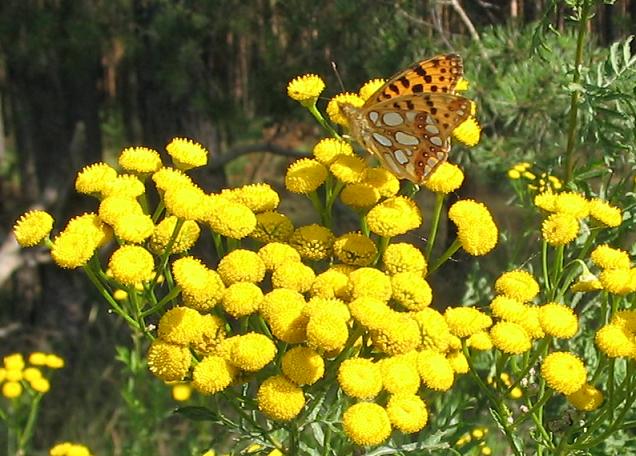
Tansy (Tanacetum vulgare) is a hardy Eurasian perennial in the aster family known for its pungent, fern-like leaves and button-shaped yellow composite flower heads. It spreads vigorously through an extensive rhizome network and self-seeding.
Because all plant parts contain toxic thujone that causes poisoning in livestock and humans, cultivate it in contained borders or herb plots rather than open pastures where it crowds out native flora.
Key Facts
- Plant type: Herbaceous rhizomatous perennial
- Sunlight: Full sun to light partial shade
- Watering: Low to moderate once established
- Bloom time: July to September
- Height: 60–120 cm (24–48 in)
- Toxicity: Toxic to humans, cattle, and horses
Where Tansy Fits in the Garden
Tansy belongs in contained ornamental borders, dedicated dye gardens, or wildlife hedgerows where its aggressive underground runners cannot overwhelm neighbouring perennials. It suits gravel plantings and low-input sites that receive direct sunlight throughout the day.
Because its volatile oils deter several garden pests, historical cottage gardens positioned it near outbuildings or fruit bushes. However, several North American regions classify Tanacetum vulgare as a noxious weed because it invades rangelands and pastures.
How to Identify Tansy Foliage and Flowers
Tansy is distinguished by pinnately lobed fern-like leaves that emit a sharp, camphoraceous scent when crushed, topped by flat corymbs of yellow button florets without ray petals. Stems grow erect, grooved, and reddish-purple towards the base, reaching 60–120 cm (24–48 in) in height.
Key diagnostic features include:
- Leaves alternate, 10–25 cm (4–10 in) long, deeply divided into serrated leaflets
- Inflorescence a flat-topped terminal cluster of 20 to 100 button-like heads
- Flower heads measure 8–10 mm across, consisting exclusively of yellow disc florets
- Roots forming tough, fibrous crowns anchored by spreading woody rhizomes
Best Light and Soil Conditions
Common tansy requires at least 6 hours of direct sunlight daily to maintain sturdy stems and produce dense flower clusters. In deep shade, stems stretch, become weak, and frequently lodge during summer rainstorms.
The plant adapts to almost any terrestrial soil type, from heavy clay to sandy loam, provided water drains away freely. It flourishes in lean, low-fertility ground where excessive nitrogen would only cause floppy, excessively leafy growth at the expense of floral buds.
How to Plant and Space Tansy
Space individual tansy plants 60–90 cm (24–36 in) apart to allow for their fast lateral spread during the first season. Dig a hole matching the depth of the root ball and twice as wide.
To prevent unwanted colonisation in mixed garden borders, implement these barriers:
- Install deep root barriers sinking 30 cm (12 in) into the subsoil
- Sink bottomless 20-litre containers directly into garden beds
- Mulch surrounding surface bare ground to suppress emerging self-sown seeds
Watering and Feeding Common Tansy
Water young transplants with 2.5 cm (1 in) of water weekly until new foliage develops, after which established root systems survive extended summer droughts without supplemental irrigation. Excessive moisture promotes root decay in waterlogged soils.
Do not apply synthetic high-nitrogen fertilisers. A light top-dressing of organic compost in early spring supplies all the nutrients this low-demand perennial needs for the growing season.
Pruning Tansy and Managing Spread
Deadhead faded flower heads immediately after petals brown in late summer to stop the plant from shedding thousands of viable wind-dispersed seeds. Cut flowering stems back to basal leaf rosettes using sharp bypass shears.
Wear protective nitrile or leather gloves when handling stems to prevent contact dermatitis triggered by the plant’s sesquiterpene lactones. If plants outgrow their boundaries, dig out rhizome runners in early spring or late autumn with a garden fork.
How to Propagate Tansy from Seed and Division
Propagate tansy reliably by root division in early spring or by surface-sowing fresh seed at 18–20 °C (64–68 °F) after the last hard frost. Divisions establish much faster than seeds and retain the exact characteristics of the parent stock.
Follow these steps to divide an established clump:
- Unearth the root clump in March or April before active shoots exceed 10 cm (4 in)
- Slice the outer rhizome crowns into sections retaining at least three visible buds
- Discard the woody, spent central core of older clumps
- Replant divisions immediately at original soil depth and water thoroughly
Tansy Bloom Season and Pollinator Value
Tansy blooms continuously from July through September, displaying vivid golden florets that persist for several weeks. Unlike daisies, the heads lack petal-like ray florets, giving them their characteristic flattened button appearance.
The exposed nectar disks attract beneficial insects, including hoverflies, predatory wasps, and honeybees. Leave select flower stems until autumn only if you intend to harvest seed heads or dry them for floral crafts before they shatter.
Winter Hardiness and Overwintering Care
Common tansy is hardy down to USDA Zone 3 (-40 °C / -40 °F) and requires no winter insulation or protective coverings. Cold winter temperatures help satisfy its natural dormancy cycle.
Cut dead brown stems back to ground level in late autumn once hard frost halts growth. Clear away dead plant debris around the crown to deter overwintering slugs and eliminate fungal spores from the soil line.
Troubleshooting Pests and Toxicity Concerns
Tansy suffers from minimal insect predation due to high concentrations of aromatic camphor, thujone, and bitter resins throughout its tissues. Aphids occasionally cluster on tender spring shoot tips, which you can dislodge with a sharp spray of cold water.
Powdery mildew can whiten foliage in stagnant, humid air during late summer; space stems well to promote circulation. Never plant tansy along borders shared with livestock pasture, as consuming Tanacetum vulgare causes gastric inflammation, liver failure, and abortion in grazing animals.
Companion Planting with Common Tansy
Pair tansy with vigorous, non-invasive perennials that can hold their own against its creeping root system, such as yarrow (Achillea millefolium), Russian sage (Salvia yangii), and purple coneflower (Echinacea purpurea). Its pungent aroma also complements aromatic shrubs like common wormwood (Artemisia absinthium).
Avoid planting tansy adjacent to delicate woodland plants, vegetable beds, or shallow-rooted annuals that are easily displaced by rhizomatous roots.
Frequently Asked Questions
Is tansy poisonous to humans and pets?
Yes, tansy is toxic to humans, dogs, cats, and livestock because it contains thujone and other volatile oils. Ingestion causes vomiting, convulsions, liver and kidney damage, and can be fatal in substantial amounts.
What is the difference between tansy and tansy ragwort?
Common tansy (Tanacetum vulgare) has button-like flower heads with no petals, finely divided fern-like foliage, and aromatic camphor oils, whereas tansy ragwort (Jacobaea vulgaris) produces daisy-like yellow flowers with distinct outer petals and contains toxic pyrrolizidine alkaloids.
What is purple tansy?
Purple tansy is a common name for lacy phacelia (Phacelia tanacetifolia), an annual pollinator plant with blue-violet fiddleneck flowers that belongs to the borage family, entirely unrelated to common tansy.
How do you remove tansy ragwort or invasive tansy?
Dig out the entire root crown and all lateral rhizomes with a spade when the soil is damp in spring, bag the material for landfill disposal, and monitor the site for emerging seedlings over the following two growing seasons.
What does tansy mean symbolically?
In the historical language of flowers, tansy symbolised resistance, immortality, and refusal or declared war, derived from the Greek word 'athanasia' meaning immortality due to its long-lasting dried flowers.
Information about traditional or historical uses is provided for educational interest only and is not medical advice. Do not use any plant to treat a condition without speaking to a qualified professional.
Sources & Verification
Taxonomy and distribution are checked against the databases below. Care guidance is written for cultivated species only and reviewed by our editor. How We Build Plant Profiles →
- Kew Plants of the World OnlineTaxonomy, distribution, and native status verification.
- North Carolina Extension Gardener Plant ToolboxBotanical traits, hardiness, and human/pet toxicity details.
- USDA PLANTS DatabaseInvasive status and North American distribution data.
- GBIF — Global Biodiversity Information Facilitytaxonomy, synonyms, occurrence records
- Wikipediageneral reference

