
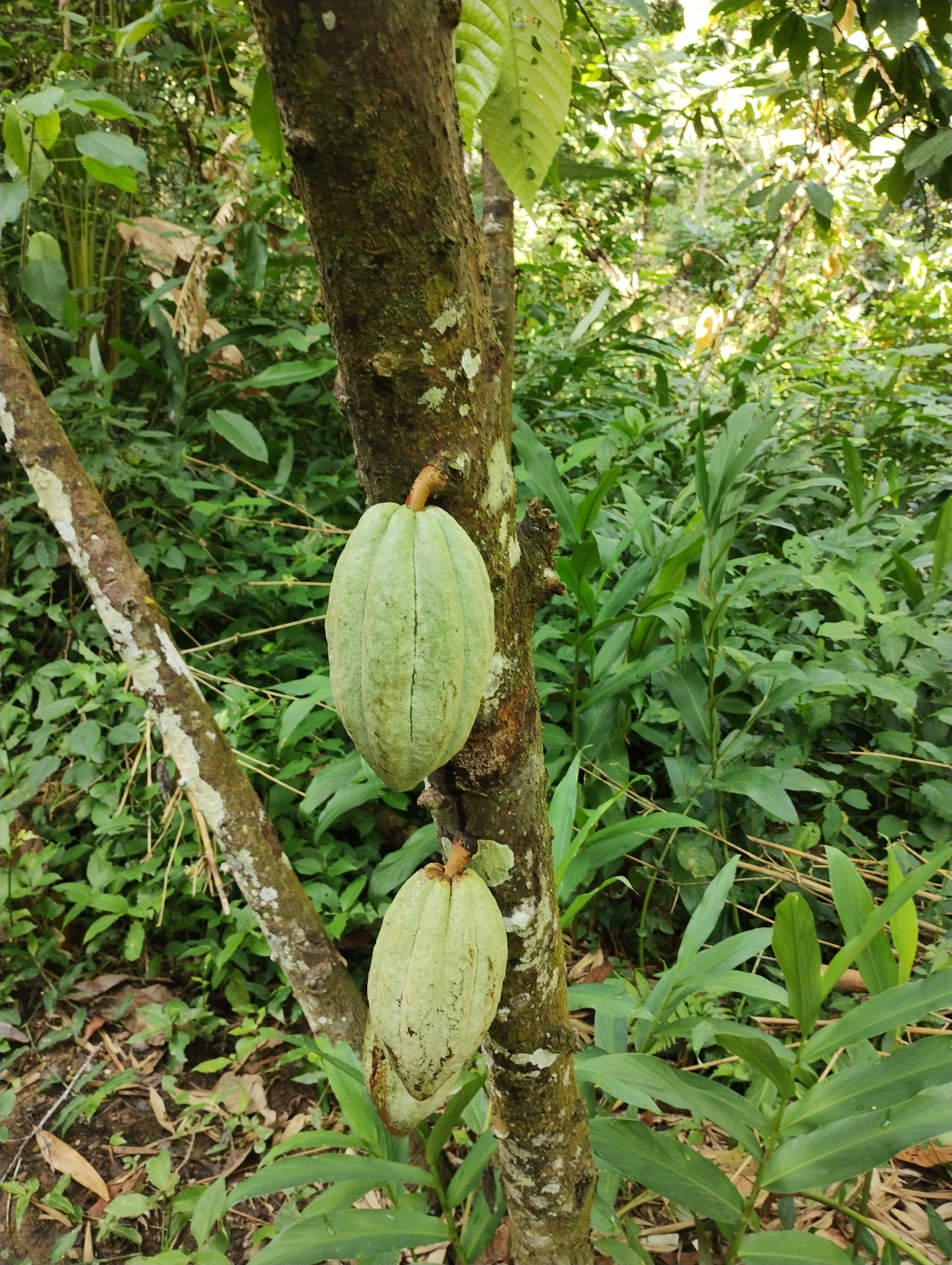
Cacao (Theobroma cacao) is a small evergreen tree in the Malvaceae family native to the tropical forests of Central and South America. It is cultivated worldwide for its large pods containing seeds that become cocoa beans.
Growing this tree requires strict tropical conditions with high humidity and constant warmth. It will fail to thrive if exposed to temperatures dropping below 15 °C (59 °F).
Key Facts
- Light: Dappled shade
- Water: High, keep evenly moist
- Soil: Rich, well-draining loam
- Hardiness: USDA zones 11-12
- Height: Up to 8 m (26 ft)
What It Is Like to Grow the Cacao Tree
Growing a chocolate tree is a rewarding long-term commitment that demands strict adherence to tropical warmth and high humidity. You need a climate that stays above 15 °C (59 °F) year-round to keep this tropical specimen alive.
This plant suits greenhouse owners, conservatory gardeners, or those living in USDA zones 11-12. The single most important rule is protecting the thin-barked trunk and shallow roots from drought and cold drafts. Expect your specimen to start flowering directly on the trunk after 3 to 4 years of growth.
- Provide shelter from strong winds that shred the large leaves.
- Maintain ambient humidity above 70 percent at all times.
- Keep mulch applied over the shallow root zone to retain moisture.
How to Identify the Cacao Tree
Recognising this species is straightforward due to its cauliflorous habit of flowering directly from the woody trunk and thick branches. Mature specimens typically reach a height of 4 to 8 m (13 to 26 ft) with a dense, spreading crown.
Leaves are alternate, glossy, dark green, and elliptical, measuring up to 30 cm (12 in) long. The small, pink or white flowers emerge in clusters straight out of the bark. These develop into oblong, leathery pods that turn from green to bright yellow, orange, or deep red when ripe.
- Leaves emerge in distinct flushes of limp, red-brown foliage.
- Pods measure 15 to 30 cm (6 to 12 in) in length.
- Seeds inside number 20 to 60, surrounded by a sweet, white pulp.
Ideal Size and Spacing for Cacao
Allowing adequate room for canopy spread ensures proper air circulation and light penetration for fruit development. Space multiple trees at least 3 to 4 m (10 to 13 ft) apart in a grove setting.
Pruning keeps garden-grown specimens closer to 3 m (10 ft) tall for easier harvesting. Unmanaged specimens in the wild can push past 10 m (33 ft) tall under a dense rainforest canopy.
- Container-grown specimens require a pot size of at least 50 litres (13 gallons).
- Maintain a 2 m (6.5 ft) clearance from structures to accommodate the spreading canopy.
Best Site Selection for Cacao Plant Care
Choosing the right microclimate dictates whether your cacao care routine succeeds or fails. Select a planting site that receives dappled shade or filtered sunlight for 4 to 6 hours daily.
Direct, scorching midday sun will burn the delicate juvenile leaves and dry out the soil too quickly. Pair your tree with taller canopy species like banana (Musa acuminata) or coconut palm (Cocos nucifera) to mimic its native understory habitat.
- Avoid frost pockets and areas prone to standing water.
- Choose a wind-protected spot to prevent leaf tearing and flower drop.
Planting Cacao Pods and Saplings
Establishing a healthy tree begins with proper soil preparation and careful handling of the taproot. Plant saplings in rich, loamy soil with a pH between 6.0 and 7.0.
Dig a hole twice as wide as the root ball but no deeper, ensuring the root flare sits level with the surrounding soil. When planting from fresh seeds, press the seed flat just beneath the surface of damp, sterile potting mix.
- Incorporate aged compost into the backfill soil to boost nutrient levels.
- Water thoroughly immediately after planting to settle the soil around the roots.
- Apply an organic leaf mulch in a 5 cm (2 in) layer, keeping it away from the trunk.
Ongoing Care and Watering Schedule
Maintaining consistent soil moisture is critical for preventing stress and pod drop. Water your tree deeply whenever the top 3 cm (1.2 in) of soil feels dry to the touch.
Feed the plant monthly during the active growing season with a balanced, slow-release organic fertilizer rich in potassium and nitrogen. Supplement natural humidity indoors or in greenhouses using a misting system or pebble trays.
- Reduce watering slightly during cooler winter months if growth slows.
- Clear fallen leaves and debris from the base to discourage fungal pathogens.
- Hand-pollinate flowers with a fine brush if keeping the tree indoors away from midges.
Pruning and Maintaining the Chocolate Tree
Pruning is necessary to shape the canopy and encourage strong branching patterns known as jorquettes. Remove dead, diseased, or crossing branches once a year at the start of the wet season.
Cut away unwanted water sprouts that shoot straight up from the main trunk to direct energy into fruit production. Always use sterilized pruning shears to prevent the transmission of fungal spores.
- Maintain a single, clean central leader trunk on young specimens.
- Clear the lower 1 m (3 ft) of the trunk to improve air circulation.
Troubleshooting Cacao Pests and Diseases
Fungal infections and sucking insects are the primary challenges when growing this tropical tree. Treat powdery mildew and black pod rot immediately with a copper-based fungicide at the first sign of dark lesions.
Monitor for pests like mealybugs and capsid bugs that feed on young flush growth and developing pods.
- Symptom: Leaves turning yellow and dropping. Cause: Overwatering or root rot. Fix: Improve soil drainage and reduce watering frequency.
- Symptom: Black patches on pods. Cause: Phytophthora fungal infection. Fix: Remove and destroy infected pods immediately, then apply fungicide.
- Symptom: Sticky residue on leaves. Cause: Aphids or scale insects. Fix: Wipe foliage with insecticidal soap or horticultural oil.
Winter Care for Cacao Trees
Protecting your plant from sudden temperature drops and dry indoor air is essential during colder months. Bring potted specimens indoors or into a heated greenhouse before night temperatures dip below 15 °C (59 °F).
Keep the plant away from cold window panes, heating vents, and drafty doorways that cause rapid moisture loss.
- Supplement natural daylight with grow lights for 12 hours daily during winter.
- Withhold heavy fertilizing until active spring growth resumes.
Harvesting and Uses of Cacao
Harvesting ripe pods requires sharp tools to avoid damaging the cushion where future flowers grow. Cut pods from the trunk using pruners once they develop a rich yellow or orange color, usually 5 to 6 months after pollination.
Open the harvested pods to extract the beans and surrounding pulp for fermentation and drying. Traditionally used to prepare spiced drinks and ceremonial beverages, the processed seeds serve as the base for all commercial chocolate production.
- Never pull or twist pods off by hand, as this destroys the delicate flower cushion.
- Ferment beans in wooden boxes for 5 to 7 days before sun-drying them.
Year-Round Care for the Cacao Tree
| Spring | Apply a balanced organic fertilizer as new flush growth appears. Monitor for early signs of aphids and scale insects on tender leaves. |
|---|---|
| Summer | Increase watering frequency to match high temperatures and peak evaporation rates. Ensure high humidity around indoor or greenhouse specimens. |
| Autumn | Harvest ripe pods carefully by cutting them from the trunk. Inspect pods for fungal spots as humidity shifts and rains increase. |
| Winter | Protect trees from any drafts or temperatures below 15 °C (59 °F). Reduce watering slightly and provide supplementary artificial light. |
Cacao Leaf and Pod Problems Explained
| What you see | Likely cause | What to do |
|---|---|---|
| Yellow lower leaves | Overwatering or compacted soil | Allow the top soil layer to dry out between watering sessions and aerate dense soil. |
| Black patches on fruit pods | Phytophthora fungal rot | Prune off infected pods immediately and apply a copper fungicide. |
| Leaf tip burn | Low humidity or fertilizer salt buildup | Increase ambient humidity and flush the potting medium with clean water. |
Popular Cacao Cultivars and Types Compared
- Criollo – produces fine-flavored beans with lower bitterness, lower yield.
- Forastero – hardy, high-yielding variety with robust disease resistance.
- Trinitario – natural hybrid combining the flavor of Criollo and vigor of Forastero.
Frequently Asked Questions
How do you make cacao powder?
Cacao powder is made by cold-pressing raw, unroasted fermented beans to remove the fat (cocoa butter) and then milling the remaining solids into a fine powder.
Can you grow a cacao tree indoors?
Yes, you can grow a cacao tree indoors as a potted plant if you provide a heated greenhouse or a warm, humid room with supplemental grow lights and temperatures above 15 °C (59 °F).
How do you harvest cacao fruit?
Harvest cacao fruit by cutting the ripe yellow or red pods cleanly from the trunk using sharp pruning shears, taking care not to damage the flower cushion.
How do you perform a cacao ceremony?
A cacao ceremony is a traditional ritual where participants consume a warm beverage brewed from whole ground cacao beans while setting intentions and meditating.
Is cacao toxic to dogs and cats?
Yes, raw pods, beans, and processed chocolate contain theobromine, which is toxic to dogs, cats, and other domestic pets.
Sources & Verification
Taxonomy and distribution are checked against the databases below. Care guidance is written for cultivated species only and reviewed by our editor. How We Build Plant Profiles →