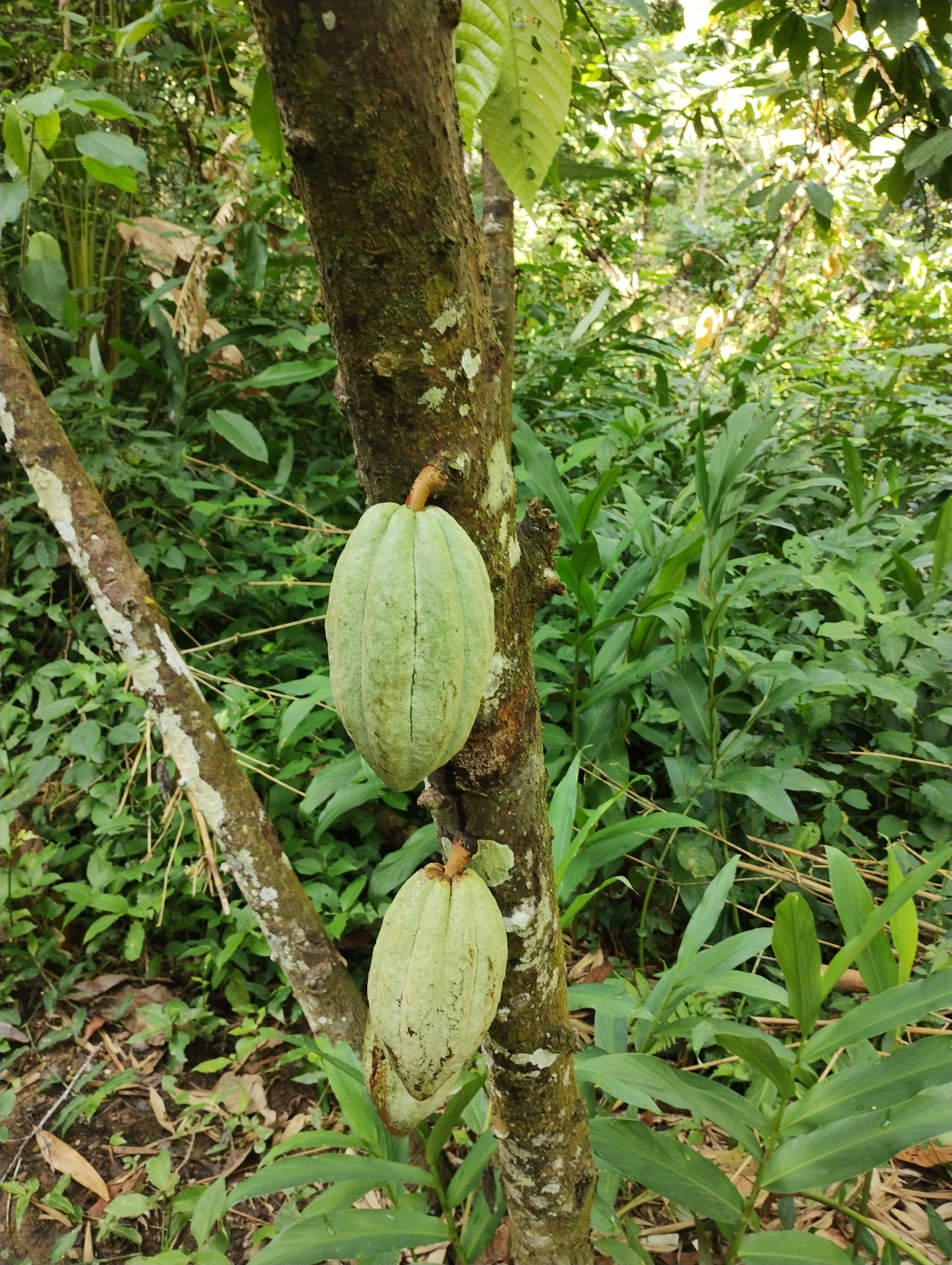
Cupuaçu is a tropical rainforest tree from the Amazon basin, and Theobroma grandiflorum is the closest relative to the cacao tree grown for chocolate. It is easily distinguished by its large, oblong, brown fuzzy fruits that can weigh up to 2 kg (4.4 lbs).
While cacao is grown for its seeds, this species is primarily harvested for its thick, white, aromatic fruit pulp which tastes like a blend of chocolate, pineapple, and pear. It requires a strictly tropical climate with high rainfall to produce a reliable yield.
Key Facts
- Water: High, needs 2000 mm (78 in) of annual rainfall
- Temperature: Never allow it to drop below 18 °C (64 °F)
- Soil: Deep, fertile, acidic soil with pH 5.0-6.5
- Harvest: Fruit falls naturally when ripe in late summer
Is Cupuaçu Right for Your Tropical Garden?
You should only grow Cupuaçu if you can provide year-round tropical heat and high humidity. This tree is native to the hot, wet lowlands of the Amazon and will fail in any region that experiences frost or prolonged dry spells. It is an understory species, meaning it prefers the filtered light found beneath taller canopy trees like the Brazil nut (Bertholletia excelsa).
Because it reaches heights of 5-10 m (16-33 ft) in cultivation, it requires significant vertical space and a wide berth for its spreading branches. Most growers in Brazil or Peru plant it in agroforestry systems where it can benefit from the shade of taller species. If you live in a temperate zone, you would need a very large, heated greenhouse to keep this tree alive.
Identifying Theobroma grandiflorum in the Wild
The most distinctive feature of the Cupuaçu is its large, woody, brown-skinned fruit that hangs directly from the branches. These fruits are oblong and covered in a fine, rust-colored down, reaching lengths of up to 25 cm (10 in). The leaves are equally impressive, often measuring 25-35 cm (10-14 in) long with a bright green upper surface and a pale, fuzzy underside.
Unlike many fruit trees, the flowers of Theobroma grandiflorum are cauliflorous, meaning they emerge directly from the trunk or older branches. These flowers are small, usually dark red or purple, and are pollinated by tiny flies rather than bees. The bark is smooth and greyish-brown, becoming slightly furrowed as the tree matures over its 20-30 year lifespan.
Ideal Light and Temperature for Cupuassu
The tree thrives best in partial shade with temperatures between 24-30 °C (75-86 °F). Direct, harsh sunlight can scorch the large leaves of young saplings, so providing a 50% shade cloth or planting near a taller nurse tree is necessary for the first three years. Once established, the tree can handle more light, but it still prefers the humid, dappled environment of its native Pará region.
Temperature stability is vital for fruit production. Growth slows significantly if temperatures drop below 20 °C (68 °F), and the tree may drop its leaves or die if exposed to 15 °C (59 °F) for extended periods. In its native range, the humidity rarely drops below 75%, a level that must be mimicked through misting or irrigation in drier climates.
Planting and Spacing Young Trees
Space your trees at least 6-7 m (20-23 ft) apart to allow for their wide, horizontal canopy. When planting, dig a hole twice the size of the root ball and enrich the soil with organic compost, as this species is a heavy feeder. Ensure the planting site has excellent drainage; while the tree loves water, it cannot tolerate ‘wet feet’ or standing water around the roots.
- Plant during the start of the rainy season to ensure establishment.
- Apply a thick layer of organic mulch to retain soil moisture.
- Protect young saplings from wind, which can tear the large leaves.
- Avoid disturbing the sensitive taproot during transplantation.
Watering and Soil Care for Theobroma
Maintain consistently moist soil throughout the year, as this tree does not have a natural dormancy period. In regions with a short dry season, you must provide supplemental irrigation to prevent the fruit from dropping prematurely. The soil should be rich in organic matter and slightly acidic, ideally with a pH between 5.0 and 6.0, similar to the forest floor of the Amazon.
Fertilize three times a year with a balanced organic fertilizer rich in potassium and phosphorus to support flowering. Micronutrients like magnesium and iron are often needed if the soil is too alkaline, which can cause the leaves to turn yellow between the veins. Avoid high-nitrogen fertilizers during the blooming phase, as this can encourage leaf growth at the expense of fruit.
When and How to Harvest Cupuaçu Fruit
The fruit is ready to harvest when it naturally falls from the tree onto the ground. Do not pull or cut the fruit from the branches, as it only reaches its full aromatic potential and sugar content once it detaches itself. In the Amazon, the main harvest season occurs between January and May, following the peak flowering period in the spring.
Once the fruit falls, it must be collected quickly to prevent insects or forest animals from damaging the thick rind. The woody shell is very hard and usually requires a machete or a heavy mallet to crack open. Inside, you will find 20 to 50 seeds surrounded by a dense, cream-colored pulp that is famously difficult to separate from the seeds without specialized tools.
Theobroma grandiflorum Seed Butter and Culinary Uses
The white pulp is used to make juices, ice creams, and jams, while the seeds are processed into a fat known as Cupuaçu butter. This butter has a melting point of approximately 30 °C (86 °F), making it softer than cacao butter and highly prized in the cosmetic industry for its ability to absorb water. It is traditionally used to moisturize skin and treat dry hair.
In Brazil, the seeds are sometimes fermented and roasted to create a chocolate-like product called ‘cupulate’. While it lacks the exact flavor profile of traditional chocolate made from cacao (Theobroma cacao), it is caffeine-free and has a distinctively fruity aftertaste. The pulp is also a significant source of vitamins C and A, as well as polyphenols and antioxidants.
Managing Witches Broom and Other Problems
The most serious threat to this tree is Witches’ Broom disease (Moniliophthora perniciosa), which causes abnormal, brush-like growth on the branches. This fungal pathogen can devastate entire orchards and is the same disease that affects cacao plantations. You must prune away and burn any infected branches immediately to prevent the spores from spreading to healthy tissue.
- Yellowing leaves: Usually a sign of iron deficiency or alkaline soil.
- Leaf spots: Often caused by fungal infections in overly stagnant air.
- Fruit rot: Occurs if ripe fruit is left on damp ground for too long.
- Spider mites: Can occur in indoor or greenhouse settings with low humidity.
Storing and Processing the Fruit Pulp
Fresh pulp must be refrigerated immediately and used within 2-3 days to prevent fermentation. Because the pulp is so high in natural sugars and moisture, it spoils rapidly at room temperature. For long-term storage, the pulp should be separated from the seeds and frozen in airtight containers, where it will maintain its flavor for up to 12 months.
The seeds can be dried and stored in a cool, dark place if you intend to extract the butter later. If you are making cupulate, the seeds must undergo a fermentation process similar to coffee beans to develop their complex flavors. The hard outer husks are often composted or used as a source of fuel in rural Amazonian communities.
Cupuaçu vs Cacao: Which Tree Is Which?
While both belong to the genus Theobroma, Cupuaçu has significantly larger fruit and lacks the deep ridges found on cacao pods. Cacao (Theobroma cacao) is grown specifically for its seeds to make chocolate, whereas the primary commercial value of Theobroma grandiflorum lies in its creamy pulp. Cacao trees are also generally smaller and more tolerant of varying tropical conditions than their Amazonian cousin.
In terms of chemistry, Cupuaçu contains theacrine instead of the higher levels of caffeine found in cacao. This results in a milder stimulating effect. The butter derived from Cupuaçu seeds is also more emollient and has a lower melting point than cacao butter, which is why it is preferred for lotions and lip balms rather than hard chocolate bars.
Year-Round Care for Cupuaçu
| Spring | Apply a balanced organic fertilizer and monitor for the emergence of cauliflorous flowers on the trunk. Increase watering frequency if the spring rains are delayed. |
|---|---|
| Summer | Ensure consistent soil moisture as the large fruits develop. Check the ground daily for fallen, ripe fruit and process them quickly to avoid spoilage. |
| Autumn | Prune any dead wood or branches showing signs of Witches’ Broom. Replenish the mulch layer with 10 cm (4 in) of leaf mold or compost. |
| Winter | Protect the tree from any temperature drops below 18 °C (64 °F). Reduce supplemental watering slightly but never let the soil dry out completely. |
Why Is My Cupuaçu Tree Struggling?
| What you see | Likely cause | What to do |
|---|---|---|
| Clustered, deformed branch growth | Witches’ Broom fungus | Prune infected branches 20 cm below the growth and burn the waste. |
| Yellowing between leaf veins | Iron or Magnesium deficiency | Apply a chelated micronutrient spray and check soil pH. |
| Premature fruit drop | Water stress or drought | Increase irrigation frequency and ensure the mulch layer is intact. |
| Brown, crispy leaf edges | Low humidity or wind burn | Misting the canopy and installing windbreaks can protect the foliage. |
Selected Cupuaçu Cultivars
- ‘BRS Carimbó’ – high-yielding Brazilian cultivar resistant to Witches’ Broom
- ‘Mamau’ – produces very large fruits with high pulp-to-seed ratio
- ‘Piauí’ – known for its smaller habit and sweet pulp
- ‘Coari’ – a wild-selection variety from the mid-Amazon region
Frequently Asked Questions
Does Cupuaçu contain caffeine?
No, it contains theacrine and theobromine, which provide a mild energy boost without the jittery effects associated with the high caffeine levels in coffee or cacao.
Is theobroma grandiflorum the same as the Theobroma bakery?
No, Theobroma is a botanical genus of trees, while the bakery chain in India is named after the Greek meaning of the word, 'food of the gods'.
Can I grow Cupuaçu from a grocery store seed?
It is difficult because the seeds are recalcitrant, meaning they lose viability within days of being removed from the fruit and must be planted immediately while still moist.
Is Cupuaçu butter better than Shea butter?
Cupuaçu butter can hold up to 440% of its weight in water, making it more hydrating than Shea butter, though both are excellent for skin care.
Is Cupuaçu safe for dogs?
No, it contains theobromine, the same compound that makes chocolate toxic to dogs and cats; keep all fruit and seed products away from pets.
Information about traditional or historical uses is provided for educational interest only and is not medical advice. Do not use any plant to treat a condition without speaking to a qualified professional.
Sources & Verification
Taxonomy and distribution are checked against the databases below. Care guidance is written for cultivated species only and reviewed by our editor. How We Build Plant Profiles →