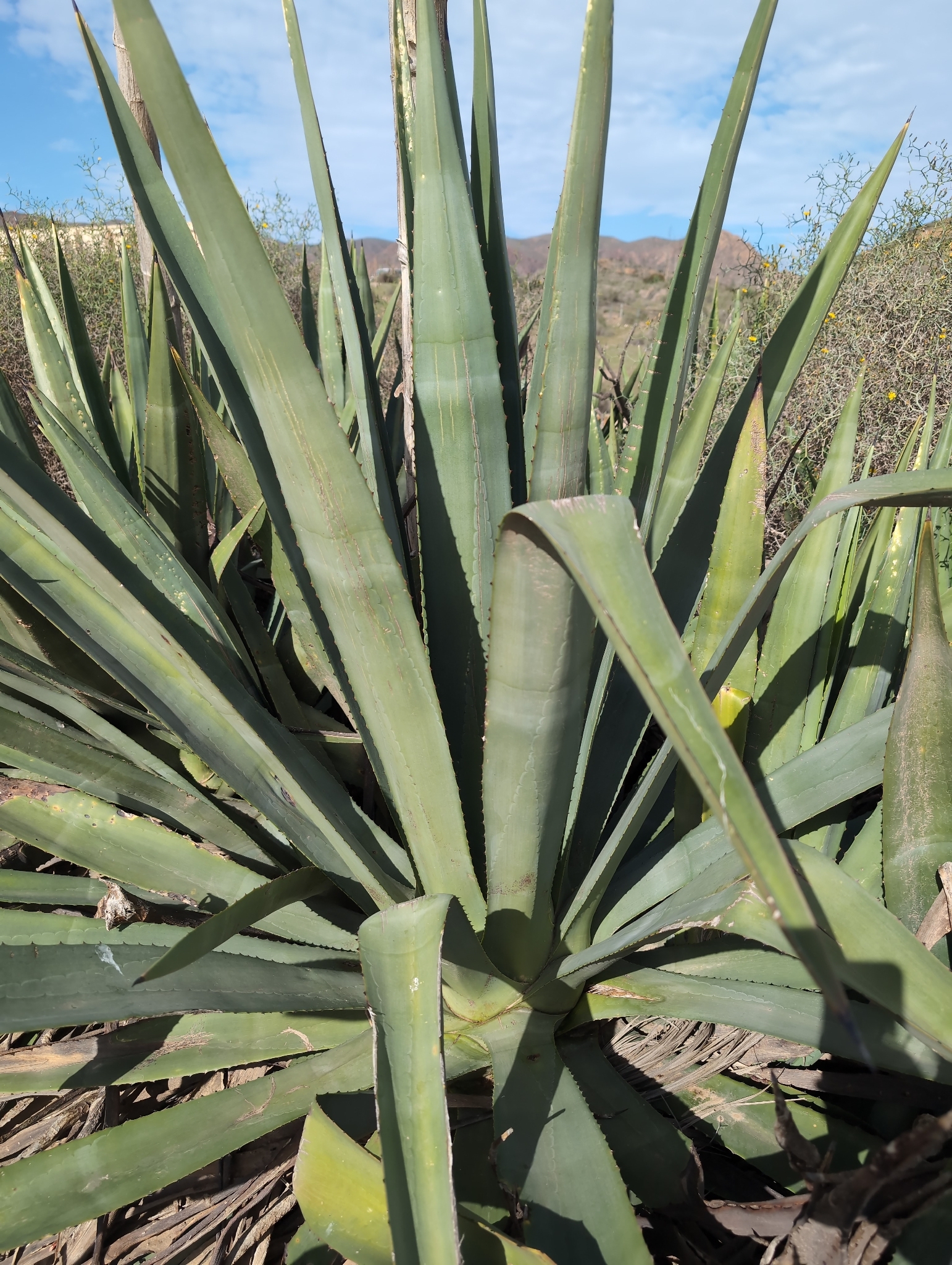
The foxtail agave (Agave attenuata) is a perennial succulent native to central Mexico, distinguished by its lack of sharp spines and wide, fleshy, pale green leaves. It forms a large, symmetrical rosette that eventually rises on a thick, woody stem as the plant matures.
You will find this plant easiest to manage in dry, frost-free climates where it can reach its full size without needing protection. It is a slow-growing choice for gardeners who want a dramatic architectural shape without the risk of painful punctures.
Key Facts
- Light: Full sun to partial shade
- Water: Allow soil to dry completely between waterings
- Hardiness: Zones 9b-11
- Size: Up to 1.5 m (5 ft) tall and wide
- Toxicity: Mildly toxic to pets and humans
Why Grow Foxtail Agave
Growing foxtail agave is a rewarding choice if you want a low-maintenance, sculptural plant that does not require constant pruning or protection from sharp thorns. It fits well in Mediterranean-style gardens or large containers where its soft, smooth foliage can provide a stark contrast to more rigid plants.
You will appreciate its predictable growth habit, which involves a central rosette that produces offsets, or ‘pups’, at the base. It is a reliable plant for xeriscaping, provided you have the space to accommodate its significant width as it reaches maturity.
How to Identify Foxtail Agave
You can identify the foxtail agave by its soft, ovate leaves that lack the terminal spines common in other Agave species. These leaves, which can reach 70 cm (28 in) in length, are arranged in a dense, symmetrical rosette that sits atop a stout, often-curved stem.
- Leaves are pale, glaucous green with a smooth, flexible texture.
- Mature plants develop a thick, woody trunk up to 1 m (3 ft) tall.
- The inflorescence is a long, arching raceme that resembles a fox’s tail.
- Flowers are greenish-yellow and appear after the plant reaches 5-10 years of age.
How Much Light Does Foxtail Agave Need
Provide your foxtail agave with at least 6 hours of direct sunlight daily for the most compact growth. While it tolerates partial shade, especially in extremely hot climates, too little light will cause the rosette to stretch and become leggy.
If you are growing this plant indoors, place it in the brightest window available, such as a south-facing exposure. Rotate the pot every few weeks to ensure even growth on all sides of the rosette.
Watering Requirements for Agave attenuata
Water your foxtail agave only when the top 5-8 cm (2-3 in) of soil is completely dry. During the active growing season, you might water once every two weeks, but reduce this frequency significantly during the winter months.
- Always check the soil moisture with your finger before adding water.
- Ensure the container or planting site has excellent drainage to prevent root rot.
- Avoid getting water into the center of the rosette, as this can lead to crown rot.
- If leaves begin to shrivel slightly, it is a sign the plant needs a deep soak.
Best Soil for Foxtail Agave
The foxtail agave requires a well-draining, gritty soil mix to thrive and prevent moisture from lingering around the roots. Whether in a pot or the ground, the soil must allow water to pass through quickly.
For container-grown plants, use a commercial cactus or succulent potting mix. If you are planting in the ground, amend heavy clay soils with coarse sand or pumice to improve aeration and drainage.
Ideal Temperature for Foxtail Agave
Keep your foxtail agave in temperatures between 18-24 °C (65-75 °F) during the growing season. While it can handle brief dips in temperature, it is not frost-tolerant and will suffer tissue damage if exposed to temperatures below 0 °C (32 °F).
In regions with cold winters, move container-grown plants to a sheltered, frost-free location. If the plant is in the ground, cover it with frost cloth during unexpected cold snaps to protect the foliage.
How to Propagate Foxtail Agave
You can easily propagate foxtail agave by removing the ‘pups’ or offsets that form at the base of the parent plant. This is the most efficient way to increase your collection, as the plant rarely produces viable seeds in cultivation.
- Wait until the pup is at least 10 cm (4 in) tall before separating it.
- Use a clean, sharp knife to cut the pup away from the parent stem.
- Allow the cut end to callous over for 2-3 days in a shaded area.
- Plant the calloused pup in a small pot with dry, well-draining succulent soil.
Common Foxtail Agave Problems
Most foxtail agave problems are related to overwatering and poor drainage, which lead to root and crown rot. Watch for soft, mushy leaves or a dark, discoloured base, which are clear indicators of moisture stress.
- Yellowing leaves: Often a sign of overwatering or poor soil drainage.
- Leggy growth: The plant is not receiving enough direct sunlight.
- Brown spots: Can indicate fungal infection from water sitting in the rosette.
- Wilting: Usually caused by extreme drought or damaged roots.
Foxtail Agave Through the Seasons
| Spring | Begin regular watering as temperatures rise. Check for new pups at the base and remove them if you wish to propagate. |
|---|---|
| Summer | Ensure the plant receives plenty of light. Water deeply but infrequently, allowing the soil to dry out completely between sessions. |
| Autumn | Gradually reduce watering frequency as growth slows. Prepare to move container plants indoors if frost is expected. |
| Winter | Keep the plant dry and cool. Avoid all fertilizing and ensure the plant is protected from freezing temperatures. |
Why Is My Foxtail Agave Failing
| What you see | Likely cause | What to do |
|---|---|---|
| Soft, mushy leaves | Overwatering | Reduce watering and ensure the soil drains quickly. |
| Pale, elongated leaves | Insufficient light | Move the plant to a location with more direct sun. |
| Brown, sunken spots on leaves | Fungal infection | Improve air circulation and keep the foliage dry. |
Frequently Asked Questions
What is the foxtail agave death bloom?
The death bloom refers to the fact that the plant is monocarpic, meaning it flowers once and then dies. However, it usually produces many pups at the base before this happens, ensuring the plant's survival.
How do you transplant a foxtail agave?
Transplant by digging up the entire root ball carefully, keeping as much of the root system intact as possible. Replant at the same depth in a new location with excellent drainage.
Is foxtail agave toxic to cats?
Yes, it is mildly toxic to cats and dogs if ingested. The sap can also cause skin irritation, so wear gloves when handling.
How do you trim a foxtail agave?
You can trim away dead or damaged lower leaves using a sharp, sterile blade. Cut the leaf as close to the main stem as possible without damaging the trunk.
Sources & Verification
Taxonomy and distribution are checked against the databases below. Care guidance is written for cultivated species only and reviewed by our editor. How We Build Plant Profiles →