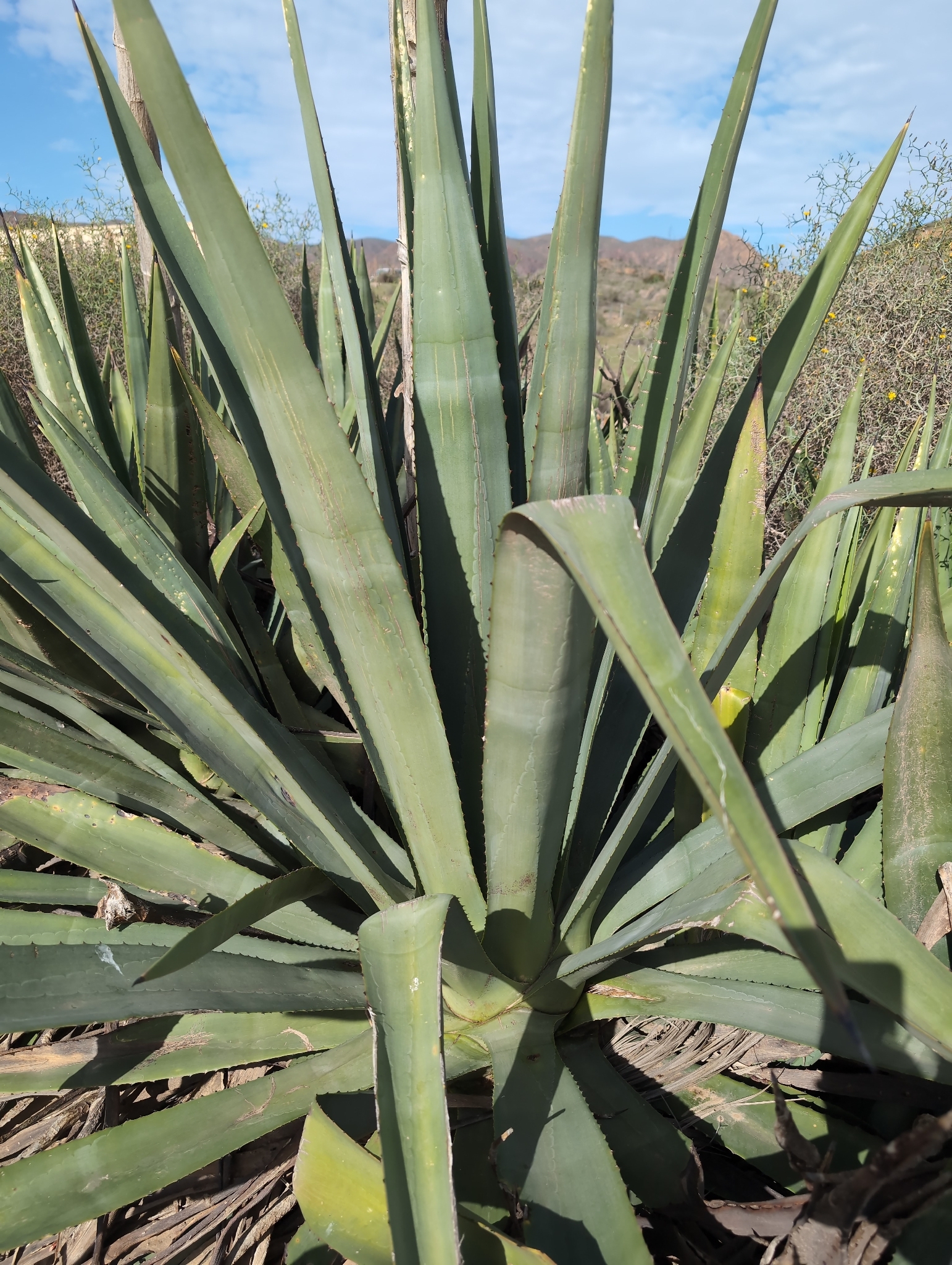
Blue Agave is a large-scale succulent native to the high-altitude volcanic soils of Jalisco, Mexico. Known scientifically as Agave tequilana, it is distinguished by its massive rosette of rigid, blue-grey leaves that can reach heights of nearly 2 m (6.5 ft).
This species is the primary economic driver for several Mexican states because its sugar-rich core is the only legal base for tequila production. Unlike many garden succulents, it requires a decade of growth before it reaches maturity for harvest or its single, spectacular bloom.
Key Facts
- Light: Full sun, 6-8 hours daily
- Water: Low; every 2-3 weeks in summer
- Hardiness: USDA Zones 9-11
- Growth: 6-10 years to maturity
- Soil: Gritty, volcanic or sandy mix
Growing Blue Agave in Your Garden or Pots
Blue Agave is a large-scale succulent that requires plenty of open space and intense sunlight to thrive. It is best suited for USDA zones 9 through 11, where winter temperatures rarely drop below freezing. If you live in a cooler climate, you must grow it in a heavy container that can be moved indoors or into a greenhouse during winter.
- Requires a minimum footprint of 2 m by 2 m (6.5 ft by 6.5 ft)
- Thrives in arid regions of Mexico, India, and the Southwestern United States
- Suits xeriscaping and low-maintenance gravel gardens
- Companion plants include the golden barrel cactus (Echinocactus grusonii) and desert spoon (Dasylirion wheeleri)
This species is monocarpic, meaning it grows for several years, flowers once, and then dies. You should plan your garden layout knowing that the parent plant will eventually need replacement by one of its pups or offsets. It is often grown alongside other succulents like Parry’s agave (Agave parryi) or whale’s tongue agave (Agave ovatifolia).
Identifying the Blue Agave Plant
The Blue Agave is a stemless succulent forming a massive rosette of stiff, sword-shaped leaves that reach up to 1.2 m (4 ft) in length. These leaves are a distinct glaucous blue-grey color, a result of a waxy coating that helps the plant retain moisture in the Jalisco heat.
- Leaf margins feature small, sharp brown teeth every 1-2 cm (0.4-0.8 in)
- Each leaf ends in a formidable terminal spine up to 3 cm (1.2 in) long
- Mature plants can reach a total height of 1.8 m (6 ft) before flowering
- The flower spike can reach 5-9 m (16-30 ft) in height
Unlike the softer leaves of Aloe vera, the foliage of Blue Agave is highly fibrous and rigid. The central core, or heart, becomes thick and bulbous as the plant stores carbohydrates for its eventual bloom. This heart is the part harvested for commercial use.
Best Light for Blue Agave Growth
To maintain its signature blue color and compact shape, Blue Agave requires at least 6 to 8 hours of full, direct sun every day. Insufficient light causes the leaves to stretch, turn a dull green, and lose their structural integrity.
- Position plants on south-facing slopes or against heat-reflecting walls
- Indoor specimens require high-intensity supplemental LED grow lights
- Young pups need slightly more protection from scorching afternoon sun than mature plants
In regions with extreme summer heat exceeding 40 °C (104 °F), the plant can tolerate very light afternoon shade. However, too much shade increases the risk of fungal infections and slows the growth rate significantly. Without enough sun, the plant will fail to produce the sugars needed for tequila production.
How Often to Water Blue Agave
You should water your Blue Agave only when the soil has dried out completely through the top 10 cm (4 in). While it is drought-tolerant, regular watering during the peak summer months encourages faster growth and a healthier appearance.
- Water once every 14-21 days during the active summer growing season
- Reduce watering to once every 6-8 weeks during the winter dormancy
- Always apply water at the base of the plant rather than into the central rosette
Overwatering is the most common cause of failure, leading to root rot that can kill the plant within weeks. If the leaves feel soft or appear yellow at the base, stop watering immediately and check the drainage. In humid climates, watering should be even less frequent.
The Best Soil for Agave tequilana
The ideal substrate for Blue Agave is a gritty, inorganic soil mix with a pH between 6.0 and 8.0. In its native Jalisco, it grows in volcanic soils that are rich in minerals but extremely free-draining.
- Use a mix of 50% pumice or perlite and 50% coarse sand or gravel
- Avoid standard potting soils that contain high amounts of peat moss or bark
- Ensure containers have multiple large drainage holes at the bottom
If planting in the ground, choose a raised bed or a sloped area to prevent water from pooling around the roots. Heavy clay soils must be amended with significant amounts of crushed rock or expanded shale to ensure survival during rainy periods. Proper drainage is more important than soil fertility for this species.
Temperature and Cold Hardiness
Blue Agave is a heat-loving species that performs best in temperatures between 21-32 °C (70-90 °F). It can survive brief dips down to -4 °C (25 °F), but prolonged frost will cause permanent scarring on the leaves or kill the core.
- Protect outdoor plants with frost blankets if temperatures drop below 0 °C (32 °F)
- Thrives in the high humidity of coastal India as well as the dry heat of Arizona
- Move container-grown plants indoors when nighttime temperatures consistently hit 10 °C (50 °F)
High temperatures are essential for the production of inulin, the complex sugar stored in the plant’s heart. In cooler climates, the plant will grow much slower and may never reach the size required for harvesting syrup or spirits. Heat stress is rare if the plant is well-established.
How to Propagate Blue Agave Pups
The most effective way to propagate Blue Agave is by removing the pups or offsets that emerge from the base of the parent plant. These small clones share the same genetic traits and will grow into mature rosettes over several years.
- Wait until the pup is at least 15 cm (6 in) wide before separating it
- Use a sharp, sterilized knife to cut the connecting rhizome
- Allow the cut end to callus over for 3-5 days before planting in dry soil
While you can grow this species from seed, it is a much slower process and seeds are only produced once in the plant’s lifetime. Pups are usually produced throughout the middle years of the plant’s life cycle, providing a steady supply of new specimens. This is the primary method used in commercial tequila plantations.
Common Pests and Diseases
The most devastating pest for this species is the Agave snout weevil (Scyphophorus acupunctatus), which bores into the heart to lay eggs. Once the larvae begin eating the core, the plant usually collapses and dies.
- Symptoms include a wilted central spike and a foul smell from the core
- Treat surrounding soil with preventative insecticides in early spring
- Remove and destroy infected plants immediately to prevent the weevil from spreading
Fungal leaf spot can also occur during humid, wet weather, appearing as black or brown lesions. Improve air circulation and keep the foliage dry to manage these outbreaks without heavy chemical use. Scale insects may occasionally appear on the undersides of the leaves.
Is Blue Agave Toxic?
Blue Agave is considered mildly toxic to humans and pets due to the presence of calcium oxalate crystals and saponins in its sap. Contact with the clear liquid inside the leaves can cause immediate skin irritation or a painful rash.
- Always wear thick gloves and long sleeves when pruning or handling the plant
- Ingestion can cause stomach upset, vomiting, and mouth irritation in dogs and cats
- The sharp terminal spines pose a physical danger to eyes and skin
If sap gets on your skin, wash the area immediately with cool, soapy water. While the processed syrup is safe for consumption, the raw sap is caustic and should never be tasted or applied to the skin as a remedy. Keep the plant away from high-traffic areas where children or pets play.
How Blue Agave Is Used for Alcohol and Syrup
The primary commercial value of Blue Agave lies in its high inulin content, which is concentrated in the central heart or piña. To produce tequila, the leaves are removed after 6 to 10 years of growth, and the core is roasted to convert starches into fermentable sugars.
- A mature piña can weigh between 40-90 kg (90-200 lbs) at harvest
- Agave syrup is produced by extracting and filtering the juice from the core
- Only plants grown in specific regions of Mexico can legally be used for Tequila
The harvesting process is labor-intensive and performed by skilled workers known as jimadores. They use a specialized long-handled tool called a coa to shear off the sharp leaves, leaving only the carbohydrate-rich heart for processing. This process kills the plant, as the entire core is removed.
Year-Round Care for Blue Agave
| Spring | Separate and replant pups that have reached 15 cm (6 in). Apply a low-nitrogen cactus fertilizer once as new growth begins. |
|---|---|
| Summer | Water every 2-3 weeks if the soil is bone dry. Monitor the central rosette for signs of Agave snout weevil infestation. |
| Autumn | Reduce watering to once a month. Stop all fertilizing to allow the plant to enter its natural winter dormancy. |
| Winter | Protect from frost with burlap or move containers indoors. Keep the soil almost completely dry to prevent winter root rot. |
Why Is My Blue Agave Dying? Quick Diagnosis
| What you see | Likely cause | What to do |
|---|---|---|
| Yellowing lower leaves | Overwatering | Stop watering immediately and ensure the soil is gritty and well-drained. |
| Collapsed central spike | Agave snout weevil | Remove the entire plant and destroy it to prevent the larvae from spreading. |
| Black spots on leaves | Fungal leaf spot | Increase air circulation and avoid getting water on the leaves during irrigation. |
Frequently Asked Questions
How long does it take for a blue agave plant to mature?
It typically takes 6 to 10 years for the plant to reach its full size and sugar content. In cooler climates, this process can take up to 15 years.
Does blue agave die after it flowers?
Yes, it is a monocarpic plant that spends its entire life cycle building energy for one massive bloom. After the seeds are produced, the main rosette withers and dies, though it often leaves pups behind.
What is the difference between blue agave and aloe vera?
Blue agave (Agave tequilana) has much larger, fibrous leaves with sharp teeth and a terminal spine, whereas Aloe vera has fleshy, gel-filled leaves. Agave also dies after flowering, while Aloe can bloom multiple times.
What are the benefits of blue agave?
It is primarily used as a source of agave nectar, a low-glycemic sweetener, and as the base for tequila. Traditionally, the fibers were used to make rope and the sap was used in folk medicine for its antimicrobial properties.
Can I grow blue agave in a pot?
Yes, you can grow it in a large, heavy container with excellent drainage. Ensure the pot is wide enough to accommodate the rosette and use a dedicated cactus potting mix.
Information about traditional or historical uses is provided for educational interest only and is not medical advice. Do not use any plant to treat a condition without speaking to a qualified professional.
Sources & Verification
Taxonomy and distribution are checked against the databases below. Care guidance is written for cultivated species only and reviewed by our editor. How We Build Plant Profiles →