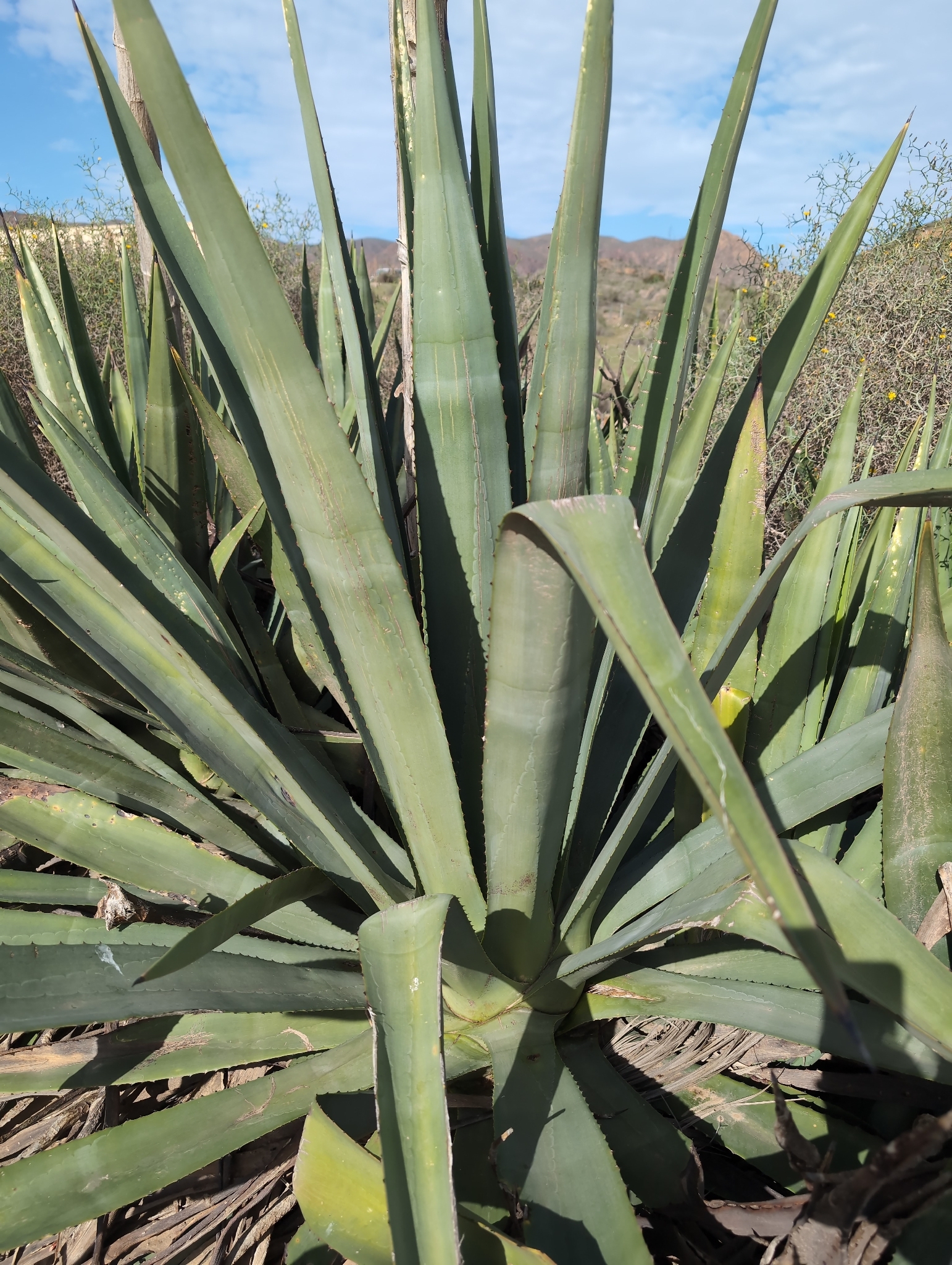
Sisal is a large, architectural succulent native to southern Mexico, recognized for its rosettes of stiff, sword-shaped leaves that produce the world’s most important natural leaf fiber. Belonging to the Agave sisalana species, it has been naturalized across Africa, Asia, and Brazil, where it thrives in arid environments that would kill most other crops.
Unlike the more common century plant, this species is almost entirely sterile and relies on bulbils or suckers for reproduction. It lives for nearly a decade before producing a single, massive flower spike and then dying, making its placement in your landscape a long-term structural decision.
Key Facts
- Water: every 3-4 weeks in summer; zero in winter
- Light: minimum 6-8 hours of direct full sun
- Soil: well-drained, alkaline limestone or sandy soils
- Fiber: extracted from 3-year-old leaves via decortication
- Hardiness: survives temperatures down to -2 °C (28 °F)
How Sisal Fits into Your Landscape
Sisal is best suited for large-scale xeriscaping or commercial plantations where its architectural form and utility can be fully utilised. It is a commitment of space and time, as a single specimen can eventually occupy a 3 m (10 ft) diameter circle. Because the plant is monocarpic, it will grow for several years, produce a massive flower spike, and then die, requiring you to manage the offspring it leaves behind.
- Space: Ensure at least 2 m (6.5 ft) of clearance from walkways to avoid injury from the sharp leaf tips.
- Climate: Ideal for arid regions with temperatures between 25-35 °C (77-95 °F).
- Maintenance: Suited for low-maintenance gardens where manual irrigation is restricted.
It is less suitable for small residential gardens or areas with high foot traffic due to its size and the potential for skin irritation from its sap. If you want a plant that provides a harvest, this species offers fiber for DIY projects or rope making.
The Look and Size of Agave sisalana
Sisal forms a dense, stemless rosette of sword-shaped leaves that can reach 2 m (6.5 ft) in height. Each leaf measures approximately 1.5 m (5 ft) long and 10-15 cm (4-6 in) wide, possessing a smooth or finely toothed margin and a sharp terminal spine. The foliage is typically a dull grey-green due to a waxy coating that helps the plant retain moisture in arid Mexican climates.
When the plant reaches maturity at 7-10 years, it produces a branched flower stalk, or mast, that can tower 6 m (20 ft) above the ground. The flowers are greenish-yellow and emit a strong, somewhat unpleasant odour to attract nocturnal pollinators. A single flowering event can produce up to 4,000 bulbils (miniature plantlets), ensuring the next generation is established before the parent plant collapses.
Optimal Site and Soil Requirements
This species requires full sun and exceptionally well-draining soil to thrive and produce high-quality fiber. It is naturally adapted to the arid limestone soils of the Yucatán Peninsula, meaning it tolerates high alkalinity and rocky substrates where other plants struggle. If you plant in heavy clay, the roots will likely rot during the first rainy season.
- Exposure: Minimum of 6-8 hours of direct sunlight daily.
- Soil Type: Sandy, loamy, or rocky soils with a pH between 6.0 and 8.0.
- Drainage: Must be planted on a slope or in raised beds if the local soil is dense.
While it can survive in partial shade, the leaves will become weak and elongated, and the fiber yield will drop significantly. In commercial settings, it is often grown in areas with an annual rainfall of 600-1500 mm (24-59 in), though it can survive on much less.
Planting and Establishing Sisal
When establishing a new plant, space specimens 2 m (6.5 ft) apart to allow for their significant mature spread. Planting is best done at the start of the rainy season to help the young bulbils or suckers develop a robust root system before the heat of summer. Avoid planting near underground pipes or foundations, as the rhizomes can be quite vigorous.
- Method: Plant suckers or bulbils in shallow holes, ensuring the crown is not buried.
- Timing: Late spring or early summer is ideal for non-tropical regions.
- Potting: Use a terracotta pot with a large drainage hole and a specialized cactus potting mix.
If you are starting from a bulbil, keep it in a nursery pot for the first year until it reaches a height of 20 cm (8 in) before transplanting it to its permanent location. This prevents the small plant from being overwhelmed by weeds or accidental foot traffic.
Care and Maintenance Schedule
Established plants require minimal intervention and thrive on neglect once their root systems are deep. In a garden setting, water only during prolonged droughts or when the leaves begin to show signs of shrivelling or thinning. Over-watering is the most frequent cause of failure, as the roots are highly susceptible to fungal pathogens in soggy soil.
- Watering: Provide deep watering once every 3-4 weeks during the peak summer heat.
- Feeding: Apply a low-nitrogen succulent fertiliser once in early spring to encourage leaf growth.
- Mulching: Use inorganic mulch like gravel or crushed stone to keep the base of the plant dry.
Avoid using organic mulches like wood chips, which retain too much moisture around the crown. If you are growing this for fiber, ensure the plant receives consistent sun, as shade reduces the strength and length of the internal fibers.
Pruning and Harvesting Leaves
Pruning this species is primarily a maintenance task to remove dead lower leaves and manage the sharp tips. In commercial plantations, the lower leaves are harvested for fiber once they reach an angle of 45 degrees from the stem, usually starting in the third year of growth. This encourages the plant to continue producing new foliage from the center.
- Leaf removal: Use a sharp machete or pruning saw to cut dead or yellowing lower leaves close to the trunk.
- Tip trimming: If planted near a path, the sharp terminal spines can be clipped with bypass pruners.
- Safety: Always wear thick gloves and long sleeves to protect against the spines and irritating sap.
Disposal of the large, heavy leaves should be planned, as they take a long time to decompose in a standard compost pile. Once the flower stalk begins to grow, pruning will not stop the plant’s life cycle; it is best to let it finish flowering and then harvest the bulbils.
Common Problems and Pests
The most serious threat to this species is the Sisal Weevil (Scyphophorus acupunctatus), which bores into the heart of the plant to lay eggs. Infestations often go unnoticed until the central leaves begin to wilt or the entire crown collapses. Look for small, circular holes at the base of the leaves and a fermented smell.
- Fungal spots: Colletotrichum agave causes dark, sunken lesions on the leaves during humid weather.
- Root rot: Caused by waterlogged soil, leading to a total plant collapse and a foul odour.
- Prevention: Ensure maximum airflow around the plants and avoid overhead watering.
If weevils are detected, infected plants should be removed and destroyed immediately to prevent the pests from spreading to the rest of the colony. Chemical treatments are rarely effective once the larvae are inside the core.
Winter Protection and Cold Hardiness
Sisal is a tropical species that cannot survive sustained temperatures below -2 °C (28 °F). In regions prone to frost, it must be grown in large containers that can be moved indoors or into a greenhouse for the winter months. Exposure to freezing temperatures causes the water-filled cells in the leaves to burst, leading to black, mushy spots.
- Frost blankets: Cover outdoor specimens with breathable frost cloth if a light freeze is predicted.
- Dry soil: Stop all watering in late autumn to ensure the plant is as dry as possible before the cold sets in.
- Indoor care: If moving inside, place the plant in the brightest possible spot and maintain temperatures above 10 °C (50 °F).
In USDA zones 9 and below, the plant is best treated as a temporary landscape feature or a container specimen. Prolonged damp cold is more lethal than a brief, dry overnight frost.
Uses of Sisal Fiber and Pith
The primary value of this species lies in its stiff leaf fibers, which are extracted through a mechanical process called decortication. Each leaf contains approximately 1,000 fibers that are traditionally used to manufacture marine rope, twine, and agricultural baler cord. In modern interiors, the fiber is woven into rugs, carpets, and wall coverings.
- Cleaning rugs: Blot liquid spills immediately with a dry cloth; never steam clean or soak sisal.
- Pet care: Use 6mm (1/4 in) or 8mm (5/16 in) unoiled sisal rope to replace worn sections on cat scratching posts.
- Recreation: High-quality dartboards are constructed from compressed sisal fibers that ‘heal’ after use.
Beyond textiles, the sugary pith of the plant can be fermented and distilled to produce a spirit similar to mezcal. In its native Mexico, the plant was traditionally used to treat skin ailments and as a diuretic, though modern use is strictly industrial.
Year-Round Care for Sisal
| Spring | Apply a low-nitrogen succulent fertilizer. Check the crown for signs of the Sisal Weevil (Scyphophorus acupunctatus). |
|---|---|
| Summer | Provide deep watering once every 3-4 weeks if rainfall is below 50mm (2 in). Harvest lower leaves for fiber if they reach a 45-degree angle. |
| Autumn | Reduce watering to zero as temperatures drop. Remove any bulbils from the flower stalk to prevent unwanted volunteers. |
| Winter | Protect from temperatures below -2 °C (28 °F) with frost blankets. Ensure the soil remains completely dry to prevent root rot. |
Sisal Leaf and Pest Problems Explained
| What you see | Likely cause | What to do |
|---|---|---|
| Holes at leaf base | Sisal Weevil | Remove and destroy infected plants immediately. |
| Mushy black leaves | Frost damage | Cut away damaged tissue and keep the plant dry. |
| Yellowing lower leaves | Natural aging or overwatering | Reduce watering frequency and check soil drainage. |
Popular Sisal Cultivars and Hybrids
- ‘H.11648’ – High-yielding hybrid used in commercial plantations.
- ‘Marginata’ – Yellow-edged leaves, often grown as an ornamental.
Similar Species and Companions
When selecting plants to grow alongside Sisal, choose drought-tolerant species that share its love for full sun and well-drained soil. It is frequently confused with other large succulents that have similar sword-shaped foliage but different growth habits. Identifying these differences helps in selecting the right plant for your specific climate.
- Mauritius hemp: Furcraea foetida looks similar but has brighter green, softer leaves.
- Blue agave: Agave tequilana has narrower, blue-tinted leaves and is the primary source of tequila.
- Century plant: Agave americana is larger and has more aggressively curved, blue-grey leaves.
- Spanish bayonet: Yucca aloifolia forms a distinct trunk and has much stiffer, sharper leaves.
Good companions include desert marigold (Baileya multiradiata) and various prickly pear (Opuntia) species, which provide contrasting textures and colours without competing for water.
Frequently Asked Questions
How do you clean a sisal rug?
Blot liquid spills immediately with a dry cloth and never use steam or excessive water. For pet stains, mist lightly with a 50/50 water and white vinegar solution then blot dry to prevent staining.
Is the sisal plant toxic to pets?
The sap is mildly toxic and contains saponins that cause skin irritation and dermatitis in both humans and pets. If ingested, it can cause stomach upset, though the sharp spines usually deter animals from eating it.
How do I replace sisal on a cat scratching post?
Remove the old rope, apply non-toxic hot glue to the post, and tightly wrap 6mm (1/4 in) unoiled sisal rope around the column. Ensure you use unoiled rope, as industrial versions often contain petroleum products harmful to cats.
What is the difference between sisal and hemp?
Sisal fiber comes from the leaves of the succulent Agave sisalana, while hemp fiber comes from the stem of the Cannabis sativa plant. Sisal is much stiffer and more resistant to salt water, making it better for marine rope.
How do you pronounce sisal?
It is most commonly pronounced SIGH-sul, though some regions and botanical circles use the pronunciation SEE-sul.
Information about traditional or historical uses is provided for educational interest only and is not medical advice. Do not use any plant to treat a condition without speaking to a qualified professional.
Sources & Verification
Taxonomy and distribution are checked against the databases below. Care guidance is written for cultivated species only and reviewed by our editor. How We Build Plant Profiles →