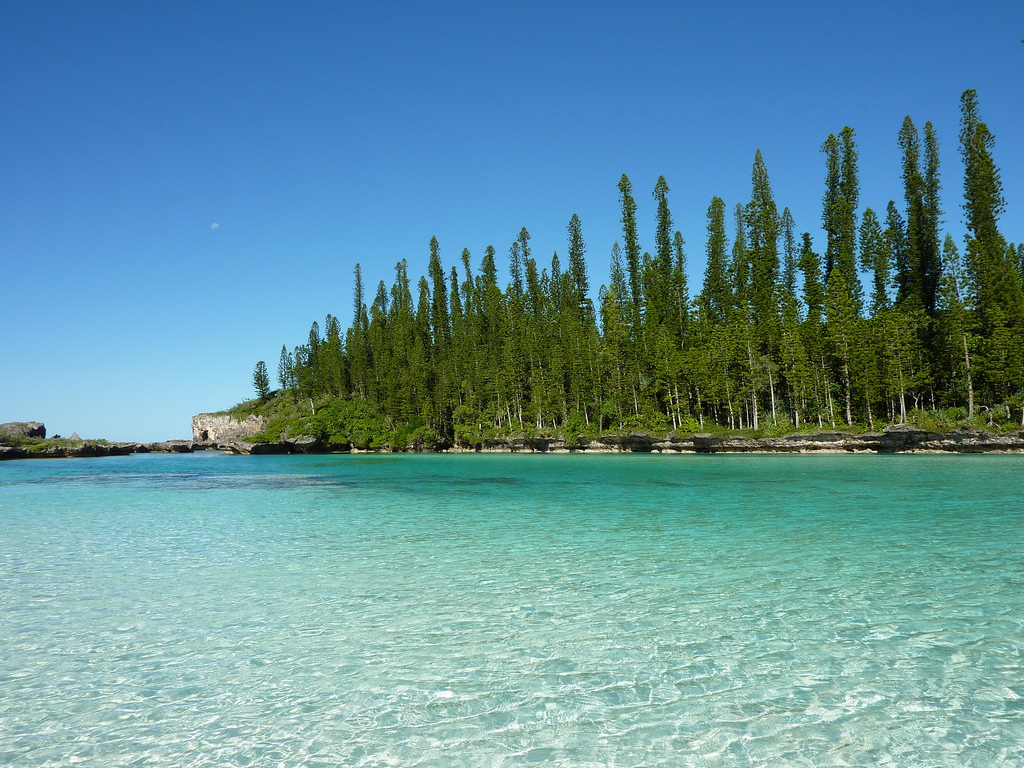
The Norfolk Island pine is a tropical conifer endemic to Norfolk Island in the Pacific Ocean, known for its perfectly symmetrical, tiered branches and soft needles. While it looks like a traditional evergreen, Araucaria heterophylla is not a true pine and cannot survive freezing temperatures.
This species functions as a long-lived indoor tree that maintains its pyramidal shape without pruning. It requires high humidity and bright light to prevent the lower branches from turning brown and falling off.
Key Facts
- Light: Bright indirect light or 3-4 hours of direct sun
- Water: Keep soil moist; water when top 2.5 cm (1 in) is dry
- Humidity: High levels (50%+) required to prevent needle drop
- Height: Reaches 1.5-2.5 m (5-8 ft) tall indoors
- Temperature: Keep between 18-24 °C (65-75 °F)
How Norfolk Island Pine Fits Your Home
You can expect a Norfolk Island Pine to grow about 15-30 cm (6-12 inches) per year when kept in ideal indoor conditions. It suits large rooms with high ceilings where its symmetrical, tiered branches have space to expand horizontally. Unlike many conifers, this species thrives in stable indoor temperatures between 18-24 °C (65-75 °F) and cannot tolerate frost.
This plant is frequently used as a “living Christmas tree” during December, but it requires year-round care to survive past the holidays. Because it is a slow-growing tree, it can remain in the same pot for several years before needing an upgrade. It is also a popular choice for large-scale bonsai due to its woody trunk and responsive growth.
Identifying a Norfolk Island Pine
A mature indoor Norfolk Island Pine typically reaches a height of 1.5-2.5 m (5-8 ft), though they can reach 60 m (200 ft) in their native habitat. The branches grow in distinct horizontal tiers or whorls from a central woody trunk, creating a pyramidal silhouette. This geometric regularity is the easiest way to distinguish it from true pines or the Cook pine (Araucaria columnaris).
- Leaves: Soft, bright green, awl-shaped needles about 1-1.5 cm (0.4-0.6 in) long.
- Bark: Grey-brown and slightly rough on older specimens.
- Shape: Pyramidal and symmetrical, resembling a star when viewed from above.
- Roots: A relatively small root system compared to the height of the tree.
Best Light for Norfolk Island Pine Indoors
Provide your Norfolk Island Pine with bright, indirect light for at least six hours every day. While it can tolerate some direct morning sun, harsh afternoon rays through a south-facing window may scorch the soft needles. If the light is too low, the tree will become leggy, and the distance between the branch tiers will increase significantly.
Rotate the pot 90 degrees every week to ensure the tree grows straight toward the light source. If left in one position, the trunk will lean permanently toward the window. In regions with low winter light, such as the UK or Northern US, using a full-spectrum grow light can prevent the lower branches from thinning out.
Watering Your Norfolk Island Pine
Water your tree when the top 2.5 cm (1 inch) of soil feels dry to the touch. This plant requires consistent moisture and will drop its lower branches if the root ball dries out completely. These lower branches do not grow back, leading to a “bare-bottomed” appearance that cannot be fixed.
- Use lukewarm water to avoid shocking the tropical roots.
- Empty the drainage saucer after 15 minutes to prevent root rot.
- Reduce watering frequency during the shorter days of winter.
- Check soil moisture every 5-7 days during the active summer growing season.
The Right Soil for Healthy Roots
Use a peat-based or pine-bark potting mix with an acidic pH between 4.5 and 5.5. Standard potting soils are often too alkaline and may lead to nutrient deficiencies over time. Adding one part coarse sand or perlite to two parts potting mix ensures the drainage required to prevent soggy roots.
Avoid using heavy garden soil or mixes with high clay content, as these compact and suffocate the roots. Because the tree can become top-heavy, use a heavy ceramic or terracotta pot to provide a stable base. Repotting should only happen every 3-4 years, as the roots are fragile and sensitive to disturbance.
Humidity and Temperature Requirements
Maintain a humidity level of 50% or higher to keep the needles soft and green. Indoor air in winter is often as low as 10-20%, which causes the needle tips to turn brown and brittle. Placing the pot on a tray filled with pebbles and water is an effective way to raise local humidity.
Keep the tree away from cold drafts, air conditioning vents, and radiators. Sudden temperature shifts or dry heat from a heater will cause rapid needle drop. This species is happiest when night temperatures do not fall below 13 °C (55 °F).
Feeding and Fertilizing Your Tree
Apply a balanced liquid fertilizer every two to four weeks during the spring and summer months. Use a formula with an N-P-K ratio like 10-10-10, diluted to half the strength recommended on the label. Over-fertilizing can lead to weak, spindly growth that cannot support the weight of the branches.
Stop all fertilization during the autumn and winter when the tree enters a period of slower growth. If you notice extremely pale green new growth, the tree may need a fertilizer specifically designed for acid-loving plants. Always apply fertilizer to moist soil to avoid burning the roots.
Can You Propagate Norfolk Island Pine?
Propagating a Norfolk Island Pine is most successful using fresh seeds or terminal tip cuttings taken from the very top of the tree. Cuttings taken from side branches will only ever grow horizontally, resulting in a lopsided, creeping plant rather than an upright tree. This unique growth habit makes home propagation very difficult for most growers.
- Seeds: Sow fresh seeds vertically in a sandy potting mix with the wing pointing up.
- Cuttings: Take a 10 cm (4 in) terminal leading shoot and use a rooting hormone with bottom heat.
- Water: Propagating in water is not recommended as it usually leads to stem rot.
- Air Layering: This can be used to shorten a tree that has reached the ceiling, but it is an advanced technique.
Is Norfolk Island Pine Toxic to Cats and Dogs?
The Norfolk Island Pine is considered toxic to cats and dogs by the ASPCA. While it is not usually lethal, ingesting the needles can cause significant gastrointestinal distress. The sharp needles can also cause physical irritation to the mouth and throat if chewed.
- Symptoms: Vomiting, diarrhea, and general lethargy.
- Skin: Some pets may develop a mild skin rash after brushing against the needles.
- Prevention: Keep the tree on a raised stand or use a physical barrier to prevent pets from eating fallen needles.
Year-Round Care for Norfolk Island Pine
| Spring | Increase watering as new growth appears. Resume feeding every 4 weeks and repot if roots are circling the bottom of the container. |
|---|---|
| Summer | Check soil moisture every few days. Shield from intense midday sun and ensure high humidity during heatwaves. |
| Autumn | Reduce fertilizer applications and gradually decrease watering frequency. Inspect needles for spider mites before bringing the plant inside from a patio. |
| Winter | Move the tree to the brightest possible spot. Use a humidifier to combat dry indoor air and stop all fertilizing until March. |
Why Is My Norfolk Island Pine Dying? Quick Diagnosis
| What you see | Likely cause | What to do |
|---|---|---|
| Lower branches turning brown and falling off | Low humidity or underwatering | Increase humidity to 50% and keep soil consistently moist. |
| Yellowing needles and limp branches | Overwatering or poor drainage | Ensure the pot has drainage holes and allow the top inch of soil to dry. |
| Tree leaning to one side | Uneven light source | Rotate the pot a quarter turn every week. |
| Thin, spindly growth between tiers | Insufficient light | Move the tree closer to a bright window or add a grow light. |
Norfolk Island Pine Varieties
- ‘Compacta’ – features a more dense, dwarf growth habit.
- ‘Glauca’ – has a distinct blue-green or silvery tint to the needles.
- ‘Albospica’ – a rare variety with white-tipped new growth.
Frequently Asked Questions
What is the difference between Norfolk Island Pine and Cook Pine?
The Norfolk Island Pine (Araucaria heterophylla) is perfectly symmetrical and upright, while the Cook Pine (Araucaria columnaris) often has a slender, leaning trunk and denser, shorter branches.
Why is my Norfolk Island Pine losing its needles?
Needle drop is usually caused by dry air or the soil drying out completely. Once a branch loses its needles, they will not grow back, so maintaining 50% humidity is essential.
How do I prune a Norfolk Island Pine that is too tall?
You cannot prune the top of a Norfolk Island Pine without destroying its symmetrical shape; the tree will stop growing upward and start growing multiple messy leaders. If it hits the ceiling, air layering the top is the only way to shorten it properly.
Can I plant my Norfolk Island Pine outside?
You can only plant it outside if you live in USDA zones 9-11, such as parts of Florida or Southern California. In any other climate, the first frost will kill the tree.
Can I grow Norfolk Island Pine as a bonsai?
Yes, it is a popular bonsai subject, but it requires careful wiring and must be kept in bright light to maintain its needle health.
Sources & Verification
Taxonomy and distribution are checked against the databases below. Care guidance is written for cultivated species only and reviewed by our editor. How We Build Plant Profiles →