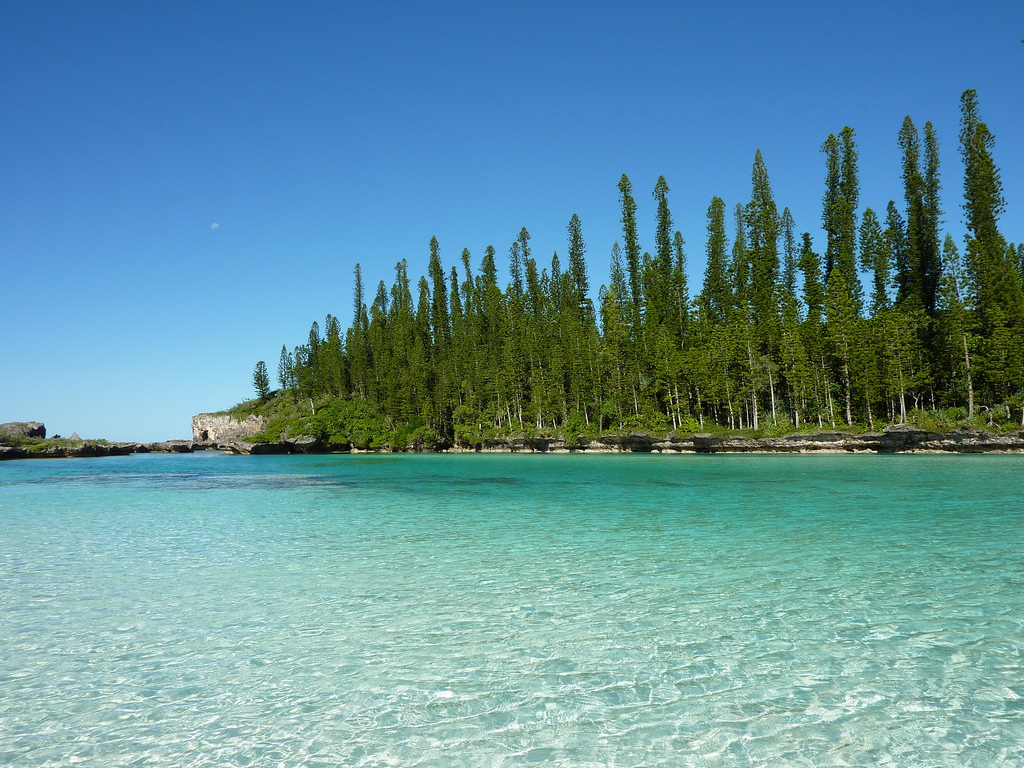
Hoop pine (Araucaria cunninghamii) is a massive conifer native to dry rainforests and coastal scrubs of eastern Australia and New Guinea, recognized by dark grey bark that peels in horizontal circular bands or hoops.
This forest emergent can reach 60 m (200 ft) in height outdoors, meaning you should never plant it close to residential foundations or power lines unless you intend to train it as a container bonsai.
Key Facts
- Light: Full sun to light partial shade
- Water: Low to moderate once established; drought-tolerant
- Mature height: 30–60 m (100–200 ft) in ground
- Hardiness: USDA zones 9b–11; damaged below -3 °C (27 °F)
- Soil: Well-drained loam or sand, pH 5.5–7.0
- Propagation: Fresh seed sown in warm spring temperatures
Is Hoop Pine Right for Your Property?
Hoop pine requires enormous open acreage to develop its natural symmetry and deep root system. In standard suburban yards, its eventual canopy spread and extensive lateral roots will heave concrete pavements and overwhelm nearby garden beds within two decades.
You will enjoy the best results with this conifer under specific conditions:
- Properties larger than 0.5 hectares (1.2 acres) with unrestricted vertical clearance
- Rural windbreaks and shelterbelts along coastal or subtropical ridges
- Specialized container culture as a potted specimen or trained bonsai
- Regeneration projects on eroded slopes requiring deep stabilization roots
If you lack acreage, keep the tree restricted to a container from the start, where root confinement reduces vertical growth without destroying its whorled silhouette.
How to Identify Hoop Pine (Leaves, Cones, and Bark)
You can identify hoop pine by its dark horizontal bark ridges that peel off in distinct rings resembling barrel hoops. Unlike the related Norfolk Island pine (Araucaria heterophylla), older hoop pine foliage forms dense, tufted clusters toward the ends of long, outward-arching branches.
Juvenile leaves differ markedly from adult foliage on the same tree:
- Juvenile needles: narrow, awl-shaped, 8–20 mm (0.3–0.8 in) long, and slightly prickly
- Adult leaves: short, scale-like, crowded, triangular, and 2–8 mm (0.08–0.3 in) long
- Bark: rough, charcoal-grey to dark brown, peeling horizontally rather than vertically
- Seed cones: ovoid to globular, 6–10 cm (2.4–4 in) long, breaking apart on the tree when ripe
Branches emerge along the central trunk in symmetrical horizontal whorls of 4 to 6, giving younger trees an upright pyramidal outline before the crown rounds out.
Mature Size and Growth Rate
Hoop pine reaches a typical mature height of 30 to 45 m (100 to 150 ft) in cultivation, occasionally achieving 60 m (200 ft) in native Australian rainforest canopies. Crown spread ranges between 8 and 15 m (26 and 50 ft) wide on open ground.
Seedlings grow slowly for their first 2 to 3 years, averaging roughly 30 cm (12 in) of vertical progress per season. Once roots anchor into subsoil moisture, vertical growth accelerates to 60–90 cm (24–36 in) per year until the tree approaches maturity at 30 to 50 years of age.
Trunk diameters regularly exceed 1 m (3.3 ft) across at breast height, requiring clearance of at least 10 m (33 ft) from buildings, driveways, and underground plumbing lines.
Ideal Sun, Soil, and Planting Site
Plant hoop pine in a position receiving full direct sunlight for at least 6 to 8 hours daily. Seedlings can tolerate light dappled shade during their first year, but mature trees lose lower foliage and lean aggressively if shaded by adjacent trees.
The root system requires specific ground conditions for longevity:
- Deep, loose volcanic loams, alluvial silts, or sandy clays
- Strictly free-draining soil that never holds standing water past 24 hours
- Soil pH between 5.5 and 7.0 for optimal micronutrient uptake
- Shelter from violent maritime gales during the initial 3 seasons of root development
Avoid heavy, compacted clay hardpans that induce collar rot and restrict the taproot from driving deep into the subsoil.
How to Plant Hoop Pine from Seed or Seedling
Hoop pine establishes best when planted in early spring or the start of the wet season while soil temperatures stay above 20 °C (68 °F). Sow seeds within 2 to 3 months of harvest, as Araucaria seed viability drops rapidly in ambient storage.
Follow these steps to germinate seed and plant out container stock:
- Push wing-tipped seeds vertically into seedling mix with the pointed tip facing downward
- Keep the germinating substrate uniformly moist at 22–26 °C (72–79 °F) until shoots appear in 14–28 days
- Dig planting holes twice as wide as the nursery container but identical in depth
- Leave the root flare exposed level with the surrounding soil grade
- Soak the planting zone thoroughly with 20 L (5.3 gal) of water to settle air pockets
Apply an 8 cm (3 in) layer of aged organic mulch over the root zone, keeping the mulch 10 cm (4 in) away from the trunk collar.
Watering and Feeding Established Trees
Water young specimens with 15 to 20 L (4 to 5 gal) per week during the initial two growing seasons whenever rainfall drops below 25 mm (1 in). Once the taproot establishes after year three, hoop pine withstands extended dry periods without supplemental irrigation.
Fertilizer is rarely necessary for landscape specimens planted in natural soil. For young trees or potted specimens, apply a balanced, slow-release native fertilizer with low phosphorus (such as NPK 10-2-6) once each spring around the drip line.
Potted bonsai trees need water whenever the top 2 cm (0.8 in) of potting mix dries out, supplemented with half-strength liquid fish emulsion applied monthly between October and March in the southern hemisphere (or April to September in the northern hemisphere).
Pruning Rules and Shaping for Bonsai
Never cut the central vertical leader of an in-ground hoop pine, as decapitation destroys the symmetry and causes weak, co-dominant stems that split in storms. Limit structural pruning on landscape trees to removing dead, diseased, or storm-damaged lower limbs back to the branch bark collar.
You can shape hoop pine into formal bonsai specimens using focused techniques:
- Wire branches using copper or aluminum wire in early autumn while wood remains pliable
- Pad the bark with raffia before applying wire, as soft hoop pine bark bruises easily
- Pinch back new soft green shoots throughout spring to force back-budding
- Protect lower whorls from shade to prevent permanent branch dieback
Never strip away healthy inner foliage abruptly; remove no more than 20 percent of total green foliage in any single growing season.
Common Hoop Pine Problems, Pests, and Diseases
The most frequent problem affecting young hoop pine is root rot caused by Phytophthora, resulting in rapid needle browning, limp growth tips, and stem collapse in waterlogged soils. Plant only in porous ground and discard contaminated container media.
Watch for several other common cultural issues and pests:
- Pine bark weevil (Aesiotes notabilis): larvae bore beneath bark after pruning damage or mechanical string-trimmer strikes
- Mealybugs and scale insects: settle in branch nodes and foliage tufts, producing sticky honeydew and black sooty mould
- Needle chlorosis: pale yellow leaves caused by nitrogen deficiency or high soil alkalinity above pH 7.5
- Sunscorch on trunk: happens when sudden clearing exposes previously shaded thin juvenile bark to direct afternoon sun
Treat scale outbreaks with horticultural oil sprays applied in the cool of early morning to avoid burning foliage needles.
Cold Hardiness and Winter Protection
Hoop pine survives short drops to -3 °C (27 °F) once mature, but young trees under 2 m (6.6 ft) tall suffer severe tip dieback or death if frosted. The species belongs naturally to frost-free subtropical and tropical zones, meaning sustained sub-zero temperatures are fatal.
In marginal zones (USDA 9b), protect saplings by erecting a burlap or frost-cloth windscreen supported by stakes over winter nights. Keep container-grown trees and bonsai indoors or under an unheated glasshouse bench whenever night forecasts fall below 2 °C (36 °F).
Reduce watering frequency by half during winter months to keep root tissues firm and dry, which raises cell sap concentration and increases cold resistance.
Timber, Plywood, and Mulch Uses
Commercial forestry utilizes hoop pine as a premier architectural softwood because its pale, fine-grained wood lacks distinct growth rings, knots, or resin canals. Queensland manages extensive plantations of this conifer specifically to supply high-grade rotary-peeled marine and interior plywood veneers.
The tree provides several distinct commercial and landscape materials:
- Hoop pine plywood: structural, acoustic, and architectural lining panels prized for uniform cream coloration
- Milled timber: clear joinery, interior mouldings, furniture framing, and match splints
- Hoop pine bark mulch: fibrous, curly bark shreds that interlock on slopes and resist washing away during torrential downpours
- Pine wood shavings: absorbent, low-dust bedding material used in livestock stalls and animal husbandry
Because the timber has low natural resistance to ground termites and marine borers, builders restrict untreated hoop pine wood to interior, above-ground applications.
Seasonal Care for Hoop Pine
| Spring | Sow fresh seeds in warm propagation trays kept at 22–26 °C (72–79 °F). Apply low-phosphorus slow-release fertilizer around the drip line of young trees, and begin pinching new shoot growth on bonsai specimens. |
|---|---|
| Summer | Water saplings weekly during prolonged dry periods, delivering 15–20 L (4–5 gal) per application. Inspect the branch crotches for mealybugs and scale, treating early with horticultural oil. |
| Autumn | Wire flexible branches on container plants and bonsai before active growth stops for winter. Refresh organic mulch around ground trees to an 8 cm (3 in) depth to conserve soil warmth and retain autumn rains. |
| Winter | Cut irrigation by half to avoid waterlogged roots in cool weather. Move potted bonsai to a frost-free shelter if local temperatures drop below 2 °C (36 °F), and remove any dead or storm-broken branches. |
Diagnosing Common Hoop Pine Problems
| What you see | Likely cause | What to do |
|---|---|---|
| Yellowing needles on lower interior branches | Natural shedding of shaded juvenile foliage, or root waterlogging | Improve soil drainage, ensure overhead light reaches the canopy, and verify roots are not standing in stagnant water. |
| Wilting leader and sudden branch dieback | Phytophthora root rot or pine bark weevil tunneling | Drench soil with a systemic phosphite fungicide and avoid nicking trunk bark with lawnmowers or pruning tools. |
| Sticky leaves covered in black powdery coating | Sooty mould growing on honeydew secreted by scale insects | Spray affected branch junctions with horticultural white oil or insecticidal soap every 14 days until pests vanish. |
| Curled, dry branch tips following a cold snap | Frost injury on tender current-season shoots | Erect frost blankets over young trees before sub-zero nights, and prune damaged tips back to healthy wood in late spring. |
Botanical Varieties of Hoop Pine
- var. cunninghamii – mainland Australian type, large forest tree with prickly juvenile foliage
- var. papuana – New Guinea variety found on mountain ridges, shorter leaves
Frequently Asked Questions
What is hoop pine used for?
Hoop pine is used primarily for architectural plywood, fine furniture joinery, interior mouldings, and commercial paper pulp. Landscapers also use its fibrous, curly bark as an erosion-resistant garden mulch on steep embankments.
How do you germinate hoop pine seeds?
Sow fresh seeds vertically with the pointed tip down in a well-drained seed mix, keeping the soil moist at 22–26 °C (72–79 °F). Seedlings emerge in 14 to 28 days if seed is fresh, as viability degrades rapidly after 90 days of open storage.
Can hoop pine be grown as a bonsai?
Yes, hoop pine responds well to bonsai cultivation when shaped using wired branches and regular shoot pinching in spring. Keep the potting substrate well-drained and protect potted trees from temperatures below 2 °C (36 °F).
Why is it called hoop pine?
It is called hoop pine because its dark grey outer bark breaks horizontally into circular, raised strips that encircle the trunk like hoops on a wooden barrel. These durable rings often remain intact on forest floors long after the inner wood has decayed.
How does hoop pine differ from Norfolk Island pine?
Hoop pine adult foliage clusters into tufts at branch tips, whereas Norfolk Island pine (Araucaria heterophylla) holds foliage along the full length of the branch in flat planes. Hoop pine bark forms horizontal hoops, while Norfolk Island pine bark peels in smaller vertical flakes.
Information about traditional or historical uses is provided for educational interest only and is not medical advice. Do not use any plant to treat a condition without speaking to a qualified professional.
Sources & Verification
Taxonomy and distribution are checked against the databases below. Care guidance is written for cultivated species only and reviewed by our editor. How We Build Plant Profiles →