
Sea Wormwood (Artemisia maritima) is a low-growing perennial shrub found along the salt marshes and coastal regions of Europe. It is part of the Asteraceae family and is recognised for its silvery, finely divided leaves that thrive in saline environments.
You will typically find this plant clinging to the edges of tidal estuaries and coastal dunes across northern Europe. It is not a plant for the garden border, as it requires the specific salt-rich conditions of its native habitat to survive.
Key Facts
- Type: Perennial coastal shrub
- Native Range: Atlantic coasts of Europe
- Family: Asteraceae
- Habitat: Salt marshes and coastal dunes
- Flowering: Late summer to autumn
How to Identify Sea Wormwood
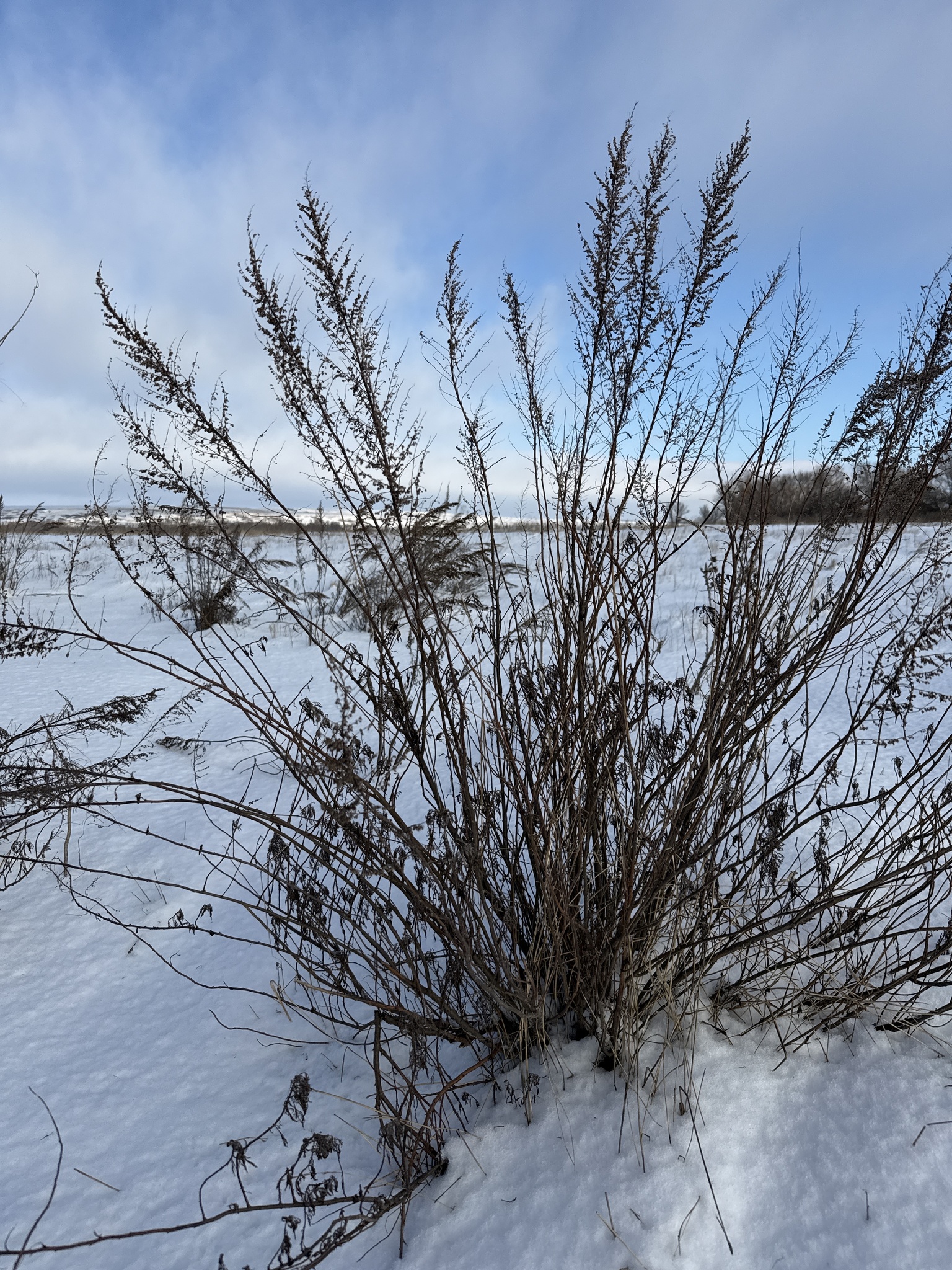
Sea Wormwood is a low, woody-based perennial that typically reaches heights of 20 to 40 cm (8 to 16 inches). Its stems are covered in a fine, white, woolly hair, which gives the entire plant a distinct greyish-green appearance.
The leaves are alternate and deeply divided into narrow, linear segments, measuring roughly 1 to 3 cm (0.4 to 1.2 inches) in length. In the late summer, the plant produces small, yellowish, tubular flowers arranged in narrow, drooping spikes. These flower heads are inconspicuous but provide a key feature for botanical identification during the autumn months.
Native Habitat and Distribution
This species is strictly a coastal specialist, restricted to the Atlantic and Baltic shorelines of Europe. It thrives in salt marshes, tidal flats, and the upper reaches of coastal dunes where few other plants can tolerate the high salinity.
Its range extends from the western coasts of France and the British Isles, stretching northwards to Norway and eastwards into the Baltic States and northwestern Russia. It is rarely found more than a few kilometres from the sea, as it requires the specific soil chemistry and moisture levels provided by maritime environments.
Ecological Role of Artemisia maritima
Sea Wormwood acts as a pioneer species in salt marsh ecosystems, helping to stabilise loose, sandy, or silty soils with its root system. It plays a role in the local food web, providing shelter for small invertebrates and insects that inhabit the intertidal zone.
Because it is a halophyte, it has evolved mechanisms to excrete excess salt through its leaves, which contributes to the nutrient cycling of the marsh. It is an essential component of the vegetation structure in European estuaries, where it often grows alongside sea lavender (Limonium vulgare) and sea purslane (Atriplex portulacoides).
Historical and Medicinal Uses
Sea Wormwood was traditionally used in herbal medicine as an anthelmintic to treat intestinal parasites, due to the presence of santonin. It was historically gathered by coastal communities and dried for use in various infusions and tinctures.
While it has been mentioned in historical texts regarding its past medicinal applications, modern science identifies these compounds as potentially toxic. It is never used as a food ingredient or in commercial beverages, and any claims suggesting its inclusion in soft drinks like Coca-Cola are entirely unfounded myths.
Is Sea Wormwood Toxic?
Sea Wormwood is considered toxic if ingested by humans or animals due to the presence of volatile oils, including thujone. These compounds can cause significant health issues, including neurological symptoms, if consumed in concentrated forms.
You should never attempt to harvest or consume this plant for medicinal or culinary purposes. Its chemical composition is complex, and the concentration of active compounds varies significantly depending on the specific growing conditions and the time of year the plant is harvested.
Similar Species to Sea Wormwood
You might confuse Sea Wormwood with other members of the Artemisia genus, specifically common mugwort (Artemisia vulgaris) or field wormwood (Artemisia campestris). These species share the characteristic aromatic foliage but differ in their habitat and physical structure.
- Common mugwort (Artemisia vulgaris) grows much taller, often reaching 1.5 m (5 ft), and is found in disturbed inland soils.
- Field wormwood (Artemisia campestris) lacks the strong, pungent scent of Sea Wormwood and typically grows in dry, sandy inland heaths.
- Sea wormwood is distinguished by its compact, prostrate habit and the specific woolly, white-grey hairs covering its stems.
Frequently Asked Questions
Is Sea Wormwood used in Coca-Cola?
No, Sea Wormwood is not an ingredient in Coca-Cola. This is a persistent urban legend with no basis in the actual recipe or production of the beverage.
Can you grow Sea Wormwood in a home garden?
It is generally not possible to grow Sea Wormwood in a standard garden. It requires highly specific, saline-rich coastal conditions that are nearly impossible to replicate in a typical soil environment.
What is the medicinal significance of Artemisia maritima?
Historically, it was used as an anthelmintic, but it is not recommended for any modern use. It contains toxic compounds that pose health risks if ingested.
How can I tell Sea Wormwood apart from other wormwoods?
Sea Wormwood is identified by its low, creeping growth habit and its exclusive habitat in coastal salt marshes. Other wormwoods typically grow taller and are found in inland, drier environments.
Information about traditional or historical uses is provided for educational interest only and is not medical advice. Do not use any plant to treat a condition without speaking to a qualified professional.
Sources & Verification
Taxonomy and distribution are checked against the databases below. Care guidance is written for cultivated species only and reviewed by our editor. How We Build Plant Profiles →
More in Artemisia
Sweet Wormwood
Artemisia annua
☀️ Full Sun 💧 Moderate

Capillary Wormwood
Artemisia capillaris
☀️ Full Sun 💧 Low
Southernwood
Artemisia abrotanum
☀️ Full Sun 💧 Low

Mugwort
Artemisia vulgaris
☀️ Full Sun 💧 Moderate

Wormwood
Artemisia absinthium
☀️ Full Sun 💧 Low

Big Sagebrush
Artemisia tridentata
☀️ Full Sun 💧 Low