

Mugwort is a robust herbaceous perennial belonging to the daisy family Asteraceae, scientifically known as Artemisia vulgaris. Native across temperate Europe and Asia, it is widely recognized for its deeply lobed leaves that feature dark green upper surfaces and silvery-white, woolly undersides.
You will frequently encounter this plant along roadsides, railway embankments, and waste grounds where soils are disturbed and nitrogen-rich. Managing this species requires attention to its aggressive root system, which allows it to form dense, persistent colonies.
Key Facts
- Type: Herbaceous perennial
- Height: Up to 2.0 m (6.5 ft)
- Foliage: Silver undersides
- Habitat: Disturbed soils
- Toxicity: Mildly toxic in large amounts
Living with Mugwort
Living near mugwort means managing a plant that spreads rapidly through underground rhizomes and copious seed production. Control requires persistent physical removal because leaving even a small fragment of root in the soil allows the plant to regenerate quickly.
- Monitor property borders and waste areas for early spring shoots.
- Pull plants before seeds mature in late autumn to prevent wider dispersal.
- Wear gloves when handling mature stems to avoid skin irritation from plant oils.
While some foragers and herbalists appreciate its historical uses, property owners often treat it as a persistent weed. Establishing competitive ground covers or desirable shrubs helps suppress spontaneous establishment in open garden patches.
How to Identify Mugwort
Identifying mugwort is straightforward when you examine the distinct bicolor foliage and aromatic scent of the crushed leaves. The key diagnostic feature is the stark contrast between the dark green upper leaf surface and the densely white-hairy underside.
- Stems grow 1.0 m to 2.0 m (3.3 ft to 6.5 ft) tall and often display a distinct reddish-purple tinge.
- Leaves are deeply pinnately lobed with narrow segments, measuring 5.0 cm to 10.0 cm (2.0 in to 3.9 in) in length.
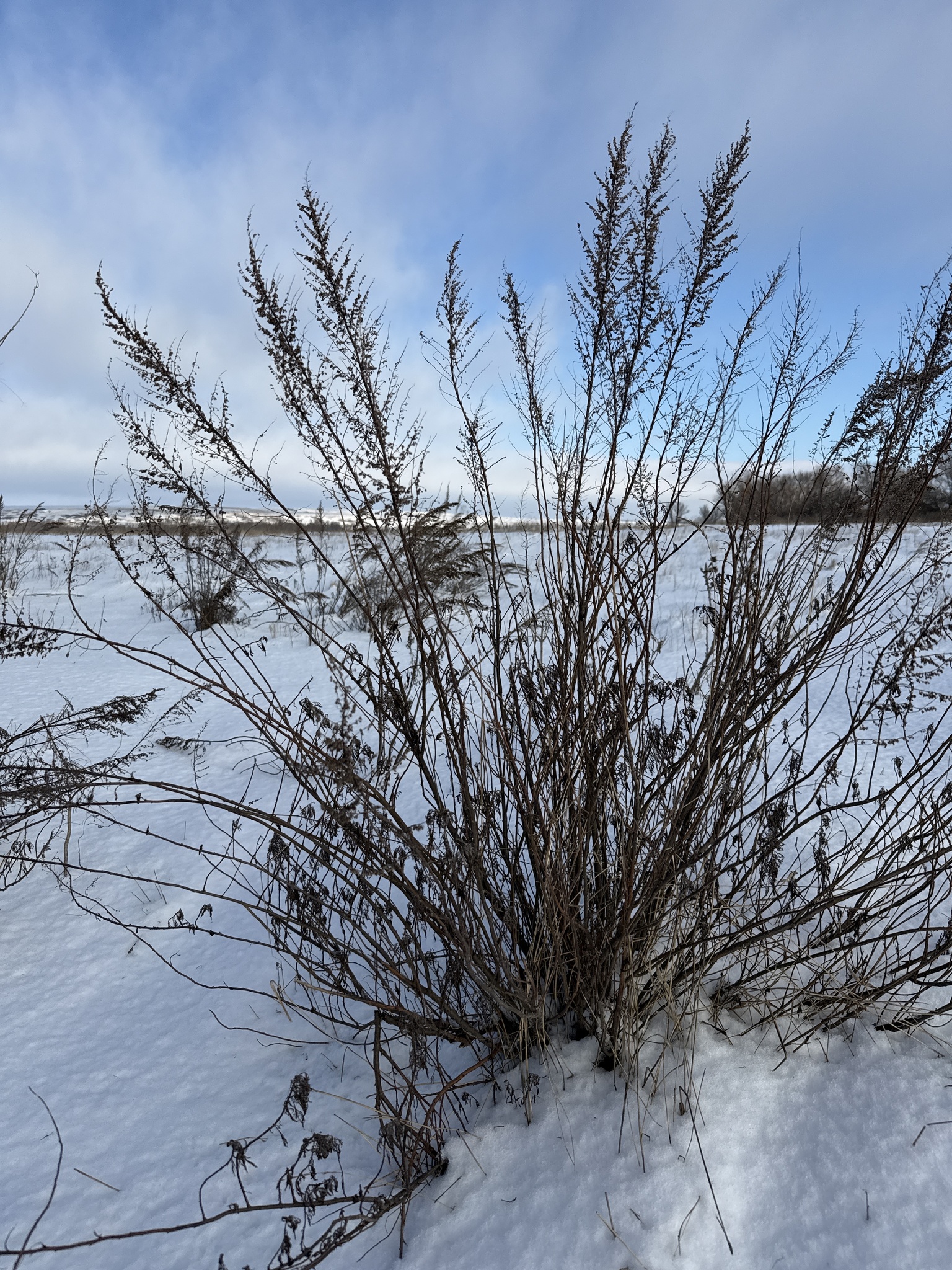
- Flowers appear in dense, narrow panicles at the stem tips from July through September, featuring small, inconspicuous yellowish or reddish-brown flower heads.
- Crushed foliage releases a sharp, sage-like aroma distinct from related species like wormwood (Artemisia absinthium).
As the plant matures into late summer, the lower leaves begin to wither while the upper floral spikes continue to elongate. This tiered growth habit helps separate it from other Asteraceae members found in similar waste habitats.
Where Mugwort Grows Naturally
Mugwort thrives primarily in disturbed habitats across temperate regions of the Northern Hemisphere. You will find it most abundantly in full sun on nitrogen-enriched soils that have been altered by human activity.
- Roadsides, ditch banks, and railway clearances
- Abandoned agricultural fields and neglected urban lots
- Riverbanks and floodplains where soil is occasionally deposited
Although it tolerates partial shade near woodland edges, vigorous stands require open sunlight to reach their maximum height. Soil compaction rarely stops root expansion, allowing colonies to persist in heavily trodden ground.
Mugwort Ecology and Wildlife Interactions
Mugwort interacts with a specialized community of insects and provides essential late-season resources for pollinators. Wind pollination is the primary method of reproduction, releasing large quantities of pollen into the summer air.
- Serves as a larval host plant for several moth species, including the burdock borer (Apamea devastator).
- Provides structural cover for small mammals and ground-nesting birds during the autumn months.
- Produces allelopathic chemicals in its roots that inhibit the germination of competing plant seeds nearby.
These biochemical secretions give established colonies a competitive advantage over slower-growing native wildflowers in disturbed zones. The dense root network also stabilizes loose soils on slopes and riverbanks against erosion.
Conservation Status of Mugwort
Mugwort maintains a conservation status of Least Concern globally due to its wide distribution and aggressive colonizing ability. Population levels remain exceptionally stable across both native Eurasian ranges and introduced North American habitats.
- Classified globally by the IUCN as Least Concern (LC).
- Exhibits invasive tendencies outside its native range, displacing local flora in parts of North America.
- Requires no conservation management or protective cultivation efforts.
Because human disturbance continually creates new open ground, this species adapts readily to shifting landscapes. Its capacity to survive heavy grazing and mowing ensures long-term population security.
Traditional Uses of Mugwort
Mugwort has a long history of traditional application in herbalism, culinary practices, and cultural rituals across Europe and Asia. Historical records show it was traditionally used to flavor fatty meats and to brew bitter teas intended to support digestion.
- Dried aerial parts were incorporated into herbal pillows designed to encourage vivid dreams.
- Leaves were historically brewed into infusions or applied externally as poultices for minor skin complaints.
- Traditional practitioners utilized extracts in various preparations, though modern safety standards urge caution due to potent active compounds.
The plant contains thujone and other volatile oils that can be toxic in concentrated doses. Contemporary herbal use has largely diminished in favor of better-documented botanicals.
Plants Similar to Mugwort
Distinguishing mugwort from related or superficially similar species requires looking closely at leaf shape and scent. Common ragweed (Ambrosia artemisiifolia) is the most frequent look-alike, though its leaves lack the distinctive white undersides.
- Wormwood (Artemisia absinthium) features a more silvery appearance overall and an intensely bitter fragrance.
- Common tansy (Tanacetum vulgare) displays button-like yellow flower heads and unlobed, fern-like leaves without white undersides.
- Western mugwort (Artemisia ludoviciana) has leaves that remain white and hairy on both upper and lower surfaces.
Checking the underside of the leaf is the fastest method to confirm identification in the field. If the lower surface is pure white and woolly while the top is dark green, you are observing mugwort.
Frequently Asked Questions
How do you use the mugwort plant safely?
Mugwort plant material should be used with extreme caution, as internal consumption of concentrated extracts or large quantities can cause toxicity due to its thujone content. Most modern applications are restricted to external uses or traditional herbal crafts like moxibustion.
What are the benefits of mugwort skin care products?
Mugwort extract is utilized in Korean skin care formulations for its soothing and antioxidant properties, helping to calm irritated or redness-prone skin. Toners, masks, and essences featuring the ingredient target sensitive complexions.
What is mugwort essence and how does it work?
Mugwort essence is a concentrated liquid skincare treatment formulated with botanical extracts to hydrate and balance the skin barrier. It works by delivering calming plant compounds directly to the epidermis after cleansing.
How do you provide proper mugwort care when cultivating it?
Mugwort care requires very little effort because the plant adapts to poor soils and demands full sun with moderate watering. However, because it spreads aggressively through underground roots, you should grow it in a contained area to prevent it from taking over.
Is mugwort toxic to pets?
Mugwort is mildly toxic to cats and dogs if ingested in large amounts because it contains volatile oils that cause digestive irritation. Pets generally avoid grazing on it due to its strong bitter flavor and aroma.
Information about traditional or historical uses is provided for educational interest only and is not medical advice. Do not use any plant to treat a condition without speaking to a qualified professional.
Sources & Verification
Taxonomy and distribution are checked against the databases below. Care guidance is written for cultivated species only and reviewed by our editor. How We Build Plant Profiles →
More in Artemisia

Wormwood
Artemisia absinthium
☀️ Full Sun 💧 Low

Chinese Mugwort
Artemisia argyi
☀️ Full Sun 💧 Moderate

Big Sagebrush
Artemisia tridentata
☀️ Full Sun 💧 Low
Southernwood
Artemisia abrotanum
☀️ Full Sun 💧 Low
Sweet Wormwood
Artemisia annua
☀️ Full Sun 💧 Moderate

Tarragon
Artemisia dracunculus
☀️ Full Sun 💧 Low