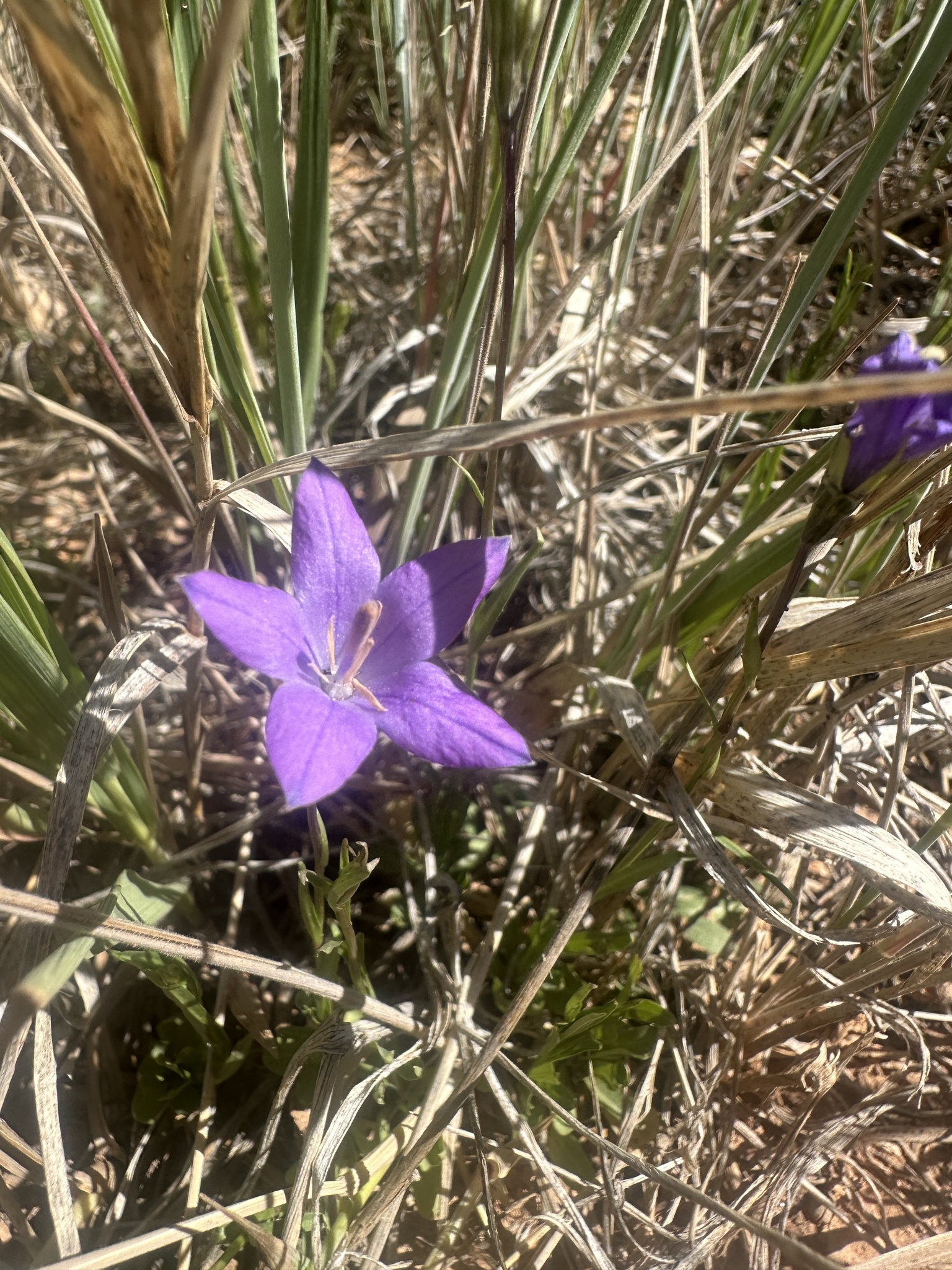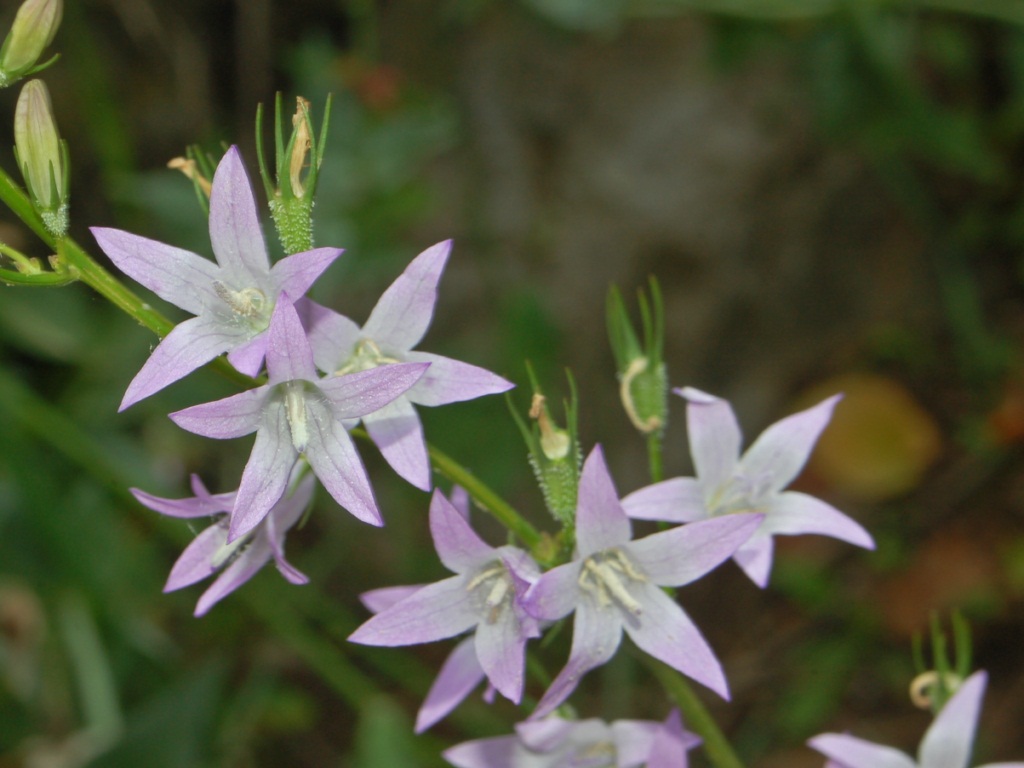
Rampion bellflower (Campanula rapunculus) is a biennial herb native to Europe, Western Asia, and North Africa that produces pale lilac-blue bells and a fleshy, edible taproot.
You must harvest the roots during the first autumn or winter before the plant bolts into flower, as second-year flowering stems turn the taproot tough and unpalatable.
Key Facts
- Plant type: Biennial edible vegetable and ornamental herb
- Edible parts: First-year taproots and tender rosette leaves
- Sunlight: Full sun to partial shade
- Root harvest: October to March of year one
- Flower color: Pale blue to light violet, rarely white
Growing Rampion Bellflower in the Kitchen Garden
Rampion bellflower is grown as a cool-season biennial crop where you treat it as an annual root vegetable or let it overwinter for summer flowers. It occupies garden beds for 6 to 8 months before the primary root harvest begins in late autumn.
The plant suits kitchen gardeners looking for traditional heirloom crops that provide fresh salad greens through frost and snow. Unlike standard salad greens that decline under cold temperatures, its rosette leaves stay green through moderate freezes.
If you leave the crop in the ground for its second season, it changes form completely. The basal rosette elongates into stiff flowering spires that attract solitary bees and hoverflies from May to July.
How to Identify Campanula rapunculus
You can identify rampion bellflower by its spindle-shaped, white taproot measuring 5-10 cm (2-4 in) long and its basal rosette of spoon-shaped, wavy-margined leaves.
In its first year, the plant remains a low rosette 15-20 cm (6-8 in) wide with leaves that narrow gradually into short stalks. In the second spring, an erect, ribbed, slightly rough stem grows 40-100 cm (16-40 in) tall, branching in its upper half into a narrow panicle.
- Root: White, fleshy, radish-like spindle tapering to a thin point.
- Leaves: Basal leaves are obovate to lanceolate, 5-8 cm (2-3 in) long; upper stem leaves are linear and sessile.
- Flowers: Five-lobed bells 1.5-2 cm (0.6-0.8 in) long, split halfway into narrow, spreading petals of pale violet-blue.
- Seed capsule: Erect, three-celled capsule opening by pores near the upper rim.
Soil and Sunlight Needs
Rampion bellflower requires full sun to partial shade and light, stone-free soil with a pH between 6.0 and 7.5. Loose soil allows the taproots to grow straight and smooth without forking.
Heavy clay compresses the roots and makes digging difficult during winter harvests. You can loosen compact beds by working in coarse sand and mature compost before sowing.
- Light: At least 5-6 hours of direct sun daily; tolerates dappled afternoon shade in hot inland climates.
- Soil texture: Sandy loam or sifted garden soil cleared of stones.
- Moisture: Even moisture without standing water; waterlogged winter soil rots the crowns.
How to Sow Rampion Bellflower Seeds
Sow seeds outdoors from April to June directly where the plants are to grow, as the taproots do not transplant well.
The seeds are minute, dust-like particles that germinate in 10-14 days at 15-20 °C (59-68 °F). Mix the fine seed with dry sand before scattering to prevent dense clumping along the seed drill.
- Rake the seedbed until the surface has a fine, level tilth.
- Press seeds into the surface or cover with no more than 2 mm (0.08 in) of fine soil, as they need light to germinate.
- Water with a fine-rose watering can to avoid washing the seeds away.
- Thin emerging seedlings in two rounds until the final spacing is 10-15 cm (4-6 in) apart.
Routine Care and Watering
Water young plants consistently to maintain moderate, uniform soil moisture throughout the summer growing period. Dry spells trigger premature flowering stalks in year one and leave the roots stringy and bitter.
Mulch the bed with a 3 cm (1.2 in) layer of shredded leaves or straw once the seedlings reach 8 cm (3 in) in height. This regulates soil temperature and prevents moisture loss during midsummer heat.
Do not apply high-nitrogen synthetic fertilizers. Excess nitrogen promotes rapid leaf growth at the expense of root density and encourages fungal leaf spotting.
Harvesting Rampion Roots and Greens
Harvest rampion roots from October through February, digging them with a hand fork after the first light frosts have sweetened their flavor. Frost triggers the conversion of starches into sugars within the root tissues.
You can harvest the young outer leaves continuously from late summer onward, cutting 2-3 leaves per plant so the central crown continues to fuel root development.
- Loosen the soil 10 cm (4 in) away from the crown with a fork before pulling to avoid snapping the taproot.
- Wash the root thoroughly with cold water to remove clinging soil.
- Stop root harvesting as soon as new center shoots bolt upward in March, as the inner core turns woody within days.
Culinary Uses and Rapunzel History
Both the roots and leaves of rampion bellflower are completely edible raw or cooked, offering a mild, nutty flavor reminiscent of sweet radishes, rampion greens, and corn salad (Valerianella locusta).
The root is peeled and sliced thinly into winter salads or boiled and buttered like parsnips (Pastinaca sativa). The tender basal leaves serve as a winter salad green across traditional Italian and French cooking, where the plant is called raponzolo.
This species is the historical root vegetable from the Brothers Grimm fairy tale Rapunzel. In the story, a pregnant mother’s intense craving for the crisp rampion greens growing in a sorceress’s walled garden drives the entire plot.
Common Growing Problems
The main threat to young rampion seedlings is slug damage, which can consume an entire row within a single night during damp spring weather.
Woody or fibrous roots occur when soil is allowed to dry out completely in July or August, or when you harvest too late after spring bolting begins. Maintain steady moisture throughout summer to ensure crisp flesh.
- Slugs and snails: Protect newly germinated rows with beer traps or organic iron phosphate bait pellets.
- Forked roots: Caused by rocky soil or fresh manure; prepare beds with aged compost and sift out stones.
- Powdery mildew: Appears as white powder on upper leaves during humid, stagnant late-summer spells; space plants 15 cm (6 in) apart to ensure airflow.
Storage and Winter Care
You can store fresh rampion roots for 3 to 4 weeks in a refrigerator perforated bag or for 3 months layered in damp sand in a cool cellar held at 1-4 °C (34-39 °F).
If you leave the crop in the ground for continuous winter harvesting, cover the row with 10-15 cm (4-6 in) of dry straw before hard freezes lock the topsoil. This keeps the ground workable so you can dig fresh roots as needed.
Second-year flowering stalks produce abundant blue blooms in early summer. Cut the stalks just as the lowest bells open if you intend to use them in fresh cut-flower bouquets.
Seasonal Tasks for Rampion Bellflower
| Spring | Sow fine seeds directly outdoors in prepared rows from April to May. Keep seedbed moist with a fine spray, and thin emerging rosettes to 10-15 cm (4-6 in) apart. |
|---|---|
| Summer | Water regularly during heatwaves to prevent premature bolting and bitter roots. Apply a light straw mulch around plants to keep the soil cool and suppress weeds. |
| Autumn | Begin harvesting the sweet, fleshy roots and tender outer salad leaves after the first autumn frost in October or November. Layer extra mulch over beds in freezing regions. |
| Winter | Dig roots on mild days throughout winter beneath straw mulch. If saving plants for summer flowers, leave designated crowns undisturbed in the ground. |
Diagnosing Common Rampion Problems
| What you see | Likely cause | What to do |
|---|---|---|
| Disappearing seedlings overnight | Slug or snail grazing on tender young sprouts | Set beer traps or scatter iron phosphate bait around the seed rows immediately after sowing. |
| Roots are tough, hollow, or woody | Crop began flowering or experienced severe drought during development | Harvest roots before flower stalks form in late winter, and maintain steady moisture through summer. |
| Roots are branched and crooked | Stony or heavily compacted soil obstructing straight downward growth | Sow into deeply loosened sandy loam free of rocks and fresh manure. |
| White powdery coating on foliage | Powdery mildew fungal infection in stagnant, warm conditions | Thin plants to improve airflow and water strictly at soil level rather than overhead. |
Frequently Asked Questions
Is rampion bellflower edible?
Yes, both the taproot and leaves of rampion bellflower are completely edible. The crisp, radish-shaped root is eaten raw in salads or boiled, while the mild rosette leaves are used like spinach or lettuce.
Does rampion bellflower have yellow flowers?
No, true rampion bellflower produces pale blue, lilac, or occasionally white flowers. Plants with yellow blooms sold or reported as rampion are usually common evening primrose (Oenothera biennis) or yellow rampion (Phyteuma species).
What is the connection between rampion bellflower and Rapunzel?
Rapunzel is the German folk name for rampion bellflower. In the Brothers Grimm fairy tale, the mother craves this specific plant from the witch's garden, leading to Rapunzel being surrendered as payment.
What does rampion bellflower symbolize?
In traditional floriography, bellflowers symbolize gratitude, humility, and steadfast love. Because of its connection to the Grimm fairy tale, rampion bellflower also represents longing, desire, and hidden attachments.
Can I use rampion bellflower in a cut flower bouquet?
Yes, second-year flower stems make long-lasting cut flowers for wild or cottage bouquets. Cut the stems in the morning when the lowest two or three bells have opened and strip the lower foliage.
How does rampion bellflower differ from creeping bellflower?
Rampion bellflower is a biennial with a single swollen taproot, whereas creeping bellflower (Campanula rapunculoides) is an aggressive perennial that spreads by extensive underground rhizomes.
Sources & Verification
Taxonomy and distribution are checked against the databases below. Care guidance is written for cultivated species only and reviewed by our editor. How We Build Plant Profiles →