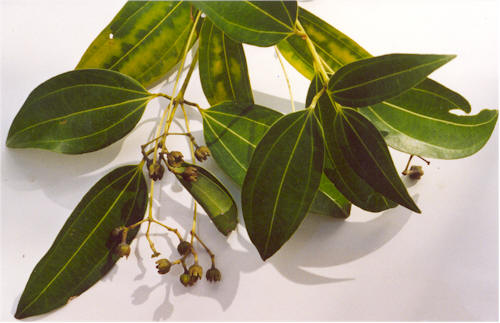
Indian bay leaf (Cinnamomum tamala) is a medium-to-large evergreen tree belonging to the family Lauraceae, native to the foothill regions of northern India, Nepal, Bangladesh, Myanmar, Laos, Vietnam, and southwestern China. It is valued primarily for its distinctively scented foliage, which features three prominent veins running down each leaf and releases a strong clove-like fragrance when crushed.
Cultivating this species requires subtropical or tropical conditions, as young trees tolerate little frost and demand consistent moisture paired with rich, well-draining soil. Gardeners in cooler regions often grow it in large containers to protect the root system during freezing winter months.
Key Facts
- Light: Full sun to partial shade
- Water: Regular moisture during growing season
- Soil: Rich, loamy, well-draining mix
- Hardiness: USDA zones 9 to 11
- Height: Up to 20 m (66 ft) mature height
Growing Indian Bay Leaf in Your Garden
Growing Indian bay leaf (Cinnamomum tamala) suits gardeners in warm climates who want a productive, evergreen shade tree with culinary value. You need a frost-free site with fertile earth to establish a healthy specimen that provides a steady harvest of aromatic leaves year-round.
- Choose a location sheltered from harsh winter winds to protect tender new flushes of growth.
- Ensure the soil has high organic matter content by mixing in compost before planting.
- Provide adequate spacing of at least 4 m (13 ft) from structures to accommodate the expansive mature canopy.
While mature trees tolerate brief dips in temperature down to -2 °C (28 °F), young plants require complete shelter or indoor placement when frost threatens.
What Does Indian Bay Leaf Look Like
Indian bay leaf (Cinnamomum tamala) forms a sturdy evergreen tree that reaches up to 20 m (66 ft) tall in its native forest habitat, though cultivated specimens often stay much smaller. The bark is dark brown and rough, while young branchlets are smooth and olive-green.
- Leaves are alternate or opposite, elliptic-oblong, measuring 10-20 cm (4-8 in) in length.
- The leaf surface displays three distinct, prominent veins running from the base to the tip.
- Small, yellowish-green flowers appear in clusters during spring, followed by small, single-seeded black berries.
The leathery foliage turns deep green and glossy upon maturity, releasing a powerful spicy fragrance resembling cinnamon and cloves when crushed between your fingers.
Indian Bay Leaf Size and Growth Rate
Indian bay leaf (Cinnamomum tamala) exhibits a moderate growth rate, typically adding 30-50 cm (12-20 in) of height per year under optimal conditions. Container-grown specimens grow much slower and remain compact, usually restricted to 2 m (6.5 ft) through routine pruning.
- Unrestrained garden trees eventually reach heights between 10-20 m (33-66 ft).
- Canopy spread often spans 5-8 m (16-26 ft) at full maturity.
- Root systems are extensive, requiring deep soil profiles without dense clay pans.
Pruning the leading shoots encourages a bushier, multi-stemmed shrub habit rather than a single tall trunk, which simplifies leaf harvesting.
Site Selection and Soil Requirements
Indian bay leaf (Cinnamomum tamala) thrives in locations with full sun to partial shade and consistently moist, well-draining soil. Soil stagnation causes root rot quickly, so heavy clay sites require heavy amendment with coarse sand and organic matter.
- Target a slightly acidic to neutral soil pH between 5.5 and 7.0.
- Incorporate aged manure or leaf mold to improve moisture retention without compacting the soil.
- Select a spot receiving at least 6 hours of direct sunlight daily for optimal leaf oil production.
Avoid planting in low-lying frost pockets where cold air settles, as freezing air damages the aromatic terminal buds.
Planting Your Indian Bay Leaf Tree
Planting Indian bay leaf (Cinnamomum tamala) is best done in early spring as soil temperatures rise and root activity accelerates. Dig a hole twice as wide as the root ball and just as deep to encourage outward root exploration.
- Set the root ball so the top sits level with the surrounding garden grade.
- Backfill with a 50/50 mix of native soil and rich garden compost, tamping gently to eliminate large air pockets.
- Water the newly planted tree thoroughly with 20 liters (5 gallons) of water to settle the soil.
Apply a 7 cm (3 in) layer of organic bark mulch around the base to conserve soil moisture, keeping the mulch a few centimeters away from the main trunk.
How to Care for Indian Bay Leaf
Caring for Indian bay leaf (Cinnamomum tamala) centers on providing regular moisture and adequate nutrition during active spring and summer growth cycles. Established trees tolerate occasional dry spells, but container plants need consistent watering whenever the top 3 cm (1.2 in) of soil dries out.
- Apply a balanced, slow-release organic fertilizer once in early spring as new leaves emerge.
- Water deeply during prolonged dry summer periods to prevent leaf scorch and premature drop.
- Flush container-grown plants annually to remove built-up mineral salts from tap water.
In regions with chilly winters, bring potted trees indoors before nighttime temperatures drop below 4 °C (40 °F).
Pruning and Harvesting Leaves
Pruning Indian bay leaf (Cinnamomum tamala) should occur in late winter or early spring before the spring flush of new growth begins. Remove any dead, damaged, or crossing branches to maintain a clean, open canopy structure.
- Harvest mature, fully developed leaves from the outer branches by snipping them cleanly with sharp shears.
- Dry harvested leaves in a single layer in a shaded, well-ventilated room for 5 to 7 days.
- Store dried leaves in airtight glass containers to preserve their volatile essential oils.
Avoid stripping a single branch completely; harvest a few leaves from multiple branches to keep the tree vigorous.
Winter Care and Frost Protection
Indian bay leaf (Cinnamomum tamala) survives outdoors year-round only in USDA zones 9 to 11, where severe freezes rarely occur. Frost below -3 °C (26 °F) kills tender new growth and damages foliage.
- Move potted trees into a bright conservatory, greenhouse, or south-facing window before the first autumn frost.
- Wrap ground-planted specimens in frost cloth and mulch the root zone heavily with straw if a rare freeze is forecast.
- Reduce watering significantly during indoor winter dormancy while maintaining adequate ambient light.
Indoor plants may experience minor leaf drop due to lower light levels, which resolves naturally when spring light returns.
Common Problems and Troubleshooting
Indian bay leaf (Cinnamomum tamala) encounters few serious pests, but environmental stress frequently manifests through leaf discoloration or dropping. Watch for scale insects and aphids on tender young shoot tips during humid spring weather.
- Treat minor sap-sucking insect infestations by spraying foliage with horticultural neem oil or insecticidal soap.
- Address yellowing lower leaves by checking for overwatering and improving soil drainage.
- Prevent root rot by never allowing the pot base to stand in a saucer of stagnant water.
Leaf spot fungi occasionally develop during prolonged rainy spells; prune affected leaves promptly and dispose of them in the trash.
Culinary and Traditional Uses
Indian bay leaf (Cinnamomum tamala) has been used in South Asian cooking and traditional herbal practices for centuries, often known historically as malabathrum. The leaves impart a complex flavor profile combining notes of cinnamon, clove, and black pepper to rice dishes, curries, and spice blends.
- Use whole leaves to infuse broths and biryanis, removing them before serving as they are too tough to chew.
- Traditional preparations utilized the dried bark and leaves in various indigenous formulations for digestive support.
- Essential oils extracted from the foliage find application in high-end perfumery and aromatherapy blends.
Unlike Mediterranean bay laurel (Laurus nobilis), Indian bay leaves feature a much sweeter, punchier aroma that closely mimics true cinnamon bark.
Year-Round Care for Indian Bay Leaf
| Spring | Apply a balanced organic fertilizer as new growth emerges. Prune out any dead winter wood and begin regular watering. |
|---|---|
| Summer | Water deeply during dry spells, ensuring soil stays moist but never soggy. Harvest mature leaves as needed for culinary use. |
| Autumn | Ease back on fertilizer applications. Prepare to move potted specimens indoors before the first predicted autumn frost. |
| Winter | Keep indoor container plants in a bright, cool spot with minimal watering. Protect outdoor ground-planted trees with frost cloth. |
Indian Bay Leaf Problems and Solutions
| What you see | Likely cause | What to do |
|---|---|---|
| Yellow lower leaves | Overwatering or poor drainage | Allow the top soil layer to dry between waterings and ensure pot drainage holes are clear. |
| Brown, crispy leaf tips | Low humidity or underwatering | Increase watering frequency and mist indoor foliage during dry winter heating seasons. |
| Sticky residue on stems | Scale insects or aphids | Wipe affected stems with insecticidal soap or apply horticultural neem oil. |
Indian Bay Leaf Cultivars and Selection
- Cinnamomum tamala 'Tejpat' – traditional selection grown specifically for aromatic leaf yield
- Cinnamomum tamala dwarf form – compact selection suited for large patio containers
Frequently Asked Questions
What is Indian bay leaf?
Indian bay leaf (Cinnamomum tamala) is an evergreen tree native to South and Southeast Asia whose aromatic leaves are widely used in cooking and traditional herbal medicine.
Is Indian bay leaf the same as regular bay leaf?
No, Indian bay leaf is botanically distinct from the Mediterranean bay laurel (Laurus nobilis); Indian bay leaves feature a sweet, clove-like aroma reminiscent of cinnamon, whereas Mediterranean bay leaves taste more herbal and earthy.
How to grow Indian bay leaf?
Grow Indian bay leaf in USDA zones 9 to 11 in a sunny spot with rich, well-draining soil, or keep it in a container to bring indoors during freezing winter weather.
Is cinnamon and Indian bay leaf the same?
They are not the same plant, but they belong to the same plant family (Lauraceae) and share similar aromatic compounds, which explains why Indian bay leaves carry a distinct cinnamon-like fragrance.
Can you use Indian bay leaf as a substitute for regular bay leaves?
You can substitute them, but use a smaller amount because Indian bay leaves have a much stronger, sweeter, and more pungent clove-like flavor than standard Mediterranean bay leaves.
What is the scientific name of Indian bay leaf?
The scientific name of Indian bay leaf is Cinnamomum tamala, belonging to the laurel family Lauraceae.
Information about traditional or historical uses is provided for educational interest only and is not medical advice. Do not use any plant to treat a condition without speaking to a qualified professional.
Sources & Verification
Taxonomy and distribution are checked against the databases below. Care guidance is written for cultivated species only and reviewed by our editor. How We Build Plant Profiles →