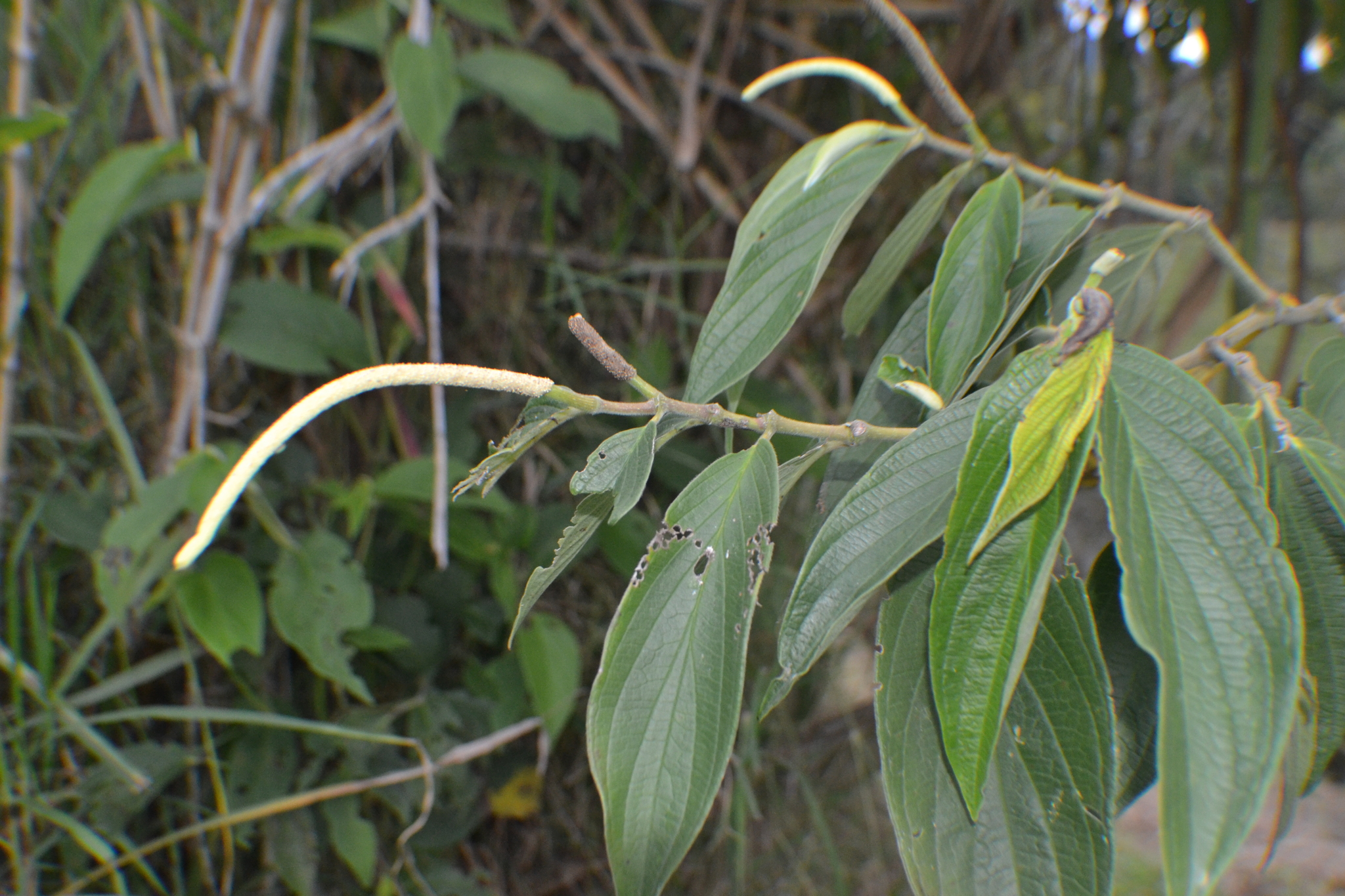
Black pepper (Piper nigrum) is a tropical woody vine native to the Malabar Coast of India, recognized by its heart-shaped leaves and spikes of small, spherical fruit. It is the source of one of the world’s most traded spices, produced from the dried drupes of the vine.
Unlike the common garden pepper (Capsicum annuum), this species is a true climber that requires a permanent support structure and a humid, frost-free environment to produce a harvest. It typically takes three to four years for a new vine to begin fruiting.
Key Facts
- Light: Dappled sunlight or partial shade
- Temperature: Minimum 15 °C (60 °F)
- Humidity: High (60-90%)
- Harvest: 3-4 years after planting
- Soil: Rich, well-draining, acidic
Is Black Pepper the Right Plant for You?
Growing Black Pepper at home requires a tropical microclimate with high humidity and consistent warmth above 15 °C (60 °F). It is a commitment for the patient grower, as the vine grows slowly and requires a sturdy vertical support like a cedar trellis or a moss-covered pole. Because it is a forest-floor native, it does not tolerate the harsh, direct sun that many other edible crops crave.
This vine is an excellent choice for a heated conservatory or a large bathroom with bright, filtered light. You must be prepared to provide daily misting or a dedicated humidifier, as dry indoor air will quickly cause leaf drop. It is not a “set and forget” plant; it needs regular monitoring for soil moisture and ambient humidity to thrive and eventually produce peppercorns.
- Requires a permanent trellis or support
- Needs temperatures consistently above 15 °C (60 °F)
- Slow to reach maturity (3-4 years)
- Demands high ambient humidity
Identifying the Black Pepper Vine
A mature Black Pepper vine features leathery, almond-shaped leaves that grow 10-18 cm (4-7 in) long and are arranged alternately along the stem. The upper surface of the leaf is a dark, glossy green, while the underside often displays tiny, clear globules known as “pepper pearls.” These pearls are natural exudates and should not be mistaken for pest eggs or disease.
The flowers are inconspicuous, appearing as slender, pendulous spikes called catkins that can reach 15 cm (6 in) in length. Each spike contains up to 150 tiny white or greenish-yellow flowers. Once pollinated, these develop into small drupes, roughly 5 mm (0.2 in) in diameter, which grow in dense clusters similar to miniature grapes. The stems are woody at the base and produce adventitious roots at the nodes, which allow the plant to cling to its support.
- Leaves: 10-18 cm (4-7 in), ovate, glossy
- Fruit: 5 mm (0.2 in) drupes in spikes
- Stem: Woody, climbing with aerial roots
- Height: Up to 4 m (13 ft) in cultivation
Ideal Growing Conditions for Piper nigrum
This vine requires dappled sunlight or partial shade, mimicking its natural habitat under the forest canopy of the Western Ghats. In a garden setting, a spot that receives morning sun and afternoon shade is ideal, while indoor plants should be placed near a bright, east-facing window. Direct, midday summer sun will scorch the foliage and stunt fruit production.
The soil must be rich in organic matter and exceptionally well-draining to prevent root rot. A mix of peat moss, perlite, and compost with a pH between 5.5 and 7.0 works best. Black Pepper is highly sensitive to cold; growth stops entirely when temperatures dip below 12 °C (54 °F), and prolonged exposure to frost is fatal. If you live in a temperate zone, you must grow this plant in a container that can be moved indoors for the winter.
How to Plant and Propagate Black Pepper
Propagating Black Pepper is most successful using semi-mature stem cuttings taken during the warm, rainy months. Select a healthy stem with at least two or three nodes and remove the lower leaves. Dip the cut end in rooting hormone and place it in a sterile seed-starting mix, ensuring at least one node is buried. Keep the cutting under a plastic dome to maintain 100% humidity until new growth appears, usually within 4-6 weeks.
Sowing from seed is possible but difficult because peppercorn seeds lose viability within a few days of harvest. If you obtain fresh, red berries, soak them in warm water for 24 hours to remove the outer pulp before planting. Sow them 1 cm (0.4 in) deep in a warm propagator maintained at 25-30 °C (77-86 °F). Commercial dried peppercorns from the grocery store will not germinate as they have been heat-treated or dried too thoroughly.
- Cuttings: 15-20 cm (6-8 in) long
- Rooting time: 4-8 weeks
- Seed soak: 24 hours in warm water
- Pot size: Start in 15 cm (6 in) pots
Watering and Feeding Your Pepper Vine
Maintain a consistent watering schedule that keeps the soil moist but allows the top 2 cm (0.8 in) to dry out between sessions. During the peak growing season in summer, you may need to water every two to three days. Overwatering is the most common cause of failure, leading to yellowing leaves and mushy stems. Always use lukewarm water, as cold tap water can shock the tropical root system.
Feed the vine every two weeks during the spring and summer with a balanced, water-soluble fertilizer, such as a 10-10-10 NPK ratio. Because the plant produces fruit, it also benefits from occasional applications of compost tea or a slow-release organic fertilizer high in potassium. Reduce feeding to once every six weeks in the winter when the plant’s metabolism slows down. Avoid high-nitrogen fertilizers which promote leaf growth at the expense of peppercorn development.
Harvesting Black, White, and Green Peppercorns
Harvest the berries for black pepper when they turn from green to a yellowish-red hue. At this stage, the berries are fully developed but not yet overripe. To produce black pepper, the harvested spikes are blanched in boiling water for one minute and then sun-dried for 3-4 days until they become black and wrinkled. The heat of the blanching triggers enzymes that darken the skin.
For white pepper, allow the berries to ripen fully until they are bright red. These are then soaked in water for about a week to ferment and soften the outer skin (pericarp). Once the skin is rubbed off, the inner white seed is dried. Green peppercorns are harvested while still immature and green, then preserved in brine or freeze-dried to maintain their color and milder flavor. Red peppercorns are the rarest, consisting of fully ripe berries preserved in vinegar or brine.
- Black: Harvest yellow-red, blanch, and sun-dry
- White: Harvest red, soak, peel, and dry
- Green: Harvest green and brine or freeze-dry
- Yield: 1-2 kg (2-4 lbs) per mature vine
Culinary and Traditional Uses
Black pepper is primarily used as a pungent culinary spice, containing the alkaloid piperine which provides its signature heat. It is used globally to season meats, soups, and vegetables. Beyond flavor, it acts as a natural preservative and is a key ingredient in spice blends like garam masala or French quatre épices. For the best flavor, whole peppercorns should be crushed in a dedicated black pepper crusher or mortar and pestle just before use.
In traditional medicine, particularly Ayurveda, black pepper was used to support digestive health and respiratory function. It was often combined with long pepper (Piper longum) and ginger (Zingiber officinale) in a preparation known as Trikatu. Modern research has noted that piperine can significantly increase the bioavailability of curcumin found in turmeric (Curcuma longa), which is why the two are often paired in health supplements.
Common Problems and Pests
The most frequent issue for indoor growers is low humidity, which leads to leaf tip browning and spider mite infestations. Spider mites appear as tiny red dots on the leaf undersides and produce fine webbing; they can be controlled by increasing humidity and using neem oil. If you notice the vine wilting despite moist soil, check the roots for signs of Phytophthora foot rot, a fungal disease caused by poor drainage.
Mealybugs may also hide in the leaf axils, appearing as small tufts of white cotton. These can be removed manually with a cotton swab dipped in rubbing alcohol. If the leaves develop small, dark spots with yellow halos, the plant may be suffering from bacterial leaf spot, which requires improved air circulation and the removal of affected foliage. Always ensure your support structure is clean to prevent the buildup of pathogens.
- Spider mites: Tiny webs, yellow mottling
- Root rot: Wilting, blackening stems
- Mealybugs: White cottony clusters
- Pepper pearls: Normal clear globules (not a problem)
Processing and Storage Tips
Store whole dried peppercorns in sealed glass jars away from direct sunlight to preserve their volatile oils. When stored correctly in a cool, dark pantry, whole peppercorns will maintain their potency and flavor for up to 3 years. Once ground, however, the spice begins to lose its aromatic qualities within 3 months due to oxidation. This is why many recipes specify “freshly ground” pepper.
To ground black pepper at home, use a high-quality burr grinder rather than a blade grinder to ensure a consistent particle size. If you have harvested your own crop, ensure the moisture content is below 12% before storage to prevent mold growth. You can test this by squeezing a peppercorn; it should crack cleanly rather than flattening. Avoid storing pepper in plastic bags for long periods, as the oils can react with certain plastics over time.
Year-Round Care for Black Pepper Vines
| Spring | Increase watering frequency as growth resumes. Apply a balanced 10-10-10 fertilizer every 2 weeks and check the trellis for any needed repairs. |
|---|---|
| Summer | Mist the vine daily to maintain 70% humidity. Provide shade from intense afternoon sun and monitor for spider mites during dry spells. |
| Autumn | Slowly reduce fertilizer applications. If growing in a container outdoors, move the plant inside once night temperatures drop to 15 °C (60 °F). |
| Winter | Water only when the top 3 cm (1.2 in) of soil is dry. Stop fertilizing and use a humidifier to counteract the drying effects of indoor heating. |
Black Pepper Plant Care: Common Problems Explained
| What you see | Likely cause | What to do |
|---|---|---|
| Yellowing lower leaves | Overwatering or poor drainage | Reduce watering and ensure the pot has large drainage holes. |
| Brown, crispy leaf edges | Low humidity | Mist the plant daily or place it on a tray filled with pebbles and water. |
| Sudden leaf drop | Cold shock | Move the plant to a warmer location away from drafts and keep it above 15 °C. |
| Slow growth and pale leaves | Nutrient deficiency | Apply a balanced liquid fertilizer and check if the soil pH is too high. |
Popular Black Pepper Cultivars
- ‘Panniyur-1’ – A high-yielding hybrid with long spikes.
- ‘Karimunda’ – Popular for its adaptability and high oil content.
- ‘Kalluvally’ – Known for being drought-tolerant in tropical climates.
- ‘Balankotta’ – Produces large, high-quality berries.
Frequently Asked Questions
What is the difference between black pepper and black pearl pepper?
Black pepper (Piper nigrum) is a tropical woody vine that produces peppercorns, while Black Pearl pepper (Capsicum annuum) is an ornamental chili plant with spicy, round black fruits. They are unrelated species with completely different growth habits and care needs.
Can I grow black pepper from grocery store peppercorns?
No, grocery store peppercorns are dried and often heat-treated, which kills the embryo. To grow the plant, you must use fresh seeds from a nursery or take stem cuttings from a living vine.
How long does it take for a black pepper plant to fruit?
A healthy vine typically begins to produce fruit 3 to 4 years after planting. Production usually peaks when the vine is 7 or 8 years old.
Is black pepper toxic to cats?
The plant is considered mildly toxic to cats and dogs if ingested in large quantities, potentially causing stomach upset. However, most pets are deterred by the plant's natural pungent smell.
Does black pepper need a lot of sun?
No, black pepper prefers partial shade or dappled sunlight. In its native jungle habitat, it grows under the canopy of taller trees, so direct midday sun can actually burn its leaves.
Information about traditional or historical uses is provided for educational interest only and is not medical advice. Do not use any plant to treat a condition without speaking to a qualified professional.
Sources & Verification
Taxonomy and distribution are checked against the databases below. Care guidance is written for cultivated species only and reviewed by our editor. How We Build Plant Profiles →