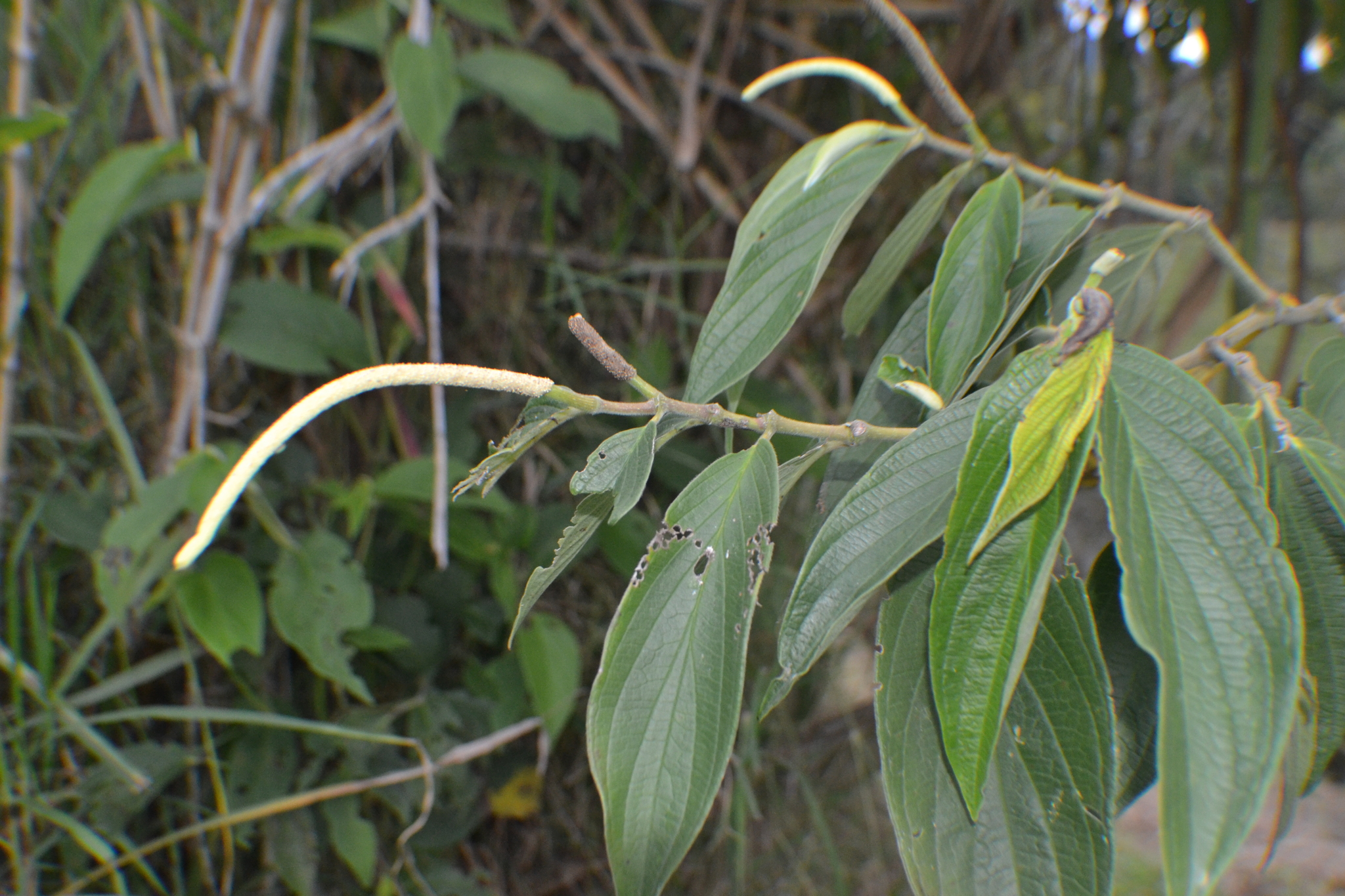
Long pepper (Piper longum) is a tropical, perennial climbing vine native to the Indian subcontinent. It is primarily cultivated for its slender, catkin-like fruit spikes, which are harvested and dried to produce a spice with a complex, sweet, and pungent heat.
Growing this plant requires a humid, frost-free environment, as it cannot survive temperatures below 10 °C (50 °F). It is a demanding crop that thrives best in a greenhouse or a warm, shaded conservatory.
Key Facts
- Light: Needs bright, filtered light or partial shade.
- Water: Keep soil consistently moist but never waterlogged.
- Temperature: Thrives in warmth between 20-30 °C (68-86 °F).
- Harvest: Pick fruit spikes when they turn dark green.
- Hardiness: Not frost-tolerant; keep above 10 °C (50 °F).
Why Grow Long Pepper
You should grow long pepper if you have a warm, humid greenhouse and want a unique, aromatic spice that is rarely found in standard grocery stores. It is a rewarding project for those interested in historical spices, as the plant functions as both a decorative climber and a functional food source.
Unlike common black pepper (Piper nigrum), this vine produces elongated, cylindrical fruits that offer a more nuanced flavour profile. It suits gardeners who enjoy tropical plants and have the space to support a vining habit that can reach up to 3 m (10 ft) in length.
Identifying Long Pepper
The long pepper is easily identified by its heart-shaped, alternate leaves that measure 5-10 cm (2-4 in) in length. These leaves are dark green, glossy, and feature prominent veins running from the base.
The plant produces small, inconspicuous flowers on spikes that eventually develop into the characteristic fruit. These fruit spikes are cylindrical, roughly 2-4 cm (0.8-1.5 in) long, and transition from green to a dark, brownish-grey colour as they mature and dry.
Conditions for Growing Long Pepper
Long pepper thrives when you provide it with high humidity levels above 60% and a stable, warm environment. It is a tropical plant that will stop growing if the air becomes too dry or if temperatures drop below 15 °C (59 °F).
- Position in a spot with bright, indirect sunlight.
- Use a rich, organic-heavy potting mix that drains well.
- Ensure the plant is protected from cold, direct draughts.
- Provide a trellis or support structure for the vines to climb.
How to Plant and Propagate
The most effective way to start a new plant is by taking stem cuttings during the active growing season. Propagation from seed is possible but slow, often taking several weeks to germinate in warm, moist conditions.
When planting, ensure the container has sufficient drainage holes to prevent root rot. If you are using cuttings, place them in a mixture of perlite and peat, keeping the environment humid until roots develop, which typically takes 4-6 weeks.
Caring for Your Long Pepper Plant
Consistent moisture is the most critical factor for healthy growth throughout the year. You should water whenever the top 2 cm (0.8 in) of soil feels dry to the touch, but avoid leaving the roots sitting in standing water.
- Feed with a balanced liquid fertilizer every 4 weeks during summer.
- Mist the leaves daily if your indoor humidity falls below 50%.
- Prune back unruly stems in early spring to encourage bushier growth.
- Repot every 2 years into a slightly larger container with fresh compost.
Harvesting and Storing Long Pepper
You should harvest the fruit spikes when they are fully developed but still green, before they begin to turn black on the vine. Harvesting at this stage ensures the most potent flavour and aroma for your spice collection.
Once picked, spread the spikes on a tray in a warm, dry area with good airflow to dehydrate completely. Properly dried fruit can be stored in an airtight glass jar for up to 12 months, retaining its characteristic pungency and sweetness.
Common Problems and Pests
The most frequent issues with long pepper are related to improper watering or low humidity, which can lead to leaf drop or stunted growth. Watch for these common signs of trouble to keep your plant healthy.
- Yellowing leaves often indicate overwatering or poor drainage.
- Brown, crispy leaf edges usually signal a lack of humidity.
- Spider mites may appear if the air is too dry and stagnant.
- Stunted growth is often a sign of insufficient light or nutrients.
Culinary Uses of Long Pepper
Long pepper is traditionally used in spice blends like garam masala, where it provides a sweet, earthy heat that lingers on the palate. You can grind the dried spikes into a powder or use them whole to infuse soups, stews, and pickles.
Its flavour is more complex than black pepper, containing notes of cinnamon, nutmeg, and cardamom. Use it sparingly, as its heat is more intense and can quickly overpower delicate dishes if you add too much.
Seasonal Care for Long Pepper
| Spring | Begin increasing water frequency as temperatures rise. Apply a balanced liquid fertilizer to support new leaf growth. |
|---|---|
| Summer | Maintain high humidity and ensure the plant receives bright, indirect light. Harvest fruit spikes as they reach full size. |
| Autumn | Reduce watering as growth slows. Move the plant to a warmer location if temperatures begin to drop below 18 °C. |
| Winter | Keep the soil barely moist and avoid all fertilizer. Ensure the plant stays in a room above 15 °C to prevent dormancy or shock. |
Why Is My Long Pepper Struggling?
| What you see | Likely cause | What to do |
|---|---|---|
| Yellowing leaves | Overwatering | Allow the soil to dry out more between waterings and check drainage. |
| Crispy leaf edges | Low humidity | Mist the plant daily or use a humidity tray. |
| Fine webbing on leaves | Spider mites | Wipe leaves with a damp cloth and increase the surrounding humidity. |
Frequently Asked Questions
What is the difference between long pepper and black pepper?
While both are in the Piper genus, long pepper (Piper longum) has a sweeter, more complex flavour than the sharper, more straightforward heat of black pepper (Piper nigrum).
What are the benefits of long pepper?
Long pepper has been traditionally used in Ayurvedic medicine to support respiratory health and digestion, though it is primarily valued today as a unique culinary spice.
How long do pepper plants produce fruit?
A healthy long pepper vine can continue to produce fruit for many years if it is kept in a stable, warm, and humid environment.
How do I use long pepper in cooking?
You can grind the dried spikes into a powder for spice rubs or drop them whole into long-simmering stews and curries to infuse flavour.
Does long pepper grow well in the UK or US?
It only grows well in the UK or US if kept in a heated greenhouse or conservatory, as it cannot tolerate cold temperatures.
Information about traditional or historical uses is provided for educational interest only and is not medical advice. Do not use any plant to treat a condition without speaking to a qualified professional.
Sources & Verification
Taxonomy and distribution are checked against the databases below. Care guidance is written for cultivated species only and reviewed by our editor. How We Build Plant Profiles →