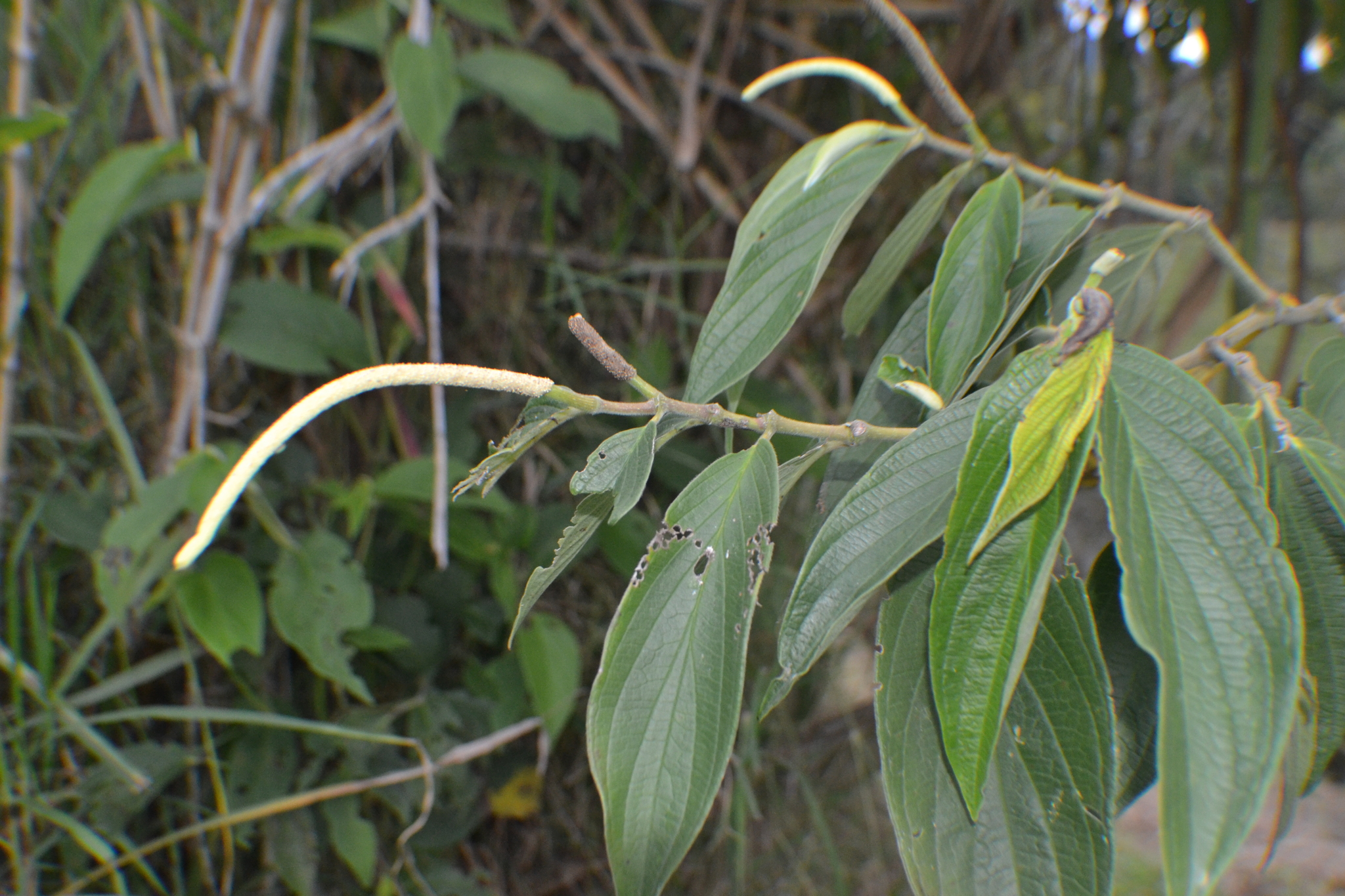
Benin pepper (Piper guineense) is a perennial climbing spice vine native to tropical West and Central Africa, harvested for its peppery leaves and fragrant dried fruit.
This shade-adapted vine requires warm temperatures above 18 °C (64 °F) and sturdy structural support to climb up to 10 m (33 ft) in height.
Key Facts
- Light: Partial shade or dapples understory sun
- Water: Keep soil constantly moist but well-drained
- Hardiness: USDA zones 10 through 12
- Soil pH: 5.5 to 6.5 acidic to neutral
- Harvest: Leaves year-round; fruit in late autumn
Is Benin Pepper Right for Your Herb Garden?
Benin pepper requires a warm, frost-free climate with minimum temperatures of 15 °C (59 °F) and reliable shade support. In temperate zones, you must grow this tropical vine inside a heated greenhouse or as a potted indoor plant.
It suits gardeners who can provide vertical trellising and continuous high humidity above 60%. Unlike black pepper (Piper nigrum), this species produces both edible foliage and aromatic peppercorns.
How to Identify Benin Pepper
Benin pepper is a woody climbing vine featuring alternate, ovate dark green leaves measuring 12-18 cm (4.7-7.1 in) long and prolate spheroid peppercorns on distinctly curved stalks. The leaf surface is smooth with prominent arcuate veins running from the petiole base to the tip.
The tiny green flowers form dense pendulous spikes during the wet season. You can distinguish the mature dried fruit from cubeb pepper (Piper cubeba) by checking the stalks and seed shape.
- Leaf shape: Ovate to oblong with pointed tips
- Fruit shape: Prolate spheroid, 3-4 mm (0.12-0.16 in) diameter
- Fruit stalk: Distinctly curved pedicel base
- Vine bark: Swollen nodes along flexible climbing stems
Growing Conditions for Ashanti Pepper Vines
Plant Benin pepper in rich, organic-heavy soil with a pH of 5.5-6.5 under partial shade that mimics rainforest understory light. Direct harsh sunlight scorches the broad leaves and stunting vine expansion.
Maintain atmospheric humidity around 60-80% for continuous leaf production. The root zone must stay evenly moist without standing water around the crown.
Sowing and Propagating Piper guineense
Propagate Benin pepper using semi-hardwood stem cuttings measuring 15-20 cm (6-8 in) in length with at least two node joints. Cuttings root most reliably when rooted in warm, moist propagation media kept at 25 °C (77 °F).
Seeds require fresh berry pulp removal before planting in shallow trays. Germination takes 30-60 days under tropical conditions.
- Cutting length: 15-20 cm (6-8 in) with two nodes
- Rooting temperature: 24-28 °C (75-82 °F)
- Germination time: 30 to 60 days from fresh seed
- Medium: 50% peat and 50% perlite mixture
Watering and Feeding Benin Pepper Vines
Water Benin pepper whenever the top 2.5 cm (1 in) of soil surface feels dry, keeping soil moisture stable year-round. Reduce application slightly during cooler months when vine growth slows down.
Feed the plant with balanced organic liquid fertilizer diluted to half-strength every 4 weeks during active growth. Top-dress the base with 5 cm (2 in) of composted leaf mould each spring to supply slow-release nutrients.
Harvesting Benin Pepper Leaves and Berries
Harvest individual mature leaves throughout the year once the vine reaches 1.5 m (5 ft) in height, taking no more than 30% of the canopy at once. Gather peppercorn clusters when berries turn reddish-brown in late autumn.
Cut entire fruit spikes using clean pruners rather than pulling individual berries. Sun-dry the picked berries for 3-5 days until they turn dark brown to black and wrinkled.
Culinary Uses for Benin Pepper Soup and Rice
Benin pepper leaves and dried fruits add a peppery, slightly nutmeg-like flavor to traditional West African pepper soup, stews, and rice dishes. Ground peppercorns form a primary ingredient in West African pepper soup mix alongside grains of paradise (Aframomum melegueta).
The shredded fresh leaves (known as uziza leaves) are stirred into goat meat pepper soup, tomato pepper sauce, and vegetable stews during the final 5 minutes of cooking. Historically, local communities traditionally used leaf infusions to support digestive comfort and relieve minor coughs.
- Benin pepper soup: Whole or ground berries simmered with broth and meat
- Benin pepper rice: Finely shredded fresh leaves folded into cooked rice
- Pepper sauce and stew: Ground seeds cooked into tomato and onion bases
Common Benin Pepper Plant Problems
Root rot caused by overwatering in compact soil is the primary issue affecting Benin pepper vines, prevented by maintaining soil organic drainage above 50% organic matter. Inspect leaf undersides regularly for red spider mites and mealybugs in warm, dry indoor environments.
Yellowing leaves usually signal poor drainage or nitrogen deficiency. Brown crispy leaf margins indicate environmental relative humidity dropping below 40%.
Storing Fresh Uziza Leaves and Dried Peppercorns
Store dried Benin peppercorns in airtight glass jars kept in a dark cupboard for up to 2 years without losing essential aromatic oils. Whole peppercorns maintain volatile flavor compounds significantly longer than pre-ground pepper.
Wrap unwashed fresh leaves in damp paper towels inside a sealed bag in the refrigerator for up to 7 days. Alternatively, blanch and freeze shredded leaves for up to 6 months.
Year-Round Benin Pepper Care
| Spring | Prune dead stem wood, apply a 5 cm (2 in) organic compost layer around the vine base, and resume monthly liquid feeding as new shoots emerge. |
|---|---|
| Summer | Maintain regular watering when the top 2.5 cm (1 in) of soil dries, mist foliage during low-humidity spells, and provide afternoon shade. |
| Autumn | Harvest reddish-brown fruit clusters for drying, reduce fertilizer applications, and move potted vines indoors before ambient temperatures fall below 15 °C (59 °F). |
| Winter | Keep indoor temperature above 18 °C (64 °F), water sparingly only when the soil surface dries completely, and inspect leaves for mealybugs. |
Benin Pepper Troubleshooting Guide
| What you see | Likely cause | What to do |
|---|---|---|
| Yellowing lower leaves | Overwatering or waterlogged root zone | Allow top 2.5 cm (1 in) of soil to dry out and improve pot drainage. |
| Crispy brown leaf edges | Low air humidity below 40% | Increase humidity using a room humidifier or mist vine foliage daily. |
| Stunted growth and pale foliage | Nitrogen deficiency or insufficient light | Apply balanced organic fertilizer monthly and relocate vine to bright indirect light. |
| White cottony spots on stem joints | Mealybug infestation | Wipe stems with a cotton swab dipped in 70% rubbing alcohol. |
Frequently Asked Questions
What is Benin pepper used for in cooking?
Benin pepper leaves and dried berries are used to flavor West African pepper soup, rice, stews, and sauces. The ground berries give a peppery, aromatic flavor, while fresh shredded leaves add herbal spice.
How do you tell Benin pepper apart from cubeb pepper?
Benin pepper berries feature a curved stem stalk and prolate spheroid shape, whereas cubeb pepper (Piper cubeba) berries have a completely straight stem stalk and spherical shape.
What is the common name for Piper guineense?
The most widely used common names for Piper guineense are Benin pepper, Ashanti pepper, Guinea cubeb, and uziza.
Can you grow Benin pepper indoors?
Yes, you can grow Benin pepper indoors near a bright window in warm rooms maintained above 18 °C (64 °F) with a trellis and humidifier.
How do you harvest uziza leaves for cooking?
Select mature, deep green leaves from healthy vine stems and cut them individually with shears, leaving at least 70% of leaf canopy on the plant.
Information about traditional or historical uses is provided for educational interest only and is not medical advice. Do not use any plant to treat a condition without speaking to a qualified professional.
Sources & Verification
Taxonomy and distribution are checked against the databases below. Care guidance is written for cultivated species only and reviewed by our editor. How We Build Plant Profiles →