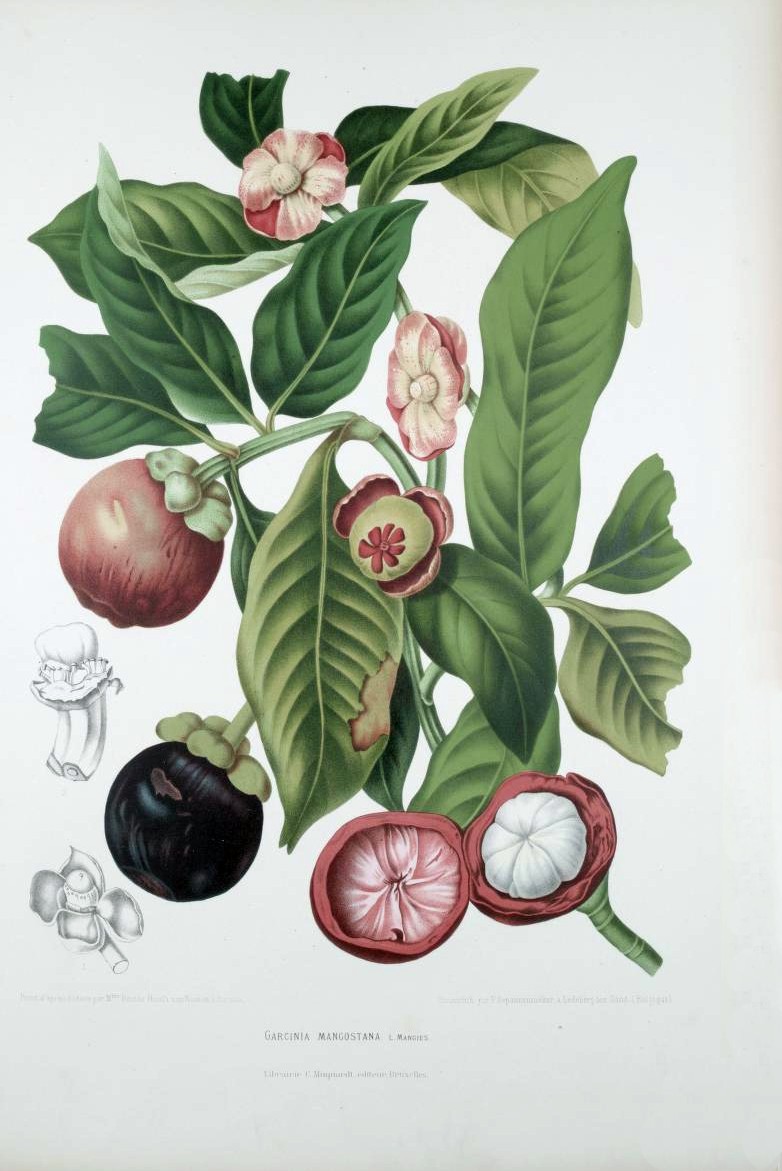
Kokum (Garcinia indica) is a tropical evergreen tree in the family Clusiaceae, native to the humid coastal and foothill forests of India’s Western Ghats. It is recognized by its dense conical canopy, drooping branches, and deep purple-red spherical fruit.
Cultivation requires frost-free tropical lowlands receiving at least 2,500 mm (98 in) of annual rainfall. The tree flowers from November to February, yielding fruit harvested between April and May before the monsoon rains begin.
Key Facts
- Common Names: Kokum, Goa butter tree, Indian gamboge
- Native Range: Western Ghats of India (Maharashtra, Goa, Karnataka, Kerala)
- Water Requirements: High moisture, 2,500 mm (98 in) minimum rainfall
- Sun Exposure: Full sun to light partial shade
- Soil Type: Well-drained lateritic or alluvial soil, pH 6.0–6.8
- Hardiness: USDA Zones 11–12 (minimum 15 °C / 59 °F)
Is Kokum Right for Your Landscape?
Growing kokum requires a frost-free tropical climate with high humidity and abundant summer rain. It is suited for orchards, large food gardens, and agroforestry plots in coastal or sub-mountainous tropical zones.
This species demands space to accommodate a mature height of 15 m (49 ft). Young trees need shelter from severe drying winds until established during their first 3 years.
Identifying the Garcinia indica Tree
The kokum tree features dark green elliptic-lanceolate leaves measuring 7–14 cm (2.8–5.5 in) long with reddish tender shoots. The trunk has smooth, dark grey bark with thin horizontal ridges, releasing a yellow latex resin when cut.
Flowering occurs along young branchlets, presenting small reddish-pink, four-petaled blossoms. The resulting fruit is a fleshy, smooth spherical berry 2.5–4 cm (1.0–1.6 in) in diameter, shifting from green to dark purple-red as it ripens.
- Leaves: Opposite, dark green, reddish when young, 7–14 cm (2.8–5.5 in) long
- Flowers: Solitary or clustered, 4 petals, 1 cm (0.4 in) wide, reddish-pink
- Fruit: Spherical, 2.5–4 cm (1.0–1.6 in) wide, deep purple-red outer skin
- Bark: Smooth grey bark yielding sticky yellow sap when wounded
Mature Height and Growth Rate
A healthy kokum tree reaches a mature height of 10–15 m (33–49 ft) with a crown spread of 4–8 m (13–26 ft). Seed-grown specimens grow at a moderate rate of 30–50 cm (12–20 in) per year, taking 7 to 9 years to begin bearing fruit.
Grafted plants remain smaller, reaching 6–8 m (20–26 ft) in height, and begin fruiting within 3 to 4 years. Canopy shape remains compact and pyramid-like in early growth before broadening with maturity.
Selecting the Best Planting Site
Plant kokum in a position receiving full sun to light afternoon shade in deep, acidic soil. The species thrives in lateritic alluvial soils with a pH of 6.0–6.8 and a soil depth of at least 1 m (3.3 ft).
Avoid locations with standing water or saline soil conditions. Select sites sheltered from salt-laden coastal gales, which damage delicate young foliage and open blossoms.
How to Plant Kokum
Plant saplings into pits measuring 60x60x60 cm (24x24x24 in) prepared during the dry season. Fill each pit with equal parts native topsoil, coarse sand, and well-rotted farmyard manure before planting at the onset of monsoon rains.
Space seedling trees 8–10 m (26–33 ft) apart to give mature crowns room to expand. Grafted trees require a reduced spacing of 5–6 m (16–20 ft).
- Dig 60 cm (24 in) square pits 4 weeks before planting.
- Mix pit soil with 10 kg (22 lb) composted manure and 500 g bone meal.
- Set the root ball flush with soil level to prevent stem rot.
- Water thoroughly with 15 L (4 gal) of water after settling the plant.
Watering and Soil Nutrition
Provide 20–30 L (5–8 gal) of water weekly per young tree during dry summer periods. Established mature trees rely primarily on natural rainfall, requiring supplemental irrigation only during prolonged droughts exceeding 45 days.
Apply organic fertilizer twice annually, once before the monsoon in May and once after the monsoon in October. Supplement each mature tree with 500 g nitrogen, 250 g phosphorus, and 500 g potassium annually to maintain fruit production.
Pruning Kokum Trees
Prune kokum trees in late autumn after harvest by removing low-hanging branches below 1 m (3.3 ft). Thin interior cross-branches to increase light penetration and airflow through the central canopy.
Remove dead wood and water sprouts twice a year using sharp bypass pruners. Grafted plants require regular removal of rootstock suckers emerging beneath the graft union.
Garcinia indica Disease and Pest Problems
Control black rot leaf spot caused by Phomopsis garciniae by removing affected leaves and applying a 1% Bordeaux mixture spray. High moisture during fruit development can trigger fungal fruit rot if air circulation is inadequate.
Common insect pests include leaf miners and scale insects. Treat infestations promptly using neem oil sprays or targeted horticultural soaps.
- Black Rot: Dark spots on leaves; treat with copper fungicide.
- Leaf Miner: Silvery winding trails in foliage; prune damaged shoots.
- Scale Insects: Brown waxy bumps on stems; scrub off or spray with horticultural oil.
- Fruit Fly: Larvae inside ripe fruit; collect and destroy fallen fruits daily.
Cold Hardiness and Temperature Limits
Kokum trees require minimum temperatures above 15 °C (59 °F) and suffer severe injury below 10 °C (50 °F). Prolonged exposure to temperatures under 5 °C (41 °F) causes leaf drop, branch dieback, and tree mortality.
Optimal growth occurs between 20 °C and 35 °C (68–95 °F) in humid tropical ecosystems. In frost-prone areas, this plant cannot survive outdoors.
Culinary Uses and Seed Butter Production
Harvest ripe fruit when the rind turns a deep maroon-purple color between April and May. The outer rind is sliced, sun-dried, and soaked in rind juice to produce kokum peel, used as a souring agent in Indian curries, dal, and beverages like sol kadhi.
Seeds yield 23–30% fat, commercially known as kokum butter or Goa butter. This vegetable fat melts at 34–40 °C (93–104 °F) and is extracted for cosmetics, skin ointments, and chocolate manufacturing as a cocoa butter substitute. Relatives such as mangosteen (Garcinia mangostana), Malabar tamarind (Garcinia gummi-gutta), and yellow mangosteen (Garcinia xanthochymus) yield edible fruits but differ in seed oil composition.
Frequently Asked Questions
What is the common name for Garcinia indica?
The primary common name for Garcinia indica is kokum. It is also widely known as Goa butter tree and Indian gamboge.
What is Goa butter?
Goa butter, also called kokum butter, is the firm vegetable fat extracted from the seeds of Garcinia indica. It stays solid at room temperature and is traditionally used for skin care and cooking.
How does Garcinia indica differ from Garcinia cambogia?
Garcinia indica (kokum) produces small, smooth purple-red round fruits with seeds rich in hard vegetable fat. Garcinia cambogia (now correctly named Garcinia gummi-gutta or Malabar tamarind) produces larger, yellow-to-green pumpkin-shaped ridged fruits.
What are the health benefits of Garcinia indica?
Kokum fruit rind contains hydroxycitric acid (HCA) and garcinol. It was traditionally used in Ayurveda for digestive health, skin inflammation, and cooling summer beverages like sol kadhi.
Can you grow Garcinia indica from seed?
Yes, kokum grows readily from fresh seeds sown in moist, well-draining soil at temperatures of 25–30 °C (77–86 °F). Seedlings take 7 to 9 years to bear fruit, whereas grafted trees fruit in 3 to 4 years.
Information about traditional or historical uses is provided for educational interest only and is not medical advice. Do not use any plant to treat a condition without speaking to a qualified professional.
Sources & Verification
Taxonomy and distribution are checked against the databases below. Care guidance is written for cultivated species only and reviewed by our editor. How We Build Plant Profiles →