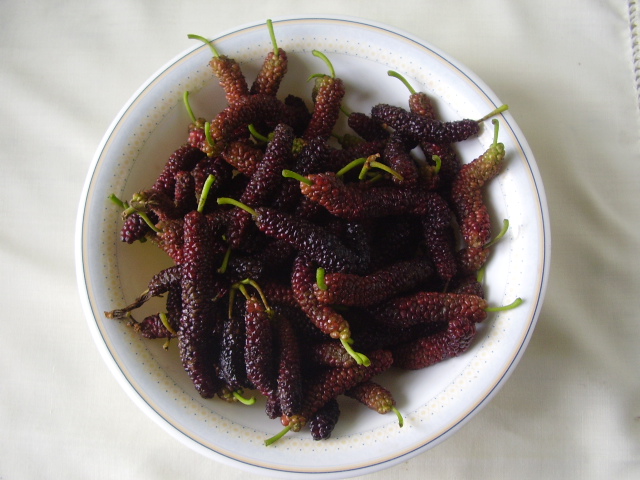
White mulberry is a fast-growing deciduous tree native to China, widely recognized for its varied leaf shapes and sweet, pale fruits. It belongs to the genus Morus and was historically introduced to North America and Europe to support the silk industry.
You will find this tree grows faster than almost any other temperate hardwood, often reaching maturity in just a few decades. It is frequently confused with the red mulberry (Morus rubra), but the white variety has glossier leaves and smoother bark.
Key Facts
- Water: 25 liters (7 gallons) weekly for young trees
- Light: requires at least 6-8 hours of direct sun
- Growth: can add 1-2 m (3-6 ft) of height annually
- Fruit: ripens from June to August
- Hardiness: survives temperatures down to -34 °C (-30 °F)
Is White Mulberry Right for Your Garden?
White mulberry is a high-maintenance tree for small urban gardens due to its aggressive root system and messy fruit drop. You should only plant it if you have ample space or choose a fruitless cultivar like ‘Kingan’. It thrives in a wide range of soils but requires a location where its falling berries won’t stain pavements or cars.
This tree is a functional choice for windbreaks or rural properties where its rapid growth provides quick screening. However, it is considered invasive in many parts of North America because it outcompetes the native red mulberry (Morus rubra). Consider these factors before planting:
- Proximity to foundations: roots can damage pipes and sidewalks
- Wildlife: birds love the fruit but will spread seeds everywhere
- Maintenance: expect significant cleanup during the summer fruiting peak
Identifying White Mulberry by Leaf and Bark
You can identify Morus alba by its highly variable leaf shapes, which can range from simple ovals to deeply lobed patterns on the same branch. The leaves are typically 5-15 cm (2-6 in) long, with a bright green, glossy upper surface that feels smooth to the touch. This distinguishes it from the red mulberry, which has dull, rough-textured leaves.
The bark of a mature tree is light orange-brown to grey with thick, irregular ridges. In spring, the tree produces small, inconspicuous green catkins. The fruit resembles a blackberry but varies in color from white and pink to dark purple, though it is almost always sweet rather than tart.
How Big Does a White Mulberry Tree Get?
A mature white mulberry typically reaches a height of 10-20 m (33-66 ft) with a similar spread. It develops a rounded, spreading crown that provides dense shade. Because it grows so quickly, the wood can be somewhat brittle, making it prone to limb breakage during heavy ice or wind storms.
In the first five years, you can expect the tree to grow at a rate of 1 m (3 ft) or more per year if given adequate water. Dwarf varieties are available for smaller spaces, usually topping out at 2-4 m (6-13 ft). If left unpruned, the canopy can become quite congested with crossing branches.
Choosing the Best Planting Site
Select a location with full sun and deep, well-drained soil to ensure the best fruit production and tree health. While white mulberry is drought-tolerant once established, it performs best when it doesn’t have to compete with other large trees for moisture. It tolerates urban pollution and salt spray, making it suitable for various environments.
Avoid planting near septic lines, underground utilities, or swimming pools. The roots are opportunistic and will seek out moisture sources aggressively. If you are planting for fruit harvest, ensure the site is accessible for ladders or tarps to catch the falling berries in July.
Watering and Feeding for Better Fruit
You should provide 2.5 cm (1 in) of water per week during the first two growing seasons to establish a deep root system. Once the tree reaches 3-4 meters in height, it generally only needs supplemental watering during extended summer droughts. Overwatering in heavy clay can lead to root rot, so ensure the site drains well.
Fertilize in early spring before the buds break using a balanced 10-10-10 NPK formula. Mature trees in fertile soil rarely need feeding, but a layer of organic mulch or compost around the base helps retain moisture. Avoid high-nitrogen fertilizers in late summer, as this encourages soft growth that may be damaged by early frosts.
Pruning White Mulberry for Shape and Harvest
The best time to prune is mid-winter while the tree is dormant to minimize sap bleeding. White mulberry produces a milky latex sap that can be messy and mildly irritating to the skin. Focus on removing dead, damaged, or crossing branches to improve airflow through the dense canopy.
For fruit production, you can prune the tree into a shorter, multi-stemmed bush to keep the berries within reach. If you are growing the weeping variety ‘Pendula’, you must prune the tips of the branches to keep them from trailing on the ground. Regular thinning prevents the center of the tree from becoming a haven for pests like scale insects.
White Mulberry vs Red Mulberry: Key Differences
The easiest way to tell them apart is to feel the top of the leaf; white mulberry is smooth and shiny, while red mulberry (Morus rubra) feels like sandpaper. Additionally, white mulberry buds are small, rounded, and pressed flat against the stem. Red mulberry buds are larger, more pointed, and sit at an angle away from the twig.
The fruit color is not a reliable indicator, as white mulberry can produce dark purple fruit. However, the fruit of the native red mulberry is usually longer and has a more complex, tart flavor. White mulberry is also much more resistant to leaf spot diseases than the native red species.
Common Problems and Invasive Risks
The most significant issue with Morus alba is its invasive potential in North America, where it cross-breeds with and displaces native species. In some regions, it is classified as a noxious weed. You should check local regulations before planting to ensure it is permitted in your area.
Common pests include mulberry scale, mealybugs, and two-spotted spider mites. Popcorn disease is a fungal issue where the fruit swells and becomes hard, resembling unpopped corn kernels. To manage this, you must:
- Rake up and destroy all fallen fruit and leaves in autumn
- Prune to increase sunlight penetration into the canopy
- Avoid overhead watering which keeps foliage wet
Traditional Uses of White Mulberry Leaf and Fruit
Historically, the leaves of this species were the exclusive food source for silkworms (Bombyx mori) in the silk trade. In traditional Chinese medicine, the leaves were dried and brewed into tea, which was used to manage blood sugar levels and support respiratory health. The fruit is high in anthocyanins and vitamin C, though it lacks the acidity found in many other berries.
The wood is dense and durable, traditionally used for making tool handles, fence posts, and even traditional sporting equipment like cricket bats in some regions. Today, white mulberry leaf extract is often sold as a dietary supplement, though its effectiveness for medical conditions should be discussed with a professional.
Year-Round White Mulberry Maintenance
| Spring | Apply a balanced fertilizer before leaves emerge. Monitor for scale insects on the bark as temperatures rise. |
|---|---|
| Summer | Harvest ripe fruit daily in June and July to prevent mess. Provide 25 liters of water weekly during heatwaves. |
| Autumn | Rake up all fallen fruit and leaves to prevent fungal spores from overwintering. Do not compost diseased foliage. |
| Winter | Prune for structure and remove dead wood while the tree is dormant. Check for winter sunscald on young trunks. |
Common White Mulberry Tree Problems
| What you see | Likely cause | What to do |
|---|---|---|
| Fruit becomes hard and white | Popcorn disease (fungus) | Remove and destroy affected fruit and improve air circulation. |
| Yellowing leaves in summer | Iron chlorosis or drought | Check soil pH and ensure the tree receives deep weekly watering. |
| White cottony spots on stems | Mealybugs or scale | Apply horticultural oil or neem oil during the dormant season. |
Best White Mulberry Cultivars
- ‘Pendula’ – weeping habit, grows to 3m (10ft) tall
- ‘Fruitless’ – male clone, no messy berries produced
- ‘Kingan’ – fast-growing fruitless variety for shade
- ‘Contorta’ – twisted, corkscrew branches for winter interest
- ‘Teas’ – a classic weeping form with small leaves
Frequently Asked Questions
Is white mulberry invasive?
Yes, it is considered invasive in many parts of the United States and Canada because it outcompetes native red mulberry trees. Always check your local invasive species list before planting.
What are the benefits of white mulberry leaf?
Traditionally, the leaves have been used to help regulate blood sugar and treat coughs. Modern extracts are often used in supplements, though you should consult a doctor before use.
Can you eat white mulberry fruit?
Yes, the fruit is edible and very sweet, though it lacks the tartness of black mulberries. It can be eaten fresh, dried, or used in jams and pies.
How do you tell white mulberry from red mulberry?
White mulberry leaves are glossy and smooth on top, while red mulberry (Morus rubra) leaves are dull and feel rough like sandpaper.
How fast does a white mulberry tree grow?
It is a very fast grower, often adding 1 to 2 meters (3 to 6 feet) of height per year under ideal conditions. It can reach its full height in about 20 years.
Information about traditional or historical uses is provided for educational interest only and is not medical advice. Do not use any plant to treat a condition without speaking to a qualified professional.
Sources & Verification
Taxonomy and distribution are checked against the databases below. Care guidance is written for cultivated species only and reviewed by our editor. How We Build Plant Profiles →