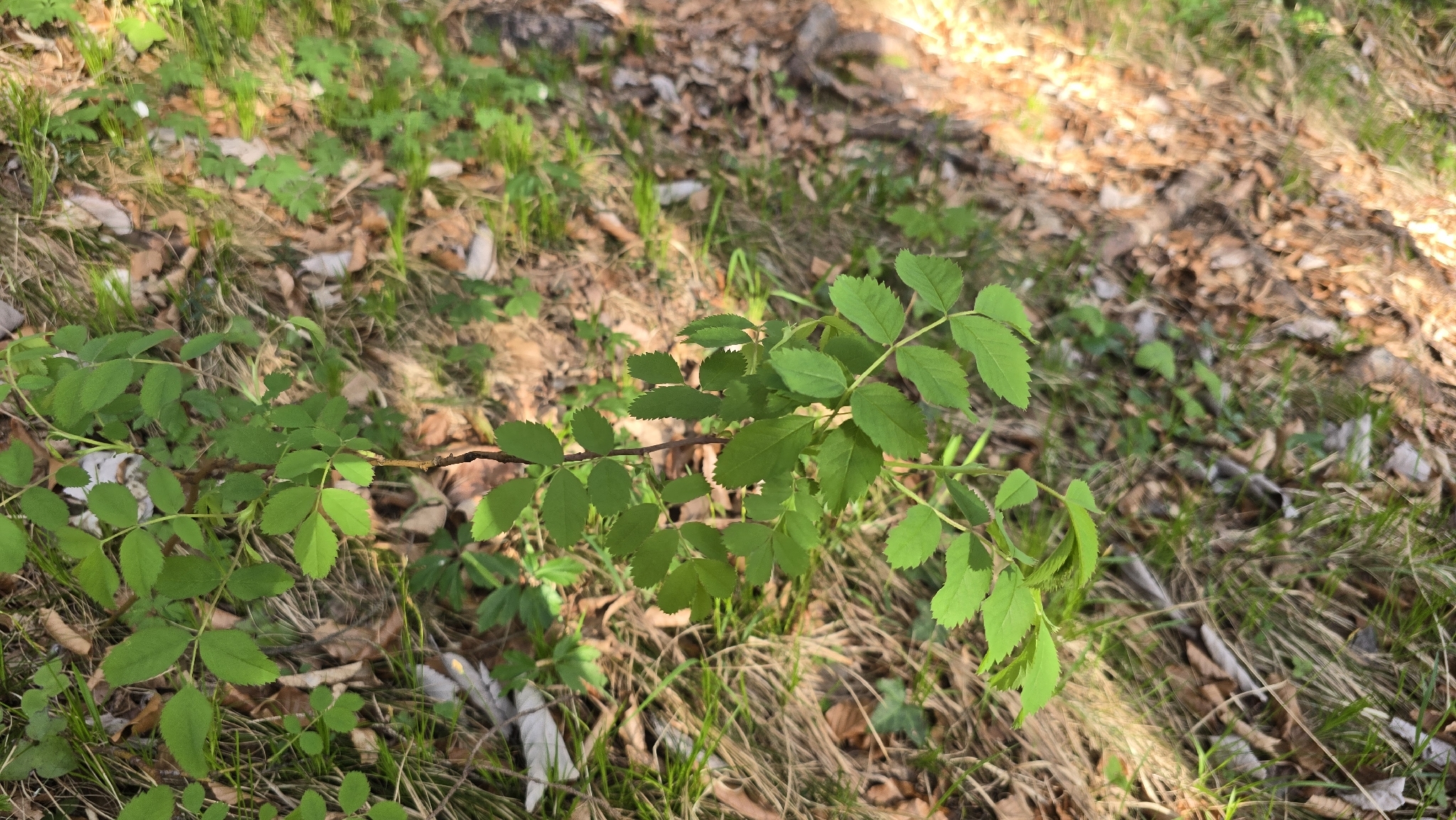
Swamp rose (Rosa palustris) is a deciduous, wetland-loving shrub native to eastern North America from Nova Scotia south to Florida and west to Arkansas. It bears single pink blossoms with bright yellow stamens that bloom from June through August.
Unlike cultivated garden roses that decay in wet conditions, this native species thrives in saturated, acidic soils along pond banks and rain gardens. It spreads naturally via underground suckers to form thickets reaching up to 2.4 m (8 ft) tall.
Key Facts
- Light: Full sun to light shade
- Soil: Wet, acidic loam or clay
- Height: 1.5–2.4 m (5–8 ft)
- Hardiness: USDA Zones 3–9
- Bloom Time: June to August
Where to Plant Swamp Rose
Swamp rose requires consistently wet or saturated soil to survive and will quickly decline in dry, well-drained garden borders. This native shrub suits rain gardens, stream banks, pond margins, and low-lying hollows that experience periodic standing water.
Because it expands through underground rhizomes, allow at least 2 m (6.5 ft) of clearance from delicate garden plants. It functions well as a informal boundary hedge or for stabilizing muddy slopes against soil erosion.
How to Identify Swamp Rose
Swamp rose forms an open, multi-stemmed shrub growing 1.5 to 2.4 m (5 to 8 ft) tall with a similar lateral spread. Stems feature distinctive, paired curved prickles located at the nodes, unlike the straight spines found on many upland wild roses.
The pinnately compound leaves consist of 5 to 9 dark green, finely serrated leaflets measuring 2 to 6 cm (0.8 to 2.4 in) long. Five-petaled pink blossoms measuring 4 to 5.5 cm (1.5 to 2.2 in) across appear in summer, followed by spherical red hips measuring 8 to 12 mm (0.3 to 0.5 in) in autumn.
Swamp Rose Soil and Sun Requirements
Swamp rose performs best in full sun with at least 6 hours of direct light daily. Plants grown in partial shade survive but produce fewer blossoms and sparse foliage.
Soil must remain moist to boggy year-round, with a preferred pH of 4.5 to 6.5. It tolerates heavy clay, silty mud, and low-oxygen soils that remain submerged during spring flood events.
How to Plant Swamp Rose
Plant bare-root or containerised swamp rose in early spring or early autumn when soil temperatures are moderate. Dig a planting hole twice as wide as the root ball and equal to its depth.
Follow these steps during installation:
- Position the root collar level with the surrounding soil line.
- Backfill with native site soil without adding rich compost or artificial amendments.
- Water with 10 to 15 L (2.6 to 4 gal) of water to settle soil around roots.
- Mulch with 5 cm (2 in) of shredded leaves, keeping mulch clear of stems.
Watering and Feeding Swamp Rose
Supply supplemental water to maintain at least 2.5 to 5 cm (1 to 2 in) of soil moisture weekly whenever natural rainfall falls short. Ground around the root zone should never dry out completely.
Fertilizer application is rarely necessary in native soil settings. In nutrient-deficient landscape beds, apply a thin top-dressing of organic leaf compost around the base in early spring.
How to Prune Swamp Rose
Prune swamp rose stems in late winter or early spring before new leaves emerge. Remove dead, damaged, or rubbing branches clean to the ground using sharp bypass shears.
Flowers form on the current season’s new growth. Thin out one-third of the oldest canes every 3 years to maintain air circulation through the canopy and control overall thicket size.
How to Propagate Swamp Rose
Propagate swamp rose by taking hardwood stem cuttings in late autumn or digging root suckers in early spring. Seed propagation is also effective when cold-stratified.
Follow these steps to root hardwood cuttings:
- Cut 15 to 20 cm (6 to 8 in) lengths of mature stem in late autumn.
- Dip the lower cut end into rooting hormone powder.
- Insert cuttings 10 cm (4 in) deep into a moist sand and peat mix.
- Keep moist at 15 to 18 °C (59 to 64 °F) until roots form in 6 to 8 weeks.
Swamp Rose Pests and Diseases
Swamp rose displays higher resistance to black spot (Diplocarpon rosae) than hybrid garden roses, though powdery mildew can occur in stagnant shade. Space plants 1.5 to 2 m (5 to 6.5 ft) apart to ensure adequate air circulation.
Monitor plants for these common insect pests:
- Aphids: Congregate on young spring shoots; knock off with a hose spray.
- Japanese beetles: Consume leaf tissue in July; pick off by hand into soapy water.
- Rose sawfly larvae: Skeletonise foliage; remove infested leaves manually.
Swamp Rose Winter Care
Swamp rose requires no winter protection in USDA Zones 3 through 9. The plant drops its leaves in autumn while bright red rose hips remain attached to dormant stems throughout winter.
Ensure the soil around the base enters winter fully saturated. Supplemental watering in late autumn is beneficial if seasonal rains have been unusually sparse.
Swamp Rose Flowers and Berry Safety
Flowers bloom from June to August, emitting a sweet fragrance that attracts native pollinators including the blinded sphinx moth (Paonias excaecatus). Each 5-petaled pink blossom lasts several days before drop.
Fleshy red hips ripen by September and remain non-toxic to humans and domestic pets. The outer pulp is edible, but internal seeds are coated in fine irritant hairs that must be scraped out before consumption.
Year-Round Care for Swamp Rose
| Spring | Prune out dead or damaged stems before buds open. Dig and transplant root suckers if expanding the planting area. |
|---|---|
| Summer | Ensure soil stays saturated during dry spells. Handpick Japanese beetles from leaves in midsummer. |
| Autumn | Leave red hips on stems to provide winter interest and bird food. Collect mature hips in October for seed collection. |
| Winter | Inspect stems for winter animal browsing. Cut old thicket canes back by one-third during late winter dormancy. |
Swamp Rose Pest and Leaf Problems Explained
| What you see | Likely cause | What to do |
|---|---|---|
| White powdery coating on foliage | Powdery mildew fungal growth from stagnant air | Prune internal stems to improve airflow and increase direct sunlight exposure. |
| Skeletonised leaves with lace-like damage | Japanese beetle feeding | Handpick beetles in early morning and submerge them in soapy water. |
| Yellowing foliage and weak stem growth | Soil drying out excessively | Increase irrigation frequency to keep soil continuously moist to wet. |
Best Companion Plants for Swamp Rose
Pair swamp rose with native moisture-loving perennials that thrive in wet, acidic soil margins. Select species with contrasting leaf textures and bloom structures.
Recommended companion plants include:
- Swamp milkweed (Asclepias incarnata)
- Blue flag iris (Iris versicolor)
- Cardinal flower (Lobelia cardinalis)
- Joe-Pye weed (Eutrochium maculatum)
Frequently Asked Questions
Is swamp rose the same as swamp rose mallow?
No, swamp rose (Rosa palustris) is a woody true rose in the Rosaceae family with prickly stems and small 5 cm pink blooms. Swamp rose mallow (Hibiscus moscheutos) is an herbaceous perennial in the Malvaceae family with smooth stems and large, plate-sized flowers up to 20 cm across.
What is the difference between swamp rose mallow and rose of sharon?
Swamp rose mallow (Hibiscus moscheutos) is a herbaceous native perennial that dies back to the ground every winter and requires wet soil. Rose of sharon (Hibiscus syriacus) is a woody Asian shrub that retains permanent woody stems above ground and prefers well-drained soil.
Is swamp rose invasive?
No, swamp rose (Rosa palustris) is a non-invasive shrub native to eastern North America. While it forms dense colonies through suckers in wet soils, it stays confined to suitable wetland habitats.
How fast does swamp rose grow?
Swamp rose grows at a moderate rate of 30 to 60 cm (12 to 24 in) per year. It reaches its mature height of 1.5 to 2.4 m (5 to 8 ft) within 3 to 5 years.
Is swamp rose toxic to dogs or cats?
Swamp rose is non-toxic to dogs, cats, and horses. Its curved prickles can cause minor skin scratches if animals run through thick stems.
Sources & Verification
Taxonomy and distribution are checked against the databases below. Care guidance is written for cultivated species only and reviewed by our editor. How We Build Plant Profiles →