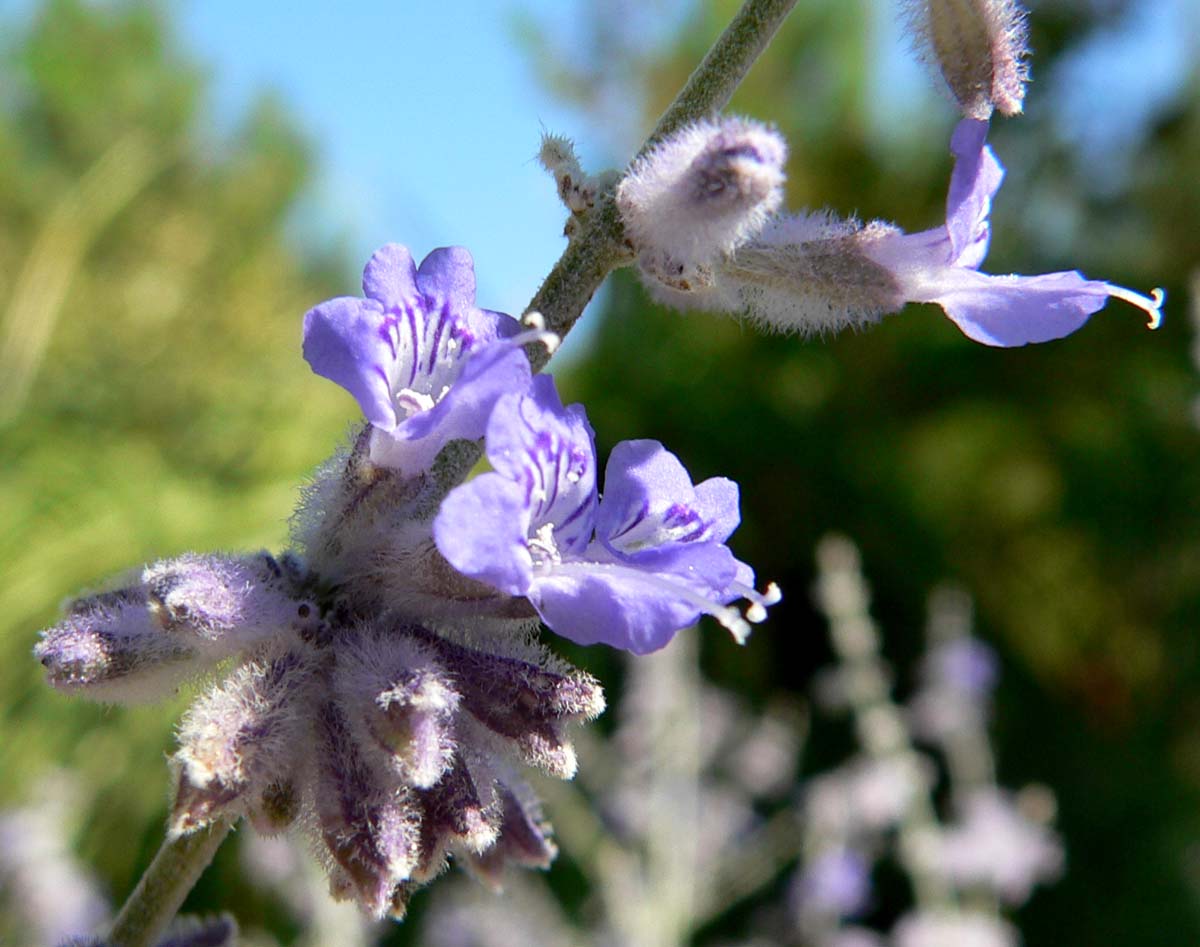
White Sage (Salvia apiana) is a woody perennial shrub native to the coastal sage scrub and desert edges of Southern California and Baja California. It is easily distinguished by its pale, almost white foliage and tall, arching flower spikes that attract a high volume of native bees.
This species is a specialist of arid environments and will fail quickly in humid climates or heavy, wet soils. While it is widely used for ceremonial smudge sticks and incense, it requires specific garden conditions to thrive outside its native range.
Key Facts
- Water: only during establishment or extreme drought
- Sun: full sun, minimum 6-8 hours daily
- Soil: fast-draining, sandy or rocky, low fertility
- Hardiness: USDA zones 8-11
- Height: up to 1.5 m (5 ft)
Is White Sage Right for Your Garden?
White Sage is best suited for dry, sun-drenched gardens in Mediterranean or semi-arid climates. It is an excellent choice for xeriscaping or native plant gardens where water conservation is a priority. Because it originates from the coastal sage scrub of Southern California, it thrives in heat and poor soil but will rot if subjected to high humidity or frequent lawn irrigation.
You should consider this plant if you have a south-facing slope or a rocky area where other plants struggle. It provides significant ecological value by supporting large carpenter bees and hummingbirds. However, if your garden has heavy clay soil or receives high summer rainfall, you will need to grow it in raised beds or large terracotta pots to ensure survival.
Identifying Californian White Sage
This evergreen shrub is characterized by its intense silvery-white foliage and tall, arching flower stalks that reach 1.5 to 2.5 meters (5 to 8 feet) when in bloom. The leaves are lanceolate, measuring 4 to 8 cm (1.5 to 3 inches) long, and are covered in a dense mat of tiny white hairs that give the plant its ghostly appearance. These hairs are a botanical adaptation to reflect sunlight and trap moisture in the Mojave and Sonoran desert edges.
When the leaves are crushed, they release a potent, resinous aroma due to high concentrations of cineole and thujone. The stems are square, a trait common to the Salvia genus, and become woody at the base as the plant matures. In late spring, the plant sends up unbranched, leafless stalks that carry small, white-to-lavender flowers with long, protruding stamens.
Choosing the Best Site and Planting
Select a location with full sun and excellent air circulation to prevent fungal issues like powdery mildew. The soil must be exceptionally well-drained; if you pour water on the ground and it takes more than a few minutes to disappear, the site is too wet for White Sage. Avoid planting it near high-water plants or under the canopy of large trees where shade and moisture accumulate.
- Space plants 1.2 to 1.8 meters (4 to 6 feet) apart to allow for their wide, mounding growth habit.
- Dig a hole only as deep as the root ball and twice as wide.
- Position the plant so the crown sits slightly above the soil line to prevent rot.
- Do not add compost or organic fertilizers to the planting hole, as this plant prefers lean, mineral-rich soil.
Watering and Feeding Requirements
Once established, White Sage requires no supplemental water except during prolonged summer droughts. During the first year, water the plant once every 2 to 3 weeks to help the roots reach deeper soil layers. After the first summer, the plant is remarkably drought-tolerant and can survive on natural rainfall alone in its native hardiness zones.
Overwatering is the most common cause of death for Californian White Sage. Never use an automated drip system that keeps the soil constantly moist. Feeding is generally unnecessary; the plant has evolved to grow in nutrient-poor soils, and adding nitrogen-rich fertilizer will result in weak, leggy growth and a shorter lifespan for the shrub.
Pruning White Sage for Health
Prune the spent flower stalks back to the base of the foliage in late summer to maintain a tidy appearance. This prevents the plant from becoming overly woody and encourages a denser flush of silvery leaves for the winter. You can also lightly trim the outer foliage to maintain a rounded shape, but avoid heavy pruning during the heat of mid-summer.
Never cut back into the old, leafless wood at the center of the shrub, as it rarely regenerates from these points. If the plant becomes too large or leggy, it is often better to replace it with a new specimen rather than attempting a hard rejuvenation prune. Regular light pruning after the bloom cycle is the most effective way to extend the plant’s ornamental life.
How to Propagate from Seeds and Cuttings
Propagate using seeds in the autumn or by taking softwood cuttings in early spring. Seeds of Salvia apiana have a low germination rate, often around 20-30%, and benefit from a light dusting of wood ash or a liquid smoke treatment to simulate the post-fire conditions of their native habitat. Sow seeds on the surface of a sandy seed-starting mix, as they require light to germinate.
- Softwood cuttings should be 7-10 cm (3-4 inches) long with the lower leaves removed.
- Use a very porous rooting medium, such as 70% perlite and 30% peat.
- Avoid using a humidity dome, as the fuzzy leaves trap moisture and rot easily.
- Rooting typically occurs in 4 to 6 weeks when kept at 18-24 °C (65-75 °F).
Common Problems and Pests
Root rot caused by overwatering or poorly draining soil is the primary cause of plant failure. If the leaves turn yellow and the stems feel soft at the base, the plant is likely suffering from Phytophthora or other fungal pathogens. There is no cure for advanced root rot, so prevention through proper site selection is vital.
Powdery mildew can appear on the foliage during humid summers or if the plant is crowded. Increase air circulation and avoid overhead watering to manage this. Aphids may occasionally cluster on the tender new flower stalks in spring; these can usually be dislodged with a sharp stream of water or left for natural predators like ladybugs to consume.
Winter Care and Cold Hardiness
Protect the root zone from excessive moisture during the winter months, as cold and wet soil will kill the plant. While White Sage is hardy down to approximately -7 °C (20 °F), it cannot tolerate “wet feet” during freezing temperatures. In regions with wet winters, consider covering the soil around the base with a waterproof barrier or growing the plant in a container that can be moved under an eave.
In USDA zone 8, a light mulch of gravel or small rocks can help reflect heat back into the plant and keep the crown dry. Do not use wood chips or straw mulch, as these retain moisture against the stem. If a hard frost is predicted, you can cover the foliage with a breathable frost cloth, but remove it as soon as temperatures rise to prevent humidity buildup.
The Bloom Cycle and Pollinators
Small, white to pale lavender flowers appear on long, wand-like racemes from May through July. The flowers are specifically shaped for pollination by large bees, such as the Valley Carpenter Bee (Xylocopa sonorina), which are heavy enough to trigger the plant’s pollen mechanism. The nectar is also a significant food source for hummingbirds and various butterfly species.
After the flowers fade, the stalks turn a light tan color and can be harvested for dried arrangements or left on the plant to provide seeds for local birds. The seeds were traditionally harvested by Indigenous peoples of the Southwest as a food source, often ground into a meal known as pinole. In the garden, the dried stalks add architectural interest throughout the autumn months.
Year-Round Care for White Sage
| Spring | Check for aphid outbreaks on new growth. Water young plants once every 2 weeks if spring rains are absent. Take softwood cuttings for propagation. |
|---|---|
| Summer | Harvest leaves for drying or smudge sticks before the heat of midday. Remove spent flower stalks after the bloom finishes in July. Monitor for signs of heat stress. |
| Autumn | Sow seeds in sandy flats. Reduce watering to zero for established plants. Clear away any fallen debris from the base of the plant to prevent winter rot. |
| Winter | Ensure drainage remains clear during heavy rains. Protect the crown from standing water. Avoid pruning or fertilizing during the dormant period. |
Common White Sage Problems Explained
| What you see | Likely cause | What to do |
|---|---|---|
| Yellowing lower leaves | Overwatering | Stop all supplemental watering and check soil drainage. |
| White fuzzy patches on leaves | Powdery mildew | Improve air circulation and avoid wetting the foliage. |
| Leggy, floppy stems | Too much shade or fertilizer | Move to a full sun location and stop feeding the plant. |
| Blackened stems at the base | Crown rot | Remove the plant and replace, ensuring the new one is planted higher. |
Popular White Sage Cultivars
- Salvia apiana ‘Compacta’ – a shorter, more mounded form for small gardens.
- Salvia apiana ‘Grandiflora’ – features slightly larger flower spikes.
- Salvia apiana x clevelandii – a hybrid with darker flowers and better cold tolerance.
Best Companion Plants
Pair White Sage with other California natives that share its low-water requirements and sun preferences. It looks best when grouped with plants that offer contrasting textures, such as the fine-textured California Poppy (Eschscholzia californica) or the dark green foliage of Cleveland Sage (Salvia clevelandii). These combinations create a resilient, habitat-rich landscape.
- Flat-top Buckwheat (Eriogonum fasciculatum) for a classic chaparral look.
- Our Lord’s Candle (Hesperoyucca whipplei) for dramatic height contrast.
- Blue-eyed Grass (Sisyrinchium bellum) for spring color at the base.
- Desert Mallow (Sphaeralcea ambigua) for orange floral accents.
Frequently Asked Questions
What is the difference between White Sage and common sage?
White Sage (Salvia apiana) is a wild shrub from California used for incense, while common sage (Salvia officinalis) is a culinary herb from the Mediterranean used in cooking.
What are the benefits of Californian White Sage incense?
Traditionally used by Indigenous peoples for purification, the smoke contains antimicrobial properties that can help clear airborne bacteria in a space.
Can I grow White Sage indoors?
It is very difficult to grow indoors because it requires extremely high light levels and low humidity; it usually fails due to lack of airflow and root rot.
Is White Sage toxic to cats?
It is generally considered non-toxic to cats and dogs, though the strong essential oils can be irritating to their respiratory systems if used as incense nearby.
How do I make a smudge stick from Salvia apiana?
Bundle fresh 15-20 cm (6-8 inch) leafy stems together, tie them tightly with cotton twine, and hang them upside down in a dark, dry place for 2-3 weeks.
Information about traditional or historical uses is provided for educational interest only and is not medical advice. Do not use any plant to treat a condition without speaking to a qualified professional.
Sources & Verification
Taxonomy and distribution are checked against the databases below. Care guidance is written for cultivated species only and reviewed by our editor. How We Build Plant Profiles →