Salvia Species and Garden Varieties
16 plant profiles · Learn how to identify and grow different Salvia species, from culinary Common Sage to ornamental Russian Sage and Rosemary.
The Salvia genus contains nearly 1,000 species, all characterized by square stems and two-lipped flowers that utilize a unique lever-like mechanism to deposit pollen on visiting insects. You can identify members of this group by their opposite leaf arrangement and often aromatic foliage, which ranges from the woolly textures of White Sage (Salvia apiana) to the needle-like leaves of Rosemary (Salvia rosmarinus). While many are native to the Mediterranean and Central America, they are adapted to diverse climates including dry scrublands and moist woodlands.
Choosing the right variety depends on whether you want a kitchen staple or a long-blooming border plant. For culinary use, Common Sage (Salvia officinalis) provides the classic earthy flavor, while Rosemary—recently reclassified into this genus—offers woody stems and high essential oil content. If your goal is a pollinator garden, Woodland Sage (Salvia nemorosa) produces dense spikes of purple flowers that return every year in temperate zones. In contrast, Scarlet Sage (Salvia splendens) is frequently grown as an annual for its intense red bracts that persist through summer heat.
Environmental conditions should guide your selection. Most species, such as the silver-leaved Russian Sage (Salvia yangii), require at least 6 to 8 hours of direct sunlight and gritty, well-draining soil to prevent root rot. If you have limited space, Mealycup Sage (Salvia farinacea) stays compact at 30-60 cm (1-2 ft), whereas Anise-Scented Sage (Salvia guaranitica) can reach heights of 1.5 m (5 ft) in a single season. Always check your local hardiness zone, as some species survive -20 °C (-4 °F) while others perish at the first frost.

Anise-Scented Sage
Salvia guaranitica
☀️ Full Sun 💧 Moderate

Brown Sage
Salvia aurea
☀️ Full Sun 💧 Low

Chia
Salvia hispanica
☀️ Full Sun 💧 Low
Clary Sage
Salvia sclarea
☀️ Full Sun 💧 Low
Common Sage
Salvia officinalis
☀️ Full Sun 💧 Low
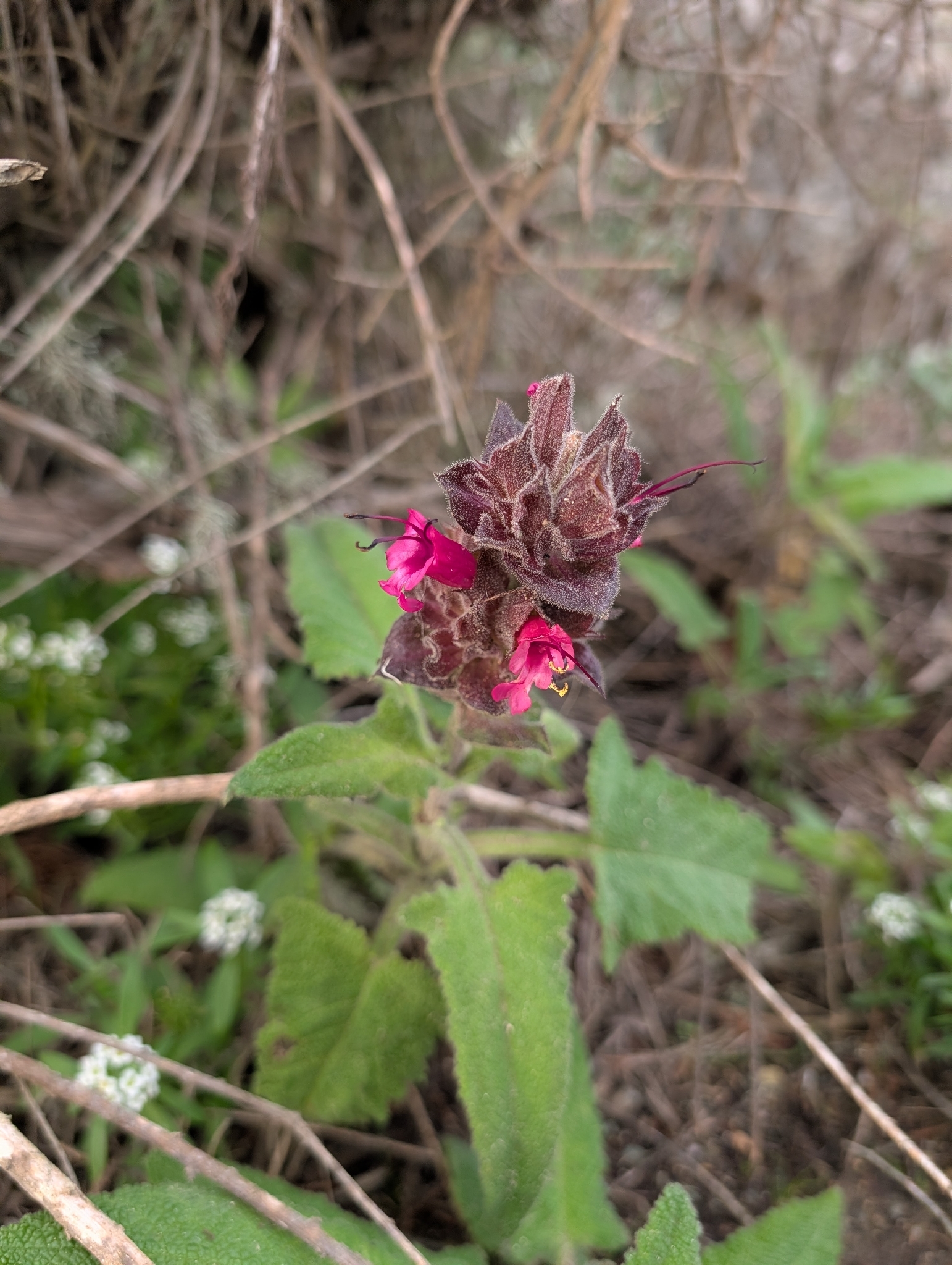
Hummingbird Sage
Salvia spathacea
☀️ Partial Shade 💧 Low
Meadow Sage
Salvia pratensis
☀️ Full Sun 💧 Low

Mealycup Sage
Salvia farinacea
☀️ Full Sun 💧 Low

Nodding Sage
Salvia nutans

Purple Sage
Salvia leucophylla
☀️ Full Sun 💧 Low

Red Sage
Salvia miltiorrhiza
☀️ Full Sun 💧 Moderate

Rosemary
Salvia rosmarinus
☀️ Full Sun 💧 Low
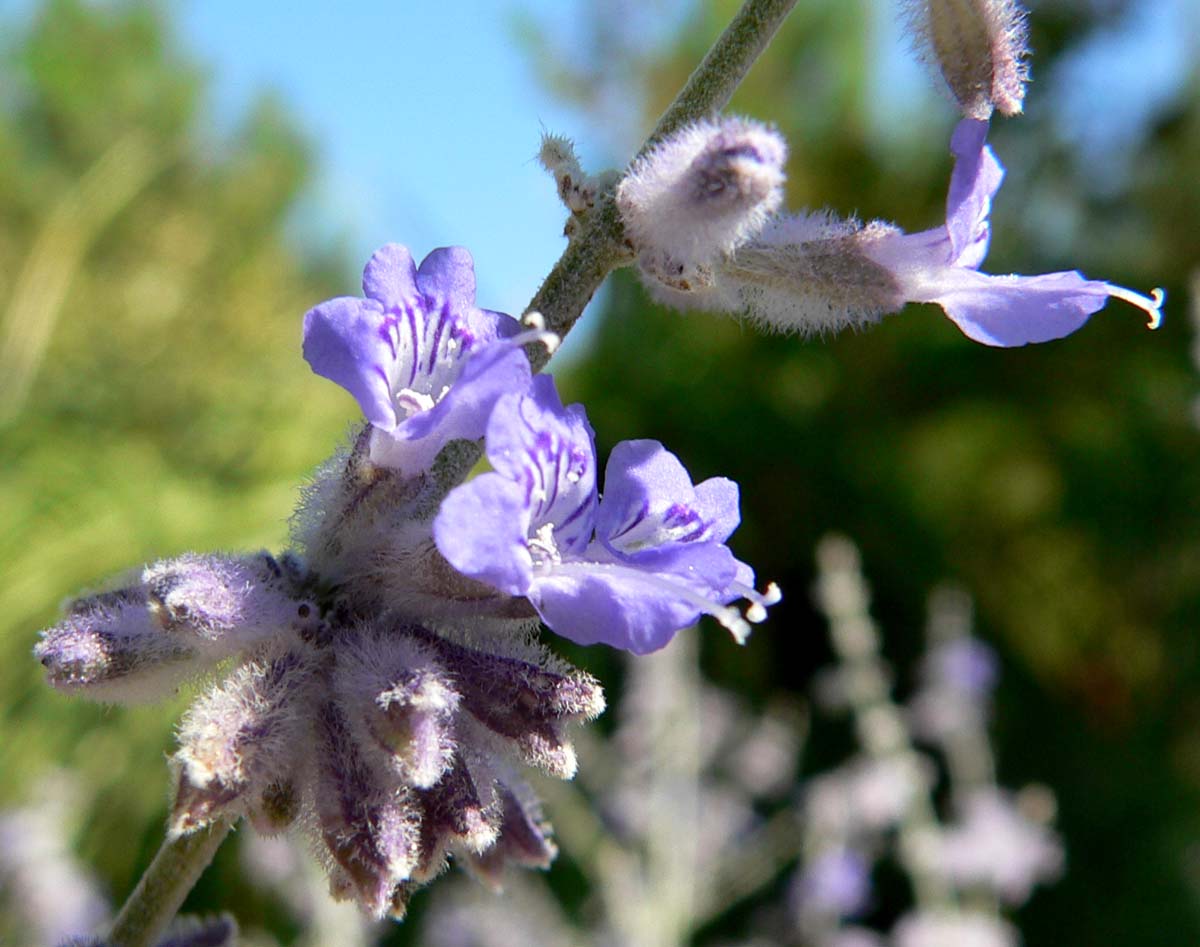
Russian Sage
Salvia yangii
☀️ Full Sun 💧 Low

Scarlet Sage
Salvia splendens
☀️ Full Sun 💧 Moderate

White Sage
Salvia apiana
☀️ Full Sun 💧 Low
Woodland Sage
Salvia nemorosa
☀️ Full Sun 💧 Moderate
Common Questions
Are all salvia plants perennial?
Most salvias are perennials, but many tropical species like Scarlet Sage are grown as annuals in climates that experience frost.
Is rosemary actually a salvia?
Yes, DNA testing in 2017 led botanists to reclassify Rosmarinus officinalis as Salvia rosmarinus because it shares the same ancestral lineage as other sages.
Which salvia is best for pollinators?
Species with open, tubular flowers like Woodland Sage and Mealycup Sage are frequently visited by honeybees, bumblebees, and butterflies throughout the summer.