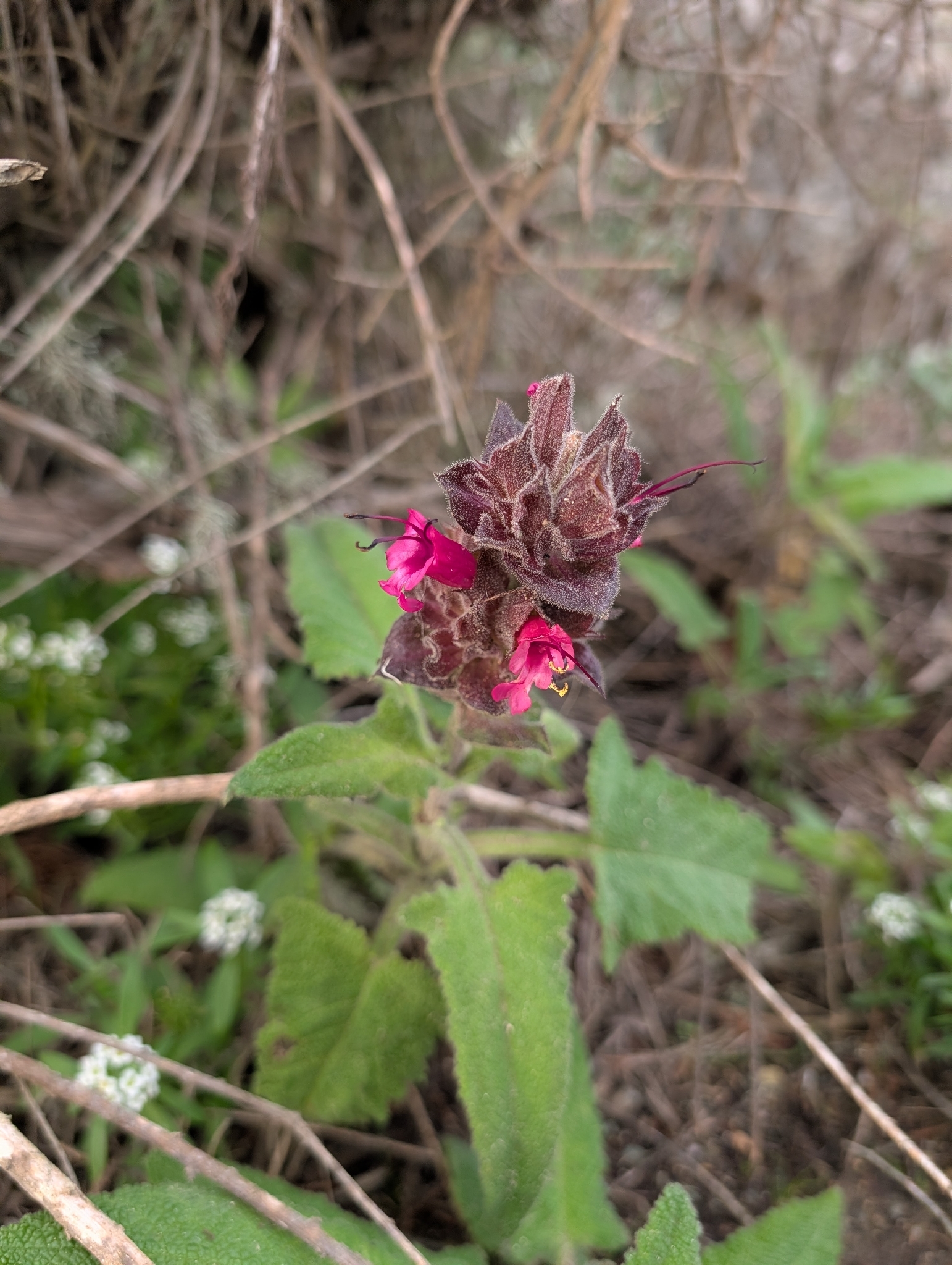
Meadow Sage, known scientifically as Salvia pratensis, is a clump-forming perennial that originates from the sun-drenched meadows of Europe, Western Asia, and Northern Africa. It produces upright, square-sided stems topped with clusters of hooded, two-lipped flowers that typically appear in shades of deep violet or blue.
This species is often confused with the more common wood sage (Salvia nemorosa), but it features larger individual blossoms and more deeply wrinkled, aromatic foliage. It thrives in well-drained, alkaline soils and is frequently used to provide vertical structure in gravel gardens or traditional borders.
Key Facts
- Light: thrives in full sun locations
- Water: requires regular moisture until established
- Hardiness: withstands temperatures down to -35 °C (-30 °F)
- Soil: prefers neutral to alkaline, well-drained conditions
- Height: reaches 30-90 cm (12-36 in) when flowering
Fitting Meadow Sage into Your Garden
Meadow Sage is a reliable choice for sunny borders and wildflower meadows where you need dependable height and structure. It suits anyone looking for a drought-tolerant perennial that returns year after year with minimal intervention. The key to success is ensuring the soil does not stay waterlogged during the winter months, which can cause the root crown to rot.
Because it is a magnet for bees and butterflies, it is a functional addition to pollinator-focused spaces. Its relaxed, somewhat wild habit makes it less formal than many hybrid salvias, allowing it to blend into naturalistic planting schemes. It is particularly effective when planted in drifts of 3-5 plants to create a concentrated wash of color.
Identifying Salvia pratensis
Meadow Sage is distinguished by its basal rosette of dark green, wrinkled leaves that grow up to 15 cm (6 in) long. The leaves are roughly heart-shaped at the base and have a distinctively pebbled or rugose texture. The flowering stems are strictly square in cross-section, a hallmark of the Lamiaceae family, and can reach 90 cm (35 in) in height.
- Flowers: 2-3 cm (0.8-1.2 in) long, hooded, usually violet-blue.
- Stems: upright, often branched, covered in fine hairs.
- Foliage: aromatic when crushed, with scalloped or toothed edges.
- Fruit: small, dark nutlets that form inside the persistent calyx.
Finding the Best Site
Choose a spot that receives at least 6 hours of direct sunlight daily to prevent the tall flower spikes from flopping. While it can tolerate very light shade, the stems will stretch and the flower density will decrease significantly. It is highly adaptable to different soil types but performs best in loamy or chalky soils that drain freely.
Avoid low-lying areas of the garden where frost pockets form or where water collects after rain. In its native habitat, it grows on limestone-rich grasslands, so if your soil is highly acidic, adding a handful of garden lime can improve its vigor. It is wind-tolerant once established, making it suitable for open, exposed sites.
Planting Meadow Sage Seeds and Pots
The best time to plant Meadow Sage is in early spring or early autumn when the soil is moist and temperatures are mild. If you are starting from seed, sow them on the surface of the compost as they require light to germinate. Germination usually occurs within 14-21 days at temperatures of 18-22 °C (64-72 °F).
- Space plants 30-45 cm (12-18 in) apart to allow for air circulation.
- Dig a hole twice the width of the root ball but no deeper.
- Water the planting hole thoroughly before placing the plant.
- Keep the soil consistently moist for the first 4 weeks.
Watering and Feeding Requirements
Water Meadow Sage once a week during its first growing season, or whenever the top 5 cm (2 in) of soil feels dry. Once the root system is established, it is remarkably drought-tolerant and typically only needs supplemental water during prolonged heatwaves. Over-watering is a common mistake that leads to weak growth and fungal issues.
This plant does not require heavy fertilization and often grows better in poor to moderately fertile soil. An annual application of organic mulch or a balanced, slow-release fertilizer in early spring is sufficient. Excessive nitrogen will result in lush foliage at the expense of the violet-blue flower spikes.
Pruning Meadow Sage for Repeat Blooms
Cut the flower spikes back to the basal foliage immediately after the first flush of flowers fades in mid-summer. This practice, often called deadheading, encourages the plant to produce a second, smaller flush of blooms in late summer or autumn. If left to go to seed, the plant will stop flowering and may become messy in appearance.
In late autumn or early spring, you should cut the entire plant back to within 5 cm (2 in) of the ground. This removes the dead, woody stems and makes way for fresh, green growth. Use sharp, clean bypass pruners to ensure clean cuts and prevent the spread of pathogens.
Meadow Sage vs Salvia Nemorosa
You can tell Salvia pratensis apart from Salvia nemorosa by the size of the individual flowers, which are significantly larger in the meadow sage. While S. nemorosa (wood sage) produces dense, narrow spikes of tiny blossoms, S. pratensis has more spaced-out, prominent hooded flowers. The foliage of Meadow Sage is also much larger and more deeply textured than the relatively smooth, small leaves of wood sage.
Growth habit also differs; Meadow Sage tends to be taller and more open, whereas wood sage is compact and bushy. In the garden, S. pratensis often begins blooming slightly earlier in the spring. Both are excellent for pollinators, but Meadow Sage provides a more architectural, airy look compared to the solid blocks of color provided by wood sage cultivars like ‘Caradonna’.
Common Pests and Problems
The most frequent issue for Meadow Sage is powdery mildew, which appears as a white, flour-like coating on the leaves during humid summers. This is usually caused by poor air circulation or drought stress. To prevent it, space plants correctly and water at the base of the plant rather than over the leaves.
- Aphids: check new growth in spring; wash off with a sharp stream of water.
- Slugs: protect young shoots in early spring with grit or barriers.
- Root Rot: ensure soil is well-drained, especially in heavy clay.
- Flopping: move plants to a sunnier spot or provide light staking.
Year-Round Care for Meadow Sage
| Spring | Cut back dead stems to the base before new growth appears. Apply a thin layer of compost and sow seeds if expanding your patch. |
|---|---|
| Summer | Deadhead spent flower spikes to the base of the stem to encourage a second bloom. Water deeply during periods of extreme drought. |
| Autumn | Collect seeds from dried flower heads if desired. Tidy up yellowing foliage but leave the basal rosette intact for winter protection. |
| Winter | Avoid watering and ensure drainage remains clear. In very cold regions, a light mulch of bark can protect the root crown from heave. |
Why Is My Meadow Sage Struggling? Quick Diagnosis
| What you see | Likely cause | What to do |
|---|---|---|
| White spots on leaves | Powdery mildew | Improve air circulation and avoid overhead watering. |
| Stems falling over | Insufficient light | Move the plant to a location with at least 6 hours of full sun. |
| Yellowing lower leaves | Waterlogged soil | Amend the soil with grit or move to a more well-drained site. |
Popular Salvia pratensis Cultivars
- ‘Twilight Serenade’ – deep violet-blue flowers on 50 cm stems
- ‘Rose Rhapsody’ – distinct pink blossoms with a compact habit
- ‘Madeline’ – unique bicolor flowers of blue and white
- ‘Sky Dance’ – soft, light blue flowers and vigorous growth
- ‘Moulin Rouge’ – dark purple flowers with reddish-tinted calyces
- ‘Indigo’ – intense, dark blue-purple flower spikes
Best Companion Plants
Meadow Sage pairs effectively with other sun-loving perennials that share its preference for well-drained soil. The vertical violet spikes provide a sharp contrast to the flat flower heads of yarrow (Achillea millefolium) or the rounded forms of sea holly (Eryngium variifolium). It also works well when interplanted with ornamental grasses.
- Lavender (Lavandula angustifolia) for a Mediterranean feel.
- Catmint (Nepeta × faassenii) for overlapping bloom times.
- Stipa tenuissima for fine-textured movement.
- Ox-eye daisy (Leucanthemum vulgare) for a classic meadow look.
Frequently Asked Questions
How do I sow Salvia pratensis seeds?
Sow seeds on the surface of well-draining compost in spring or autumn, as they need light to germinate. Keep them at 18-22 °C (64-72 °F) and they should sprout within three weeks.
Is Meadow Sage toxic to dogs or cats?
No, Salvia pratensis is considered non-toxic to humans, dogs, and cats. It is a safe choice for family gardens and pet-friendly landscapes.
How tall does Meadow Sage grow?
The flowering spikes typically reach between 30 and 90 cm (12-36 in) depending on the variety and soil fertility. The basal foliage usually stays below 20 cm (8 in).
What is the difference between Salvia pratensis and Salvia nemorosa?
Meadow Sage (S. pratensis) has larger, more open flowers and deeply wrinkled leaves, while Wood Sage (S. nemorosa) has smaller flowers in very dense, tight spikes.
Was Meadow Sage used as medicine?
Traditionally, the seeds were soaked to create a mucilage used to clear debris from the eyes, which earned the plant the common name 'Meadow Clary' or 'Clear-eye'.
Information about traditional or historical uses is provided for educational interest only and is not medical advice. Do not use any plant to treat a condition without speaking to a qualified professional.
Sources & Verification
Taxonomy and distribution are checked against the databases below. Care guidance is written for cultivated species only and reviewed by our editor. How We Build Plant Profiles →