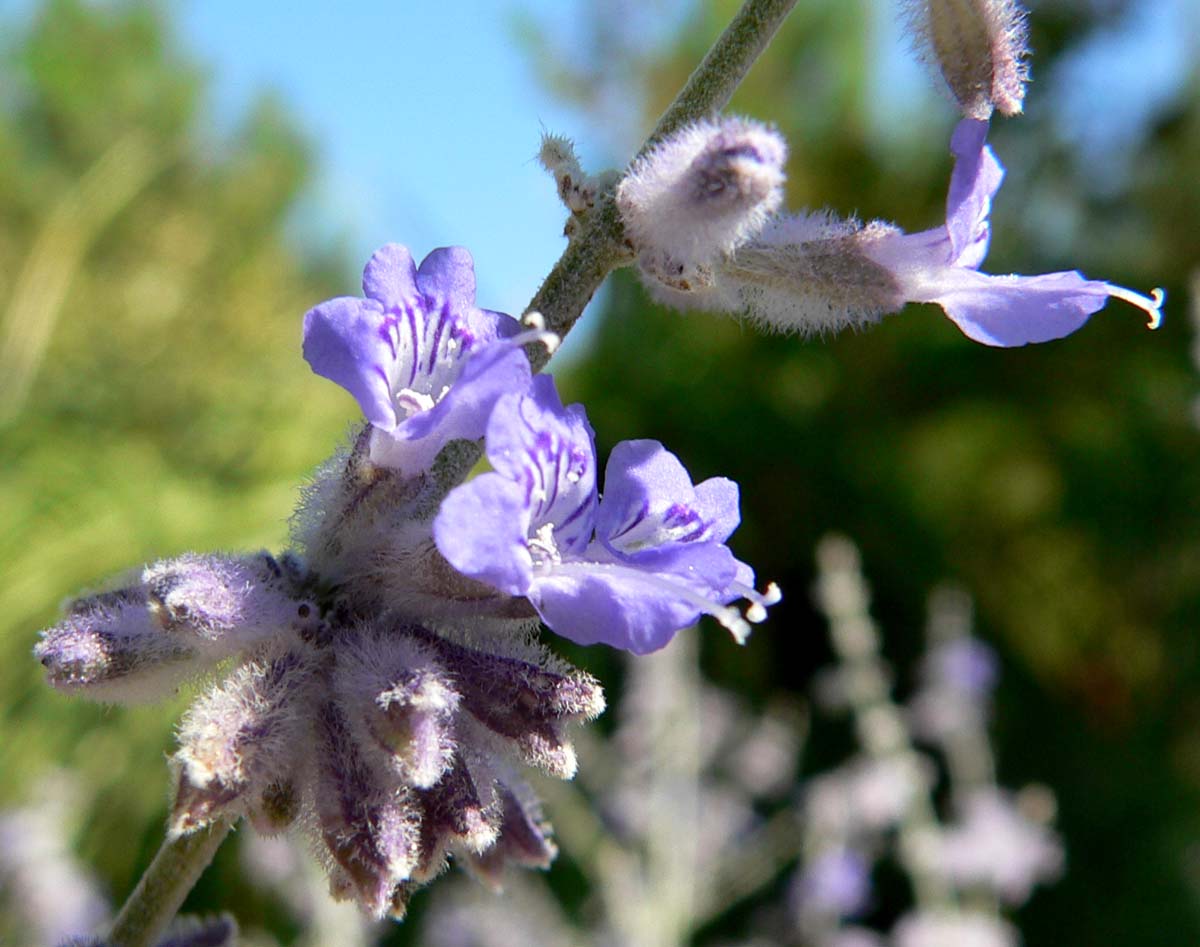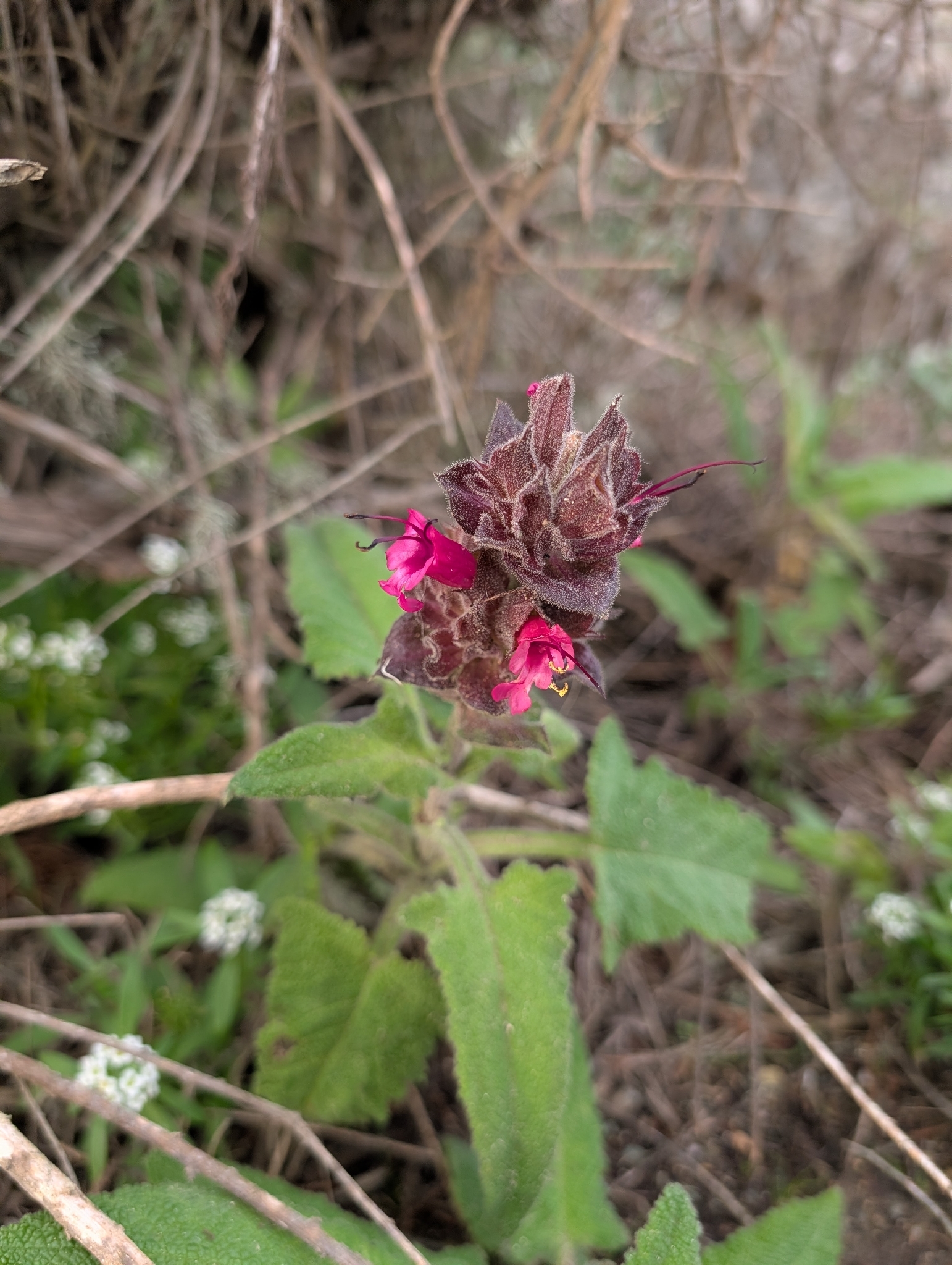
Hummingbird Sage (Salvia spathacea) is a perennial herb native to the coast ranges of California, easily recognized by its fruity, pineapple-scented foliage and tall spikes of rose-lilac flowers. Unlike most members of its genus that demand blistering sun, this species is a specialist of the dry shade found beneath oak canopies.
You can expect this plant to spread via underground rhizomes, eventually forming a dense groundcover that suppresses weeds and attracts pollinators. It is particularly useful for stabilizing slopes or filling coastal garden gaps where other flowering plants might struggle with low light levels.
Key Facts
- Water: low to moderate once established
- Light: partial shade to full shade
- Hardiness: USDA zones 8 to 11
- Bloom Time: March to May
- Height: 30 to 90 cm (1 to 3 ft)
Is Hummingbird Sage Right for Your Garden?
Hummingbird Sage is the ideal choice for dry, shaded areas where most flowering perennials fail to thrive. It fits best in Mediterranean-style gardens, woodland edges, or as an understory plant for coast live oak (Quercus agrifolia). While many sages require sharp drainage and full sun, this species evolved in the leaf litter of California canyons, making it tolerant of heavier soils and lower light.
You should choose this plant if you want a low-maintenance groundcover that provides high wildlife value. It is specifically adapted to the foraging habits of Anna’s hummingbirds, which visit the nectar-rich flowers throughout the spring. Because it spreads through rhizomes, it can fill a 1.2 m (4 ft) wide space within two to three growing seasons.
- Thrives in the dry shade of oak trees
- Suppresses weeds with dense, aromatic foliage
- Drought-tolerant once the root system is established
- Attracts hummingbirds and native bees
Identifying the Look of California Hummingbird Sage
Hummingbird Sage is a colony-forming perennial that reaches a foliage height of 30 cm (1 ft), with flower spikes extending up to 90 cm (3 ft). The leaves are deltoid or arrow-shaped, measuring 10 to 20 cm (4 to 8 in) in length, and have a noticeably wrinkled or rugose texture. Both the stems and leaves are covered in glandular hairs that make the plant feel slightly sticky to the touch.
The flowers are arranged in dense whorls along a sturdy, dark-colored stem. Each flower is encased in a large, burgundy-colored calyx that resembles a small pitcher, giving the plant its other common name, Crimson Pitcher Sage. The petals themselves are typically a deep rose or magenta, though rare yellow-flowered cultivars exist in the nursery trade.
- Large, arrow-shaped leaves with scalloped edges
- Sticky, glandular hairs that release a pineapple scent
- Tall, unbranched flower spikes with burgundy bracts
- Deeply lobed, two-lipped flowers about 2.5 cm long
The Best Site and Light for Salvia spathacea
For the best results, plant Hummingbird Sage in partial shade or filtered sunlight, especially in inland areas where summer temperatures exceed 32 °C (90 °F). In cool coastal regions, it can handle more direct sun, but the leaves may turn a lighter green or yellow if the plant becomes heat-stressed. It is one of the few sages that will continue to bloom even in fairly deep shade under a dense canopy.
The soil should be well-draining, though this species is more forgiving of clay than its desert-dwelling relatives like white sage (Salvia apiana). If your soil is heavy clay, planting on a slight mound or slope will help prevent the rhizomes from rotting during wet winters. It naturally occurs on north-facing slopes and in canyon bottoms from sea level to 610 m (2,001 ft).
- Avoid planting in areas with standing water
- Select a site with protection from the afternoon sun
- Provide space for the 90-120 cm (3-4 ft) spread
- Ideal for slopes to prevent crown rot
Planting and Spacing for a Thick Groundcover
Space your plants 90 to 120 cm (3 to 4 ft) apart to allow for their natural rhizomatous spread. While they may look sparse initially, the underground runners will quickly fill the gaps between plants. The best time to plant is in the late autumn or early winter, coinciding with the start of the California rainy season, which allows the roots to establish before the summer heat arrives.
When planting, dig a hole twice as wide as the root ball but no deeper. Ensure the crown of the plant sits slightly above the soil line to prevent rot. Adding a 5 to 10 cm (2 to 4 in) layer of coarse mulch or oak leaf litter around the base will help retain moisture and mimic the plant’s natural habitat. Do not bury the crown with mulch, as this can lead to fungal issues.
- Plant during the cool, rainy months (November to February)
- Space 90 cm apart for a faster fill
- Keep the crown elevated above the soil surface
- Use organic mulch to cool the soil
Watering and Feeding Hummingbird Sage
Established plants require deep watering once every 2 to 4 weeks during the dry summer months to keep the foliage looking lush. While the plant can survive on no supplemental water once established in coastal zones, it may go partially dormant and lose leaves in extreme heat. If you live in a hot inland valley, regular monthly irrigation is necessary to prevent the plant from drying out completely.
Regarding nutrients, Hummingbird Sage rarely requires supplemental feeding or chemical fertilizers. In fact, over-fertilizing can lead to excessive, weak foliage growth and fewer flowers. If your soil is particularly nutrient-poor, a thin layer of compost applied in the autumn is sufficient. Avoid high-nitrogen fertilizers which can make the plant more susceptible to pests like aphids.
- Water deeply but infrequently to encourage deep roots
- Reduce watering in the winter if rainfall is consistent
- Avoid overhead watering to prevent powdery mildew
- Skip synthetic fertilizers; use compost if needed
Pruning and Maintenance After Blooming
Prune the spent flower spikes back to the base of the foliage in late summer or early autumn after the seeds have dropped. This keeps the plant looking tidy and prevents the dry stalks from becoming a fire hazard in late summer. You can also remove any old or tattered leaves at this time to make room for the new growth that typically emerges with the first autumn rains.
If the colony becomes too dense or begins to encroach on pathways, you can easily thin the rhizomes. Simply use a sharp spade to cut through the runners and lift the unwanted sections. This maintenance is best performed in early winter when the plant is beginning its active growth cycle. Every 3 to 5 years, you may want to cut the entire patch back to 5 cm (2 in) above the ground to rejuvenate the foliage.
- Deadhead flower spikes to maintain a neat appearance
- Thin rhizomes in winter to control the spread
- Remove dead leaves in autumn to improve airflow
- Rejuvenate old patches with a hard prune every few years
Propagating Hummingbird Sage from Seeds and Rhizomes
The most effective way to propagate Salvia spathacea is by dividing the rhizomes in late autumn. Dig up a small section of the plant that includes a rooted runner and at least one set of leaves, then transplant it directly into a new spot or a container. This method ensures you get a clone of the parent plant, which is important if you are growing a specific cultivar like ‘Cerro Alto’.
Growing from seed is also possible but requires more patience. Harvest the seeds from the dried ‘pitchers’ in mid-summer and store them in a cool, dry place. Sow them in late autumn in a well-draining seed starting mix. They do not require cold stratification, but germination can be irregular, taking anywhere from 3 to 8 weeks. Seedlings should be protected from slugs and snails, which find the young leaves particularly tasty.
- Divide rhizomes during the winter growing season
- Sow seeds in autumn for natural germination
- Keep seed flats moist but not waterlogged
- Protect young starts from frost in their first year
Year-Round Care for Hummingbird Sage
| Spring | Monitor for hummingbirds as blooming begins. Provide light supplemental water if the spring is unusually dry to extend the flowering period. |
|---|---|
| Summer | Water deeply every 3 weeks to prevent dormancy in hot areas. Collect seeds from dried flower spikes once they turn brown and brittle. |
| Autumn | Cut back old flower stalks to the base. Apply a 5 cm (2 in) layer of leaf mulch and divide rhizomes if you wish to expand the colony. |
| Winter | This is the primary growing season; no irrigation is needed if it rains. Protect young plants from heavy freezes below -7 °C (20 °F). |
Common Hummingbird Sage Problems and Solutions
| What you see | Likely cause | What to do |
|---|---|---|
| White powdery coating on leaves | Powdery mildew | Improve air circulation and avoid overhead watering in the evening. |
| Yellowing leaves in summer | Heat stress or too much sun | Provide more shade or increase deep watering frequency to once every 2 weeks. |
| Mushy stems at the soil line | Crown rot from poor drainage | Reduce watering and ensure the crown is not buried under soil or mulch. |
| Ragged holes in new growth | Slugs or snails | Use organic snail bait or hand-pick pests during damp evenings. |
Popular Hummingbird Sage Cultivars
- ‘Cerro Alto’ – unique yellow flowers on standard green foliage.
- ‘Powerline Pink’ – vigorous grower with bright magenta-pink blooms.
- ‘Confetti’ – a mix of flower colors including bicolors.
- ‘Avis Keedy’ – another reliable yellow-flowering selection.
- ‘Kawishiwi’ – compact variety with very dark burgundy bracts.
Companion Plants for Hummingbird Sage
Pair Hummingbird Sage with other California native shade-dwellers that share its preference for dry summer conditions. It looks particularly natural when planted alongside Island Alumroot (Heuchera maxima) or Douglas Iris (Iris douglasiana). These species provide a variety of textures and flower shapes that complement the bold, upright spikes of the sage.
For a multi-layered woodland look, consider planting it under a canopy of Coast Live Oak (Quercus agrifolia) or near shrubs like Coffeeberry (Frangula californica). It also pairs well with Western Sword Fern (Polystichum munitum) in areas that receive slightly more moisture. Avoid planting it near high-water garden plants like hydrangeas, as the excess summer moisture may cause the sage to rot.
- Island Alumroot (Heuchera maxima)
- Douglas Iris (Iris douglasiana)
- Coffeeberry (Frangula californica)
- Western Sword Fern (Polystichum munitum)
- Snowberry (Symphoricarpos albus)
Frequently Asked Questions
Do salvias need feeding?
No, most salvias, including Hummingbird Sage, prefer lean soil and do not require regular fertilizing. Excessive nitrogen can actually reduce flowering and lead to floppy growth.
How big does Salvia spathacea get?
The foliage stays low at about 30 cm (1 ft), but the flower spikes reach 90 cm (3 ft). A single plant can spread via rhizomes to cover an area 1.2 m (4 ft) wide.
Can I grow Hummingbird Sage from seeds?
Yes, you can sow seeds in the autumn for spring germination. However, dividing the underground rhizomes in winter is a much faster and more reliable way to propagate this plant.
Is Hummingbird Sage toxic to dogs?
No, Salvia spathacea is considered non-toxic to dogs, cats, and humans. It is often used in native gardens specifically because it is safe for pets and children.
What is the difference between Salvia spathacea and Salvia clevelandii?
Hummingbird Sage (Salvia spathacea) grows in shade and has wide, fuzzy leaves with magenta spikes. Cleveland Sage (Salvia clevelandii) requires full sun, has small grey-green leaves, and produces blue-purple pom-pom flowers.
Information about traditional or historical uses is provided for educational interest only and is not medical advice. Do not use any plant to treat a condition without speaking to a qualified professional.
Sources & Verification
Taxonomy and distribution are checked against the databases below. Care guidance is written for cultivated species only and reviewed by our editor. How We Build Plant Profiles →