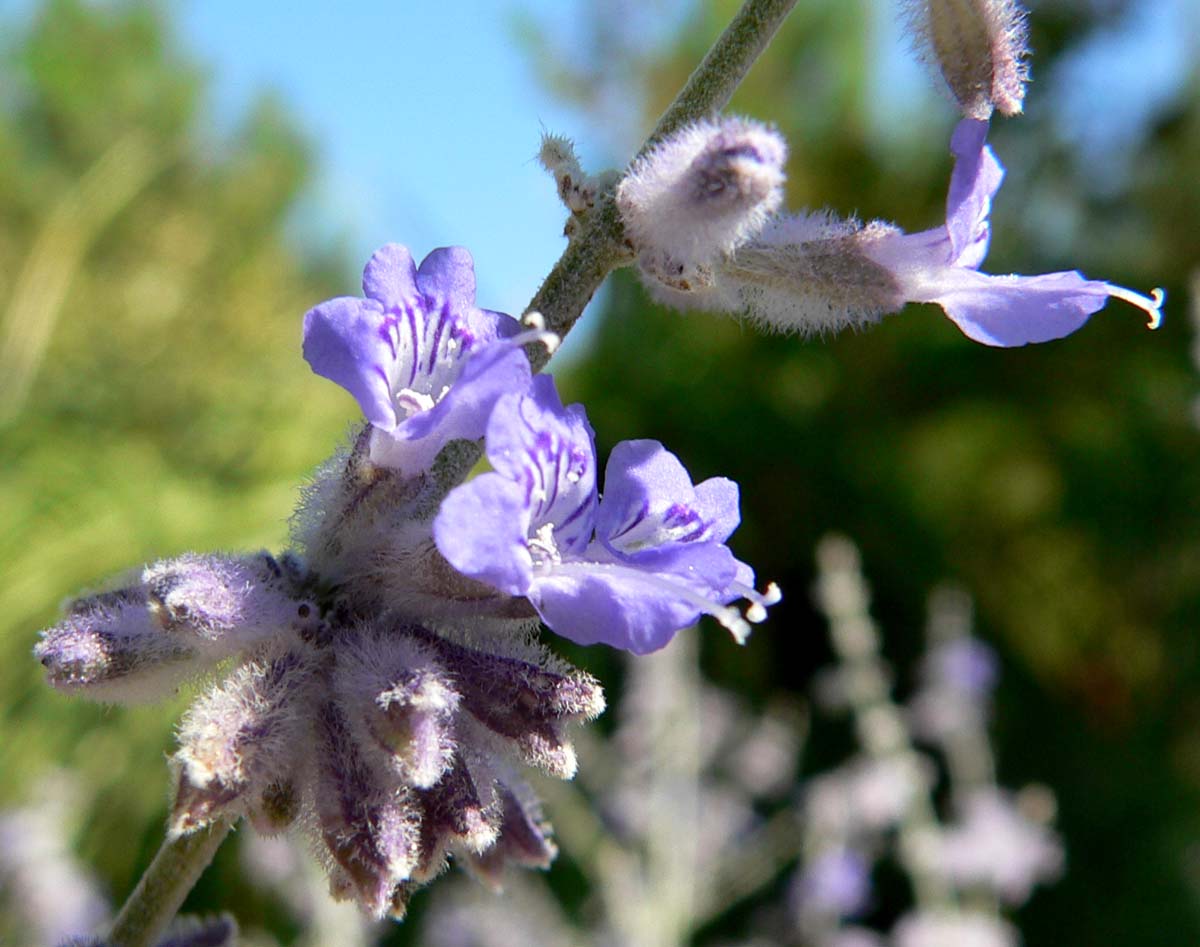
Brown Sage (Salvia aurea), formerly classified as Salvia africana-lutea, is an evergreen woody shrub native to the coastal sand dunes and fynbos of South Africa. It produces aromatic grey-green leaves and tubular yellow flowers that mature into papery, rust-brown calyces.
It thrives in exposed coastal conditions, tolerating salt spray and gale-force wind. Hardiness extends across USDA zones 8b through 11, requiring minimal summer water once roots establish.
Key Facts
- Height: 1 m to 2 m (3.3 ft to 6.6 ft)
- Light: Full sun (6+ hours direct sun daily)
- Water: Low; once every 14–21 days in summer
- Hardiness: USDA zones 8b to 11 (-7 °C / 20 °F)
- Soil: Well-drained sandy or gravelly soil, pH 6.0–7.8
Where Brown Sage Fits in Your Garden
Brown Sage belongs in full-sun xeriscapes, coastal windbreaks, and drought-tolerant Mediterranean garden borders. It suits Mediterranean-climate zones, such as coastal California, South Africa, southwestern Australia, and mild regions of southern Europe.
Its high wind and salt spray tolerance makes it suitable for sand dune stabilization and oceanfront plantings where delicate perennials fail. The woody shrub develops a rounded, spreading form over time.
Keep in mind that Salvia aurea requires poor to moderately fertile soil with fast drainage. It struggles in damp, humid microclimates where heavy clay soils hold standing water around the root system.
Identifying Brown Sage Foliage and Flowers
Brown Sage grows 1 m to 2 m (3.3 ft to 6.6 ft) tall with rounded grey-green leaves and 4 cm (1.6 in) tubular flowers. The plant retains its greyish foliage year-round in frost-free regions.
Opposite leaves measure 2 cm to 4 cm (0.8 in to 1.6 in) long and carry a fine layer of glandular hairs that emit an aromatic scent when rubbed. Young blossoms open bright golden-yellow in spring, turning reddish-orange before aging into persistent rust-brown calyces that remain on stems through winter.
Key structural features include:
- Foliage: Small, oval grey-green leaves with soft silver undersides.
- Flowers: Two-lipped tubular blossoms, 4 cm (1.6 in) long, opening golden-yellow.
- Calyx: Papery bell-shaped structure turning deep rust-brown post-bloom.
- Stems: Square, woody, brittle stems coated in fine white hairs.
Sunlight and Soil Requirements for Brown Sage
Position Brown Sage in full sun receiving at least 6 hours of direct sunlight daily and soil with a pH between 6.0 and 7.8. High light levels keep stem growth dense and maximize floral production.
Shaded specimens produce weak, elongated stems that break under wind pressure and fail to set dark reddish-brown floral bracts. Full sun exposure also accelerates evaporation, reducing soil moisture around root crowns.
Sandy or gravelly substrates provide the rapid drainage this species requires. Amend heavy garden soils by blending in 30% coarse horticultural grit or crushed lava rock by volume prior to planting.
How to Plant Brown Sage
Plant Brown Sage during early spring after the last frost date when soil temperatures reach 13 °C (55 °F). Spring planting gives root systems 6 months to establish before summer drought or winter cold.
Dig a hole twice as wide as the root ball and equal in depth, keeping the root crown level with surrounding soil. Space individual shrubs 1.2 m to 1.5 m (4 ft to 5 ft) apart to accommodate mature spread.
Follow these planting steps:
- Dig: Excavate a hole 40 cm (16 in) deep and 60 cm (24 in) wide.
- Amend: Mix native soil with coarse sand or sharp grit if soil drains slowly.
- Set: Position the root mass and backfill gently to eliminate air pockets.
- Water: Saturate with 10 L (2.6 gal) of water to settle soil around roots.
Watering and Feeding Schedules
Water newly planted Brown Sage once a week for the first 8 weeks, then reduce watering to once every 14 to 21 days during dry summer periods. Mature plants survive on seasonal rainfall alone in coastal regions.
Excessive irrigation causes root decay, branch dieback, and yellowing foliage. Always allow the top 7 cm (3 in) of soil to dry completely between watering sessions.
Nutrient requirements remain low throughout the growing season. Apply a light top-dressing of composted bark or balanced organic fertilizer (5-5-5 NPK) at 50 g (1.8 oz) per square meter in early spring, avoiding high-nitrogen feeds that lead to soft growth.
How and When to Prune Brown Sage
Prune Brown Sage by one-third of its total height in late winter or early spring just as new growth begins. Annual pruning maintains a compact shape and prevents central stems from turning woody and bare.
Use clean bypass secateurs to cut stems back to an active leaf node or young lateral shoot. Avoid cutting deep into old, leafless grey wood, which rarely regenerates new foliage.
Pruning guidelines:
- Timing: Prune between late February and late March before active sap flow increases.
- Reduction: Trim main branches back by 30% to maintain a compact, rounded habit.
- Sanitation: Remove dead or damaged branches flush with the main trunk.
- Deadheading: Trim off dried brown flower spikes in autumn to encourage spring shoots.
Propagating Brown Sage from Cuttings
Propagate Brown Sage using 8 cm to 10 cm (3 in to 4 in) semi-ripe stem cuttings taken in late summer or early autumn. Cuttings root reliably within 21 to 28 days when provided bottom heat.
Select firm, non-flowering shoots from the current season’s growth. Strip lower leaves from the bottom 4 cm (1.6 in) of the stem and dip the cut tip in rooting hormone powder containing 0.1% IBA.
Insert cuttings into pots filled with a 50:50 mixture of perlite and coarse sand. Maintain temperatures at 18 °C to 21 °C (65 °F to 70 °F) under bright, indirect light until new top growth appears.
Brown Sage Problems and Leaf Discoloration
Foliage yellowing and leaf browning on Brown Sage usually indicate waterlogged roots, insufficient sunlight, or cold damage below -7 °C (20 °F). Root rot fungi thrive when roots sit in saturated ground for longer than 48 hours.
Powdery mildew can appear on foliage during warm, humid periods when air circulation is limited. Space shrubs 1.2 m (4 ft) apart and avoid overhead sprinkler watering to keep leaves dry.
Note that online recipe queries for “brown sage butter sauce” refer to frying leaves of culinary sage (Salvia officinalis) in butter, not foliage discoloration on Salvia aurea. On living garden plants, leaves turning brown signal severe drought stress, root rot, or severe frost injury.
Winter Survival and Cold Hardiness
Brown Sage survives winter temperatures down to -7 °C (20 °F) when grown in dry, well-draining soil across USDA zones 8b to 11. Cold, wet soil in winter causes far more damage than low temperatures alone.
In zones 8b and 9a, protect root zones by applying a 7 cm (3 in) layer of coarse gravel or pine bark mulch around the drip line. Avoid piling mulch directly against the woody stem base.
Container-grown specimens in colder climates must move indoors into an unheated greenhouse or sunroom kept at 5 °C to 10 °C (41 °F to 50 °F). Withhold fertilizer entirely and water only once a month during winter dormancy.
Year-Round Care for Brown Sage
| Spring | Prune woody stems back by one-third in late March before new growth begins. Apply 50 g per square meter of balanced organic fertilizer around the base. |
|---|---|
| Summer | Water deeply once every 14 to 21 days during prolonged dry spells. Check foliage for spider mites during periods over 30 °C (86 °F). |
| Autumn | Take 10 cm semi-ripe stem cuttings for overwintering indoors. Deadhead old flower spikes if self-seeding is not wanted. |
| Winter | Apply a 7 cm layer of gravel mulch around root zones in zones 8b and 9a. Withhold all irrigation for established outdoor plants. |
Brown Sage Problems and Leaf Discoloration
| What you see | Likely cause | What to do |
|---|---|---|
| Leaves turning brown and drooping | Overwatering or poorly drained soil | Stop watering immediately and mix coarse grit into surrounding soil. |
| Leggy stems with few blossoms | Shade or low sunlight exposure | Prune back by one-third and move plant to full sun. |
| Powdery white film on foliage | High humidity and poor air circulation | Space shrubs 1.2 m apart and avoid overhead watering. |
| Blackened stem tips after winter | Frost injury below -7 °C (20 °F) | Prune damaged stems back to green wood in mid-spring. |
Companion Plants for Brown Sage
Pair Brown Sage with sun-loving, drought-tolerant Mediterranean and South African shrubs that share low water requirements. Its muted grey foliage and warm rust-brown calyces contrast well with purple and blue blossoms.
Plant in grouped borders alongside coastal rosemary (Westringia fruticosa), pride of Madeira (Echium candicans), sea lavender (Limonium perezii), and autumn sage (Salvia greggii).
Maintain 1 m (3.3 ft) spacing between companion plants to ensure adequate air movement. Good spacing prevents fungal spores from establishing on grey-green foliage in coastal locations.
Frequently Asked Questions
What is brown sage butter sauce and can you make it with Salvia aurea?
Brown sage butter sauce is a culinary dish made by frying fresh leaves of common sage (Salvia officinalis) in melted butter until brown and crispy. Brown Sage (Salvia aurea) is an ornamental South African shrub and is not the herb used in cooking brown sage butter pasta recipes.
How do you brown sage leaves in butter for cooking?
To brown sage leaves in butter, melt unsalted butter in a skillet over medium heat until it foams, add clean leaves of culinary common sage (Salvia officinalis), and cook for 1 to 2 minutes until the butter turns golden brown and the leaves crisp up.
Why are my sage leaves turning brown?
Sage leaves turn brown due to root rot from overwatering, prolonged severe drought, or frost damage below -7 °C (20 °F). Ensure your soil drains quickly and water only when the top 5 cm (2 in) of soil is dry.
Does brown sage color pair well with sage green in garden design?
Yes, the muted grey-green foliage of Salvia aurea contrasts naturally with its persistent rust-brown floral calyces. Combining grey-green leaves with warm brown tones creates an earthy color palette in dry landscapes.
What traditional medicinal uses exist for Brown Sage?
In South Africa, leaves of Salvia aurea were traditionally brewed into teas by Indigenous communities to relieve coughs, colds, and sore throats. While internet searches link the plant to cancer care, no clinical evidence supports its use as a cancer treatment.
Is there a brown sage spider species associated with this plant?
The term brown sage spider typically refers to general garden spiders like crab spiders (family Thomisidae) that hunt insects on grey-green sage foliage; it is not a specific venomous spider species native to the plant.
Information about traditional or historical uses is provided for educational interest only and is not medical advice. Do not use any plant to treat a condition without speaking to a qualified professional.
Sources & Verification
Taxonomy and distribution are checked against the databases below. Care guidance is written for cultivated species only and reviewed by our editor. How We Build Plant Profiles →