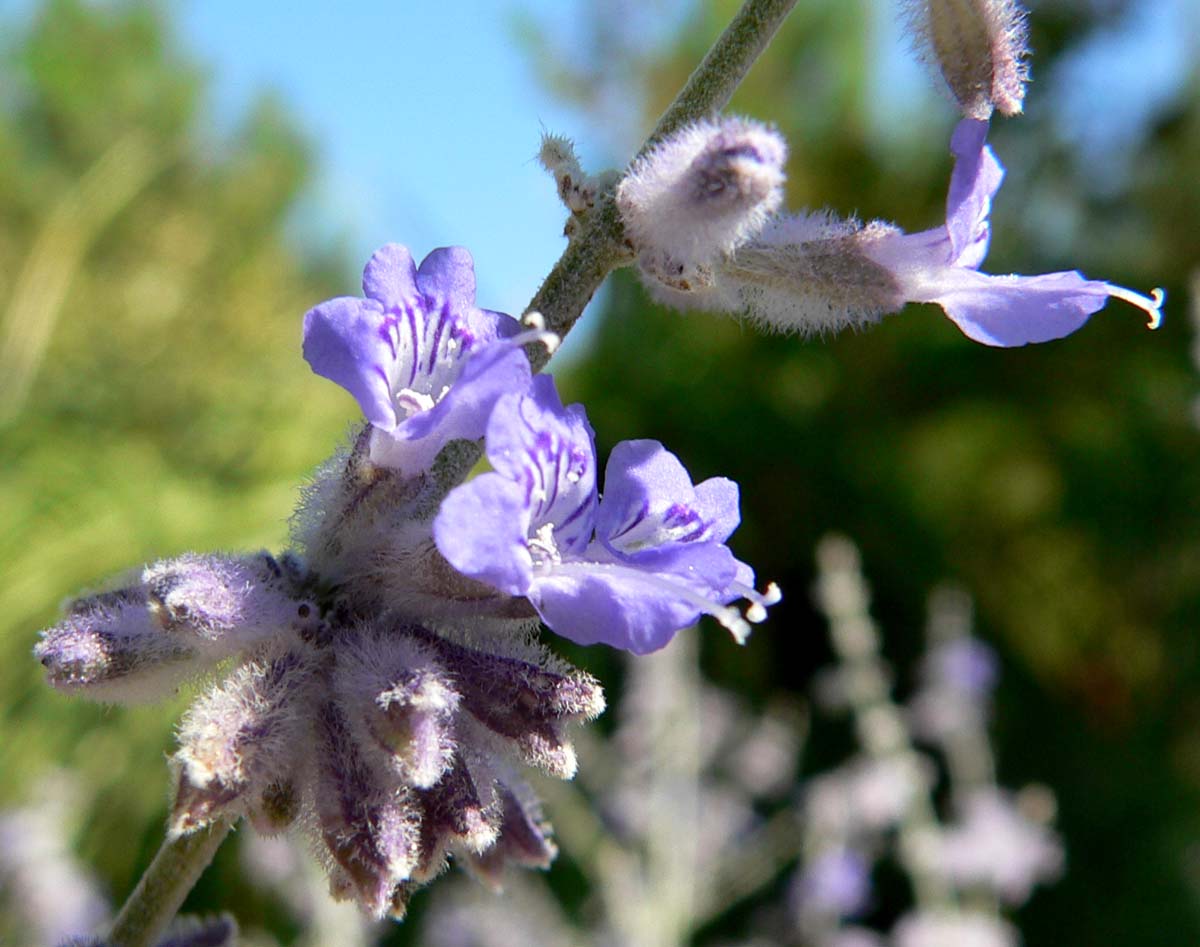
Clary Sage (Salvia sclarea) is a biennial or short-lived perennial herb native to the northern Mediterranean Basin and Central Asia. It is distinguished by its large, fuzzy, heart-shaped leaves and tall, multi-colored flower spikes that can reach 1.2 m (4 ft) in height.
Unlike common sage (Salvia officinalis), this species is grown primarily for its essential oil and ornamental bracts rather than culinary seasoning. It requires a full two-year cycle to bloom, typically dying back after it sets seed in its second summer.
Key Facts
- Life Cycle: Biennial, flowering in the second year
- Light: Requires full sun for high oil content
- Water: Drought tolerant once established
- Height: Reaches 90-120 cm (3-4 ft)
- Hardiness: Reliable in USDA zones 5-9
Is Clary Sage Right for Your Garden?
Clary Sage is a fit for gardeners who have space for a tall, structural herb and the patience for a two-year life cycle. In the first year, the plant produces a low-growing rosette of large, silver-green leaves that can spread 60 cm (2 ft) wide. The second year brings the dramatic flowering spikes that attract pollinators like honeybees and bumblebees.
This herb is particularly suited to Mediterranean-style gardens, gravel beds, or the back of a perennial border. It thrives in poor soil where other plants might struggle, provided the drainage is excellent. It is not a good choice for small containers or damp, shaded corners where the heavy leaves may rot.
How to Identify Clary Sage
You can identify Salvia sclarea by its large, rugose (wrinkled) leaves and square, hairy stems. The leaves are heart-shaped, grayish-green, and can grow up to 20 cm (8 in) long. The foliage has a soft, velvety texture due to a dense covering of fine hairs, which give it the muted color that inspired the popular ‘Clary Sage’ paint shade.
The flower spikes are the most distinct feature, appearing in the second summer. They consist of small, two-lipped flowers surrounded by large, papery bracts in shades of lilac, pale blue, or white. The entire plant emits a strong, complex scent that is often described as herbaceous, nutty, and slightly musky.
Best Growing Conditions for Salvia sclarea
Clary Sage requires full sun and sharply draining soil to thrive and produce its signature aromatic oils. It is highly adaptable to different soil types, including sandy or rocky ground, but it will fail in heavy clay that remains wet over winter. A pH between 6.0 and 7.5 is ideal for nutrient uptake.
While it is drought-tolerant, young plants need consistent moisture during their first few months to establish a deep taproot. High humidity can lead to fungal issues, so ensure there is plenty of space between plants for air to circulate. In colder climates (Zone 5), a light mulch of gravel can help protect the crown from excessive winter moisture.
Sowing and Planting Clary Sage Seeds
The most effective way to grow Clary Sage is to surface-sow seeds in spring or late summer. The seeds require light to germinate, so press them firmly into the soil but do not cover them with a thick layer of earth. Germination usually occurs within 14-21 days at temperatures of 15-20 °C (60-68 °F).
- Space seedlings 45-60 cm (18-24 in) apart to allow for the wide first-year rosette.
- Sow in late summer for flowers the following year, mimicking the plant’s natural self-seeding cycle.
- Avoid transplanting mature plants, as the long taproot is easily damaged.
Watering and Feeding Requirements
Water your Clary Sage only when the top 5 cm (2 in) of soil feels completely dry. Established plants are very efficient at finding water and rarely need supplemental irrigation except during prolonged heatwaves. Overwatering is the most common cause of death, leading to crown rot.
Feeding is rarely necessary and can actually reduce the quality of the essential oil. If your soil is particularly poor, apply a thin layer of compost around the base in early spring. Avoid high-nitrogen fertilizers, which encourage lush, weak foliage at the expense of the aromatic flowers.
Harvesting Leaves and Flowers for Oil
Harvest the flower spikes for oil in the second year when the flowers are in full bloom and the bracts are colored. The essential oil concentration is highest in the calyces and bracts during mid-morning, after the dew has dried but before the midday sun. Use sharp shears to cut the entire spike just above the top set of leaves.
If you are harvesting leaves for tea or culinary use, pick them in the first year or early in the second spring before the flower stalk begins to elongate. The leaves are most potent just before the plant blooms. For drying, hang the flower spikes upside down in a dark, well-ventilated room to preserve the volatile oils.
Traditional Uses and Essential Oil
Clary Sage was traditionally used as a medicinal herb to treat eye irritations, earning it the name ‘clear-eye’. The seeds contain a mucilaginous coat; when soaked, they were once used to clear dust and grit from the eyes. In the brewing industry, the leaves were traditionally used to flavor ales and wines, often as a substitute for hops.
Today, the plant is a major commercial crop for clary sage essential oil, which is extracted via steam distillation. The oil is a fixative in the perfume industry and is used in aromatherapy for its purported calming effects. It contains sclareol, a compound also used in the fragrance industry as a plant-based alternative to ambergris.
Common Pests and Growing Problems
The primary threat to Clary Sage is root and crown rot caused by poor drainage. If you notice the lower leaves turning yellow and the plant wilting despite moist soil, it is likely suffering from fungal decay at the root level. Ensure the plant is not sitting in a depression where water collects.
- Powdery Mildew: Appears as white spots on leaves; improve air circulation.
- Spider Mites: Can occur in very dry, dusty conditions; mist the plant occasionally to deter them.
- Slugs and Snails: May target young first-year rosettes during damp spring weather.
- No Flowers: Usually because the plant is in its first year or lacks sufficient sunlight.
Clary Sage Through the Seasons
| Spring | Sow seeds directly into the garden or thin out self-sown seedlings to 45 cm (18 in) apart. Remove any dead or damaged leaves from the first-year rosettes. |
|---|---|
| Summer | Harvest flower spikes for oil or drying when in full bloom. Deadhead spent flowers if you want to prevent excessive self-seeding. |
| Autumn | Allow some flower heads to remain if you want the plant to self-sow for future generations. Clean up fallen debris to prevent fungal spores from overwintering. |
| Winter | Leave the basal rosette intact to protect the crown. Avoid watering and ensure the soil remains as dry as possible to prevent rot. |
Common Clary Sage Problems Explained
| What you see | Likely cause | What to do |
|---|---|---|
| Yellowing lower leaves and wilting | Overwatering or poor drainage | Reduce watering and improve soil drainage or move the plant to a higher spot. |
| White powdery coating on foliage | Powdery mildew from poor airflow | Thin out nearby plants and avoid overhead watering. |
| Plant dies after flowering | Natural biennial life cycle | Allow the plant to drop seeds so new seedlings emerge the following spring. |
Popular Clary Sage Cultivars
- ‘Vatican White’ – features pure white flowers and bracts
- ‘Turkestanica’ – large spikes with pinkish-white bracts
- ‘Piemont’ – a compact variety suitable for smaller borders
- ‘Blue Cloud’ – known for deeper blue-violet flower spikes
Frequently Asked Questions
Is clary sage toxic to cats or dogs?
No, Clary Sage is considered non-toxic to cats, dogs, and horses according to the ASPCA. However, concentrated essential oil should never be applied directly to pets.
What is the difference between sage and clary sage?
Common sage (Salvia officinalis) is a perennial shrub used for cooking, while Clary Sage is a biennial used for its fragrance and essential oil. Clary Sage has much larger, hairier leaves and taller flower spikes.
Can you eat clary sage leaves?
Yes, the leaves are edible and can be battered and fried or used to flavor teas and wines. They have a stronger, more musky flavor than common sage and should be used sparingly.
How do you use clary sage for eyes?
Traditionally, the seeds were soaked to create a mucilage that caught debris, but this is an old practice. Modern medical experts advise against putting any part of the plant or its oil directly into the eyes.
Does clary sage come back every year?
It is a biennial, meaning it lives for two years: growing leaves the first year and flowering the second. It often self-seeds so vigorously that it appears to be a permanent perennial in the garden.
Information about traditional or historical uses is provided for educational interest only and is not medical advice. Do not use any plant to treat a condition without speaking to a qualified professional.
Sources & Verification
Taxonomy and distribution are checked against the databases below. Care guidance is written for cultivated species only and reviewed by our editor. How We Build Plant Profiles →