
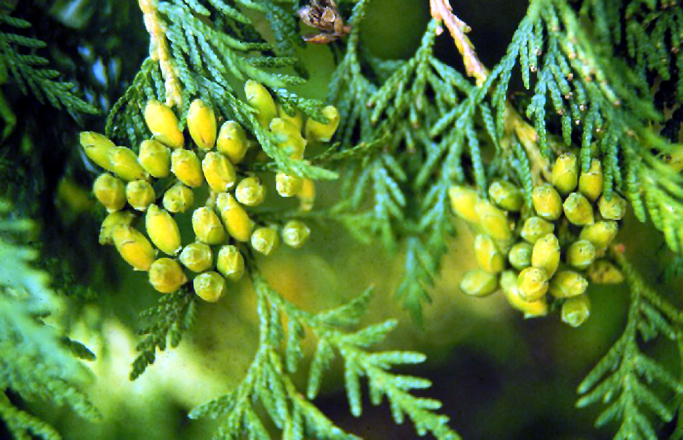
Northern white cedar is a slow-growing evergreen conifer native to the cool, moist forests of eastern Canada and the northeastern United States. Known scientifically as Thuja occidentalis, it is recognized by its flat, fan-like sprays of scale-like foliage and its small, upright woody cones.
This species is often selected for windbreaks and privacy screens due to its dense growth habit and tolerance of alkaline soils. While wild specimens in the Great Lakes region can live for over 800 years, garden cultivars are more commonly valued for their predictable shapes and winter hardiness.
Key Facts
- Light: Full sun to partial shade
- Water: Consistent moisture; does not tolerate drought
- Growth Rate: 15–30 cm (6–12 inches) per year
- Hardiness: USDA Zones 2 through 7
- Soil: Prefers moist, well-drained, alkaline loams
Is Northern White Cedar Right for Your Garden?
Northern white cedar is a suitable choice for gardeners in cold climates who need a structural evergreen that thrives in moist or even swampy conditions. It is frequently utilized as a living fence or windbreak because it maintains foliage all the way to the ground if given enough light. Because it is highly palatable to wildlife, it should not be planted in areas with high deer populations without protection.
The rot-resistant nature of the wood makes it a historical favorite for fence posts and shingles. In smaller landscapes, dwarf cultivars provide architectural interest without the massive height of the parent species. It is also a frequent subject for bonsai enthusiasts because of its rugged, peeling bark and small foliage scales.
How to Identify Northern White Cedar
You can identify northern white cedar by its flat, fan-like sprays of scale-like leaves that lack the sharp needles found on many other conifers. Each leaf scale is 2–4 mm (0.1 in) long and features a conspicuous resin gland on the underside. The bark is another key marker, appearing reddish-brown and furrowed into narrow, vertical strips that peel away easily.
The cones are distinct and help separate this tree from its relatives:
- Cones: Small, upright, and woody, measuring 7–17 mm (0.3–0.7 in) long.
- Scales: Each cone has 8–12 thin scales that turn brown when mature.
- Foliage: Yellow-green to dark green, often turning brownish in winter.
- Scent: Crushed leaves emit a pleasant, citrus-like or piney aroma.
Choosing the Best Site for Arborvitae
The best site for this tree provides full sun to partial shade and protection from harsh, drying winter winds. While it can survive in partial shade, the foliage will become thin and less effective as a screen if it receives fewer than six hours of light. It naturally occurs in limestone-rich areas, so it prefers a soil pH that is neutral to slightly alkaline.
Avoid planting in extremely dry, sandy upland sites where moisture is scarce. It can tolerate occasional flooding and heavy clay, making it useful for rain gardens or low-lying areas of the property. Ensure the site has enough vertical clearance, as the species can reach 15 m (50 ft) in height over several decades.
Planting and Spacing Your Cedar Trees
For a dense privacy hedge, space your northern white cedar plants 60–90 cm (2–3 ft) apart from center to center. If you are planting them as individual specimen trees, allow at least 3–4.5 m (10–15 ft) of space to accommodate their mature spread. Dig a hole twice as wide as the root ball but no deeper, ensuring the flare of the trunk sits exactly at the soil line.
Backfill with native soil rather than heavy amendments to encourage the roots to spread into the surrounding area. Water deeply immediately after planting to remove air pockets. Applying a 5–10 cm (2–4 in) layer of wood chip mulch will help retain the consistent moisture these trees require during their first two years.
Watering and Feeding Northern White Cedar
You must provide 2.5 cm (1 in) of water per week during the growing season, especially during the first three years of establishment. Unlike many evergreens, this species does not tolerate drought and will show signs of stress, such as needle drop or browning, if the soil dries out completely. Monitor soil moisture during autumn to ensure the tree enters winter well-hydrated.
Fertilizing is generally only necessary in early spring before new growth begins. Use a balanced, slow-release fertilizer (such as 10-10-10) or a formula specifically designed for evergreens. Avoid fertilizing after mid-summer, as this can stimulate soft new growth that will be damaged by the first frosts of autumn.
How to Trim and Shape Northern White Cedar
Prune your cedar in early spring or early summer to maintain its shape and density. Avoid cutting back into the “dead zone”—the brown, leafless interior of the branches—as new growth will not sprout from old wood. Only trim the green, leafy tips to encourage thicker branching and to manage the height of a hedge.
If you are growing a formal hedge, taper the sides so the top is narrower than the bottom. This allows sunlight to reach the lower branches, preventing the base of the tree from becoming bare. Remove any dead, diseased, or broken branches as soon as they are spotted, regardless of the season, to maintain plant health.
Propagating Thuja occidentalis from Cuttings
The most reliable way to propagate this species is through semi-hardwood cuttings taken in late summer or early autumn. Select healthy, current-season growth that has started to turn woody at the base. Cuttings should be approximately 10–15 cm (4–6 in) long and stripped of foliage on the bottom half before being placed in a rooting medium.
- Rooting Hormone: Apply a liquid or powder hormone to the cut end.
- Medium: Use a mix of 50% peat moss and 50% perlite.
- Humidity: Cover with a plastic dome to maintain high humidity.
- Timing: Roots typically form within 6–10 weeks.
Winter Care and Protection
Protect young trees from heavy snow loads by loosely wrapping them with burlap or using twine to tie branches upward. This prevents the weight of ice and snow from splitting the multi-stemmed trunks common in many cultivars. Winter burn, caused by desiccating winds and bright sun, can be mitigated by ensuring the tree is watered deeply until the ground freezes.
In areas with high deer activity, winter is the most dangerous time for northern white cedar. Deer will browse the lower 1.8 m (6 ft) of foliage, often leaving a distinct “browse line” where no greenery remains. Use physical fencing or reputable deer repellents starting in late autumn to prevent significant structural damage to your landscape plants.
Year-Round Care for Northern White Cedar
| Spring | Apply a balanced evergreen fertilizer and prune for shape before new growth starts. Check for winter damage and remove broken limbs. |
|---|---|
| Summer | Provide 2.5 cm (1 in) of water weekly during dry spells. Monitor for bagworms or spider mites on the interior foliage. |
| Autumn | Water deeply until the ground freezes to prevent winter desiccation. Apply a fresh layer of mulch and install deer fencing if necessary. |
| Winter | Gently brush heavy snow off branches to prevent breakage. Check burlap wraps or ties on young trees after major storms. |
Common Northern White Cedar Problems Explained
| What you see | Likely cause | What to do |
|---|---|---|
| Browning foliage in spring | Winter desiccation (winter burn) | Ensure deep watering in autumn and provide wind protection. |
| Holes in foliage with silk bags | Bagworms | Hand-pick bags in winter or apply Bacillus thuringiensis (Bt) in late spring. |
| Yellowing interior needles | Natural seasonal needle drop | No action needed if it occurs on the oldest, innermost needles in autumn. |
| Bare lower branches | Insufficient light or deer browsing | Thin the top of the hedge to let light in or install a 2 m (6 ft) fence. |
Popular Arborvitae Cultivars for Your Landscape
- ‘Smaragd’ (Emerald Green) – Maintains bright green color in winter, narrow habit.
- ‘Nigra’ – Very dark green foliage, exceptionally hardy for cold climates.
- ‘Danica’ – Dwarf globe-shaped variety reaching only 60 cm (2 ft).
- ‘Hetz Midget’ – Very slow-growing round shrub for small gardens.
- ‘Yellow Ribbon’ – Golden-yellow foliage on a narrow upright frame.
Companions for Your Cedar Hedge
Select companions that share a preference for moist, neutral to alkaline soils and can tolerate the shade cast by the cedar. Deciduous shrubs provide excellent color contrast against the dark green evergreen backdrop. Consider these species for a layered landscape:
- Red osier dogwood (Cornus sericea) for winter stem color.
- Serviceberry (Amelanchier lamarckii) for spring flowers and berries.
- Winterberry (Ilex verticillata) for bright red fruit in damp soil.
- Hostas (Hosta spp.) for ground-level foliage in the shade of the trees.
Frequently Asked Questions
What is the difference between Northern White Cedar and Eastern Red Cedar?
Northern white cedar (Thuja occidentalis) has flat, fan-like foliage and woody cones, while Eastern Red Cedar (Juniperus virginiana) has prickly needles and blue berry-like cones.
How fast does Northern White Cedar grow?
It is a slow to moderate grower, typically adding 15–30 cm (6–12 inches) of height per year depending on moisture levels.
Why is it called the Tree of Life?
The name 'Arborvitae' (Tree of Life) was given by French explorers because the Vitamin C in the foliage traditionally helped prevent scurvy during winter.
Is Northern White Cedar toxic to dogs?
The foliage contains thujone, which can cause digestive upset or skin irritation if chewed, though it is generally not considered life-threatening in small amounts.
Can I grow Northern White Cedar in the shade?
It can grow in partial shade, but the foliage will become sparse and the tree will lose its dense, conical shape.
Information about traditional or historical uses is provided for educational interest only and is not medical advice. Do not use any plant to treat a condition without speaking to a qualified professional.
Sources & Verification
Taxonomy and distribution are checked against the databases below. Care guidance is written for cultivated species only and reviewed by our editor. How We Build Plant Profiles →
