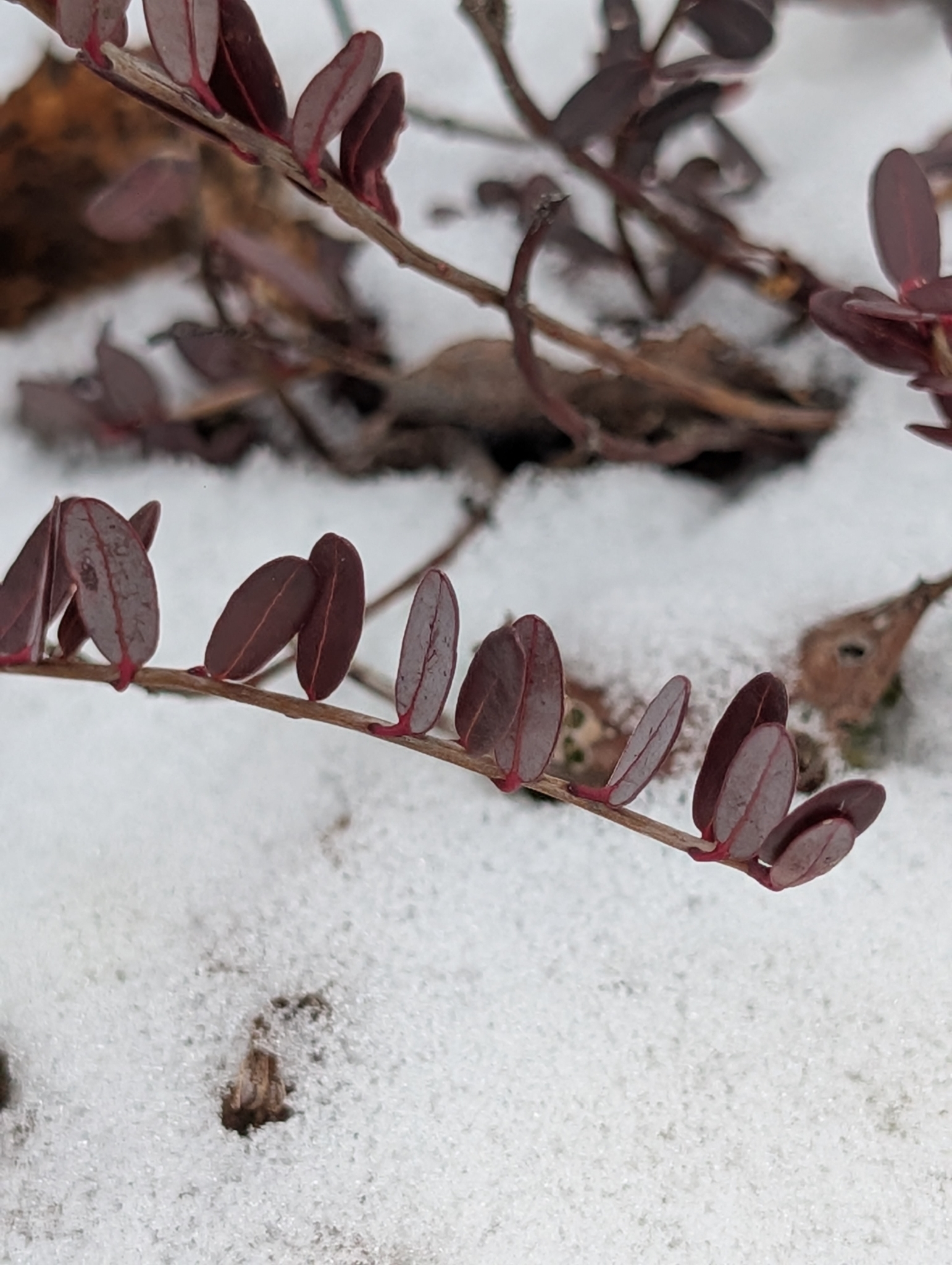
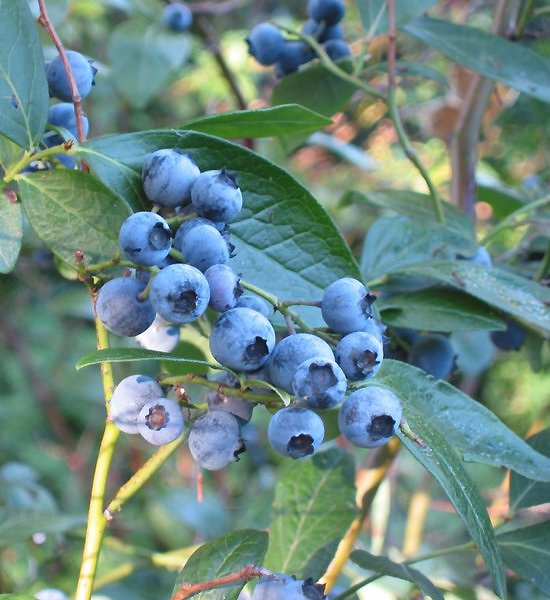
Vaccinium pallidum is a deciduous, fruit-bearing shrub native to the central and eastern United States and parts of Canada, typically found in rocky, upland habitats. It belongs to the heath family and is often found growing alongside oaks and pines in acidic soil.
It is frequently confused with the lowbush blueberry (Vaccinium angustifolium), but Hillside Blueberry reaches greater heights and tolerates much drier, nutrient-poor soils. This species is often the first to colonize areas after a forest fire due to its deep rhizomes.
Key Facts
- Height: 30–100 cm (1–3 ft) tall
- Light: Full sun to dappled shade
- Soil: Acidic, well-drained, sandy or rocky
- Fruit: Sweet, glaucous blue to black berries
- Native Range: Eastern North America
Fitting Blue Ridge Blueberry into the Landscape
Blue Ridge Blueberry is a suitable choice for native plant gardens that feature dry, acidic slopes where other species struggle. It provides a multi-season interest with spring flowers, summer fruit, and deep red autumn foliage. Because it spreads via underground rhizomes, it can eventually form a low-maintenance groundcover in wooded areas.
This shrub is particularly effective in restoration projects for oak-hickory forests or pine barrens. It requires minimal intervention once established, as it has evolved to survive in environments with low nutrient availability. It serves as a structural layer in bird-friendly gardens, offering both nesting cover and a reliable food source.
Identifying Blue Ridge Blueberry
Identify Blue Ridge Blueberry by its greenish-yellow or reddish stems that often grow in a distinct zig-zag pattern. The leaves are alternate, ovate, and measure 2–6 cm (0.8–2.4 in) in length. A key diagnostic feature is the pale, glaucous (waxy) underside of the leaf, which gives the plant its specific epithet pallidum.
The flowers and fruit provide further identification clues during the growing season:
- Flowers: Bell-shaped, 5–10 mm (0.2–0.4 in) long, appearing in clusters in late spring.
- Fruit: Berries are 5–12 mm (0.2–0.5 in) in diameter, usually light blue with a heavy waxy bloom.
- Bark: Older stems develop a shredded, papery texture near the base.
- Habit: A multi-stemmed shrub that rarely exceeds waist height.
Natural Habitat and Geographic Range
The natural range of Vaccinium pallidum extends from Maine to Georgia and west to Arkansas and Minnesota. It is most abundant in the Appalachian Mountains, where it carpets the understory of dry ridge-top forests. Unlike many other blueberries, it avoids bogs and wetlands, preferring the well-drained soil of rocky outcrops.
In the wild, you will find it in thin soils over sandstone or granite. It thrives in open woodlands where sunlight can reach the forest floor, though it can persist in heavier shade with reduced fruit production. It is a common component of the “pine barrens” ecosystem in the northeastern United States.
Ecological Role and Fire Adaptation
Blue Ridge Blueberry is a fire-adapted species that utilizes deep rhizomes to survive surface fires. When a fire clears the canopy and consumes leaf litter, this shrub quickly resprouts, benefiting from the sudden increase in light and nutrients. This makes it a vital component of fire-maintained ecosystems like oak savannas.
It supports a wide variety of wildlife throughout the year. The flowers are a primary nectar source for early-emerging bumblebees and solitary bees. The berries are consumed by over 30 species of birds, including eastern bluebirds (Sialia sialis) and wild turkeys (Meleagris gallopavo), while the foliage serves as a host for several sphinx moth larvae.
Conservation Status and Threats
While currently listed as Least Concern (LC), Blue Ridge Blueberry faces localized threats from habitat fragmentation and the suppression of natural fire cycles. In areas where fires are strictly controlled, taller shrubs and trees eventually shade out the colonies, leading to a decline in plant vigor. Invasive species like Japanese barberry (Berberis thunbergii) also compete for space in its preferred habitats.
Conservation efforts often focus on maintaining the open-canopy structures of its native woods. In some states, it is monitored as part of rare upland heath communities. Protecting the acidic, rocky ridges where it grows is essential for maintaining the genetic diversity of wild blueberry populations.
Edible Uses and Commercial Potential
The fruit of the Blue Ridge Blueberry is highly edible and sweet, often considered superior in flavor to larger commercial varieties. The berries ripen from late June through August, depending on the latitude and elevation. While the small size of the fruit makes commercial mechanical harvesting difficult, they are a favorite for foragers and small-scale processors.
Beyond fresh eating, the berries have several culinary and beverage applications:
- Cider and Wine: The high sugar content and intense flavor make them excellent for fermenting into fruit wines or flavoring hard ciders.
- Preserves: They contain sufficient pectin to make thick, flavorful jams and jellies.
- Baking: Their small size ensures they distribute evenly through muffins and pancakes without sinking.
- Drying: The low moisture content compared to highbush varieties allows them to dry into “blueberry raisins.”
Blue Ridge Blueberry vs Lowbush Blueberry
The primary difference is that Hillside Blueberry is taller and has paler leaves than the common lowbush blueberry (Vaccinium angustifolium). While V. angustifolium usually stays below 50 cm (20 in), V. pallidum can reach 100 cm (40 in). The leaves of V. pallidum are also broader and lack the dense, fine teeth found on the leaf margins of its shorter relative.
Habitat is another distinguishing factor. If you find a low-growing blueberry in a swamp or bog, it is likely a stunted highbush or a different species entirely. Vaccinium pallidum is almost strictly an upland, dry-ground specialist. The berries of the Blue Ridge variety also tend to have a much thicker, whiter waxy bloom on the skin.
Traditional Medicinal History
Historically, various parts of Vaccinium pallidum were traditionally used by Indigenous peoples for medicinal purposes. A tea made from the leaves was sometimes used as a tonic or to treat symptoms of inflammation. The roots were occasionally boiled to create a wash for skin ailments or used in decoctions for gastrointestinal distress.
These traditional uses were largely documented in the Appalachian region. While modern science focuses primarily on the antioxidant properties of the fruit, the leaves contain compounds similar to those found in other Vaccinium species, which have been studied for their effects on blood sugar. No modern medical applications are currently recommended without professional guidance.
Frequently Asked Questions
Are Blue Ridge blueberries edible?
Yes, the berries of Vaccinium pallidum are edible and are often described as sweeter than store-bought highbush blueberries. They can be eaten fresh, dried, or used in baking and preserves.
How tall does Blue Ridge Blueberry grow?
It typically grows between 30 and 100 cm (1 and 3 ft) tall. Its height depends largely on light availability and soil quality, with plants in sunnier, richer spots reaching the higher end of the range.
What is the difference between Vaccinium pallidum and Vaccinium angustifolium?
Vaccinium pallidum (Hillside Blueberry) is generally taller and has pale, waxy leaf undersides, whereas Vaccinium angustifolium (Lowbush Blueberry) is shorter and has narrower, darker green leaves.
Can you use Blue Ridge blueberries for cider or wine?
Yes, they are popular for flavoring craft ciders and making small-batch fruit wines due to their concentrated flavor and high sugar-to-acid ratio. They provide a deep color and intense blueberry aroma to fermented beverages.
Where can I find Blue Ridge blueberries in the wild?
Look for them in dry, rocky upland woods, particularly in oak or pine forests across the Eastern United States. They are common along hiking trails on mountain ridges and in areas that have experienced past forest fires.
Information about traditional or historical uses is provided for educational interest only and is not medical advice. Do not use any plant to treat a condition without speaking to a qualified professional.
Sources & Verification
Taxonomy and distribution are checked against the databases below. Care guidance is written for cultivated species only and reviewed by our editor. How We Build Plant Profiles →