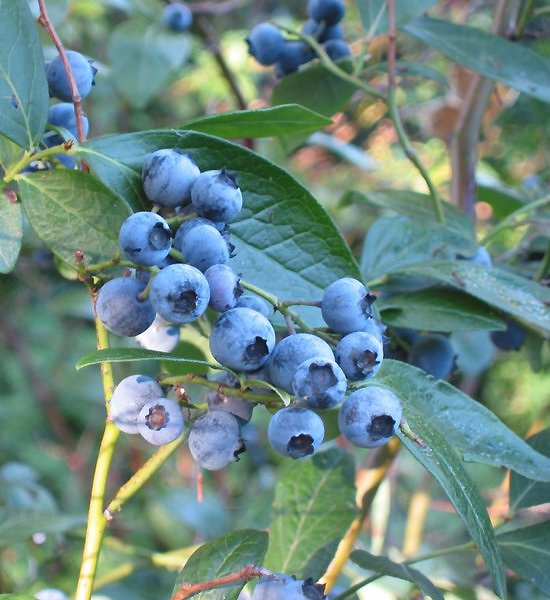
American cranberry (Vaccinium macrocarpon) is an evergreen dwarf shrub native to wetlands and bogs across eastern North America, known for trailing woody stems and firm, tart red fruit. Plants fail in neutral or alkaline garden dirt, needing an unyielding soil pH between 4.0 and 5.5 alongside continuous moisture to establish healthy fruiting uprights.
A single mature square meter of cranberry bed produces roughly 1 to 2 kg (2.2 to 4.4 lb) of fruit each autumn. Commercial fields flood their bogs during harvest so the buoyant berries float to the surface, but home gardeners harvest the crop dry by hand directly from upright stems.
Key Facts
- Light: Full sun, at least 6 to 8 hours daily
- Soil: Peat-sand mix with a pH of 4.0 to 5.5
- Water: Constantly moist soil, needing 2.5 cm (1 in) weekly
- Hardiness: USDA Zones 2 through 7
- Harvest: September to November after the first light frost
Is American Cranberry Right for Your Garden?
Growing American cranberry requires a dedicated acid-soil bed with constant moisture, making it unsuited to mixed perennial borders. The plant behaves as a low groundcover that forms runners and upright fruiting stems, functioning similarly to lingonberry (Vaccinium vitis-idaea) and creeping blueberry (Vaccinium crassifolium).
You will need an area with full sun and access to lime-free irrigation, as municipal tap water with high alkalinity slowly raises bed pH and causes chlorosis. If your natural soil is clay or limestone, build a dedicated raised timber bed lined with plastic and filled with a blend of peat moss and coarse silica sand.
Cranberry Identification and Botanical Features
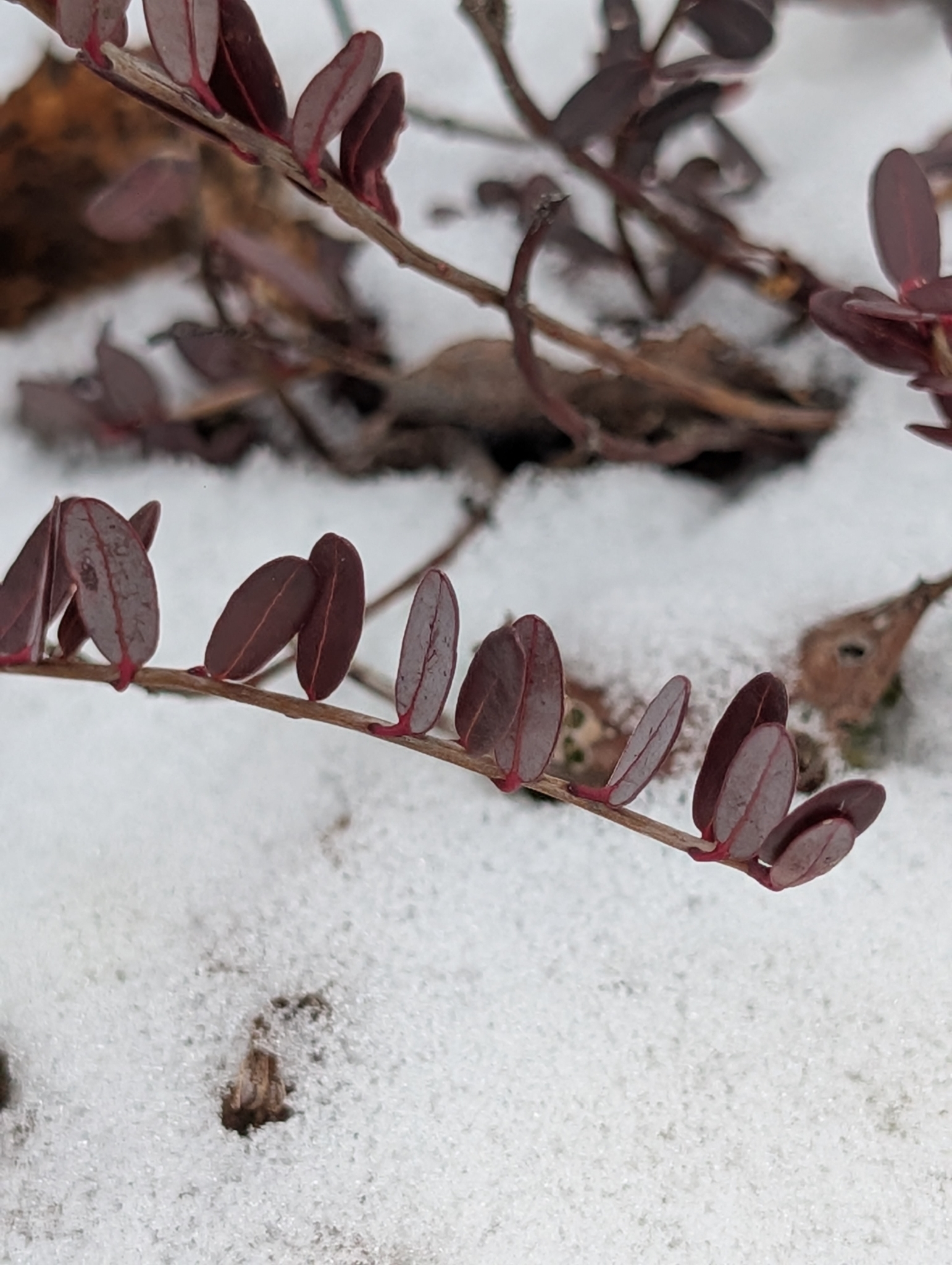
Identifying Vaccinium macrocarpon is straightforward due to its slender trailing woody runners lined with small evergreen leaves and nodding pink-white flowers. The oblong leaves measure 6 to 18 mm (0.24 to 0.71 in) in length, featuring blunt tips and pale green undersides that turn bronze-red in winter.
The flowers open in June and July on vertical stems known as uprights. Each flower has four narrow, reflexed petals that curve backwards, exposing a central beak of stamens that early settlers thought resembled the head and neck of a crane. Unlike small cranberry (Vaccinium oxycoccos), which carries leaves under 10 mm (0.4 in) and stems thinner than 1 mm, American cranberry produces much larger berries measuring 10 to 20 mm (0.4 to 0.8 in) across. It also differs from bearberry (Arctostaphylos uva-ursi), which has dry, mealy fruit and broader, paddle-shaped foliage.
Mature Size and Growth Habit
American cranberry grows to a height of 15 to 25 cm (6 to 10 in) while spreading 60 to 100 cm (24 to 40 in) across the ground. Two distinct types of growth develop during each season:
- Runners: Horizontal stolons that creep along the soil surface, rooting at leaf nodes and growing 30 to 60 cm (12 to 24 in) in a single season.
- Uprights: Short, vertical branches 5 to 15 cm (2 to 6 in) tall that emerge from the runners and produce flower buds and fruit.
Because runners interlock tightly, a bed established from plugs forms an unbroken mat within three growing seasons. Growth remains low to the ground and does not require staking or trellising.
Soil and Sunlight Needs for Cranberry Plants
Cranberries require a soil pH between 4.0 and 5.5 in full sunlight receiving at least 6 to 8 hours of direct rays daily. Shaded locations result in spindly vegetative runners that fail to develop floral buds on the upright stems.
Soil structure should replicate the natural bog environment: loose, porous, and organic. Standard garden soil packs too tightly around the fine hair roots, which lack root hairs and rely on ericoid mycorrhizal fungi to absorb nutrients. An ideal garden substrate consists of 70 percent sphagnum peat moss and 30 percent horticultural sand, kept weed-free so invasive grasses do not overwhelm the low canopy.
How to Plant Cranberry Runners
Plant cranberry rooted cuttings or container plugs in early spring at intervals of 30 to 45 cm (12 to 18 in). Early spring planting gives root systems time to anchor before summer heat arrives.
Follow these steps to establish a clean, productive bed:
- Excavate the planting area to a depth of 20 to 25 cm (8 to 10 in) and remove all weed roots.
- Fill the bed with a blend of two parts sphagnum peat moss and one part coarse sand, tamping lightly.
- Set plugs so the root crowns sit level with the soil surface and water thoroughly.
- Spread a 1.5 cm (0.6 in) layer of clean silica sand across the top of the bed to suppress weeds and anchor running stems.
Watering and Acid Soil Care
Cranberry roots need 2.5 cm (1 in) of water each week, keeping the top 15 cm (6 in) of the bed continuously damp. Though commercial bogs are submerged for pest management and harvest, garden plants rot if left sitting in stagnant, undrained water during active summer growth.
Feed sparingly because excess nitrogen promotes long vegetative runners instead of fruiting uprights. Apply an acid-forming fertilizer formulated for highbush blueberry (Vaccinium corymbosum) or rhododendron (Rhododendron spp.) at one-third the package rate in late spring. Use harvested rainwater or filter tap water if your local municipal supply has a pH higher than 6.5, as dissolved calcium carbonates will neutralize the bed over time.
Pruning Cranberry Uprights and Runners
Prune your cranberry bed in early spring before new growth starts to thin dense tangles and stimulate new upright branches. Without regular management, runners pile into a thick thatch that restricts air circulation and encourages fungal rots.
- Comb through the bed with a hand rake to lift stray, unrooted runners trailing beyond the designated plot.
- Clip back unruly runner tips using sharp pruning shears, directing the plant’s energy into vertical uprights.
- Remove dead, grey woody stems that no longer produce green leaves or buds.
- Spread a fresh 1 cm (0.4 in) top-dressing of clean sand every three years to pin runners and renew upright development.
Cranberry Pests and Fungal Diseases
Yellowing leaves and shrivelled berries are typically caused by iron chlorosis from high pH, cranberry fruitworm, or cottonball fungus. Inspecting both the foliage and the fruit during midsummer allows you to catch issues before the harvest fails.
- Iron chlorosis: Foliage turns pale yellow while the veins stay green; check soil pH and adjust with elemental sulfur if it climbs above 5.5.
- Cranberry fruitworm (Acrobasis vaccinii): Green caterpillars bore into developing berries, filling them with frass and webbed silk; hand-pick infested fruit immediately.
- Cottonball disease (Monilinia oxycocci): Shoots wilt in spring and maturing berries turn tan and filled with white mycelium; prune away symptomatic uprights and remove all mummified fruit.
- Phytophthora root rot: Roots darken and die in waterlogged, compacted soils; improve sand drainage in the bed bed-lining to prevent standing water pools.
Winter Care and Cold Protection
American cranberry handles extreme cold down to -35 °C (-31 °F), corresponding to USDA Zone 2, but needs protection against dry winter winds when the ground is frozen. Winter desiccation occurs when bright winter sun and wind evaporate moisture from evergreen leaves while frozen roots cannot draw water.
Protect your bed once the soil freezes in December by laying a 5 to 8 cm (2 to 3 in) layer of loose pine straw or clean pine boughs directly over the vines. Remove this protective mulch in early spring as daytime temperatures rise above 4 °C (40 °F). In sub-zero regions without reliable snow cover, growers briefly soak the bed right before severe freezes to form a protective ice crust over the vines, preventing windburn.
Cranberry Uses: Juice, Sauce, and Garlands
Cranberry berries are grown for fresh culinary sauces, unsweetened juice pressing, and seasonal garlands. Commercial supplements such as cranberry 400 mg tablets, standardized capsules, and pharmacy extracts (like CareOne) are prepared from concentrated fruit solids and traditionally taken to support urinary tract wellness.
For culinary preparation, simmer 350 g (12 oz) of fresh fruit with 200 g (1 cup) of granulated sugar and 240 ml (1 cup) of water for 10 minutes until skins burst, creating standard whole-berry cranberry sauce. To produce clear juice, simmer berries in water until soft, crush them gently through a jelly bag, and sweeten the tart liquid to taste. For holiday decorations, thread firm, dry raw berries onto waxed dental floss or fishing line using a tapestry needle, spacing with popcorn or evergreen sprigs to craft long-lasting holiday garlands.
Year-Round Cranberry Maintenance Schedule
| Spring | Remove winter pine bough mulch when daytime temperatures top 4 °C (40 °F). Prune out tangled runners, top-dress with a thin layer of sand, and test the bed’s pH to keep it below 5.5. |
|---|---|
| Summer | Deliver 2.5 cm (1 in) of lime-free water per week to keep the root zone damp. Pull stray weeds by hand to keep the mat clear and inspect uprights for fruitworm damage. |
| Autumn | Harvest berries by hand from September to November once they develop deep red skin after the first frost. Clean fallen foliage from the bed and soak the ground thoroughly before freezing. |
| Winter | Apply a 5 to 8 cm (2 to 3 in) layer of pine needles or boughs over dormant vines after the ground freezes to shield foliage from drying winter winds. |
Common Cranberry Problems and Solutions
| What you see | Likely cause | What to do |
|---|---|---|
| Yellow leaves with green veins on young uprights | High soil pH or hard water exposure | Irrigate with collected rainwater and amend the bed with elemental sulfur to reduce soil pH below 5.5. |
| Prematurely red berries bound with white silk | Cranberry fruitworm infestation | Pick off and dispose of infested fruit clusters immediately to disrupt caterpillar life cycles. |
| Vigorous green runners with no flowers or fruit | Excessive nitrogen fertilizer or heavy shade | Cease nitrogen feeding and ensure the bed receives at least 6 hours of unshaded sunlight daily. |
| Soft, brown, rotting berries before autumn harvest | Fungal fruit rot from poor bed aeration | Thin dense runner thatch in early spring and prune to increase air movement around upright stems. |
Cranberry Cultivars for Home Beds
- ‘Early Black’ – deep red fruit, matures early September
- ‘Howes’ – crisp berries, high pectin, excellent storage life
- ‘Stevens’ – large fruit, vigorous runners, cold hardy
- ‘Ben Lear’ – burgundy-black fruit, early season cropper
Frequently Asked Questions
How do you grow cranberry plants at home?
Plant rooted plugs in an acidic soil bed of 70 percent peat moss and 30 percent sand with a pH between 4.0 and 5.5 in full sun. Keep the soil evenly moist throughout the growing season and apply a light sand top-dressing every three years.
Do cranberries need to grow in standing water?
No, cranberries do not grow in standing water during the active growing season. Commercial growers only flood bogs for autumn harvesting and winter freeze protection; garden plants require moist, well-draining acidic soil.
How do you make cranberry juice from fresh berries?
Simmer fresh berries in water at a 1:1 ratio by volume for 15 minutes until they burst. Strain the mixture through a cheesecloth or jelly bag, discard the pulp, and sweeten the tart liquid with sugar or apple juice.
How do you make a fresh cranberry garland?
String firm, raw cranberries onto waxed dental floss or heavy thread using a blunt sewing needle. Tie knots at both ends and hang the garland indoors or outdoors away from direct moisture, where it will stay intact for several weeks.
What is the difference between cranberry tablets and fresh cranberries?
Commercial tablets and 400 mg capsules contain concentrated powdered cranberry solids or standardized extracts that deliver proanthocyanidins without the sugars added to commercial sauces and juice drinks. Fresh cranberries provide dietary fiber and whole vitamin content alongside their natural acids.
Information about traditional or historical uses is provided for educational interest only and is not medical advice. Do not use any plant to treat a condition without speaking to a qualified professional.
Sources & Verification
Taxonomy and distribution are checked against the databases below. Care guidance is written for cultivated species only and reviewed by our editor. How We Build Plant Profiles →
- USDA PLANTS DatabaseTaxonomic confirmation and native range data
- NC State ExtensionGrowth habit, soil pH requirements, and cultivation specifications
- Kew Plants of the World OnlineBotanical morphology and geographical distribution
- GBIF — Global Biodiversity Information Facilitytaxonomy, synonyms, occurrence records
- Wikipediageneral reference