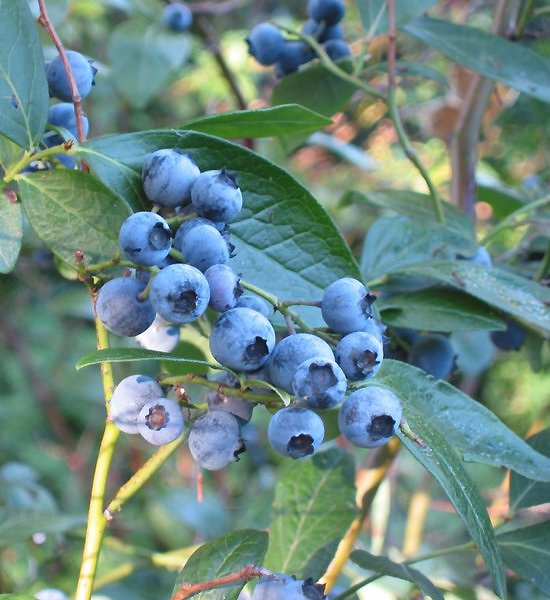
Small cranberry (Vaccinium oxycoccos) is a delicate evergreen dwarf shrub native to cold peatlands across the boreal and temperate Northern Hemisphere, known for thread-like trailing stems and intensely sour crimson fruit.
Unlike the widely farmed commercial cranberry (Vaccinium macrocarpon), this wild relative creeps through living sphagnum moss mats in specialized, nutrient-poor bogs where waterlogged acidic conditions exclude most other vascular flora.
Key Facts
- Plant type: Evergreen creeping dwarf shrub
- Mature height: 5 to 15 cm (2 to 6 in)
- Soil preference: Wet, acidic peat bogs (pH 3.0 to 5.0)
- Berry size: 6 to 12 mm (0.24 to 0.47 in)
- Bloom window: Late spring to early summer
- Edibility: Tart and fully edible when cooked or sweetened
Small Cranberry in the Wild
Small cranberry is an obligate wetland survivor that requires saturated, highly acidic peat soils to persist. Its thin stems weave through live moss hummocks, rooting periodically wherever stem nodes maintain contact with damp substrate.
Because it lacks structural woody tissue capable of upright growth, you encounter it as a flat carpet pinned directly to the surface of bogs. It cannot tolerate shade, dense competition from tall sedges, or soil drying, making it an immediate bioindicator of intact ombrotrophic peat systems.
How to Identify Vaccinium oxycoccos
You can identify Vaccinium oxycoccos by its hair-thin trailing stems and recurved pink petals that resemble miniature shooting stars. Flowers appear individually or in clusters of two to four on slender, nodding pedicels measuring 1.5 to 3 cm (0.6 to 1.2 in) long.
- Stems: Wiry, reddish-brown, trailing up to 80 cm (31 in) across moss surfaces.
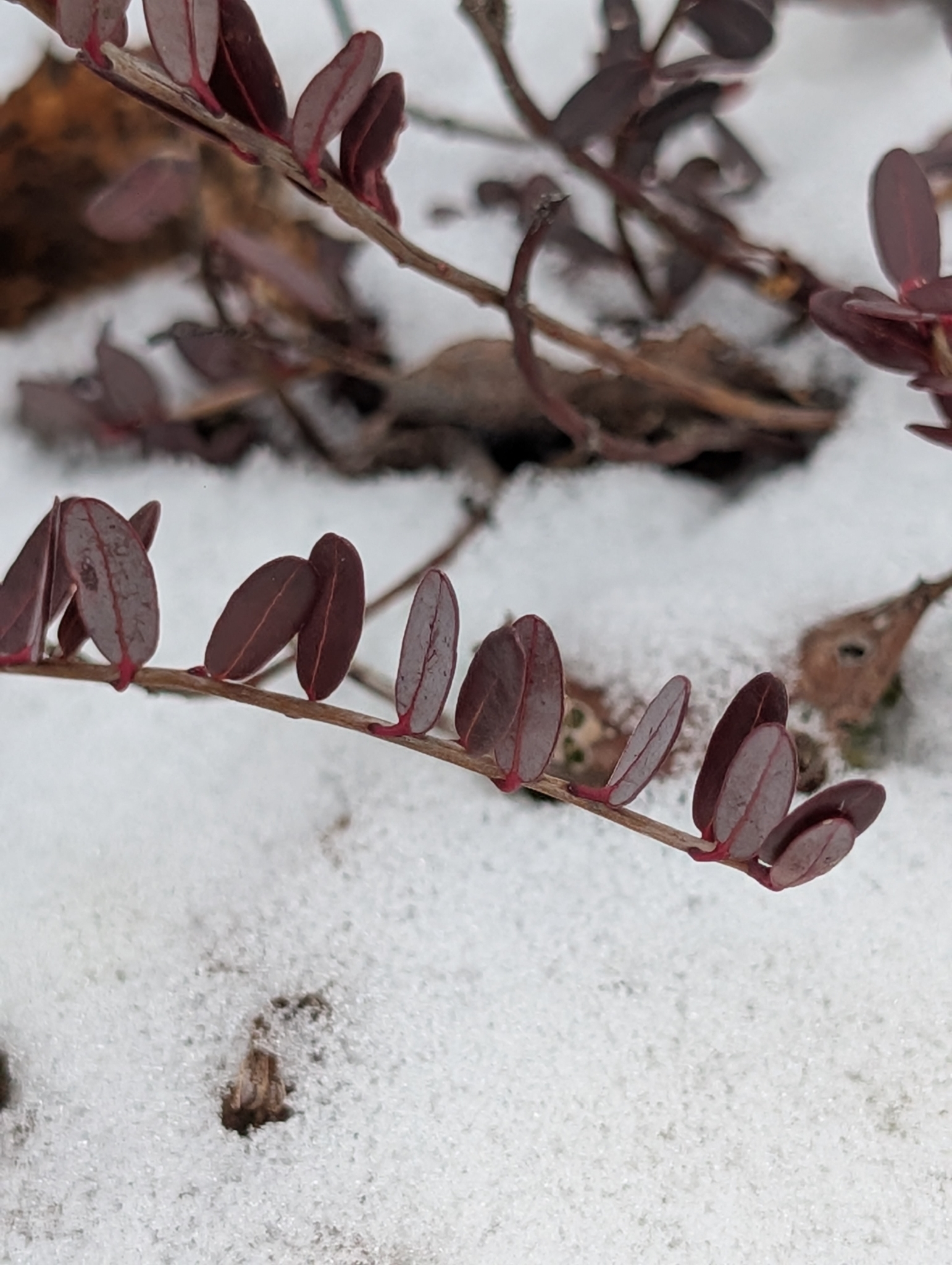
- Leaves: Alternate, leathery, dark green above and glaucous white beneath, 4 to 10 mm (0.16 to 0.4 in) long, with strongly rolled-under margins.
- Flowers: Deep pink to pale magenta, divided into four sharply backward-curving lobes with protruding yellow stamens.
- Fruit: Spherical to teardrop-shaped berry, 6 to 12 mm (0.24 to 0.47 in) wide, ripening from mottled green-white to bright speckled crimson.
Vaccinium oxycoccos vs Vaccinium Macrocarpon
The easiest way to separate Vaccinium oxycoccos from American cranberry (Vaccinium macrocarpon) is leaf size and floral stem position. Small cranberry features smaller leaves under 10 mm (0.4 in) with distinctly pointed tips, whereas American cranberry produces blunt-tipped leaves up to 18 mm (0.7 in) long.
Floral morphology also differs reliably in the field:
- Bract position: Vaccinium oxycoccos carries its pair of tiny bracts at or below the middle of the flower stalk, while Vaccinium macrocarpon carries them above the middle.
- Berry dimensions: Small cranberry yields fruit roughly 6 to 12 mm (0.24 to 0.47 in) across, whereas commercial American cranberry produces berries reaching 12 to 20 mm (0.5 to 0.8 in).
- Shoot growth: American cranberry flower stalks terminate in vegetative leafy shoots; small cranberry flowering stems do not prolong into leafy shoots during bloom.
Native Habitat and Peatland Conditions
Small cranberry grows almost exclusively in open quaking bogs, raised mires, and poor fens across subarctic and cool temperate zones. It thrives directly on mats formed by peat moss (Sphagnum magellanicum and Sphagnum fallax), which provide constant moisture and suppress potential plant competitors through natural acidification.
These environments stay cold throughout spring, frequently undergo summer water-table fluctuations, and offer minimal available nitrogen and phosphorus. The plant utilizes specialized ericoid mycorrhizal fungi within its root cells to scavenge organic nitrogen bound within raw sphagnum peat.
Ecological Role in Bogs
The flowers of small cranberry provide essential early-season nectar for cold-tolerant pollinators such as queen bumblebees (Bombus species) and solitary hoverflies in open wetlands. These insects vibrate their flight muscles to release pollen through sonic poricidal dehiscence from the tubular anthers.
As autumn arrives, the persistent berries serve as a cold-weather carbohydrate reserve for migratory waterfowl, grouse, small rodents, and brown bears. Undigested seeds pass through avian digestive tracts intact, distributing the plant to distant, isolated wetland basins.
Conservation and Environmental Threats
While globally secure, small cranberry populations face severe local declines from peat mining and wetland drainage along the southern limits of its geographic range. Lowered regional water tables allow birch scrub and tall graminoids to overtop the creeping mats, smothering the sun-dependent stems.
- Hydrological disruption: Ditching and forestry drainage dry the bog surface and halt peat formation.
- Nutrient deposition: Agricultural runoff and atmospheric nitrogen deposition accelerate weed and grass growth, choking out low-growing shrubs.
- Peat harvesting: Mechanical excavation destroys centuries of accumulated moss hummock layers and their seed banks.
Traditional Uses and Berry Foraging
The tart fruit of small cranberry is collected in late autumn or early spring after severe frosts convert bitter starches into simple sugars. Northern indigenous communities historically stewed the berries with wild game meats or preserved them in seal grease and birchbark containers without spoilage, aided by naturally high levels of benzoic acid.
Traditional herbal practices utilized berry infusions and decoctions as antiscorbutic tonics and to ease urinary discomfort. In modern foraging, the firm berries are boiled into jellies, spiced sauces, and tart syrups, requiring sweetening to temper their sharp malic and citric acid bite.
Similar Wild Bog Plants
Several related ericaceous shrubs grow alongside small cranberry in northern mires, but their leaf structure and fruit position easily distinguish them on closer inspection. Watch for these distinct peatland companions:
- Lingonberry (Vaccinium vitis-idaea): Grows upright up to 25 cm (10 in) with dark green, bell-shaped white flowers and shiny crimson berries borne in terminal clusters rather than on solitary trailing pedicels.
- Bog bilberry (Vaccinium uliginosum): Possesses deciduous, blue-green obovate leaves and produces frosted blue berries with pale flesh, rather than red fruit.
- Bog rosemary (Andromeda polifolia): Shares rolled-under narrow leaves with white undersides, but bears clusters of urn-shaped pink blossoms and dry five-valved seed capsules that must never be eaten.
Frequently Asked Questions
Is Vaccinium oxycoccos edible?
Yes, the berries of Vaccinium oxycoccos are completely edible. They have a sharply tart, acidic taste raw and are traditionally cooked into preserves, jellies, and relishes with a sweetener.
What is the common name for Vaccinium oxycoccos?
The primary English common name is small cranberry. It is also widely called bog cranberry, swamp cranberry, marshberry, and mossberry across northern regions.
What are the traditional benefits of Vaccinium oxycoccos?
Historically, the high vitamin C content made small cranberry an effective food to prevent scurvy during northern winters. Infusions and unsweetened extracts were traditionally used to alleviate symptoms of bladder and urinary tract irritation.
Can you grow small cranberry from seed?
Yes, but seeds require a 90-day cold, moist stratification period at 2 to 4 °C (35 to 40 °F) before they germinate. Once sprouted, seedlings must be planted in damp, non-fertilized sphagnum peat.
When are wild bog cranberries ripe to pick?
Small cranberries ripen from late September through November, turning deep crimson. Many foragers wait until after the first hard frosts, which softens the skin and mellows the intense astringency.
Information about traditional or historical uses is provided for educational interest only and is not medical advice. Do not use any plant to treat a condition without speaking to a qualified professional.
Sources & Verification
Taxonomy and distribution are checked against the databases below. Care guidance is written for cultivated species only and reviewed by our editor. How We Build Plant Profiles →