

Welsh onion (Allium fistulosum) is a perennial clumping herb native to East Asia, recognizable by its hollow tubular leaves and lack of a distinct underground bulb. Unlike common bulb onions, this species produces continuous harvests of green shoots year after year.
Plants survive freezing winters down to USDA zone 6, supplying fresh scallion-like leaves from early spring into late autumn. A single plot yields shoots for five years or more before requiring division.
Key Facts
- Type: Perennial culinary herb
- Hardiness: USDA zones 6 to 9
- Light: Full sun to partial shade
- Soil: Moist, well-drained loam, pH 6.0–7.0
- Height: 40–70 cm (16–28 in)
- Harvest: Spring through late autumn
Is Welsh Onion Right for Your Vegetable Patch
Welsh onion offers continuous year-round harvests of fresh scallions with far less seasonal replanting than annual onions. It suits perennial food beds, vegetable rows, and raised garden containers where space is limited.
- Requires minimal crop rotation due to its perennial clumping habit
- Produces early spring greens while annual crops remain dormant
- Expands outward each year to yield 10–15 harvestable shoots per root clump
- Thrives in containers at least 20 cm (8 in) deep
How to Identify Welsh Onion
Welsh onion grows as dense clusters of hollow, cylindrical leaves that reach 40–70 cm (16–28 in) in height. The bases remain straight white shanks without swelling into a round bulb.
- Leaves: Blue-green hollow tubes up to 2 cm (0.8 in) in diameter
- Flowers: Spherical clusters of whitish-green flowers blooming on thick scapes in June
- Stems: Straight white bases extending 10–20 cm (4–8 in) underground
- Roots: Dense fibrous roots emerging from a short subterranean rhizome
Welsh Onion Growing Conditions and Zone Requirements
Welsh onions require full sun to light partial shade within USDA zones 6 through 9. Plants endure winter temperatures as low as -20 °C (-4 °F) while maintaining root viability beneath the soil.
- Sunlight: 6 hours of direct sun daily for thick, upright foliage
- Soil pH: Neutral ground between 6.0 and 7.0 pH
- Soil texture: Loamy, moisture-retentive soil enriched with well-rotted compost
- Temperature: Optimum stem foliage growth occurs between 15–22 °C (59–72 °F)
Sowing Welsh Onion Seeds and Planting Stems
Sow seeds 6 mm (0.25 in) deep indoors 8 weeks before the last spring frost, or direct sow into outdoor garden beds in April. Seeds germinate in 10–14 days at temperatures of 15–20 °C (59–68 °F).
- Transplant young seedlings outdoors when they reach 10 cm (4 in) in height
- Space individual plants 15–20 cm (6–8 in) apart in rows set 30 cm (12 in) apart
- Direct sow in autumn for early emergence during the following spring
- Plant split root divisions directly into moist soil during spring or autumn
Welsh Onion Care and Maintenance
Provide 2.5 cm (1 in) of water per week to keep the shallow fibrous root system moist throughout the summer. Keep beds free from competing weeds to maintain light access around the stem bases.
- Mulch beds with 5 cm (2 in) of straw to retain ground moisture
- Feed with a balanced organic liquid fertilizer every 4 weeks from April to August
- Mound loose soil around stem bases to expand the length of white shanks
- Divide overcrowded root clumps every 3–4 years in early spring
How to Harvest Welsh Onions
Harvest stems by cutting outer green leaves 3 cm (1.2 in) above the soil line once plants reach 20 cm (8 in) in height. Leaving the growing center intact lets the plant generate new foliage continuously.
- Cut entire clumps down to 5 cm (2 in) above ground for a full yield batch
- Pull entire stems with roots attached if long white shanks are needed for cooking
- Gather edible floral buds in May before they open for a mild onion garnish
- Stop heavy cutting 4 weeks before winter to protect root energy reserves
Culinary Uses and Welsh Onion Cake
Welsh onion provides a mild, savory onion taste in stir-fries, soups, and baked pastries like traditional Welsh onion cake. Both the tender green tops and white shanks substitute for leeks or scallions in recipes.
- Sauté chopped stems with butter and layer with potatoes to make Welsh onion cake (Capan Cennin)
- Slice green foliage thinly to garnish soups, noodles, and egg dishes
- Grill whole mature stems to bring out natural sugars
- Traditionally used in herbal preparations to support digestion and respiratory warmth
Welsh Onion Problems and Pest Solutions
Onion thrips and downy mildew represent the primary cultural problems that reduce leaf health. Maintaining proper stem spacing and avoiding wet foliage reduces disease risks.
- Onion thrips: Cause silvery patches on leaves; wash stems or apply insecticidal soap
- Downy mildew: Produces grey fungal coating; space plants 20 cm (8 in) apart for air movement
- Allium leaf miner: Leaves white tracks; cover rows with fine insect netting from March to May
- Onion rust: Leaves bright orange spots; trim infected foliage and lower nitrogen applications
Storing Welsh Onion Stems and Overwintering
Refrigerate unwashed stems wrapped in damp cloth inside a sealed bag for up to 14 days. In the garden, established roots overwinter outdoors without protection down to -15 °C (5 °F).
- Slice green tops and freeze them on trays before storing in airtight freezer containers
- Place pulled whole plants in buckets of damp sand in a cool shed for 2–3 months
- Apply 10 cm (4 in) of straw mulch over root crowns in freezing climate zones
- Bring potted stems indoors to a sunny windowsill for fresh winter harvests
Frequently Asked Questions
Is Welsh onion a perennial?
Yes, Welsh onion (Allium fistulosum) is a persistent perennial plant that lives for many years. The root clumps multiply underground and sprout new green stems every spring without needing replanting.
What is the difference between Welsh onion vs spring onion?
Welsh onion is a true perennial species that never forms a swollen round bulb underground. Spring onions are usually young annual bulb onions (Allium cepa) harvested early before their main bulb expands.
What is the difference between Welsh onion vs leek?
Welsh onions have hollow, tubular leaves, whereas leeks (Allium ampeloprasum) produce flat, folded leaves wrapped tightly into a broad stem. Leeks are biennials grown as annuals, while Welsh onions are perennial.
What is the difference between Welsh onion vs scallion?
Scallion is a general cooking name for any young green onion, whereas Welsh onion (Allium fistulosum) is a distinct perennial plant species. Welsh onions grow thicker stems and maintain persistent clumping roots.
What is the difference between Welsh onion vs chives?
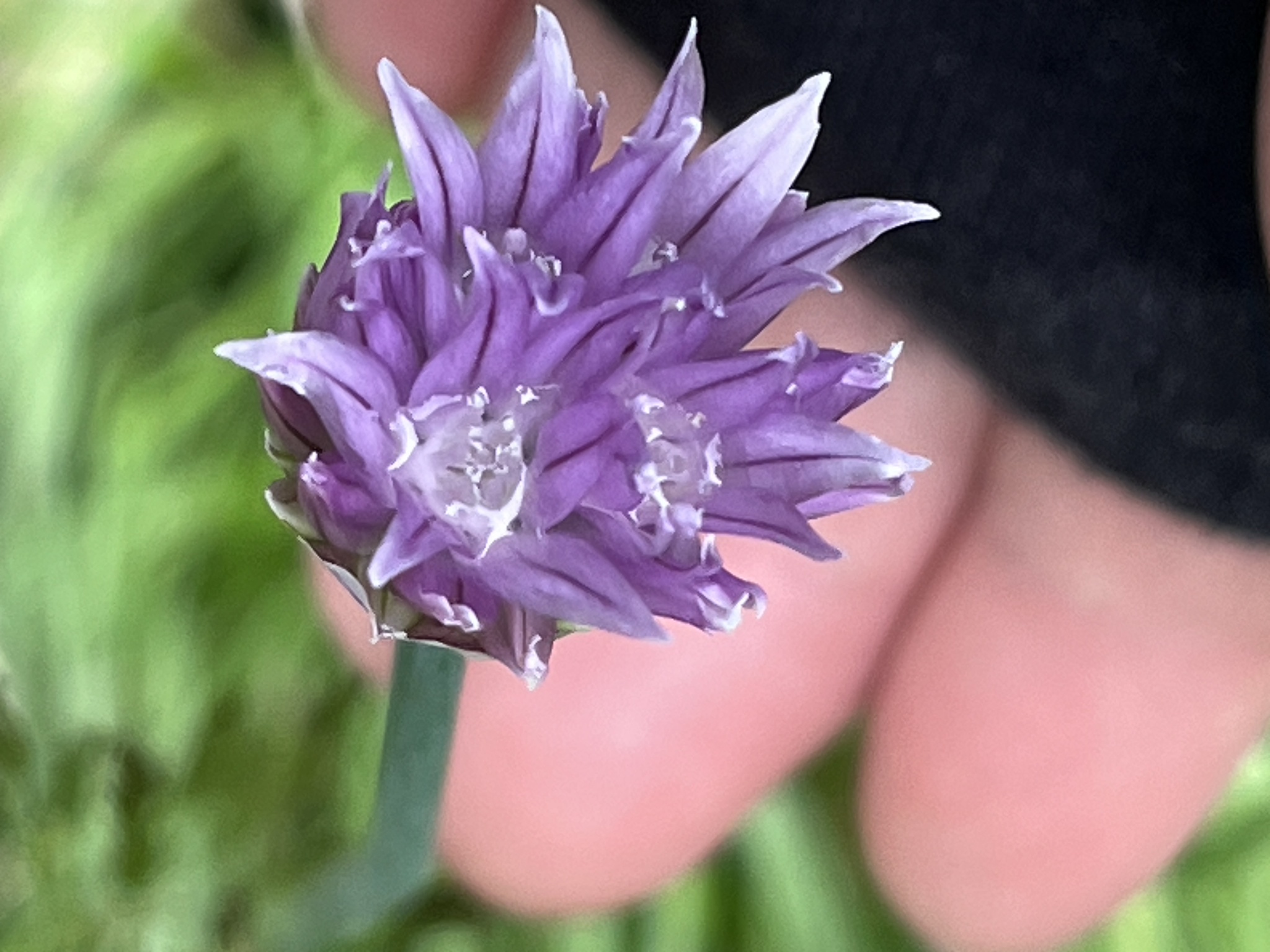
Chives (Allium schoenoprasum) grow thin, narrow foliage up to 30 cm (12 in) tall with purple blooms. Welsh onions grow much larger, reaching 70 cm (28 in) in height, with thick hollow stems and white flower heads.
Are Welsh onions toxic to pets?
Yes, Welsh onions are toxic to dogs and cats because they contain sulfur compounds that damage red blood cells. Consumption causes anemia, lethargy, and digestive upset in pets.
Information about traditional or historical uses is provided for educational interest only and is not medical advice. Do not use any plant to treat a condition without speaking to a qualified professional.
Sources & Verification
Taxonomy and distribution are checked against the databases below. Care guidance is written for cultivated species only and reviewed by our editor. How We Build Plant Profiles →
- Kew Plants of the World Onlinepowo.science.kew.org
- RHS Gardeningrhs.org.uk
- Missouri Botanical Gardenmissouribotanicalgarden.org
- NC State Extensionplants.ces.ncsu.edu
- ASPCA Animal Poison Controlaspca.org
- GBIF — Global Biodiversity Information Facilitytaxonomy, synonyms, occurrence records
- Wikipediageneral reference
More in Allium

Garlic Chives
Allium tuberosum
☀️ Full Sun 💧 Moderate

Keeled Garlic
Allium carinatum
☀️ Full Sun 💧 Low

Garlic
Allium sativum
☀️ Full Sun 💧 Moderate
Chives
Allium schoenoprasum
☀️ Full Sun 💧 Moderate

Chinese Onion
Allium chinense
☀️ Full Sun 💧 Moderate

Shallot
Allium ascalonicum
☀️ Full Sun 💧 Moderate