
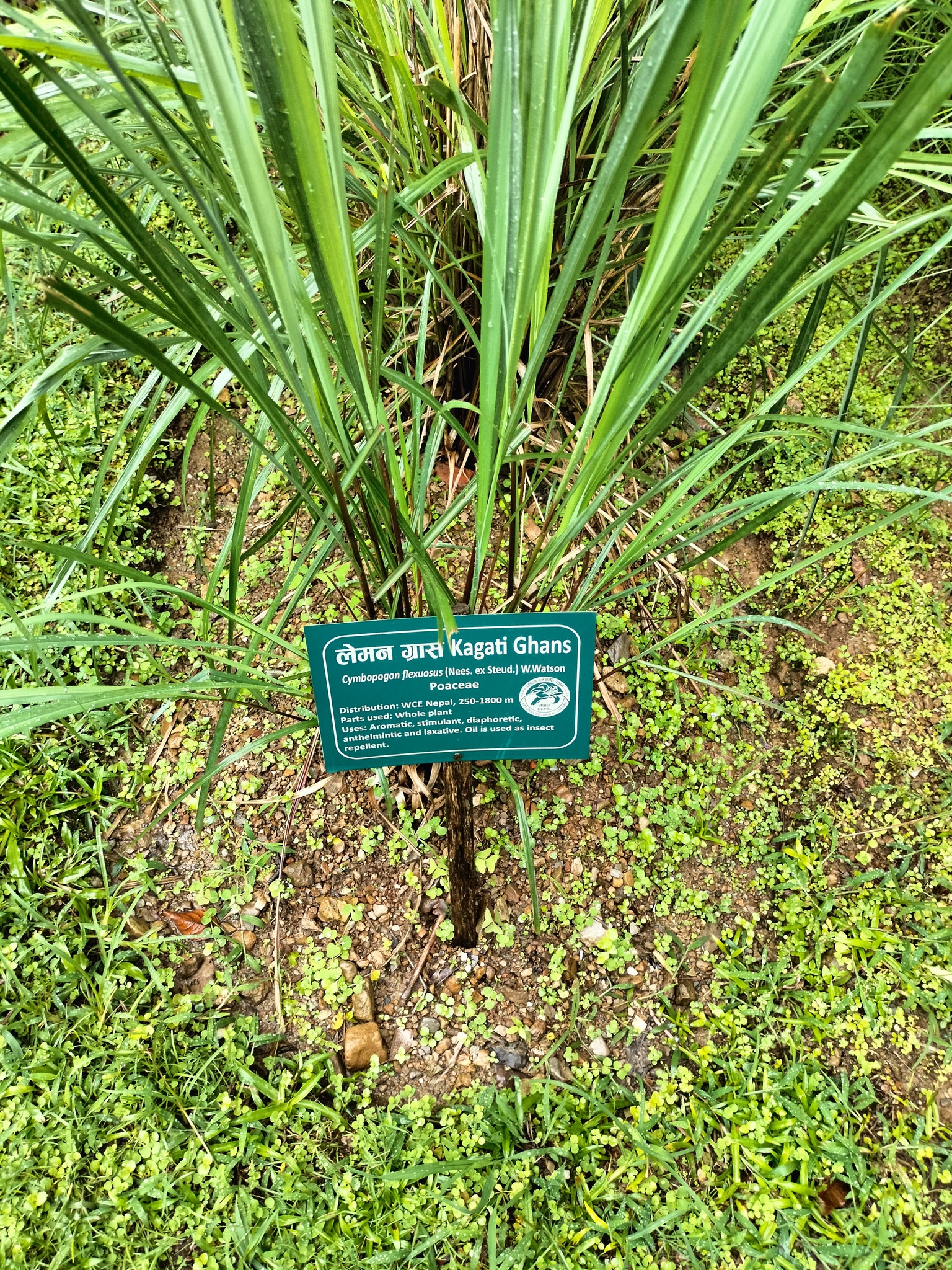
East Indian lemongrass is a perennial aromatic grass native to India, Sri Lanka, and Thailand, belonging to the species Cymbopogon flexuosus. It is primarily grown for its high citral content, which gives the leaves and stalks a sharp, lemon-like fragrance used in perfumes and cooking.
While often confused with its cousin, West Indian lemongrass (Cymbopogon citratus), this species is more likely to produce flowers and is the primary source of commercial lemongrass oil. It requires high heat and consistent moisture to reach its full height of 2 m (6.5 ft).
Key Facts
- Light: Full sun for at least 6-8 hours daily
- Temperature: Prefers 20-30 °C (68-86 °F); not frost-tolerant
- Height: Reaches 1.5-2 m (5-6.5 ft) in ideal conditions
- Water: High; requires regular watering to prevent leaf browning
- Soil: Rich, well-draining loam with a slightly acidic pH
Fitting East Indian Lemongrass into Your Garden
East Indian lemongrass is a fast-growing, structural grass that thrives in tropical and subtropical climates where temperatures stay above 10 °C (50 °F). Because it grows significantly taller than many other culinary herbs, it is best placed at the back of a border or in a dedicated herb patch. In temperate regions, it must be grown in large containers that can be moved indoors during the winter months.
You should choose a site with plenty of space, as a single clump of Malabar grass can spread to 1.2 m (4 ft) wide within two growing seasons. It is an excellent choice for gardeners who want to harvest large quantities of foliage for tea or oil extraction. If you live in a region with high humidity and heat, such as Florida or Southeast Asia, this plant will grow much more vigorously than in dry, Mediterranean climates.
How to Identify Cymbopogon flexuosus
You can identify Cymbopogon flexuosus by its tall, drooping leaf blades and distinct purple-tinged flowering panicles. The leaves are typically 0.5-1 cm (0.2-0.4 in) wide and can grow up to 1 m (3.3 ft) long, featuring a rough texture and a sharp lemon scent when crushed. Unlike West Indian lemongrass, this species frequently produces large, branched flower heads that can reach 30-60 cm (12-24 in) in length.
- Stem: Short, rhizomatous stem that forms dense, woody clumps.
- Leaves: Linear, glaucous green, with a prominent midrib and scabrid (rough) margins.
- Inflorescence: Large, drooping clusters of spikelets, often showing reddish or purplish hues.
- Roots: A fibrous, shallow root system that expands quickly in loose soil.
Ideal Growing Conditions for Malabar Grass
East Indian lemongrass requires full sun and consistent heat to produce high levels of essential oils. It performs best when daytime temperatures range between 22 °C and 32 °C (72-90 °F). While it can tolerate partial shade, the stalks will be thinner and the citrus aroma will be significantly weaker than plants grown in direct light.
The soil must be rich in organic matter and capable of retaining moisture without becoming waterlogged. A sandy loam with a pH between 5.5 and 7.0 is ideal for nutrient uptake. If your soil is heavy clay, incorporate compost or well-rotted manure to improve drainage and prevent root rot during rainy seasons. In pots, use a high-quality potting mix blended with 20% perlite for aeration.
Sowing East Indian Lemongrass Seeds
You should sow lemongrass seeds indoors 6-8 weeks before the last frost, as they require warm soil to germinate. Place seeds on the surface of a fine seed-starting mix and press them down lightly, but do not cover them deeply with soil; they need some light to sprout. Maintain a consistent temperature of 21-24 °C (70-75 °F) using a heat mat if necessary.
- Germination Time: Seeds typically sprout within 7 to 21 days.
- Transplanting: Move seedlings outdoors only when night temperatures stay above 10 °C (50 °F).
- Spacing: Space individual plants 60-90 cm (24-36 in) apart to allow for clump expansion.
- Division: Mature clumps can be divided in spring by slicing through the root ball with a sharp spade.
Watering and Feeding Requirements
Keep the soil consistently moist but never saturated, especially during the peak of summer. East Indian lemongrass has a high transpiration rate due to its large leaf surface area, and it will show signs of stress, such as leaf tip browning, if the soil dries out completely. During dry spells, you may need to water the plants 2-3 times per week.
Apply a high-nitrogen fertilizer every 4-6 weeks during the growing season to support rapid foliage production. Organic options like fish emulsion or compost tea work well for edible crops. If you notice the leaves turning pale yellow, it is often a sign of nitrogen deficiency or poor drainage. Mulching with 5 cm (2 in) of straw or wood chips helps retain soil moisture and suppress weeds around the base of the plant.
How to Harvest Lemongrass Stalks
Harvesting can begin once the stalks are at least 1.5 cm (0.5 in) thick at the base, usually 6-8 months after sowing. To harvest the whole stalk for cooking, use a sharp knife to cut it off at ground level, or pull the stalk firmly away from the main clump. For tea, you can simply snip the green leaf blades at any time, leaving the base intact to continue growing.
- Frequency: In tropical climates, you can harvest every 3-4 months.
- Technique: Always harvest from the outside of the clump first to allow the center to remain productive.
- Safety: Wear gloves and long sleeves, as the leaf edges are sharp and can cause small skin cuts.
- Quantity: Avoid removing more than one-third of the plant at a single time to prevent weakening the root system.
East Indian vs West Indian Lemongrass
The primary difference is that East Indian lemongrass (C. flexuosus) has a more herbal, grassy scent and frequently produces seeds, whereas West Indian lemongrass (Cymbopogon citratus) has a cleaner lemon aroma and almost never flowers. While both are edible, the East Indian variety is more common in the essential oil industry because it yields a higher volume of oil per acre.
In the kitchen, Cymbopogon citratus is often preferred for its thicker, more succulent stalks which are easier to mince for pastes. Cymbopogon flexuosus stalks are slightly more fibrous and are frequently used whole to infuse soups or dried for herbal teas. If you see lemongrass seeds for sale, they are almost certainly the East Indian species, as the West Indian type is propagated almost exclusively by division.
Cooking and Essential Oil Uses
The bulbous base of the stalk is traditionally used in curries, soups, and marinades across South Asia. To use it, peel away the tough outer layers until you reach the soft, pale inner core, which can then be finely chopped or pounded into a paste. The green upper leaves are too fibrous to eat but make a refreshing, citrusy herbal tea when steeped in hot water.
East Indian lemongrass oil was traditionally used in Ayurvedic practices for its purported antifungal and antimicrobial properties. Today, the oil is a major component in soaps, detergents, and insect repellents. When using the oil on the skin, it must be diluted in a carrier oil, as the high citral content can cause irritation or sensitization in some individuals.
Common Pests and Problems
The most frequent issue for this plant is lemongrass rust (Puccinia nakanishikii), which appears as small brown or orange streaks on the leaves. This fungal disease is common in humid environments and can be managed by increasing air circulation and removing infected leaves immediately. Avoid overhead watering, as wet foliage encourages spore germination.
- Aphids: Small green or black insects that cluster on new growth; wash off with a strong stream of water.
- Spider Mites: Cause fine webbing and yellow stippling on leaves in dry conditions; increase humidity to deter them.
- Root Rot: Occurs in heavy, poorly drained soil; ensure pots have large drainage holes.
- Yellowing Leaves: Often indicates a lack of nitrogen or a drop in temperature below 10 °C (50 °F).
Storing and Preserving Your Harvest
Fresh lemongrass stalks will stay fresh in the refrigerator for up to 3 weeks when wrapped tightly in plastic wrap. For long-term storage, the stalks can be frozen whole or sliced; they retain their flavor remarkably well when frozen for up to 6 months. Simply thaw and use as you would fresh stalks.
Drying is the best method for preserving the green leaves for tea. Cut the leaves into 2 cm (1 in) pieces and dry them in a dehydrator at a low setting or in a cool, dark place with good airflow. Once completely brittle, store them in an airtight glass jar away from direct sunlight. Dried lemongrass maintains its potency for about a year before the aromatic oils begin to fade.
Year-Round Care for East Indian Lemongrass
| Spring | Sow seeds indoors 8 weeks before the last frost. Divide mature clumps and replant into fresh, nutrient-rich soil once temperatures exceed 15 °C (60 °F). |
|---|---|
| Summer | Water deeply 2-3 times per week during heatwaves. Apply a nitrogen-rich liquid fertilizer every 4 weeks to maximize foliage growth for harvesting. |
| Autumn | Harvest the majority of stalks before the first frost. In colder zones, prune the plant back to 15 cm (6 in) and move containers into a frost-free area. |
| Winter | Reduce watering significantly for indoor or dormant plants. Keep the soil barely moist to prevent root rot while the plant is not actively growing. |
Why Is My Lemongrass Turning Brown? Quick Diagnosis
| What you see | Likely cause | What to do |
|---|---|---|
| Brown, dry leaf tips | Underwatering or low humidity | Increase watering frequency and mist the foliage or use a humidity tray. |
| Orange or reddish spots on leaves | Lemongrass rust fungus | Prune away infected leaves and avoid getting water on the foliage. |
| Stunted growth and pale leaves | Nitrogen deficiency | Apply a high-nitrogen organic fertilizer like fish emulsion. |
| Mushy base and wilting | Root rot from overwatering | Improve drainage and allow the top 3 cm of soil to dry before watering again. |
Popular Cultivars of Cymbopogon flexuosus
- OD-19 – High oil yield and citral content
- Sugandhi – Improved resistance to lemongrass rust
- Krishna – Deep purple stalks, popular for essential oil
- Kaveri – High biomass variety suited for humid regions
Frequently Asked Questions
Can you eat East Indian lemongrass?
Yes, it is edible and used extensively in Asian cuisine for flavoring soups and teas. While the stalks are more fibrous than West Indian lemongrass, the inner core is flavorful when minced.
What is East Indian lemongrass oil used for on skin?
It is traditionally used as an antifungal and antiseptic treatment for minor skin irritations. However, it must always be diluted in a carrier oil to prevent chemical burns or irritation.
Is East Indian lemongrass toxic to cats?
Yes, it contains essential oils and cyanogenic glycosides that can cause stomach upset or liver damage in cats if eaten in large amounts. Keep the plant out of reach of curious pets.
How do I grow East Indian lemongrass from seeds?
Sow seeds on the surface of moist soil indoors, as they need light and temperatures around 21-24 °C (70-75 °F) to germinate. They typically sprout within two to three weeks.
What is the difference between Cymbopogon flexuosus and Cymbopogon citratus?
C. flexuosus (East Indian) often flowers and has a grassier scent, while C. citratus (West Indian) rarely flowers and has a purer lemon aroma. C. flexuosus is the primary source of commercial lemongrass oil.
Information about traditional or historical uses is provided for educational interest only and is not medical advice. Do not use any plant to treat a condition without speaking to a qualified professional.
Sources & Verification
Taxonomy and distribution are checked against the databases below. Care guidance is written for cultivated species only and reviewed by our editor. How We Build Plant Profiles →