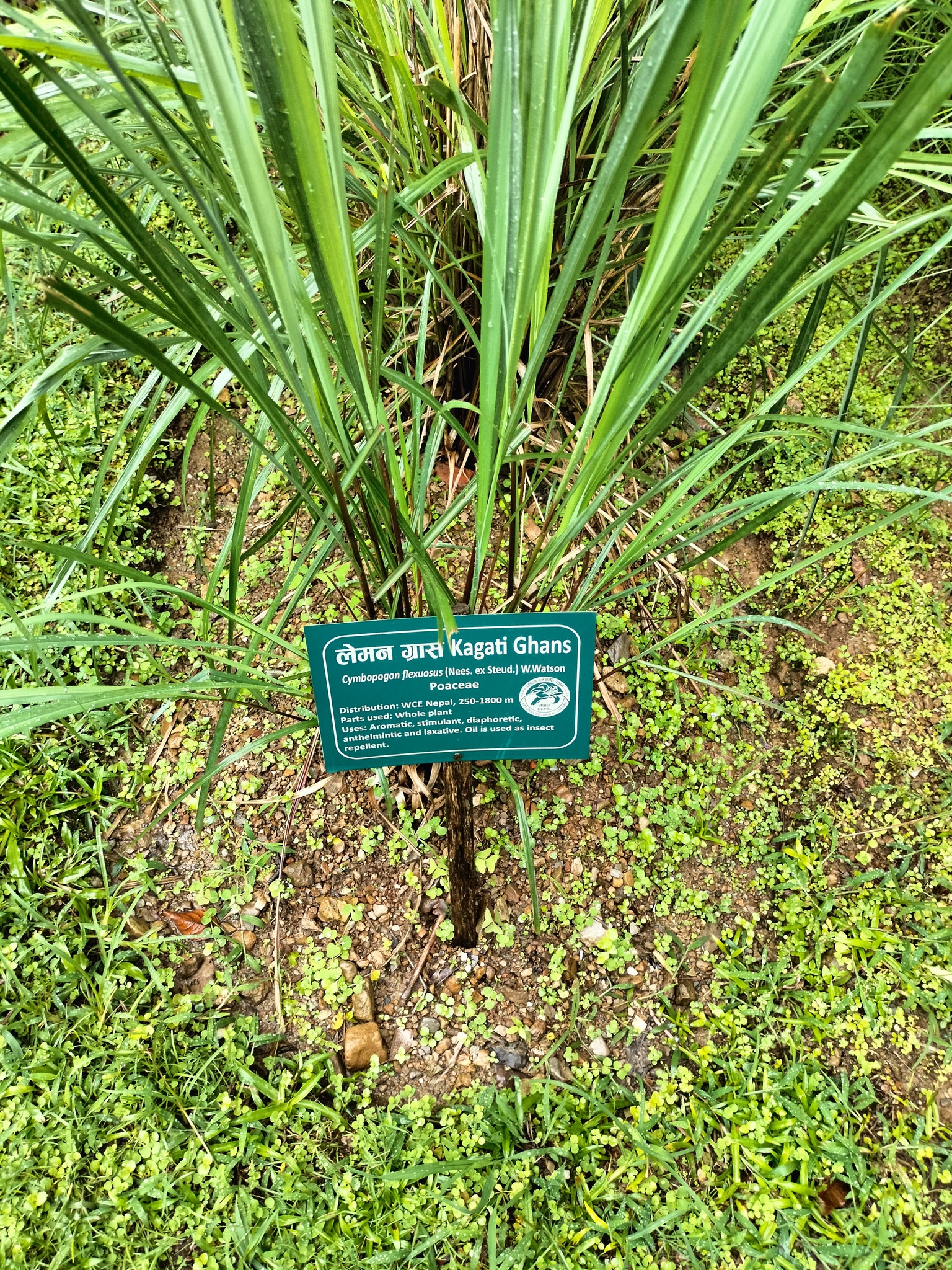
Citronella (Cymbopogon nardus) is a large, clump-forming tropical grass native to Sri Lanka and Southeast Asia that is the primary source of Ceylon citronella oil. It is frequently confused with lemon grass (Cymbopogon citratus) due to its citrus-like aroma, but it is distinguished by its reddish pseudostems and larger mature size.
This species is a true grass and should not be mistaken for the common “mosquito plant” or citronella geranium (Pelargonium graveolens), which is a completely different genus. While the grass contains high concentrations of essential oils, it requires significant space and high humidity to thrive as a crop.
Key Facts
- Light: At least 6 hours of full sun daily
- Water: Keep soil consistently moist but not waterlogged
- Temperature: Minimum 15 °C (60 °F) for active growth
- Height: Reaches 1.5–2.5 m (5–8 ft) in height
- Hardiness: USDA Zones 10 to 12 only
Fitting Citronella into Your Garden
Citronella is a high-volume grass that requires significant space in sunny, frost-free garden beds or very large containers. Because it can grow up to 2.5 m (8 ft) tall, it is best used as a background screen or a focal point in a tropical-themed border. It is not suitable for small windowsills or cramped indoor spaces where light levels are insufficient for essential oil production.
This grass is ideal for gardeners in humid, warm climates who want a functional aromatic plant. It is often planted near patios or seating areas, though its ability to repel mosquitoes just by growing in the ground is frequently overstated. You should ensure the site has enough room for the clump to expand to 1.5 m (5 ft) in width over two growing seasons.
- Best for USDA zones 10-12
- Requires consistent heat and humidity
- Suited for large 40-liter (10-gallon) pots
- Functions well as a fast-growing privacy screen
Identifying Citronella Grass
True citronella grass is identified by its long, strap-like leaves and distinctively reddish-purple base or pseudostems. The leaves are narrow, tapering to a point, and can reach lengths of 1 m (3.3 ft). When crushed, the foliage releases a strong, pungent scent of citrus and turpentine, which is much sharper than the sweet lemon scent of culinary lemon grass (Cymbopogon citratus).
The plant grows in dense, upright tufts that do not produce runners, unlike some invasive grasses. In late summer, it may produce large, drooping panicles of brownish flowers, though these are rarely seen in temperate climates or indoor cultivation. The leaf margins are slightly rough to the touch, and the blades are typically a greyish-green color.
- Reddish-purple color at the base of the stems
- Leaves 1–2 cm (0.4–0.8 in) wide
- Strong citrus-turpentine aroma
- Clump-forming habit without runners
Light and Temperature Requirements
This grass needs a minimum of 6 to 8 hours of direct sunlight to maintain its structural integrity and oil content. Without intense light, the tall blades will become floppy and lose their characteristic scent. In regions with extreme afternoon heat, such as Arizona or inland California, it can tolerate very light dappled shade, but full sun is generally preferred.
As a tropical species, it has zero frost tolerance and will begin to suffer when temperatures drop below 10 °C (50 °F). Growth stops entirely in cold weather, and the roots may rot if the soil remains wet and cold simultaneously. If you are growing it in a container in a cooler zone, move the plant indoors before the first night of autumn frost.
- Optimal temperature range: 20–30 °C (68–86 °F)
- Direct southern exposure is best indoors
- Requires protection from cold winds
- Foliage dies back at 0 °C (32 °F)
Planting and Sowing Citronella
Propagate citronella by dividing established root clumps in the spring or by purchasing nursery-grown starts. While seeds are available, they have a low germination rate and take significantly longer to reach a useful size than divisions. To divide, use a sharp spade to slice through the root ball, ensuring each section has at least three or four healthy green shoots and a robust set of roots.
When planting in the ground, dig a hole twice as wide as the root ball and enrich the soil with compost. Space multiple plants at least 90 cm (3 ft) apart to allow for air circulation, which prevents fungal issues in humid weather. If using containers, ensure they have large drainage holes and use a loamy, peat-based potting mix.
- Divide every 3 years to maintain vigor
- Plant at the same depth as the nursery pot
- Keep newly planted divisions moist for 2 weeks
- Best planted when soil reaches 18 °C (65 °F)
Watering and Feeding Schedule
Keep the soil consistently moist during the peak growing season, watering whenever the top 2 cm (1 in) of soil feels dry. Citronella is a thirsty plant and will develop brown, dry leaf tips if the roots are allowed to dry out completely. During the hot summer months, container-grown plants may require daily watering to prevent wilting.
Feed the plant with a balanced, water-soluble fertilizer every 4 weeks from spring through late summer. Because it is a grass, it responds well to fertilizers with a slightly higher nitrogen content, which encourages the production of lush, aromatic foliage. Reduce watering and stop fertilizing entirely during the winter months when the plant enters a dormant or semi-dormant state.
- Water deeply to reach the entire root system
- Use a 10-10-10 or 20-10-10 NPK ratio
- Avoid overhead watering to prevent leaf rust
- Mulch around the base to retain moisture
Harvesting and Extracting Oil
Harvest citronella leaves by cutting them about 10 cm (4 in) above the soil line using sharp shears. The best time to harvest is in the morning after the dew has dried but before the sun is at its peak, as this is when the essential oil concentration is highest. You can begin harvesting once the plant is at least 90 cm (3 ft) tall and well-established.
For oil extraction, the leaves are traditionally steam-distilled. In a home setting, the fresh leaves can be chopped and infused into a carrier oil, such as olive or coconut oil, by heating them gently in a double boiler for several hours. This oil can then be used in homemade candles or topical repellents, though its concentration will be much lower than commercial essential oils.
- Harvest up to three times per year
- Do not remove more than 30% of the foliage at once
- Wear gloves to avoid skin irritation from oils
- Use fresh leaves immediately for the best scent
Traditional and Modern Uses
The primary use for citronella is the production of insect-repelling oils containing geraniol, citronellol, and citronellal. These compounds work by masking the scents that attract insects, rather than killing them. In traditional medicine, the grass was used in steam baths or as a topical wash for skin conditions and minor aches.
Beyond its repellent properties, the grass is used in the fragrance industry for soaps, lotions, and detergents. In some regions, it is planted on slopes for erosion control due to its dense, fibrous root system. While it is related to culinary lemon grass, it is generally considered too bitter and fibrous for cooking, though it is occasionally used in traditional herbal teas in small amounts.
- Used in outdoor torches and candles
- Traditionally used for digestive support in tea
- Component in natural perfumes
- Effective for stabilizing loose soil
Common Pests and Leaf Problems
Leaf rust, caused by the fungus Puccinia narsuda, is the most common issue, appearing as small orange or brown pustules on the undersides of leaves. This usually occurs in conditions of high humidity with poor air circulation. If you notice rust, prune away the affected leaves immediately and improve spacing between plants to allow the foliage to dry faster after rain.
Spider mites can also be a problem, particularly if the plant is kept indoors or in a very dry greenhouse. These pests cause the leaves to look speckled and dull. Regularly misting the foliage or washing it with a firm stream of water can help keep mite populations under control without the need for harsh chemicals.
- Rust: orange spots, remove infected foliage
- Spider mites: fine webs, speckled leaves
- Root rot: yellowing leaves, mushy base
- Leaf spot: brown circles with yellow halos
Citronella Vs. Citronella Geranium
It is vital to distinguish between true citronella grass (Cymbopogon nardus) and the
Drying and Storing Citronella
Store dried citronella leaves in airtight glass jars kept in a cool, dark environment to preserve their volatile oils. To dry the leaves, bundle small groups of 5–10 stalks together and hang them upside down in a well-ventilated area away from direct sunlight. The drying process typically takes 1 to 2 weeks depending on the local humidity levels.
Once the leaves are brittle and snap easily, they can be crumbled or cut into smaller pieces for storage. Dried leaves retain their scent for approximately 6 to 12 months. They are commonly used in potpourri, sachets for linen closets, or as an ingredient in herbal tea blends, though the flavor is significantly more medicinal than culinary lemon grass.
- Dry in a dust-free environment
- Avoid plastic bags for storage as they trap moisture
- Label jars with the harvest date
- Discard if any signs of mold appear
Year-Round Citronella Grass Maintenance
| Spring | Divide large clumps as new growth appears. Apply a balanced fertilizer and increase watering frequency as temperatures rise above 15 °C (60 °F). |
|---|---|
| Summer | Provide daily water for container plants. Harvest leaves for oil extraction or drying. Check for leaf rust during periods of high humidity. |
| Autumn | Reduce watering as growth slows. Move container-grown plants indoors before the first frost. Cut back dead foliage in warmer zones. |
| Winter | Keep indoor plants in the sunniest possible window. Water only when the soil is dry to the touch. Do not fertilize until spring. |
Common Citronella Plant Problems and Solutions
| What you see | Likely cause | What to do |
|---|---|---|
| Yellowing lower leaves | Overwatering or poor drainage | Allow the top 2 cm of soil to dry before watering again. |
| Brown leaf tips | Low humidity or underwatering | Increase watering frequency and mist the plant if kept indoors. |
| Floppy, weak stalks | Insufficient sunlight | Move the plant to a location receiving at least 6 hours of full sun. |
| Orange spots on leaves | Leaf rust fungus | Prune infected leaves and increase air circulation around the plant. |
Types of Citronella and Related Grasses
- Cymbopogon nardus ‘Ceylon’ – the standard variety for essential oil.
- Cymbopogon winterianus – Java citronella, higher oil yield and quality.
- Cymbopogon citratus – culinary lemon grass, often sold alongside citronella.
Frequently Asked Questions
Does citronella grass really repel mosquitoes?
While the essential oil in the leaves is an effective repellent, the living plant sitting in a garden does not release enough scent to keep mosquitoes away; you must crush or burn the leaves to release the oils.
What is the difference between citronella and citronella geranium?
Citronella (Cymbopogon nardus) is a tall tropical grass, while the citronella geranium (Pelargonium graveolens) is a bushy perennial with divided leaves that merely smells similar.
Is citronella safe for dogs and cats?
The plant is mildly toxic to pets because the essential oils can cause digestive upset if the leaves are eaten in large quantities.
Can I grow citronella grass indoors?
It is difficult to grow indoors because it requires very high light levels and significant space, but it can survive winter in a bright, heated conservatory.
How do I use citronella leaves for mosquitoes?
You can crush the fresh leaves and rub them on your skin or clothes, or boil them in water to create a temporary repellent spray.
Information about traditional or historical uses is provided for educational interest only and is not medical advice. Do not use any plant to treat a condition without speaking to a qualified professional.
Sources & Verification
Taxonomy and distribution are checked against the databases below. Care guidance is written for cultivated species only and reviewed by our editor. How We Build Plant Profiles →