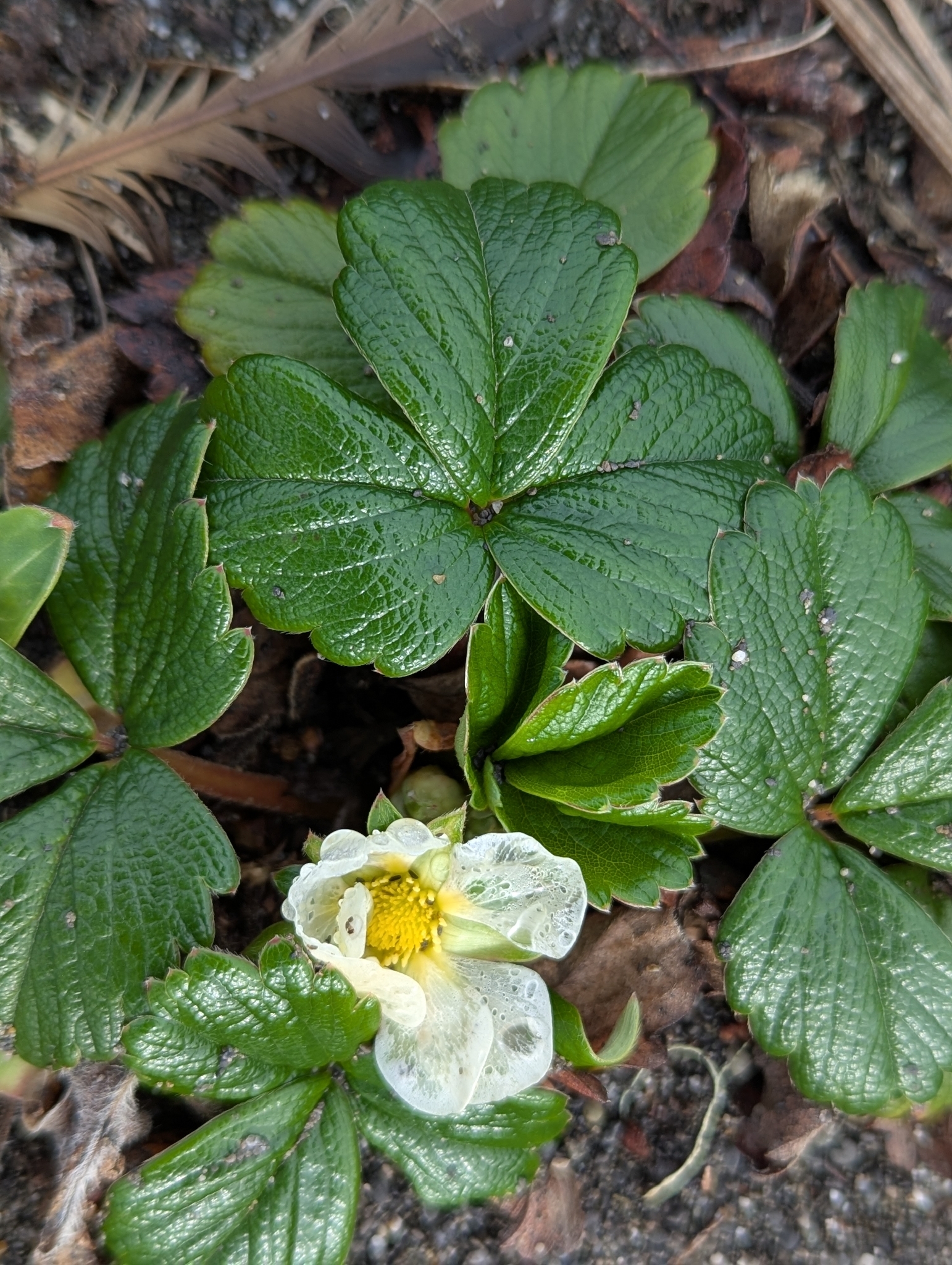
Wild strawberry (Fragaria vesca) is a creeping perennial herb native to temperate woodlands across Europe, Asia, and North America, recognised by its trifoliate toothed leaves and small, intensely aromatic red fruit.
Gardeners grow wild strawberry as an edible ground cover and pot fruit, where the primary rule is maintaining moist, humus-rich soil in dappled sunlight to prevent foliage scorch and fruit shrivelling.
Key Facts
- Soil: Moist, well-draining loam rich in organic matter
- Light: Full sun to partial woodland shade
- Mature Size: 15–25 cm (6–10 in) tall, spreading indefinitely
- Fruit Harvest: June until the first autumn frost
- Edibility: Fully edible fruit and leaves
- Hardiness: USDA Zones 3 through 9
Growing Wild Strawberry in Gardens and Containers
Wild strawberry fits seamlessly into woodland borders, forest gardens, and shallow patio containers where commercial garden strawberries often falter under partial shade. Because the true wild form spreads via leafy runners called stolons, a single plant colonises bare ground within two seasons to suppress weeds.
Unlike the large hybrid garden strawberry (Fragaria × ananassa), this species produces smaller berries continuously across summer rather than all in one heavy June flush. It suits anyone seeking high-aroma fruit from difficult shaded edges, provided the soil remains consistently damp.
Wild Strawberry Plant Leaves, Flowers, and Fruit Identification
Wild strawberry is an herbaceous perennial forming a basal rosette that reaches 15 to 25 cm (6 to 10 in) in height and spreads indefinitely by above-ground stolons. Each leaf is compound with three coarsely toothed, bright green leaflets measuring 2 to 6 cm (0.8 to 2.4 in) long, featuring prominent silky hairs on the lower veins.
Flowering occurs from April to July on slender stems held just above or level with the crown. You can identify the plant through these distinct botanical features:
- Flowers: Five rounded white petals with central yellow stamens, measuring 1.2 to 1.8 cm (0.5 to 0.7 in) across, facing outward or slightly nodding.
- Fruit: Conical to spherical false berries measuring 1 to 1.5 cm (0.4 to 0.6 in), turning scarlet red when ripe with tiny achenes (seeds) resting on the surface.
- Foliage: Trifoliate, light green with sharp serrations along the margins; the terminal tooth of each leaflet usually projects beyond the adjacent lateral teeth.
- Stolons: Slender, reddish-green runners that root at nodes to establish daughter crowns.
Ideal Growing Conditions for Wild Strawberry
Wild strawberry thrives best in morning sun with afternoon shade and an acidic to neutral soil pH between 5.5 and 6.8. In scorching midday heat, intense direct sunlight bleaches the foliage and shrinks berry development.
The root system is shallow, occupying primarily the top 15 cm (6 in) of the soil profile. To support steady fruiting throughout the growing season, prepare the site according to these baseline standards:
- Light exposure: 4 to 6 hours of filtered sunlight daily; full sun is tolerated only in cool coastal climates.
- Soil texture: Friable loam amended heavily with leaf mould or well-rotted garden compost.
- Drainage: Free-draining yet moisture-retentive; waterlogged clay causes root rot within days.
- Temperature tolerance: Fully frost hardy down to -35 °C (-31 °F) when crowns are insulated by natural snow cover or winter mulch.
How to Plant Wild Strawberry Seeds and Runners
Sow wild strawberry seeds indoors 8 to 10 weeks before your last spring frost after subjecting the seeds to 3 to 4 weeks of cold stratification in a refrigerator. The minuscule seeds require light to germinate, so press them gently onto damp seed compost without burying them.
If you are establishing plants by divisions or rooting stolons, follow these practical steps:
- Chilling seeds: Seal the seed packet inside a plastic bag in the refrigerator at 2 to 4 °C (35 to 40 °F) for 21 to 30 days to break dormancy.
- Sowing: Scatter seeds onto surface soil, mist thoroughly, and maintain a temperature of 18 to 21 °C (65 to 70 °F) under bright grow lights; germination takes 14 to 28 days.
- Spacing: Set transplants 30 cm (12 in) apart in garden beds or plant 3 crowns per 30 cm (12 in) hanging basket.
- Planting depth: Keep the central crown exactly level with the soil surface; burying the crown causes rotting, while high planting dries out emerging roots.
- Pinning runners: Press node points of trailing stolons into moist soil using bent garden wire to root new clones within 14 days.
Wild Strawberry Plant Care and Watering Routine
Supply wild strawberry with 2.5 cm (1 in) of water per week whenever natural rainfall falls short. Because the root zone is shallow, allow only the top 2 cm (0.8 in) of soil to dry out between waterings to prevent fruit drop.
Feed wild strawberry sparingly. High nitrogen fertilisers generate excessive leaf canopy at the expense of floral buds. Top-dress beds each spring with a 3 cm (1.2 in) layer of organic compost, or feed container-grown specimens every three weeks with a balanced liquid seaweed and tomato feed high in potassium.
Harvesting Ripe Wild Strawberries
Harvest wild strawberries when the berries are uniformly deep red and release effortlessly from the green calyx with a gentle pull. Unripe berries showing green or white shoulders will not ripen after picking and lack sweetness.
Check the plants every two days from June through September, as the small berries soften quickly in warm weather. Harvest in dry morning hours after dew has evaporated. Pinch the thin stem just above the fruit using your fingernails to avoid crushing the soft pulp.
Culinary Uses and Edible Wild Strawberry Leaves
Wild strawberry berries are entirely edible raw or cooked, offering an intense musky sweetness that exceeds commercial strawberries despite their diminutive size. Pastry chefs prize them whole for tarts, macerated in balsamic vinegar, or folded into fresh cream.
The foliage also has a long culinary and traditional history:
- Fresh fruit: Best eaten immediately within 4 hours of harvest or infused into syrups, jams, and vinegars.
- Herbal tea: Fully dried wild strawberry leaves have traditionally been steeped in boiling water for 10 minutes to brew an astringent, mineral-rich herbal infusion.
- Safety caution: Never steep partially wilted leaves; use fresh green leaves immediately or cure them until crisp and dry to avoid bitter degraded compounds.
Wild Strawberry vs Mock Strawberry and Common Problems
The most frequent identification error involves mock strawberry (Potentilla indica), which produces yellow flowers and dry, tasteless fruit pointing upright rather than white flowers and pendulous, fragrant red berries. Mock strawberry berries are non-toxic but spongy and completely flavourless.
Cultivated wild strawberry beds are occasionally troubled by small pests and damp-weather diseases. Watch out for these four regular garden issues:
- Slugs and snails: Rasp holes through ripening fruit overnight; manage them with beer traps, copper tape on pots, or organic iron phosphate pellets.
- Grey mould (Botrytis cinerea): A fuzzy grey fungal growth on damp berries; prevent it by mulching with clean straw to keep berries off bare dirt.
- Powdery mildew (Podosphaera aphanis): White talcum-like film curling upward on leaves; thin dense plantings to improve air circulation.
- Strawberry root weevil (Otiorhynchus ovatus): Grubs chew roots causing sudden wilt; apply beneficial nematodes (Heterorhabditis bacteriophora) in late summer.
Storing Wild Strawberries and Preserving Foliage
Fresh wild strawberries last only 24 to 48 hours in the refrigerator when arranged in a single layer on paper towels inside an unsealed container. Do not wash the berries until minutes before consumption, as residual water causes rapid mould development.
To store surplus fruit longer than two days, freeze individual berries on a parchment-lined baking sheet at -18 °C (0 °F) for two hours before transferring them into airtight freezer bags. For leaf preservation, bundle healthy whole stems and hang them upside down in a warm, dark, well-ventilated room for 10 to 14 days until the leaflets crumble between your fingers.
Wild Strawberry Care Through the Four Seasons
| Spring | Rake clear winter debris and old blackened leaves from crowns. Top-dress the bed with 2 to 3 cm (1 in) of aged compost and begin watering as new green shoots expand. Set out autumn-sown seedlings after hard frosts pass. |
|---|---|
| Summer | Provide 2.5 cm (1 in) of water weekly during hot periods. Harvest ripe berries every 48 hours to prevent attractant rot for wasps and slugs. Direct and pin emerging stolons to fill bare gaps, or clip unwanted runners to focus energy into fruit. |
| Autumn | Trim spent flower stems and damaged foliage down to 5 cm (2 in) above the crown in October. Transplant newly rooted daughter plantlets to new positions. Apply a thin layer of compost around roots without burying the crown. |
| Winter | In zones 3 to 5, apply a 5 cm (2 in) loose mulch of clean straw or evergreen boughs over the bed once the ground freezes to avoid frost-heaving. Move container plants to a sheltered cold frame or unheated garage. |
Wild Strawberry Plant Problems and Easy Fixes
| What you see | Likely cause | What to do |
|---|---|---|
| Berries stay dry, point upright, and taste like water | Invasive mock strawberry (Potentilla indica) infestation | Hand-pull plants bearing yellow flowers and erect, bumpy fruit to leave true wild strawberries room to spread. |
| Ripening berries turn into grey fuzzy mush | Grey mould (Botrytis cinerea) caused by ground contact and dampness | Tuck pine needles or straw mulch beneath plants to hold fruit off bare soil and water only at the base. |
| Leaf margins turn brown and crispy in midsummer | Sun scorch combined with dry root zone | Erect 30% shade cloth or relocate container plants to dappled afternoon shade and maintain consistent moisture. |
| Holes chewed in ripe fruit near the ground | Slugs and snails feeding overnight | Distribute organic iron phosphate bait pellets around bed perimeters and elevate hanging planters. |
| Lush foliage produced but no flowers or fruit | Excess soil nitrogen from synthetic fertilisers | Discontinue high-nitrogen feeds and switch to a potassium-rich organic tomato feed. |
Selected Cultivars and Alpine Strawberry Varieties
- 'Alexandria' – runnerless alpine type with heavy red fruit
- 'Baron Solemacher' – compact runnerless heirloom with conical sweet berries
- 'Yellow Wonder' – cream-yellow fruit ignored by birds
- 'Mignonette' – compact French selection with fragrant scarlet berries
- 'Rügen' – early blooming runnerless German garden variety
Frequently Asked Questions
Is the wild strawberry plant edible?
Yes, both the small red berries and the green leaves of true wild strawberry are completely edible. The berries have a fragrant, sweet flavour, while the leaves are traditionally dried to brew herbal infusions.
How can you tell wild strawberry from mock strawberry?
Wild strawberry produces white flowers and drooping, sweet red fruit with indented seeds, whereas mock strawberry (Potentilla indica) has yellow flowers and tasteless, dry fruit that points straight up. Mock strawberry leaves are also a darker, rougher green.
Does wild strawberry make a good ground cover?
Yes, standard wild strawberry spreads vigorously by leafy runners to create a dense ground cover 15 to 20 cm (6 to 8 in) tall in woodland gardens. Plant crowns 30 cm (12 in) apart to achieve solid foliage cover within two growing seasons.
How long do wild strawberry seeds take to germinate?
Wild strawberry seeds germinate in 14 to 28 days when kept at 18 to 21 °C (65 to 70 °F) following 3 to 4 weeks of cold stratification in the refrigerator. The seeds require light to sprout and must not be buried deeply.
Why are my wild strawberries so small?
Small fruit size is a natural botanical trait of wild strawberry, which typically measures only 1 to 1.5 cm (0.4 to 0.6 in) across. Insufficient soil moisture or severe root competition can make them even smaller, so maintain damp, humus-rich soil during berry swell.
Information about traditional or historical uses is provided for educational interest only and is not medical advice. Do not use any plant to treat a condition without speaking to a qualified professional.
Sources & Verification
Taxonomy and distribution are checked against the databases below. Care guidance is written for cultivated species only and reviewed by our editor. How We Build Plant Profiles →
- Kew Plants of the World OnlineTaxonomy, distribution, and native status.
- Royal Horticultural SocietyCultivation profile and hardiness specifications.
- NC State Extension Gardener Plant ToolboxPhysical characteristics, landscape uses, and mock strawberry distinction.
- IUCN Red ListLeast Concern conservation assessment.
- GBIF — Global Biodiversity Information Facilitytaxonomy, synonyms, occurrence records
- Wikipediageneral reference