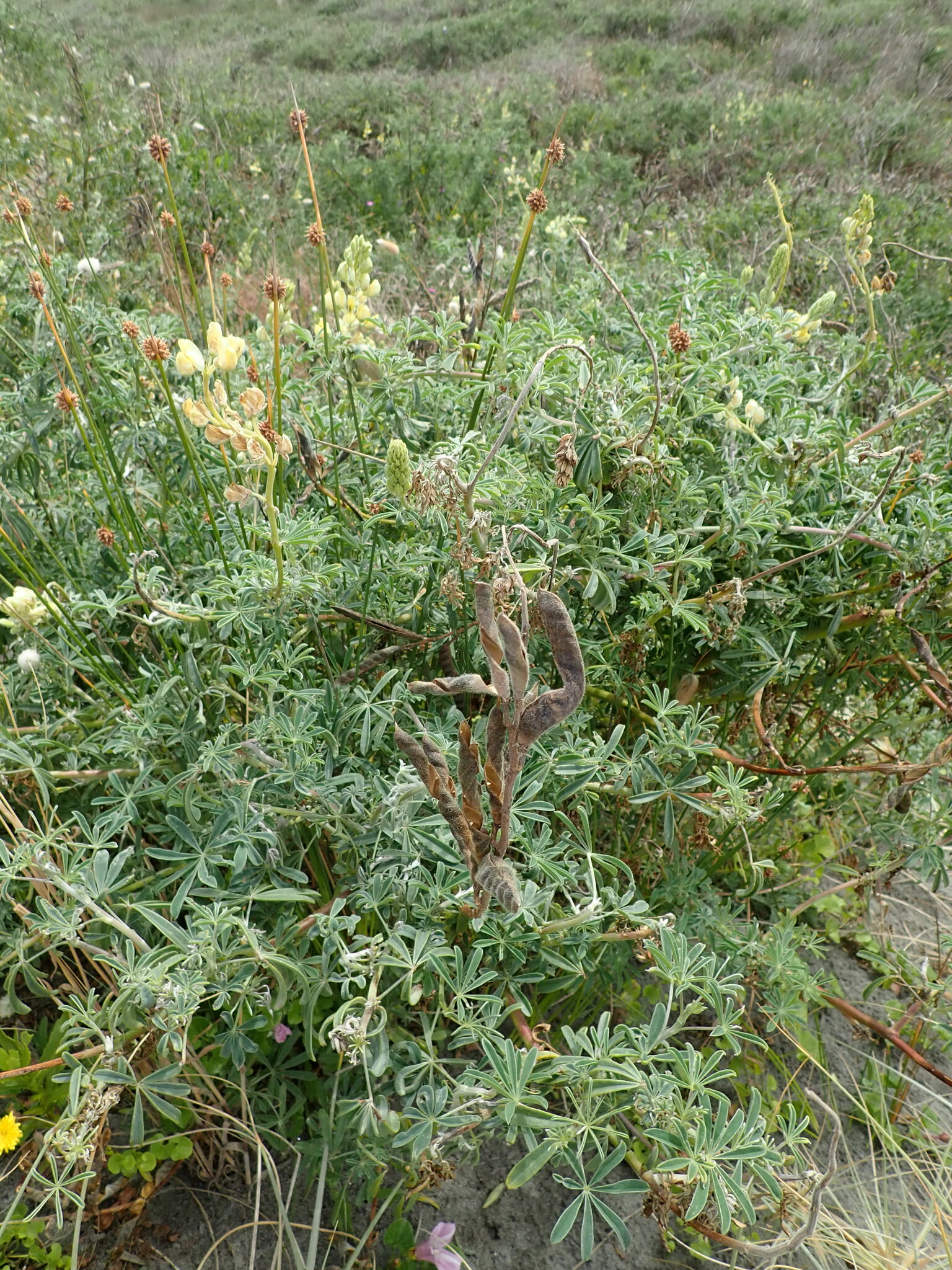
Silver Bush Lupine (Lupinus albifrons) is a perennial shrub native to the coastal bluffs and foothills of California and Oregon, recognized by its metallic, light-reflecting foliage. It serves as a primary food source for several native insects and provides structural density to dry landscapes.
This species is short-lived, typically lasting three to five years in a garden setting before needing replacement. It thrives in nutrient-poor soils where other shrubs struggle, provided the ground remains dry during the summer months.
Key Facts
- Water: low, once established
- Sun: full sun required
- Soil: rocky or sandy drainage
- Height: up to 1.5 m (5 ft)
- Wildlife: Mission Blue butterfly host
Why Grow Silver Bush Lupine?
Silver Bush Lupine is a primary choice for restoration projects and native gardens in USDA zones 8 through 10. It provides essential habitat for the endangered Mission Blue butterfly (Plebejus icarioides missionensis), which relies on the foliage for larval development.
This shrub is a nitrogen-fixing plant that improves soil quality in degraded chaparral or coastal scrub environments. It is best suited for gardeners who prefer a low-intervention landscape and can tolerate the plant’s relatively short lifespan.
Identifying Silver Lupine
Silver Bush Lupine forms a rounded, woody shrub reaching 0.6 to 1.5 m (2 to 5 ft) in height and width. The palmate leaves consist of 7 to 11 leaflets, each 2 to 6 cm (0.8 to 2.4 in) long, covered in dense, silky silver hairs.
In spring, it produces terminal racemes 10 to 30 cm (4 to 12 in) long, packed with pea-like flowers that range from light blue to deep violet. The stems are woody at the base and become increasingly branched as the plant matures.
Choosing the Right Planting Site
Select a planting site with excellent drainage and full sun exposure to prevent root rot. This species naturally occurs on dry slopes, rocky outcrops, and coastal bluffs where water does not pool.
It can tolerate some afternoon shade in extremely hot inland valleys, but the silver foliage will be less intense without direct sunlight. Avoid planting in low spots where winter rains may accumulate, as saturated roots are fatal to this species.
How to Plant Silver Bush Lupine Seeds and Shrubs
Sow Silver Bush Lupine seeds in autumn or early winter to take advantage of natural rainfall cycles. If using nursery-grown 1-gallon (3.8 L) pots, dig a hole twice as wide as the root ball but no deeper.
Avoid adding soil amendments or fertilizers, as this species is adapted to nutrient-poor soils and can be killed by excessive nitrogen or phosphorus. Ensure the crown of the plant sits slightly above the soil line to prevent moisture from sitting against the woody stem.
Watering and Feeding Requirements
Water newly planted Silver Bush Lupine once a week during its first dry season to establish roots. Once the plant has been in the ground for a year, it requires no supplemental summer irrigation in most coastal California climates.
Excessive water during the summer dormancy period often leads to fungal infections and sudden death. Do not fertilize this plant; its symbiotic relationship with nitrogen-fixing bacteria allows it to thrive in sterile, rocky ground.
Pruning for Longevity
Prune Silver Bush Lupine by one-third in late summer or autumn after the seeds have dropped. This prevents the shrub from becoming overly leggy and encourages a more compact, rounded form.
Avoid cutting into old, thick wood that lacks leaves, as the plant may not sprout new growth from these points. Regular deadheading of spent flower spikes can extend the blooming period but will prevent the plant from self-seeding.
Silver Bush Lupine Propagation Methods
Propagate Silver Bush Lupine by scarifying seeds with sandpaper or hot water before sowing. Rub the seed coat until the lighter inner tissue is visible, or soak in 80 °C (176 °F) water for 12 hours.
Stem cuttings are rarely successful due to the plant’s sensitivity to root disturbance, so direct sowing or high-quality nursery stock is preferred. Seeds should be buried 1 cm (0.4 in) deep in a well-draining seed-starting mix or directly in the garden.
Common Problems and Pests
Monitor for aphid infestations on the succulent flower stalks in early spring. While these pests can distort the bloom spikes, they often provide a food source for ladybugs and birds, and chemical treatment is rarely necessary.
Root rot caused by Phytophthora species is the most common cause of death, usually resulting from overwatering or heavy clay soils. If the plant suddenly wilts and turns brown despite moist soil, it is likely suffering from fungal root decay.
Winter Care and Hardiness
Protect young Silver Bush Lupine plants from prolonged hard freezes below -7 °C (20 °F). Mature plants are generally hardy to USDA zone 8, but they may drop some leaves or experience tip dieback in extreme cold.
Ensure the soil remains well-drained during winter rains to prevent the roots from sitting in cold, saturated ground. In colder regions, a light mulch of gravel or pea shingle around the base can help regulate soil temperature without retaining too much moisture.
Flowering Season and Pollinators
Flowers appear from March to June, attracting a wide variety of native bees, butterflies, and hummingbirds. The purple petals often feature a white or yellow spot that turns reddish after pollination, signaling to insects that the nectar is depleted.
After the flowers fade, the plant produces hairy seed pods that twist and pop open to eject seeds several feet away. These seeds are a food source for various small mammals and birds, though they are toxic to humans and livestock.
Year-Round Care for Silver Bush Lupine
| Spring | Monitor for aphids on flower spikes and enjoy the bloom period from March through June. |
|---|---|
| Summer | Stop all supplemental watering once established and allow the plant to enter its natural dormancy. |
| Autumn | Prune the shrub by one-third and sow scarified seeds directly into the garden soil. |
| Winter | Ensure drainage channels are clear of debris to prevent water from pooling around the root crown. |
Silver Bush Lupine Problems and Solutions
| What you see | Likely cause | What to do |
|---|---|---|
| Yellowing lower leaves | Overwatering | Reduce irrigation frequency and allow the soil to dry out completely. |
| Sticky residue on flower stalks | Aphids | Blast the pests off with a strong stream of water or wait for natural predators. |
| Sudden wilting and death | Root rot | Remove the dead plant and improve soil drainage before replanting in that spot. |
Popular Silver Bush Lupine Varieties
- ‘Lupinus albifrons var. collinus’ – prostrate, mountain-dwelling variety.
- ‘Lupinus albifrons var. hallii’ – taller, southern California form.
- ‘Lupinus albifrons var. douglasii’ – coastal form with narrow leaves.
Companion Plants for Silver Bush Lupine
Plant Silver Bush Lupine alongside California Poppy (Eschscholzia californica) for a classic gold-and-purple color combination. This pairing mimics the natural floral displays found in the California foothills.
Other suitable companions include White Sage (Salvia apiana), California Sagebrush (Artemisia californica), and Deerweed (Acmispon glaber). These species share similar low-water requirements and help create a self-sustaining native ecosystem.
Frequently Asked Questions
How big does Silver Bush Lupine get?
It typically reaches 0.6 to 1.5 m (2 to 5 ft) in both height and spread. The size depends on the specific variety and the amount of sunlight it receives.
Is Silver Bush Lupine toxic to dogs?
Yes, it contains toxic alkaloids that can cause tremors and respiratory issues in pets. All parts of the plant, especially the seeds, should be kept away from animals.
How long does Silver Bush Lupine live?
This species is relatively short-lived, usually lasting between 3 and 5 years. It is best to allow it to self-seed or plant new specimens every few years.
Does Silver Bush Lupine support the Mission Blue butterfly?
Yes, it is one of the few host plants for the endangered Mission Blue butterfly. The larvae feed exclusively on the leaves of this and two other lupine species.
Do I need to soak Silver Bush Lupine seeds before planting?
Yes, scarifying the seeds with sandpaper and soaking them in warm water for 12 hours significantly improves germination rates. This mimics the natural wear the seeds would experience in the wild.
Sources & Verification
Taxonomy and distribution are checked against the databases below. Care guidance is written for cultivated species only and reviewed by our editor. How We Build Plant Profiles →