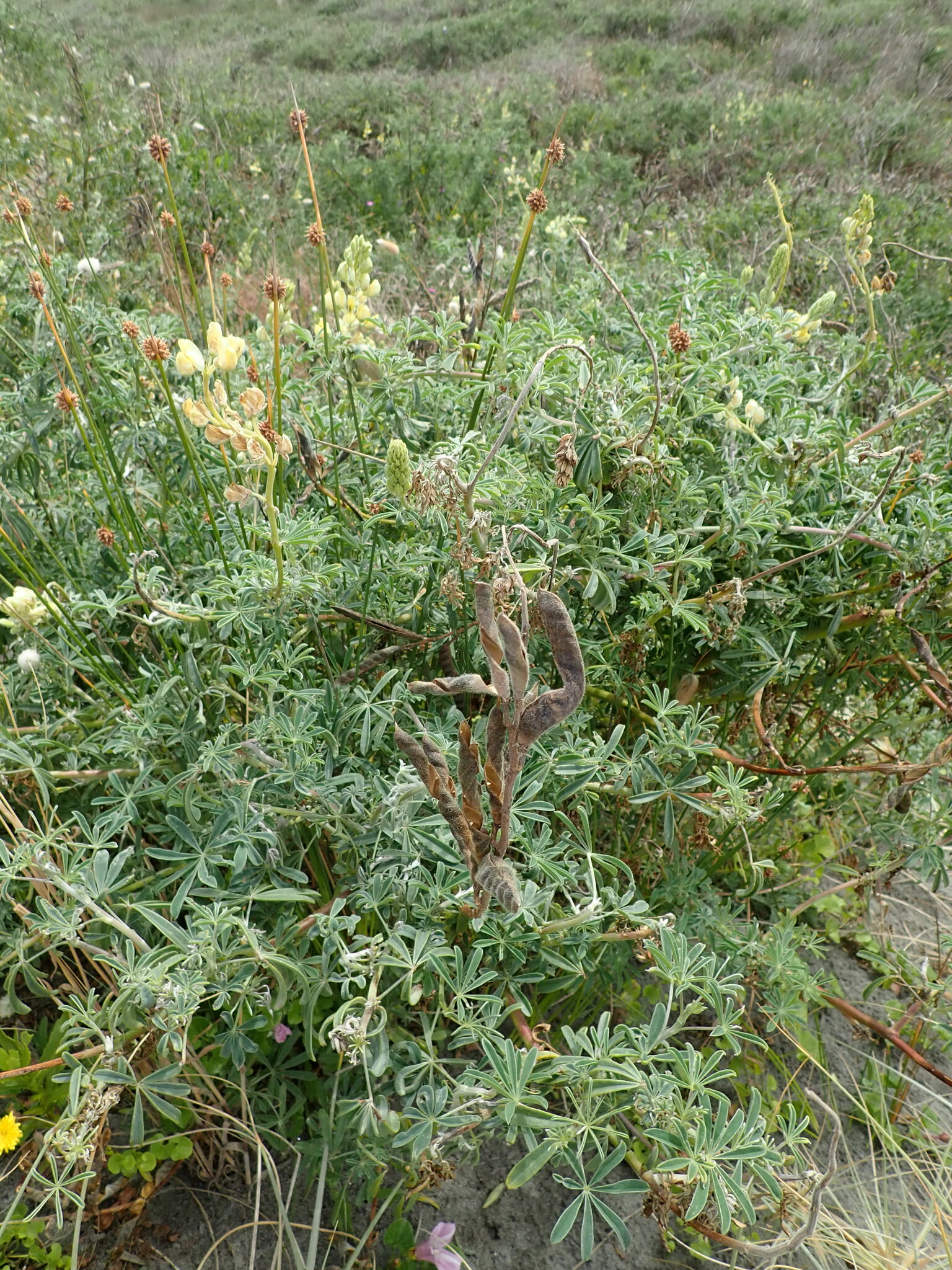
Narrow-leaf lupin (Lupinus angustifolius) is an upright annual legume native to the Mediterranean basin and Northern Africa. It is recognized by its palmate leaves with very thin leaflets and spikes of blue flowers that produce protein-rich seeds.
While related to ornamental garden lupins, this species is primarily an agricultural crop used for livestock fodder, green manure, and human food. It produces a deep taproot that can reach 1.5 m (5 ft) into the soil, making it more drought-tolerant than the white lupin (Lupinus albus).
Key Facts
- Type: Annual legume crop
- Soil pH: Prefers acidic to neutral (5.0 to 7.0)
- Protein: Seeds contain 30-40% protein
- Sowing Depth: 3 to 5 cm (1.2 to 2 in)
- Life Cycle: Germinates, flowers, and dies within one year
Is Narrow-Leaf Lupin Right for Your Land?
Narrow-leaf lupin is a cool-season annual crop best suited for large gardens or farms with well-drained, sandy soils. It functions as a break crop, meaning it helps disrupt pest cycles in soil used for cereals while adding significant nitrogen. Because it is an annual, it will not return the following year unless it self-seeds, which can be problematic in some regions where it becomes weedy.
This plant is not intended for small ornamental containers or shaded borders. It requires a significant amount of space and full sun to reach its full height of up to 1.5 m (5 ft). If your soil is heavy clay or alkaline (above pH 7.0), this species will likely suffer from iron chlorosis and poor growth.
- Choose this plant for soil improvement and high-protein seed production.
- Avoid areas with standing water, as the taproot rots easily.
- Ensure you have at least 5 months of frost-free growing time for seed maturity.
How to Identify Lupinus angustifolius
The narrow-leaf lupin is a 20 to 150 cm (8 to 60 in) tall annual characterized by its distinctive palmate leaves and blue flowers. The leaves consist of 5 to 9 leaflets that are notably narrow, measuring 2 to 5 cm (0.8 to 2 in) long and only 2 to 5 mm (0.08 to 0.2 in) wide. These leaflets are smooth on the top but have fine, silky hairs on the underside.
The flowers appear on terminal racemes, usually in shades of blue, though white or pale purple cultivars exist. Each flower is 10 to 15 mm (0.4 to 0.6 in) long, followed by a flat, hairy pod that is 4 to 6 cm (1.5 to 2.4 in) long. Inside the pods, you will find 4 to 6 seeds that are roughly 8 to 10 mm (0.3 to 0.4 in) in diameter, often speckled or marbled in gray, brown, or white.
- Stems are erect and branched, covered in short, appressed hairs.
- Flowers are non-verticillate, meaning they are arranged spirally rather than in distinct rings.
- Pods turn brown or dark gray when the seeds reach maturity.
The Best Growing Conditions for Blue Lupin
Provide full sun and acidic to neutral soil with a pH between 5.0 and 7.0 for optimal growth. Blue lupin is highly sensitive to free lime in the soil, which causes the leaves to turn yellow and stunts the plant. It thrives in light, sandy loams where its deep taproot can penetrate easily to access moisture from lower soil layers.
While it is drought-tolerant once established, the plant requires consistent moisture during the flowering and pod-filling stages. Temperatures between 15-25 °C (60-77 °F) are ideal; heat stress above 30 °C (86 °F) during flowering can cause the plant to drop its blossoms, significantly reducing the seed yield. It is more cold-tolerant than the yellow lupin (Lupinus luteus), surviving light frosts in its rosette stage.
Sowing Narrowleaf Lupin Seeds
Sow seeds at a depth of 3 to 5 cm (1.2 to 2 in) into moist soil during early spring or autumn depending on your climate. In Mediterranean climates, autumn sowing allows the plant to establish a deep taproot before the winter rains. If you are in a temperate region with harsh winters, wait until the soil temperature reaches at least 7 °C (45 °F) in the spring.
You should aim for a plant density of 40 to 60 plants per square meter (approx. 4 to 6 per square foot). This usually requires a seeding rate of roughly 100 kg per hectare (89 lbs per acre). Proper spacing ensures airflow, which reduces the risk of fungal infections like anthracnose.
- Inoculate seeds with Bradyrhizobium bacteria if lupins haven’t been grown in that soil for 3 years.
- Space rows 18 to 35 cm (7 to 14 in) apart for mechanical weeding.
- Ensure the seedbed is firm to improve seed-to-soil contact.
Managing Your Lupin Crop Through the Season
Focus on early weed control as narrow-leaf lupin grows slowly in its first 4 to 6 weeks. Once the canopy closes, the plant is quite effective at shading out competitors. Because lupins are legumes, they fix their own nitrogen; adding nitrogen fertilizer is unnecessary and can actually suppress the natural fixation process.
Monitor the crop for aphids during the flowering stage, as they can transmit cucumber mosaic virus (CMV), which causes stunted growth and leaf deformation. If the season is particularly wet, watch for brown spot lesions on the lower leaves, which can spread upward and cause premature leaf drop. Irrigation should be applied at the base of the plants to keep the foliage dry.
Harvesting and Storing Lupin Beans
Harvest the seeds when the pods turn brown and the seeds rattle inside, typically when moisture content drops below 14%. For small-scale growers, this usually occurs in late summer. If you wait too long, the pods may shatter, dropping the seeds onto the ground and making them impossible to collect.
Commercial growers use combine harvesters with specialized headers to minimize pod shattering. Once harvested, seeds must be cleaned to remove any pod debris or weed seeds. Store the dried beans in a cool, dark, and dry location; if the moisture content is above 12%, the seeds may develop mold or lose their germination viability over time.
- Test seed moisture by biting; a dry seed should be hard and difficult to crack.
- Harvest in the morning when humidity is higher to reduce pod shattering.
- Store in breathable sacks or ventilated bins to prevent sweating.
Is Lupinus angustifolius Edible?
Yes, but you must only eat ‘sweet’ cultivars or properly process bitter wild seeds to remove toxic alkaloids. Traditional Mediterranean varieties are ‘bitter’ and contain high levels of lupanine and hydroxylupanine, which can cause lupin poisoning. These bitter seeds must be soaked in running water or multiple changes of brine for several days until the bitterness is gone.
Modern agricultural cultivars, such as ‘Regent’, are ‘sweet’ and contain less than 0.02% alkaloids, making them safe for consumption without extensive soaking. The seeds are ground into flour for gluten-free baking, fermented into tempeh, or eaten as a snack. Be aware that lupin proteins are similar to those in peanuts and can trigger severe allergic reactions in sensitive individuals.
Common Pests and Diseases of Narrow-Leaf Lupin
The most devastating disease for this species is anthracnose caused by Colletotrichum lupini, which causes twisting of the stems and lesions on the pods. This fungus is seed-borne, so always start with certified disease-free seed. In wet years, Botrytis gray mold may also infect the flowers and young pods, especially in dense stands with poor airflow.
Insect pests include the bluegreen aphid (Acyrthosiphon kondoi) and the cowpea aphid (Aphis craccivora). These pests suck sap from the growing tips, causing wilting and potentially spreading viruses. In some regions, the larvae of the native budworm (Helicoverpa punctigera) may tunnel into the developing pods and consume the seeds directly.
- Rotate crops every 3 to 4 years to prevent soil-borne disease buildup.
- Use fungicides only if anthracnose symptoms appear before flowering.
- Control weeds like wild radish, which can harbor similar pests.
Year-Round Management of Narrow-Leaf Lupin
| Spring | Sow seeds in temperate zones once soil reaches 7 °C (45 °F). Apply pre-emergent weed control and monitor for early aphid outbreaks. |
|---|---|
| Summer | Irrigate during the flowering stage if rainfall is low. Monitor pods for browning and prepare for harvest as the plant begins to senesce. |
| Autumn | In Mediterranean climates, sow seeds before the first heavy rains. Clear away old crop residue from summer harvests to reduce disease carryover. |
| Winter | Monitor autumn-sown seedlings for slug damage. In cold climates, test stored seed viability and plan rotations for the coming spring. |
Why Is My Blue Lupin Struggling? Common Issues
| What you see | Likely cause | What to do |
|---|---|---|
| Yellowing young leaves | Iron chlorosis | Check soil pH; if it is above 7.0, move the crop to more acidic soil. |
| Stem twisting and lesions | Anthracnose fungus | Remove infected plants immediately and use certified disease-free seed next season. |
| Flowers dropping off | Heat stress or drought | Ensure adequate irrigation during the flowering window and avoid late spring planting. |
| Stunted growth and mottled leaves | Cucumber Mosaic Virus | Control aphid populations and remove infected plants to prevent spread. |
Popular Cultivars of Lupinus angustifolius
- ‘Regent’ – A popular ‘sweet’ variety with low alkaloid content and early maturity.
- ‘Mandelup’ – High-yielding Australian cultivar with improved resistance to anthracnose.
- ‘Tanjil’ – Known for its high protein content and resistance to Phomopsis stem blight.
- ‘Pulsar’ – A compact variety suited for shorter growing seasons and cooler climates.
Frequently Asked Questions
Is Lupinus angustifolius edible?
Yes, the seeds are edible, but you must use 'sweet' cultivars or remove bitter alkaloids through extensive soaking. Only 'sweet' types like 'Regent' are safe for direct processing into flour or snacks.
Is narrow-leaf lupin a perennial?
No, it is a strict annual that completes its entire life cycle from seed to death in a single growing season. It does not return from the roots the following year.
Is narrow-leaf lupin invasive?
It can be invasive in parts of Australia, Scandinavia, and North America where it escapes cultivation. Its ability to fix nitrogen allows it to outcompete native plants in nutrient-poor soils.
What is the 'Regent' variety?
Regent is a specifically bred 'sweet' cultivar of narrow-leaf lupin with very low alkaloid levels. It is widely used in agriculture for high-quality animal feed and human food products.
Can people with peanut allergies eat lupin?
No, people with peanut allergies should avoid lupin seeds. The proteins are very similar, and cross-reactivity is common, potentially leading to anaphylaxis.
Sources & Verification
Taxonomy and distribution are checked against the databases below. Care guidance is written for cultivated species only and reviewed by our editor. How We Build Plant Profiles →