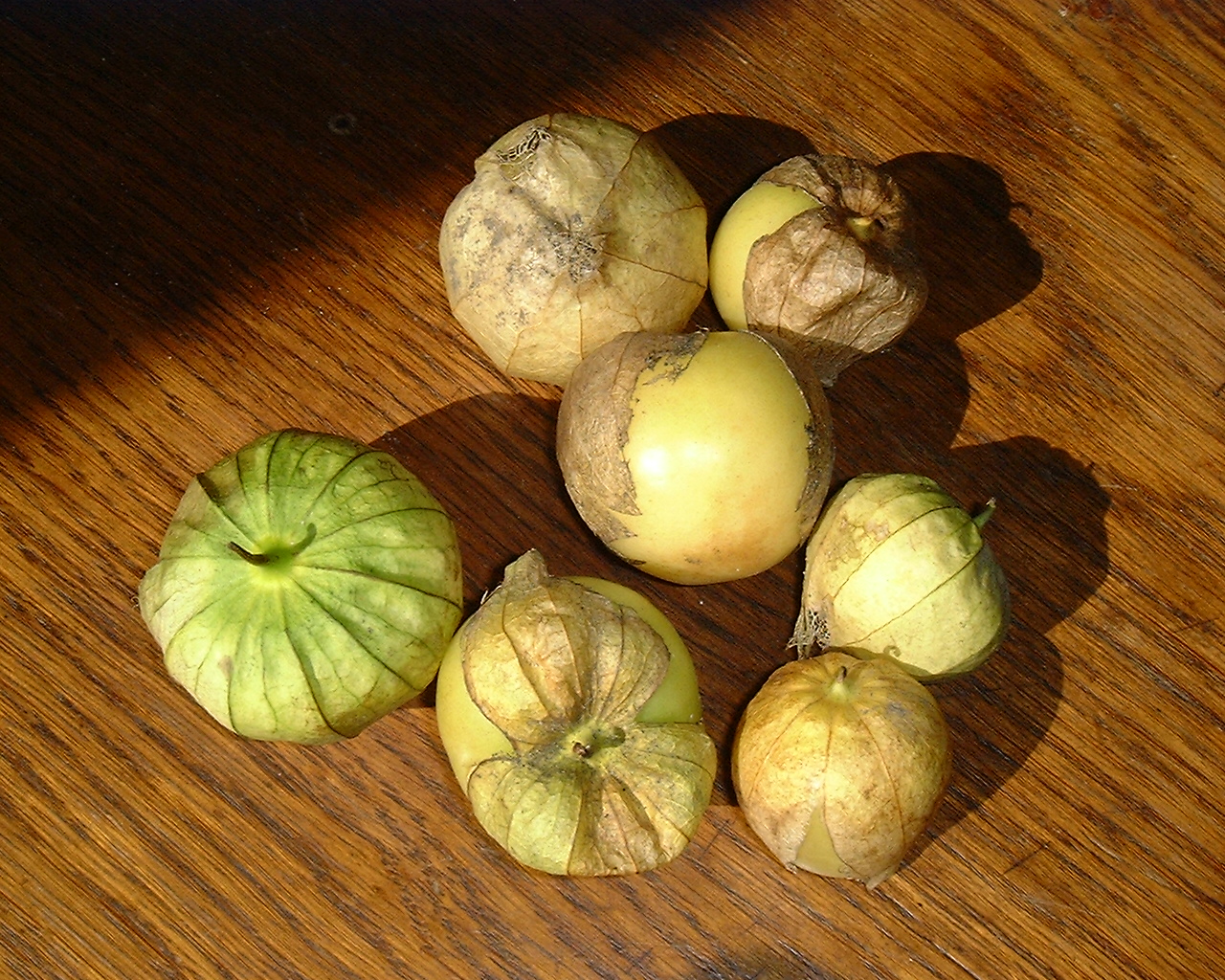
Downy ground-cherry (Physalis pubescens) is a sprawling annual crop native to North and South America that produces small yellow berries inside papery husk lanterns.
Plants reach 30–60 cm (12–24 in) in height and drop mature fruit to the ground in late summer, providing sweet, pineapple-flavoured yields until the first autumn frost.
Key Facts
- Sunlight: Full sun, 6–8 hours daily
- Soil pH: 6.0 to 7.0
- Water: 2.5 cm (1 in) per week
- Fruit Harvest: Late summer to early autumn
- Planting Distance: 45–60 cm (18–24 in) apart
- Toxicity: Unripe green fruit and leaves are toxic
Growing Downy Ground-Cherry in the Garden
Downy ground-cherry grows as a low, spreading annual crop that thrives in warm weather and yields fruit within 70 to 80 days from transplanting.
This species suits vegetable patches, raised beds, or large containers with a minimum depth of 30 cm (12 in). Because branches spread outward up to 90 cm (36 in) along the ground, giving each stem space keeps leaves dry and deters fungal infection.
Unlike tomato vines, downy ground-cherry rarely requires heavy staking, though a small tomato cage keeps sprawling branches elevated above garden mulch. A single healthy plant yields 100–300 husked berries in one season.
- Growth Habit: Sprawling annual herb up to 60 cm (24 in) tall
- Days to Harvest: 70–80 days after transplanting outdoors
- Best Container Size: 15–20 L (4–5 gal) pot per plant
- Planting Distance: 45–60 cm (18–24 in) apart in rows
Identifying Downy Ground-Cherry
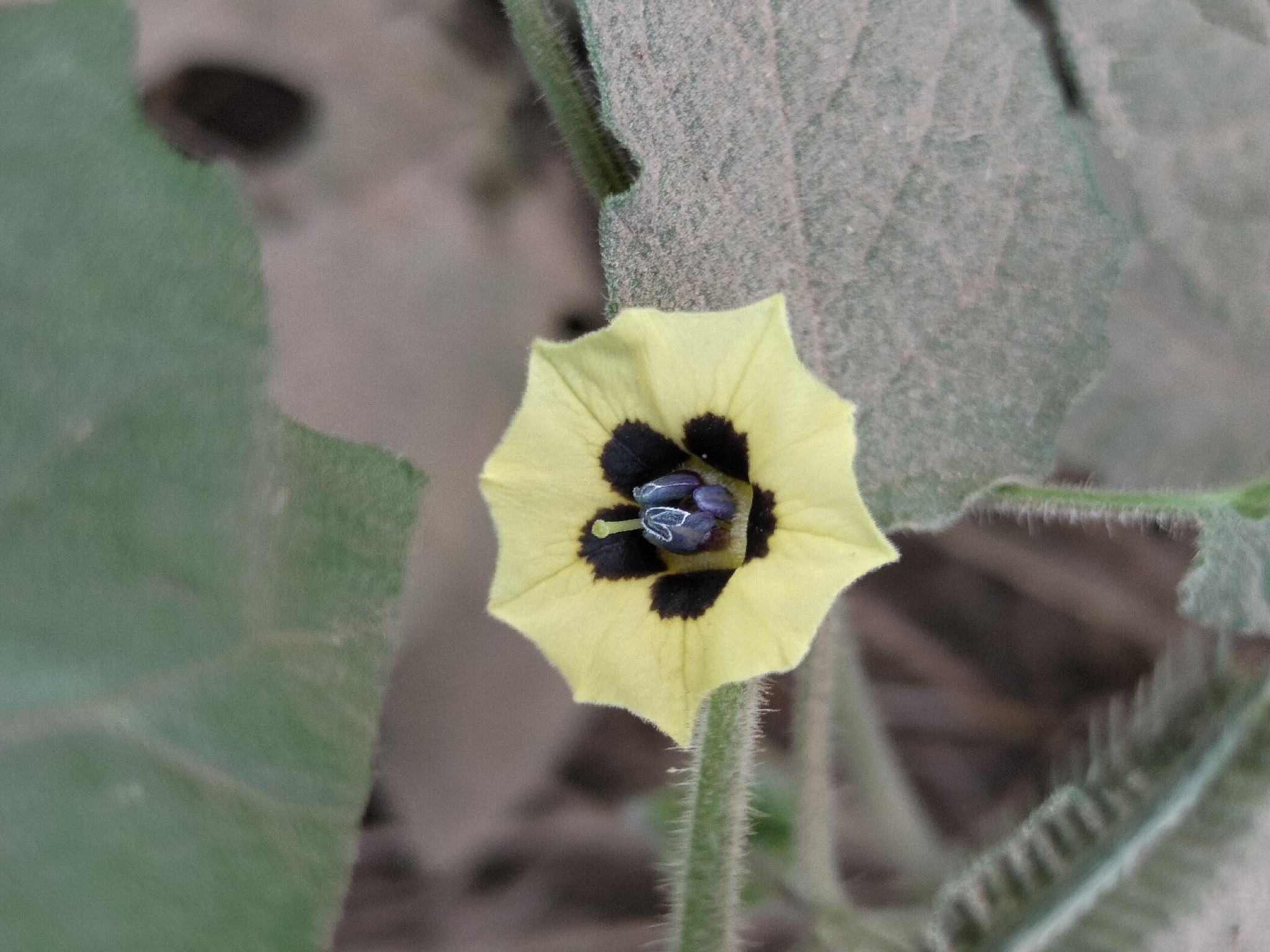
Downy ground-cherry features densely hairy stems, heart-shaped leaves 3–9 cm (1.2–3.5 in) long, and yellow bell-shaped flowers with five dark purple spots inside the throat.
Stems grow covered in sticky glandular hairs that feel soft to the touch. Flowers measure about 1 cm (0.4 in) across and display blue or purple anthers on five central stamens during summer blooming.
After pollination, the green calyx inflates into a paper lantern structure measuring 2–4 cm (0.8–1.6 in) long. Inside this husk sits a round berry measuring 1–1.5 cm (0.4–0.6 in) across, turning from bright green to golden-yellow when mature.
- Stem Structure: Densely branched with soft, glandular trichomes
- Foliage: Oval to heart-shaped leaves with smooth or coarsely wavy edges
- Flowers: Pale yellow with five brown or dark purple throat spots
- Fruit: Golden spherical berry housed inside a 5-ribbed papery calyx
Ideal Growing Conditions for Physalis pubescens
Physalis pubescens requires full sun exposure for at least 6 to 8 hours per day and well-draining soil with a pH between 6.0 and 7.0.
Soil should remain moist but loose; heavy clay soils cause root damage unless amended with organic compost or coarse sand. Native to sunny subtropical and warm temperate zones, plants stop growth when nighttime temperatures fall below 10 °C (50 °F).
High nitrogen levels encourage excessive leaf production while delaying flower set. Soil high in phosphorus and potassium promotes steady husk development and early fruit ripening.
- Sunlight Needs: Minimum 6–8 hours of direct light daily
- Soil Type: Sandy loam or compost-rich, well-draining garden soil
- Ideal Temperature: 21–29 °C (70–85 °F) daytime growing range
- Soil pH: Slightly acidic to neutral (6.0–7.0 pH)
Sowing Physalis pubescens Seeds
Start Physalis pubescens seeds indoors 6 to 8 weeks before your region’s average last spring frost date, using seed-starting mix maintained at 21–24 °C (70–75 °F).
Sow seeds 0.5 cm (0.2 in) deep in potting trays and keep the medium damp. Germination takes 7–14 days when bottom heat is supplied from a propagation mat.
Harden off seedlings outdoors over 7–10 days before planting them into garden beds after soil temperatures reach 15 °C (60 °F). Space plants 45–60 cm (18–24 in) apart in sunny garden rows.
- Sowing Depth: 0.5 cm (0.2 in) under fine seedling mix
- Germination Time: 7 to 14 days at 21–24 °C (70–75 °F)
- Indoor Start Window: 6–8 weeks before last spring frost
- Transplant Timing: After soil exceeds 15 °C (60 °F)
Watering and Feeding Downy Ground-Cherry
Water downy ground-cherry with 2.5 cm (1 in) of water weekly, soaking the root zone while keeping leaf surfaces completely dry.
Irregular moisture causes ripe berries to split inside their papery husks before dropping. Drip irrigation or soaking hoses deliver steady moisture to taproots without splashing soil-borne spores onto lower foliage.
Feed plants every 3–4 weeks with an organic 5-10-10 or low-nitrogen tomato fertilizer once yellow flowers emerge. Avoid high-nitrogen fertilizers, which suppress blossom formation and delay harvest times.
- Watering Schedule: 2.5 cm (1 in) per week, increased to 3.5 cm in hot spells
- Fertilizer Ratio: Low-nitrogen 5-10-10 or 4-8-10 organic liquid feed
- Feeding Frequency: Every 21–30 days from early flower set
- Mulch Layer: 5 cm (2 in) of straw to retain moisture and keep husks clean
Harvesting Downy Ground-Cherry Fruit
Harvest downy ground-cherry fruit when the papery husks turn dry, translucent brown and the ripe yellow berries drop naturally onto the ground.
Never pick green, firmly attached husks off the vine. Unripe green berries contain solanine, a toxic glycoalkaloid compound that causes digestive distress if consumed.
Gather fallen husk lanterns from the ground every 2–3 days during peak harvest season. Clean straw mulch laid underneath the canopy prevents fallen fruit from contacting damp soil and rotting.
- Harvest Indicator: Husk turns straw-colored and berry drops to soil
- Fruit Maturity Color: Bright golden-yellow to orange-yellow
- Toxicity Warning: Unripe green fruit contains solanine and must not be eaten
- Collection Frequency: Gather fallen husks every 48 hours
Culinary Uses and Fruit Juice Preparation
Physalis pubescens fruit is edible when fully ripe, offering a sweet tropical flavor reminiscent of pineapple, mango, and sweet tomato.
Raw golden berries can be eaten directly out of their dry husks, sliced into fruit salads, or baked into pies and tarts. Cooked down with sugar, ground cherries release natural pectin to create rich preserves, salsas, and jellies.
To make physalis pubescens fruit juice, press fully ripe yellow berries through a fine mesh strainer or mechanical juicer, then sweeten with honey or syrup. In traditional herbal practices, extracts and topical pastes were made from leaves, but internal consumption should be restricted exclusively to ripe berries due to foliage toxicity.
- Flavor Profile: Sweet-tart with pineapple and apricot notes
- Preparation Steps: Remove husk, rinse golden berries in cool water
- Popular Uses: Fresh snacks, fruit juice, jams, salsa, and fruit pies
- Processing Tip: High pectin content allows jelly setting with minimal added pectin
Common Pests and Diseases
Flea beetles and three-lined potato beetles pose the main pest threats to downy ground-cherry plants by eating small holes in leaves.
Covering young seedlings with floating row covers during early spring prevents flea beetle damage until plants establish strong root systems. Hand-picking striped potato beetles limits defoliation in late summer.
Fungal diseases like early blight (Alternaria solani) cause dark spotted foliage when leaves remain wet. Prevent fungal problems by watering at ground level, spacing stems 60 cm (24 in) apart, and rotating nightshade crops yearly.
- Flea Beetles: Tiny shot-holes in young leaves; control with row covers or neem oil
- Three-lined Potato Beetle: Larvae strip leaves; pick off by hand or spray insecticidal soap
- Early Blight: Concentric brown leaf spots; prune lowest leaves and avoid overhead watering
- Powdery Mildew: White powder on stems; improve air circulation and space plants
Storing and Preserving Ripe Fruit
Downy ground-cherry berries stay fresh for up to 3 to 4 weeks at room temperature when kept intact inside their dry papery husks.
Spread freshly collected husk lanterns in a single layer on screen trays in a cool, dark, dry room at 10–15 °C (50–60 °F). Do not peel off the protective husks until immediately before cooking or eating.
For long-term storage, husk the ripe golden berries, rinse them thoroughly, and freeze them flat on baking sheets before transferring them to airtight freezer bags. Frozen berries retain flavor and texture for up to 12 months for baking or juice making.
- Room Temperature Storage: 3–4 weeks inside intact husks
- Cool Pantry Storage: Up to 2 months at 10–13 °C (50–55 °F)
- Freezer Storage: Up to 12 months for peeled, washed berries
- Drying Method: Dehydrate halved berries at 57 °C (135 °F) for golden raisins
Frequently Asked Questions
Is Physalis pubescens edible?
Yes, the ripe golden berries of downy ground-cherry are fully edible and have a sweet tropical flavor. Unripe green fruit, leaves, and stems are toxic and contain solanine, so only eat fruit that has fallen naturally from dry husks.
What is the difference between Physalis pubescens and Physalis peruviana?
Downy ground-cherry (Physalis pubescens) is a compact, low-growing annual reaching 30–60 cm (12–24 in) with blue anthers and small berries. Cape gooseberry (Physalis peruviana) is a larger bushy perennial up to 1.5 m (5 ft) tall with yellow anthers and larger, tart-sweet fruit.
What is the common name for Physalis pubescens?
Physalis pubescens L. is most commonly known as downy ground-cherry, low ground-cherry, husk tomato, or strawberry-tomato.
How do you make Physalis pubescens fruit juice?
To make juice from downy ground-cherry, remove the papery husks, wash ripe yellow berries, and press them through a fine strainer or juicer to separate seeds. Mix the concentrated juice with water and sweetener to taste.
Are there medicinal supplements or topical uses for Physalis pubescens?
Traditionally, extracts from the leaves and roots were applied topically in folk remedies or used in herbal teas. Modern herbal supplement interest exists, but home usage is restricted to edible ripe berries because raw vegetative tissues contain toxic glycoalkaloids.
Information about traditional or historical uses is provided for educational interest only and is not medical advice. Do not use any plant to treat a condition without speaking to a qualified professional.
Sources & Verification
Taxonomy and distribution are checked against the databases below. Care guidance is written for cultivated species only and reviewed by our editor. How We Build Plant Profiles →