

The Damask rose (Rosa damascena) is a deciduous hybrid shrub originating from the Middle East, recognized across centuries for its clustered pink petals and concentrated essential oil.
Traditional summer forms bloom only once per year in a heavy 25-day flush, meaning misplaced spring pruning will strip away an entire year of flowers.
Key Facts
- Light: Minimum 6 hours of direct sun daily
- Water: 25 mm (1 in) of water per week
- Height: 1.5 to 2.2 m (5 to 7 ft)
- Soil: Well-drained loamy soil, pH 6.0 to 6.8
- Pruning: Directly after early summer flowering completes
Growing Damask Rose in the Garden
Damask rose requires open garden beds with full sun exposure and ample space to accommodate arching, thorny canes up to 2.2 m (7 ft) tall.
Because the canes lean outwards as they mature, you will need a planting footprint of at least 1.5 m (5 ft) across. The shrub works well along boundary fences, informal windbreaks, or dedicated cutting rows. It does poorly in tight containers or damp, stagnant corners where air circulation drops below the threshold needed to keep leaves dry.
Botanical Features and Damask Rose Color
Damask rose produces clustered double blossoms measuring 6 to 8 cm (2.4 to 3.1 in) across in shades varying from soft shell-pink to deep rose, alongside occasional white selections.
Its structural features include:
- Canes: Arching green stems densely armed with hooked prickles mixed with smaller glandular bristles.
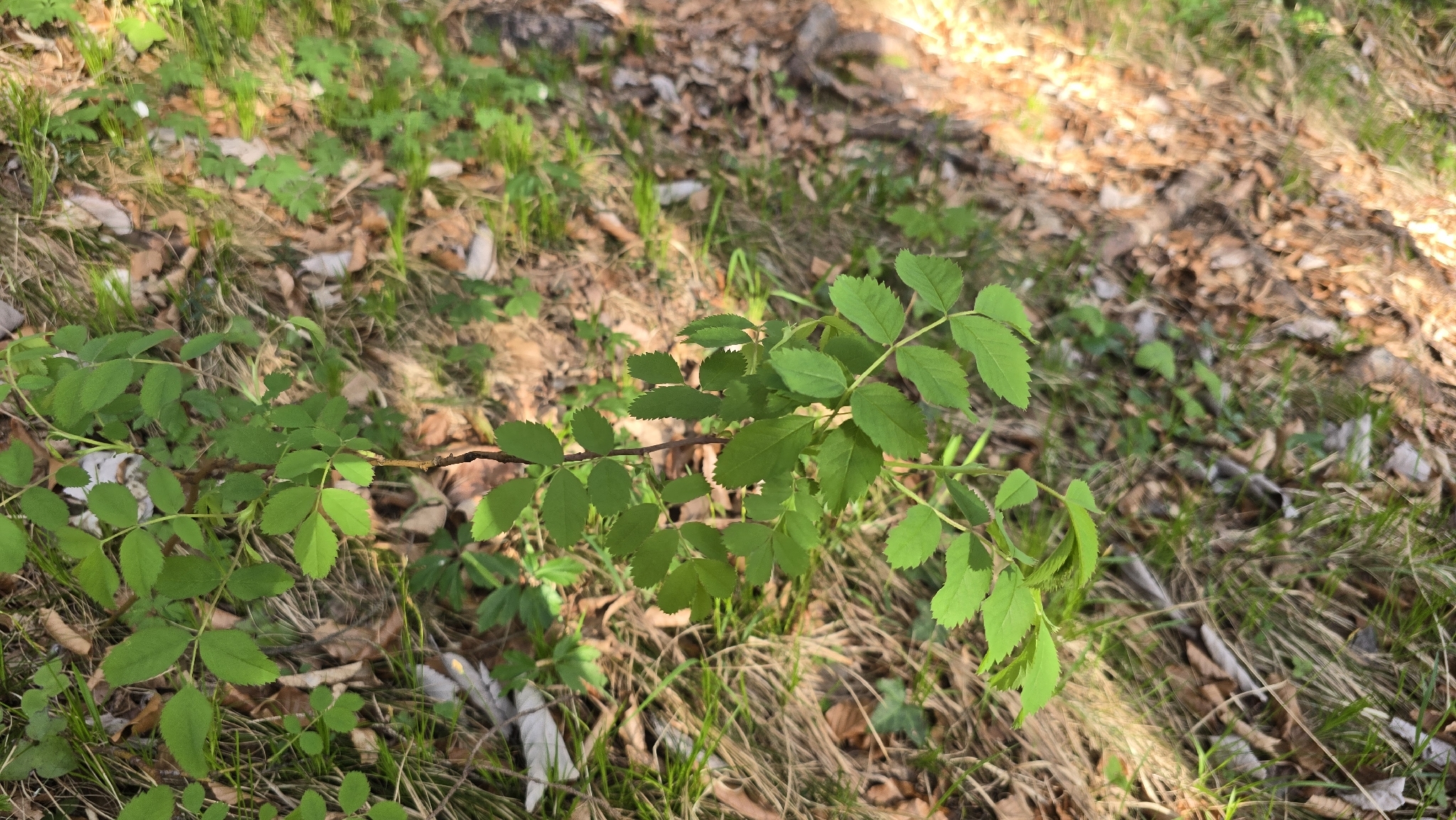
- Foliage: Pinnate leaves with 5 to 7 ovate, serrated leaflets that measure 3 to 5 cm (1.2 to 2 in) long, displaying a greyish-green hue and fine down beneath.
- Hips: Oval to pear-shaped red hips measuring 1.5 to 2 cm (0.6 to 0.8 in) that develop in autumn if flowers are not harvested.
- Fragrance: Heavy, spicy floral scent caused by high concentrations of geraniol and citronellol.
Sun and Soil Requirements
Plant Damask rose in a position that receives at least 6 to 8 hours of unfiltered sunlight each day.
Morning sun is especially critical because it quickly evaporates dew from the foliage, preventing fungal spores from germinating. The soil must drain freely while holding enough organic matter to support heavy petal formation.
A loam base amended with compost provides the necessary drainage while maintaining an optimal pH between 6.0 and 6.8. Avoid waterlogged clay soils, which trigger root rot within 48 hours of standing saturation.
How to Plant Damask Rose
The best time to plant bare-root Damask roses is late autumn or early spring while the plant remains in winter dormancy.
Follow these steps to establish a new plant:
- Dig a planting hole measuring 45 cm (18 in) deep and 60 cm (24 in) wide.
- Soak bare-root stock in a bucket of tepid water for 8 to 12 hours prior to planting.
- Form a small cone of soil at the base of the hole and spread the root system outward over it.
- Set the plant so the graft union sits 5 cm (2 in) below soil level in regions facing freezing winters, or level with the soil in mild regions.
- Backfill with native soil mixed with 25% mature compost, firm gently, and soak with 15 L (4 gal) of water to settle air pockets.
Watering and Feeding Needs
Apply 25 mm (1 in) of water per week at the soil surface, increasing to 40 mm (1.5 in) during hot summer weeks.
Always irrigate at soil level using a soaker hose or drip line. Wetting the foliage directly encourages black spot and mildew outbreaks. Stop excessive watering in late autumn to allow the canes to harden before frost arrives.
Feed the shrub in early spring just as leaf buds crack green using a balanced organic fertilizer, such as a 5-5-5 formula. Provide a second feeding immediately after flowering ends in midsummer, but avoid high-nitrogen fertilizers after July, which stimulate fragile green shoots vulnerable to winter freeze.
How to Prune Damask Roses
Prune traditional summer Damask roses immediately after the flowering period ends in midsummer, never in late winter or early spring.
Because summer Damasks flower on wood grown during the prior season, cutting canes in winter eliminates all emerging flower buds for the coming year. Follow this pruning sequence annually:
- Remove all dead, damaged, or rubbing stems back to green tissue or the base crown.
- Cut back flowering side shoots by roughly one-third of their length to encourage vigorous replacement growth.
- Remove one or two of the oldest, thickest, woody stems at ground level every two years to let light reach the center.
- Clear out thin, twiggy stems under pencil thickness to maintain internal air circulation.
Bloom Cycle and Harvesting Petals
Damask rose blooms during a concentrated 25 to 30 day window in late spring to early summer, with flowers opening progressively each morning.
The concentration of volatile aromatic compounds peaks right after sunrise as the flower buds crack open. For perfume, distillation, or drying, pluck petals between 5:00 AM and 9:00 AM before the heat of the day causes oils to vaporize into the air. If you grow autumn Damask forms (such as ‘Quatre Saisons’), you will see a second, smaller flush of flowers in September.
How to Propagate Damask Rose
Propagate Damask rose using semi-ripe stem cuttings taken in late summer or hardwood cuttings collected in late autumn.
Avoid growing from seed, as hybrid garden roses do not come true to type and seedlings rarely produce the parent’s perfume or flower structure. To take cuttings successfully:
- Cut a 15 to 20 cm (6 to 8 in) stem from healthy non-flowering new growth using sharp bypass shears.
- Strip the leaves off the lower two-thirds of the stem, keeping two sets of leaflets near the top.
- Dip the cut base into 0.2% IBA rooting hormone powder.
- Insert the cutting 8 cm (3 in) deep into a mix of equal parts coarse perlite and peat moss.
- Maintain high humidity under a clear cloche at 18 to 22 °C (65 to 72 °F) until roots form in 6 to 8 weeks.
Damask Rose Care: Common Pests and Diseases
The two most common threats to Damask rose are black spot fungus and aphids attacking soft spring shoots.
Inspect foliage weekly through the active growing season. Managing these issues quickly keeps foliage full and healthy:
- Black spot (Diplocarpon rosae): Manifests as fringed black circles on upper leaf surfaces followed by yellowing and leaf loss; strip diseased leaves immediately and avoid evening irrigation.
- Powdery mildew (Podosphaera pannosa): Appears as a white talc-like dust across soft young tips; clear out inner canes to improve wind flow.
- Rose aphids (Macrosiphum rosae): Crowd young flower stems; knock colonies off with a sharp blast of water or apply horticultural soap spray.
- Rose sawfly larvae (Endelomyia aethiops): Skeletonize leaves between the veins in spring; pick them off by hand when spotted.
Seasonal Tasks for Damask Rose
| Spring | Apply a 5 cm (2 in) mulch layer of well-rotted manure or compost around the base, keeping it clear of the stems. Feed with a balanced rose fertilizer as buds break. Treat emerging foliage with organic sulfur sprays if black spot occurred in previous years. |
|---|---|
| Summer | Harvest open flower heads early in the morning for culinary or cosmetic use. Prune out spent flowering wood immediately after bloom flushes cease. Ensure the plant receives 25 mm (1 in) of water each week at the roots. |
| Autumn | Reduce supplemental watering to prepare canes for cold dormancy. Rake up and discard all fallen rose leaves to eliminate overwintering fungal spores. Avoid all nitrogen fertilizers to prevent cold-susceptible tender growth. |
| Winter | In zones 5 and 6, mound 20 to 30 cm (8 to 12 in) of loose soil or shredded bark over the crown after the ground freezes. Check canes after heavy snow and gently brush off buildup to prevent structural branch breakage. |
Diagnosing Common Damask Rose Problems
| What you see | Likely cause | What to do |
|---|---|---|
| Black spots with yellow margins on leaves | Black spot fungus (Diplocarpon rosae) exacerbated by wet foliage | Remove infected leaves, clear all ground debris, and switch exclusively to morning drip irrigation. |
| White powdery coating on tips and flower buds | Powdery mildew infection during warm days and humid nights | Prune out dense central canes to improve airflow and spray with potassium bicarbonate solution. |
| No flowers despite vigorous cane growth | Improper late winter pruning that removed flowering second-year wood | Cease pruning until midsummer directly after the normal flowering window passes. |
| New foliage curling with clustered tiny green bugs | Rose aphid infestation feeding on sap | Wash the colony off with a firm jet of water or spray with insecticidal soap. |
Classic Damask Rose Cultivars
- ‘Kazanlak’ (Trigintipetala) – primary oil-producing variety with warm pink flowers
- ‘Ispahan’ – clear pink, extended flowering window, strong scent
- ‘Celsiana’ – pale pink ruffled petals with yellow stamens
- ‘Quatre Saisons’ – autumn Damask form that produces repeat blooms
- ‘York and Lancaster’ – mottled petals striped with white and blush
Planting Companions for Rosa damascena
Pair Damask rose with drought-tolerant perennials that share full sun requirements and mask the bare lower stems characteristic of mature rose bushes.
English lavender (Lavandula angustifolia) makes an ideal underplanting, thriving in dry soil and masking woody cane bases. Catmint (Nepeta racemosa) forms broad billowing blue clumps that flower at the same time as the rose. You can also mix in Russian sage (Salvia yangii) and upright spikes of common foxglove (Digitalis purpurea) to introduce textural contrast without competing for root space.
Frequently Asked Questions
What is the difference between summer Damask and autumn Damask roses?
Summer Damask roses flower once per season across a four-week period in early summer. Autumn Damask roses produce that initial main flush followed by sporadic recurring blooms through late summer and autumn.
Can you grow Damask rose from seed?
No, Damask rose cannot be grown reliably from seed because it is a complex hybrid that will not produce plants matching the parent. Propagate it using stem cuttings to guarantee identical fragrance and flower characteristics.
How is Damask rose oil produced?
Damask rose oil is extracted through gentle steam distillation of freshly gathered petals harvested at dawn. It requires roughly 3,000 to 4,000 kg (6,600 to 8,800 lb) of petals to yield a single kilogram of pure rose attar.
What are the traditional health uses of Damask rose?
Petals and distilled rosewater were traditionally used as soothing mild astringents for irritated skin and digestive tonics in Persian and Mediterranean folk medicine. Modern skincare extracts are used to calm skin and supply surface hydration.
Is Damask rose safe around dogs and cats?
Yes, Damask rose is non-toxic to dogs, cats, and humans according to ASPCA records. However, mechanical scratches from the hooked prickles along the stems can cause skin irritation or minor scratches if pets brush through dense growth.
Information about traditional or historical uses is provided for educational interest only and is not medical advice. Do not use any plant to treat a condition without speaking to a qualified professional.
Sources & Verification
Taxonomy and distribution are checked against the databases below. Care guidance is written for cultivated species only and reviewed by our editor. How We Build Plant Profiles →
- Royal Horticultural SocietyCultivar profiles and cultivation guidelines
- Kew Plants of the World OnlineTaxonomic status and hybrid parentage
- NC State Extension Gardener Plant ToolboxGrowing conditions and plant traits
- ASPCA Animal Poison ControlNon-toxicity status for domestic animals
- GBIF — Global Biodiversity Information Facilitytaxonomy, synonyms, occurrence records
- Wikipediageneral reference
More in Rosa

Cinnamon Rose
Rosa majalis
☀️ Full Sun 💧 Moderate

Musk Rose
Rosa moschata
☀️ Full Sun 💧 Moderate

Small-Leaved Sweet-Briar
Rosa agrestis
☀️ Full Sun 💧 Low

Rugosa Rose
Rosa rugosa
☀️ Full Sun 💧 Low

Chestnut Rose
Rosa roxburghii
☀️ Full Sun 💧 Moderate
Alpine Rose
Rosa pendulina
☀️ Partial Sun 💧 Moderate