
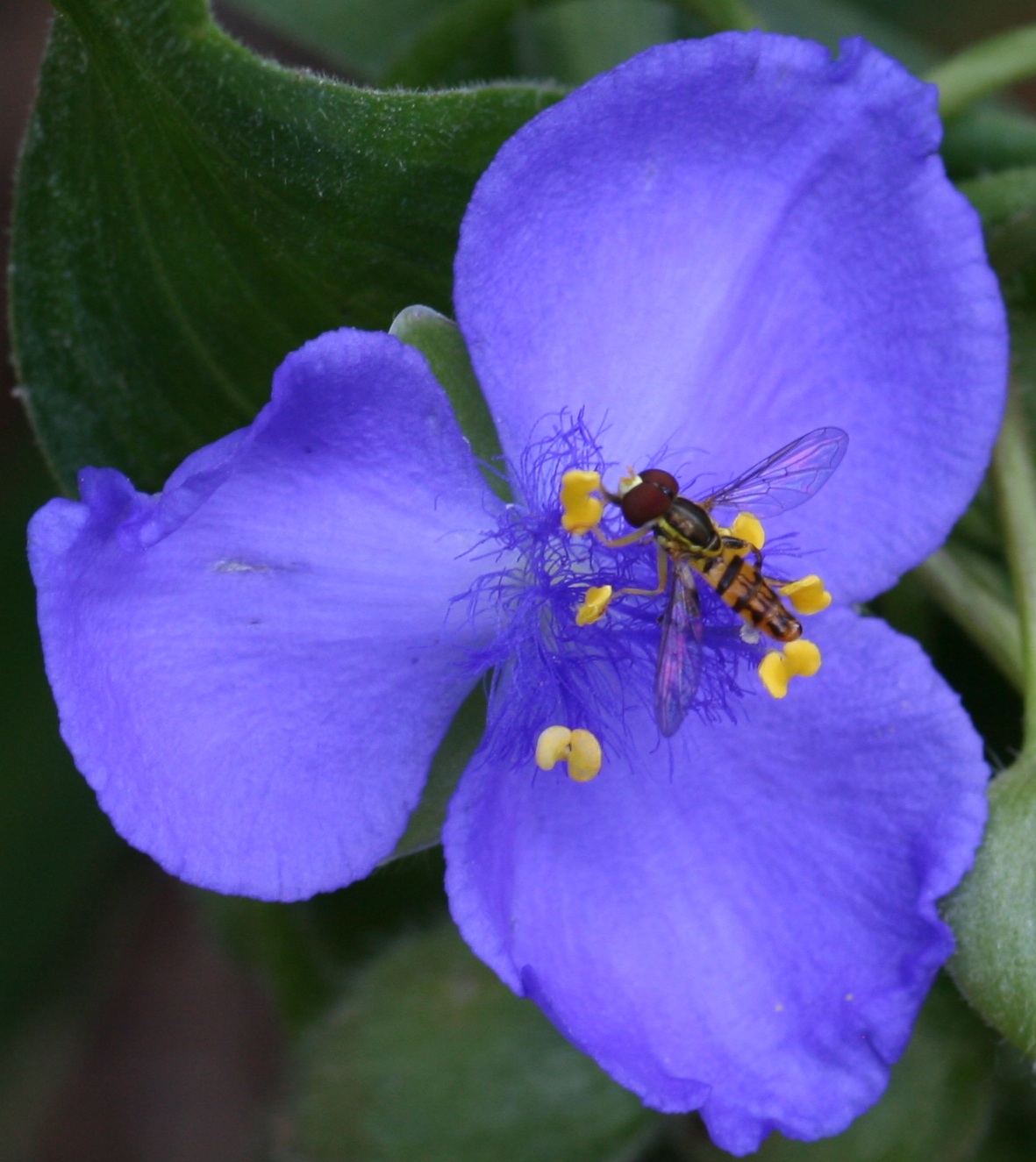
Virginia spiderwort (Tradescantia virginiana) is a clump-forming herbaceous perennial native to eastern North America, recognized by grass-like leaves and bright three-petaled flowers.
This hardy species tolerates heavy clay soil and urban air conditions, but foliage turns untidy in midsummer heat if soil drops below 50% moisture capacity.
Key Facts
- Light: Full sun to partial shade
- Soil: Moist, well-draining loamy or clay soil
- Hardiness: USDA Zones 3 to 9
- Height: 30 to 90 cm (12 to 36 in)
- Toxicity: Mild skin irritation from sap
Is Virginia Spiderwort Right for Your Garden?
Virginia spiderwort grows best in USDA hardiness zones 3 through 9 where summer soil remains continuously damp.
This plant suits damp borders, rain gardens, and naturalized woodland edges in North America and Western Europe. Cherokee doctors traditionally used root extracts as a digestive tonic and leaf poultices for insect bites.
- Fits damp garden beds with morning sun
- Resists deer and rabbit grazing
- Survives freezing temperatures down to -35 °C (-31 °F)
Identifying Virginia Spiderwort Flowers and Leaves
Virginia spiderwort forms leafy clumps 30 to 90 cm (12 to 36 in) tall with arching, channelled leaves measuring 15 to 30 cm (6 to 12 in) long.
Flowers measure 2 to 3 cm (0.8 to 1.2 in) across with three broad petals in violet, blue, pink, or white surrounding six bright yellow anthers. Stems yield a mucilaginous clear fluid when broken that hardens into thread-like strands resembling spider webs.
Where to Plant Spiderwort for Best Sunlight and Soil
Plant Virginia spiderwort where it receives 4 to 6 hours of morning sunlight and shade during hot afternoons.
In cool northern regions like USDA Zone 4, plants accept full direct sunlight if given consistent water. Soil pH should sit between 5.8 and 7.2 in moist, organic-rich loam or heavy clay.
Planting Virginia Spiderwort in Garden Beds and Pots
Space young plants 30 to 45 cm (12 to 18 in) apart in spring after the final hard freeze.
Unlike the red spider lily (Lycoris radiata), Virginia spiderwort grows from thick, fleshy root crowns rather than true bulbs. For growing spider lily in pots, select containers at least 30 cm (12 in) wide with bottom drainage holes, using standard peat-based potting soil mixed with 20% compost.
- Set root crown 2.5 cm (1 in) below soil surface
- Firm soil gently around fleshy roots to eliminate air pockets
- Water thoroughly with 2 L (0.5 gal) of water per plant at planting
Spider Lily Watering Schedule and Fertilizer Needs
Apply 2.5 cm (1 in) of water weekly during spring flowering to keep root zones evenly damp.
Feed once in April using balanced 10-10-10 granular fertilizer at a rate of 30 g per square metre (1 oz per square yard). Excessive nitrogen fertilizer causes weak stems that collapse under flower weight.
How to Prune Spiderwort After Flowering
Cut stem clumps down to 5 to 10 cm (2 to 4 in) above soil level when midsummer foliage turns yellow or floppy.
This shear removes spent seed heads and stimulates fresh basal leaves for autumn. In mild climates, shearing triggers a smaller secondary bloom period in September.
How to Propagate Spiderwort by Division
Divide overgrown root crowns every 2 to 3 years in early spring before shoots grow taller than 10 cm (4 in).
Follow these propagation steps:
- Dig up root mass using a spade inserted 20 cm (8 in) deep
- Slice root crown into 3 to 4 sections using a clean knife
- Ensure each section keeps at least 3 viable shoot buds
- Replant divisions immediately at original depth
Common Spiderwort Pests and Diseases
Slugs and snails cause the main physical damage by eating irregular holes in young spring leaf shoots.
Yellow leaves and flopping stems indicate root drought during high summer temperatures exceeding 28 °C (82 °F). Leaf spot fungi develop when plants lack air circulation in heavy shade.
- Chewed leaf margins: apply iron phosphate slug bait around base
- Floppy stems: reduce fertilizer and increase light to 4 hours daily
- Brown leaf tips: increase weekly water during dry spells
Overwintering Virginia Spiderwort Outdoors
Virginia spiderwort leaves die back naturally after autumn frosts hit temperatures below 0 °C (32 °F).
Remove dead brown stems in November to clear garden beds. Spread a 5 cm (2 in) layer of shredded leaf mulch over root crowns in USDA Zones 3 and 4 to protect against root heaving caused by freeze-thaw cycles.
Spiderwort Bloom Season and Daily Flowering Cycle
Individual flowers remain open for only 6 to 8 hours during morning hours from May through July.
Each bud opens sequentially within dense terminal clusters, maintaining continuous floral displays for 6 to 8 weeks. On overcast days, individual blossoms stay open until mid-afternoon before dissolving into jelly-like drops.
Spiderwort Care Through the Seasons
| Spring | Apply 3 cm (1.2 in) of organic compost around plant bases in April. Divide congested clumps before shoots reach 10 cm (4 in) tall. |
|---|---|
| Summer | Cut stems back to 8 cm (3 in) after primary bloom finishes in July. Provide 2.5 cm (1 in) water weekly during dry weather. |
| Autumn | Prune dead stems to ground level after first hard freeze in October or November. Spread 5 cm (2 in) mulch cover over crowns. |
| Winter | Leave root crowns dormant underground. Avoid walking on frozen bed soil to prevent crown damage. |
Common Spiderwort Problems and Fixes
| What you see | Likely cause | What to do |
|---|---|---|
| Leaves turn yellow and stems fall over in July | Heat stress and dry soil conditions | Cut entire plant back to 5 cm (2 in) above ground and water deeply. |
| Holes in fresh spring leaf shoots | Feeding by slugs and snails | Scatter organic iron phosphate bait around root bases in early spring. |
| Long weak stems without flowers | Excessive shade or high-nitrogen fertilizer | Relocate plant to a position receiving at least 4 hours of morning sun. |
| Mild red skin rash on hands | Contact with calcium oxalate crystals in stem sap | Wear protective gardening gloves when cutting or dividing stems. |
Popular Virginia Spiderwort Cultivars
- ‘Sweet Kate’ – yellow foliage with deep blue-violet flowers
- ‘Innocence’ – pure white flowers on 45 cm (18 in) stems
- ‘Zwanenburg Blue’ – large deep blue blossoms up to 4 cm (1.5 in) across
- ‘Red Grape’ – magenta-purple flower clusters with blue-green leaves
Best Companion Plants for Spiderwort
Combine spiderwort with broader-leaved perennials that fill border space when spiderwort leaves are sheared back in July.
Suitable companion species include:
- Hosta (Hosta plantaginea)
- Ostrich fern (Matteuccia struthiopteris)
- Columbine (Aquilegia canadensis)
- Coral bells (Heuchera americana)
Frequently Asked Questions
Is Virginia spiderwort the same plant as red spider lily?
No, Virginia spiderwort (Tradescantia virginiana) is a herbaceous perennial native to North America, while red spider lily (Lycoris radiata) is a bulbous plant native to Asia.
Does spider lily grow from bulbs?
Virginia spiderwort grows from fleshy, fibrous root crowns rather than true bulbs. Plants sold as spider lily bulbs in spring catalogs generally belong to Lycoris or Hymenocallis genera.
Can spider lily be grown in pots outdoors?
Yes, Virginia spiderwort grows in outdoor pots measuring at least 30 cm (12 in) wide filled with moisture-retentive potting mix.
What does the spider lily symbolize?
In traditional floral language, spiderwort symbolizes admiration and transient light because individual blossoms open for only a single morning.
Is Virginia spiderwort invasive?
Virginia spiderwort spreads through self-seeding and root clumps in damp garden soil, but it is a native North American wildflower rather than a listed invasive species.
Information about traditional or historical uses is provided for educational interest only and is not medical advice. Do not use any plant to treat a condition without speaking to a qualified professional.
Sources & Verification
Taxonomy and distribution are checked against the databases below. Care guidance is written for cultivated species only and reviewed by our editor. How We Build Plant Profiles →
- Kew Plants of the World Onlinepowo.science.kew.org
- Missouri Botanical Garden Plant Findermissouribotanicalgarden.org
- NC State Extension Plant Toolboxplants.ces.ncsu.edu
- USDA PLANTS Databaseplants.usda.gov
- GBIF — Global Biodiversity Information Facilitytaxonomy, synonyms, occurrence records
- Wikipediageneral reference


