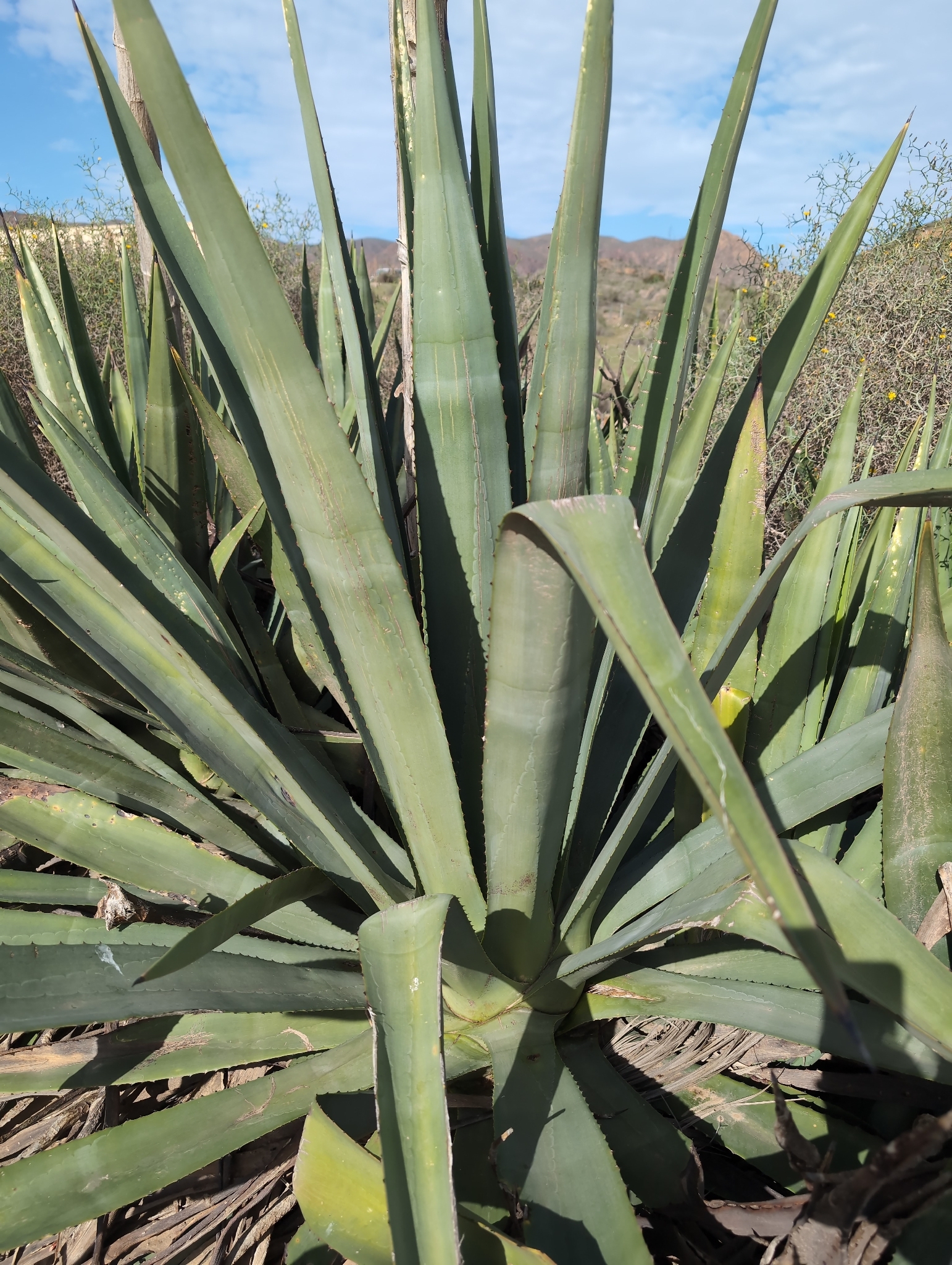
Queen Victoria Agave (Agave victoriae-reginae) is a compact, slow-growing succulent native to the Chihuahuan Desert in Mexico. It is recognized by its rigid, dark green leaves that form a tight geometric rosette and feature distinct white markings known as bud-prints.
This species is significantly smaller than the common century plant (Agave americana), rarely exceeding 45 cm (18 in) in diameter. It requires minimal intervention and survives in rocky, arid environments where other succulents might fail.
Key Facts
- Water: Every 2-3 weeks during summer
- Light: Full sun to very bright indirect light
- Hardiness: USDA Zones 8-11; hardy to -7°C (20°F)
- Growth Rate: Extremely slow; decades to reach maturity
- Lifespan: 15-40 years before flowering and dying
Growing Queen Victoria Agave at Home
Growing this succulent requires patience and excellent drainage above all else. Because it grows so slowly, it is a stable choice for containers or rock gardens where you do not want plants to outgrow their space quickly. It suits growers who prefer a low-maintenance schedule, as it thrives on neglect once established in a sunny spot.
You should place it in a terracotta pot to help moisture evaporate from the sides. While it is more cold-tolerant than many tropical agaves, it cannot survive in regions with wet, freezing winters. In temperate climates, move your container indoors before the first hard frost to prevent cellular damage to the leaves.
Identifying the Royal Agave
The Royal Agave is identified by its spherical rosette of toothless leaves that are 15-20 cm (6-8 in) long. Unlike many other species in the genus, the margins are smooth, though each leaf ends in a single, sharp black spine. The white lines on the leaf surfaces are actually impressions made by the adjacent leaves as the plant develops.
- Leaves are thick, wedge-shaped, and dark emerald green.
- White ‘bud-prints’ form distinct geometric patterns on all leaf faces.
- Mature rosettes are very dense, containing dozens of overlapping leaves.
- The plant remains low to the ground, rarely developing a visible trunk.
Light Requirements for Agave victoriae-reginae
This agave needs at least 6 hours of direct sunlight daily to maintain its tight, symmetrical shape. Without enough light, the rosette will begin to stretch or flatten, a process known as etiolation, which ruins the geometric aesthetic. In extremely hot climates like Arizona or interior Mexico, some light afternoon shade prevents the white markings from scorching.
Indoor plants should be placed in a south-facing window. If your home lacks sufficient natural light, a high-intensity LED grow light kept 15-30 cm (6-12 in) above the plant for 12 hours a day will suffice. Rotating the pot every few weeks ensures the rosette grows evenly toward the light source.
How to Water Queen Victoria Agave
Water only when the soil is completely dry to the touch, usually every 14-21 days in summer. Overwatering is the most common cause of death for this species, as the thick roots rot quickly in damp conditions. During the winter months, reduce watering to once every 6-8 weeks, or stop entirely if the plant is kept in a cool, humid environment.
- Use the ‘soak and dry’ method, saturating the soil until water runs out the bottom.
- Avoid getting water into the center of the rosette to prevent crown rot.
- Always use pots with large drainage holes.
- Rainwater or distilled water is preferable if your tap water is very hard.
The Best Soil and Potting Mix
The ideal substrate is a highly porous, mineral-based mix with at least 50% grit. A standard potting soil will hold too much moisture for the Royal Agave. You can create a suitable mix by combining one part potting soil with one part perlite and one part coarse sand or poultry grit. This mimicry of its native limestone cliffs prevents water from pooling around the sensitive root neck.
Repotting is rarely necessary because of the slow growth rate. You should only move the plant to a larger container every 3-5 years. When repotting, wear thick gloves to protect your hands from the sharp terminal spines, and wait one week before watering to allow any damaged roots to callous over.
Temperature and Cold Hardiness
Queen Victoria Agave is hardy down to -7°C (20°F) for short periods if the soil remains dry. It is much more resilient to cold than the Foxtail Agave (Agave attenuata), but it will suffer leaf spotting or death if exposed to prolonged freezing temperatures combined with wet soil. Ideally, keep the plant between 10-27°C (50-80°F) for optimal growth.
If you live in USDA Zone 8, you can plant it in the ground if you provide a rain shelter or plant it on a slope. In colder zones, it must be treated as a houseplant or moved to a garage during the winter. It handles indoor heating well because it is adapted to low humidity levels in the desert.
How to Propagate Queen Victoria Agave
Propagation is most successful using seeds sown in spring, as this species rarely produces offsets or ‘pups’. Unlike the Octopus Agave (Agave vilmoriniana), which produces many bulbils, the Queen Victoria Agave often grows as a solitary specimen for its entire life. If your plant does produce a pup at the base, wait until it is 5 cm (2 in) wide before detaching it with a clean knife.
Seeds should be sown on the surface of a moist cacti mix and covered with a very thin layer of fine grit. Maintain a temperature of 21-24°C (70-75°F) and keep the soil slightly damp until germination occurs, which usually takes 2-4 weeks. Seedlings grow very slowly and may take two years to resemble the adult form.
Lifespan and the Death Bloom
Like most agaves, this species is monocarpic, meaning it flowers once and then dies. This usually happens after 20 to 40 years of growth. The plant produces a massive, unbranched flower spike that can reach 4 m (13 ft) in height, covered in thousands of cream-colored or reddish-purple flowers. The energy required to produce this spike exhausts the plant’s reserves.
While the mother plant will die after the seeds ripen, the process is slow. You can enjoy the flower spike for several months. If the plant has produced any offsets at the base during its life, these will continue to grow after the main rosette has withered. Collecting the seeds from the spent flower spike is the best way to start the next generation.
Year-Round Care for Queen Victoria Agave
| Spring | Gradually increase watering as temperatures rise. Apply a balanced liquid fertilizer diluted to quarter-strength once in April. |
|---|---|
| Summer | Water every 2 weeks if the soil is dry. Check for agave snout weevil activity around the base of the plant. |
| Autumn | Reduce watering frequency to once a month. Move outdoor pots to a sheltered location before temperatures drop below 5°C (41°F). |
| Winter | Keep the plant dry and in a bright spot. Do not fertilize and only water if the leaves show signs of shriveling. |
Why Is My Queen Victoria Agave Dying? Quick Diagnosis
| What you see | Likely cause | What to do |
|---|---|---|
| Soft, black base or leaves | Root or crown rot | Stop watering immediately and repot into dry, gritty soil, removing any mushy roots. |
| Elongated, pale center | Insufficient light (etiolation) | Move the plant to a brighter location with at least 6 hours of sun. |
| Small holes in leaves or collapsing base | Agave snout weevil | Apply a systemic insecticide and remove any heavily infested plants to save the rest of your collection. |
| Yellowing leaves | Nutrient deficiency or too much sun | Provide light afternoon shade and check if the plant has been in the same soil for over 5 years. |
Popular Queen Victoria Agave Cultivars
- ‘Porcupine’ – a very compact form with exceptionally straight, stiff leaves.
- ‘White Rhino’ – a rare, expensive variegated form with broad white leaf margins.
- ‘Compacta’ – a dwarf variety that stays under 20 cm (8 in) in diameter.
- ‘Albomarginata’ – features white edges along the entire leaf margin.
- ‘Kizan’ – a Japanese cultivar with yellowish-white variegation.
Frequently Asked Questions
How big does Queen Victoria Agave get?
It typically reaches a size of 30-45 cm (12-18 in) in both height and width. It is one of the smaller agave species, making it perfect for small gardens or pots.
Can Queen Victoria Agave grow indoors?
Yes, it grows well indoors if placed in a south-facing window with 6-8 hours of direct light. Its slow growth rate and low water needs make it a manageable houseplant.
How fast does Queen Victoria Agave grow?
It has an extremely slow growth rate, often taking 10-15 years to reach its full mature size. You will likely not notice significant changes month-to-month.
Is Queen Victoria Agave cold hardy?
It is hardy down to -7°C (20°F) if the soil is kept dry. In wet winter climates, it should be protected or moved indoors to prevent rot and frost damage.
Does Queen Victoria Agave die after flowering?
Yes, it is a monocarpic plant that blooms once at the end of its life (usually after 20-40 years) and then dies as it puts all its energy into seed production.
Sources & Verification
Taxonomy and distribution are checked against the databases below. Care guidance is written for cultivated species only and reviewed by our editor. How We Build Plant Profiles →