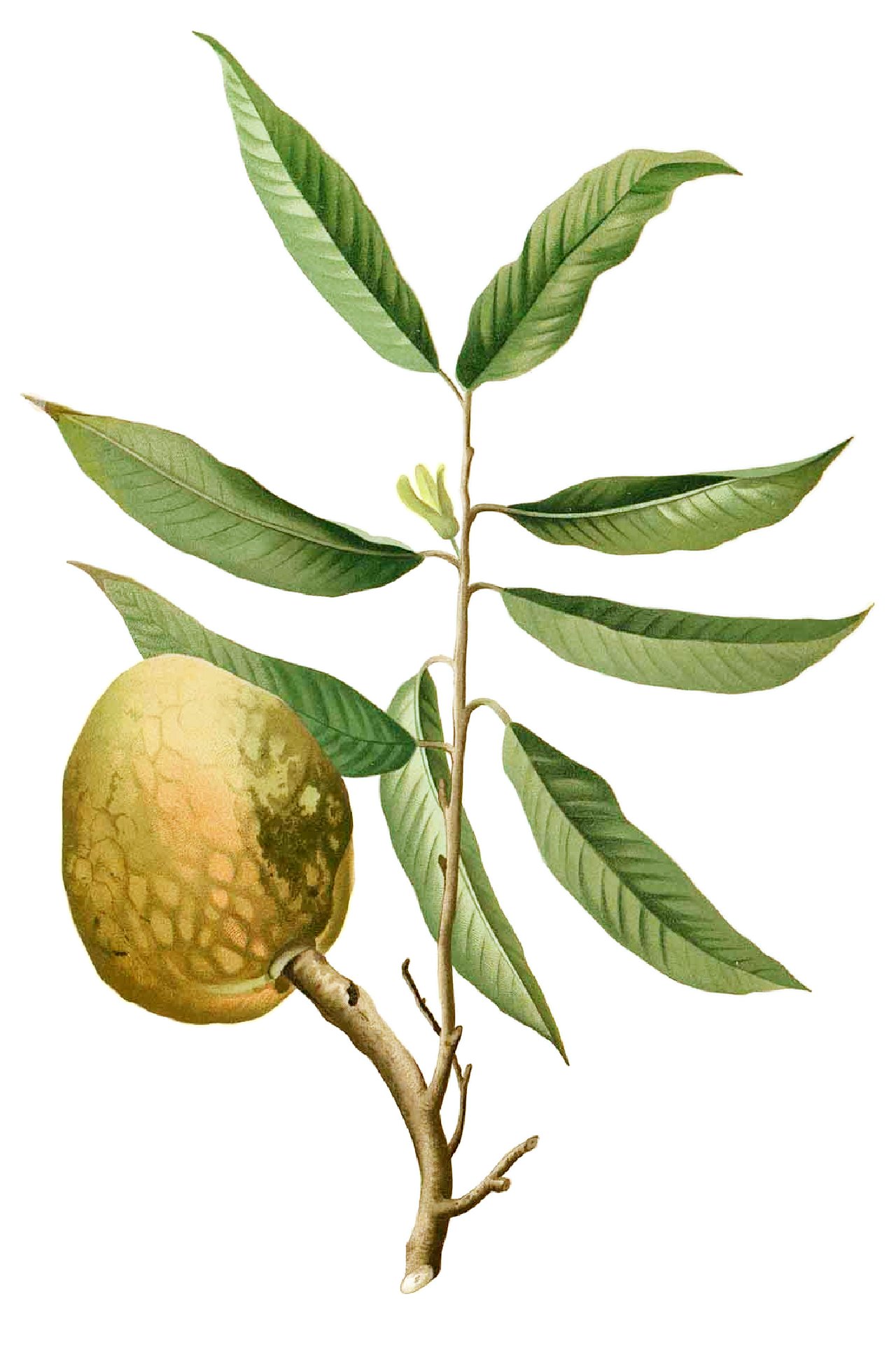
Soncoya is a deciduous tropical tree native to the lowlands of Mexico and Central America, producing heavy, spiked fruits with a distinct mango-like aroma. It belongs to the custard apple family, Annona purpurea.
You must provide a frost-free environment for this species to survive, as it is more cold-sensitive than the common custard apple (Annona reticulata). It is primarily grown for its 15-20 cm (6-8 in) wide fruits and its large, felt-textured foliage.
Key Facts
- Light: Requires full sun for optimal fruit development
- Water: Keep soil consistently moist during the summer fruiting season
- Temperature: Minimum safe temperature is 10 °C (50 °F)
- Fruit: Harvest when the skin spikes turn brown and brittle
- Soil: Prefers deep, well-drained loamy soil with high organic matter
Is Soncoya Right for Your Garden?
You should only plant Soncoya if you live in a consistently warm, tropical climate with high humidity. This tree requires significant space, as it can reach 10 m (33 ft) in height and develops a broad, spreading canopy that provides dense shade. It is an excellent choice for food forest enthusiasts who want a fruit that differs from the standard sugar apple (Annona squamosa).
- Requires a frost-free zone (USDA 10-12)
- Needs a large garden footprint for its 6 m (20 ft) spread
- Suits humid coastal or lowland environments
- Provides seasonal shade due to its deciduous nature
Identifying the Soncoya Tree
The most recognizable feature of Soncoya is its large fruit covered in conical, hook-like spikes. The fruit is spherical, measuring 15-20 cm (6-8 in) in diameter, and the skin turns from green to a brownish-grey when ripe. Inside, the pulp is a vivid orange or deep yellow, which is more fibrous than the white flesh of the cherimoya (Annona cherimola).
The leaves are equally distinctive, growing up to 30 cm (12 in) long and 15 cm (6 in) wide. They are elliptical with a pointed tip and have a soft, velvety texture on the underside. The flowers are large and heavy, featuring three thick outer petals that are brownish-purple and three smaller inner petals.
Size and Growth Habit
Soncoya typically grows to a mature height of 6 to 10 meters (20-33 ft) depending on soil quality. It develops a short, thick trunk and a rounded, dense crown that can become quite heavy when loaded with fruit. In its native Central American habitat, it often grows as a mid-canopy tree in deciduous forests.
The growth rate is moderate, usually taking 3-5 years to produce the first crop from seed. Because the wood is relatively brittle, the tree should be protected from high-velocity winds which can snap the fruit-laden branches. The deciduous cycle usually occurs during the dry season, when the tree drops its large leaves to conserve moisture.
Ideal Site and Soil Requirements
Provide a site with full sun and deep, well-draining soil to ensure healthy root development. While Soncoya can tolerate a variety of soil types, it performs best in loamy soils rich in organic matter with a pH between 5.5 and 7.0. Avoid areas with standing water, as the roots are susceptible to rot in anaerobic conditions.
- Select a location with at least 8 hours of direct sunlight
- Ensure the site is sheltered from strong, drying winds
- Avoid heavy clay soils that retain excessive water
- Space trees at least 7 meters (23 ft) apart
Watering and Feeding for Fruit Production
You must keep the soil consistently moist during the flowering and fruiting stages to prevent the fruit from dropping prematurely. During the dry season or when the tree is dormant and leafless, reduce watering significantly to avoid root issues. A mature tree benefits from a thick layer of organic mulch to retain ground moisture.
Apply a balanced fertilizer (such as 10-10-10) three times a year during the active growing season. As the tree reaches fruiting age, switch to a fertilizer higher in potassium to support the development of the large, heavy fruits. If the leaves show signs of yellowing between the veins, apply a chelated iron or magnesium supplement.
Pruning and Maintenance
Prune your tree in late winter or early spring before the new growth begins to maintain a manageable height. Focus on removing dead, damaged, or crossing branches to improve airflow through the dense canopy. Keeping the center of the tree open helps sunlight reach the interior branches, which encourages better fruit set.
- Remove water sprouts that grow vertically from the main trunk
- Thin out crowded branches to reduce pest hiding spots
- Head back long branches to encourage lateral fruiting wood
- Always use sharp, sterilized shears to prevent disease spread
Common Pests and Diseases
The most frequent problem for Soncoya is anthracnose fungus, which causes dark spots on leaves and can rot the fruit. This is most common in very humid or rainy weather. You may also encounter mealybugs or scale insects, which cluster on the undersides of the large leaves and secrete sticky honeydew.
- Anthracnose: Treat with copper-based fungicides if spots appear
- Fruit Flies: Use netting or traps to protect developing fruit
- Mealybugs: Blast off with water or use insecticidal soap
- Root Rot: Ensure soil drainage is perfect to prevent this
Harvesting and Using the Fruit
Harvest the fruit when the spines become brittle and the skin yields slightly to thumb pressure. The fruit does not ripen well if picked too early, so wait until the green color fades toward brown. Once harvested, the fruit has a short shelf life and should be eaten within 2-3 days.
The pulp is traditionally eaten fresh or pressed through a sieve to make juice and frozen desserts. In Central American folk medicine, the juice was traditionally used as a remedy for fever and chills. The seeds are not edible and were historically crushed to create a powder used to treat skin parasites.
Year-Round Soncoya Maintenance
| Spring | Apply a balanced fertilizer as new leaves emerge. Increase watering frequency and monitor for aphids on new growth. |
|---|---|
| Summer | Maintain consistent moisture to support fruit growth. Mulch the base of the tree to 10 cm (4 in) depth to keep roots cool. |
| Autumn | Harvest ripe fruits when they soften. Reduce nitrogen fertilizer to allow the tree to prepare for its dormant phase. |
| Winter | Reduce watering while the tree is deciduous. Prune for shape and remove any diseased wood before spring growth starts. |
Common Soncoya Problems and Solutions
| What you see | Likely cause | What to do |
|---|---|---|
| Fruit dropping before ripe | Irregular watering or drought stress | Maintain a consistent watering schedule and apply mulch. |
| Yellowing leaves with green veins | Iron or magnesium deficiency | Apply a foliar spray or soil drench containing chelated micronutrients. |
| Black spots on leaves and fruit | Anthracnose fungal infection | Improve air circulation and apply a copper fungicide. |
Frequently Asked Questions
What is the difference between Bullock's Heart and Soncoya?
While both are called Bullock's Heart, Soncoya (Annona purpurea) has orange flesh and a spiked skin, whereas the common Bullock's Heart (Annona reticulata) has white flesh and smooth, netted skin.
What does Soncoya fruit taste like?
The fruit has a strong, pleasant aroma and a flavor often compared to a mix of mango and custard, though it is more fibrous than other Annona species.
Can you grow Soncoya from seeds?
Yes, Soncoya is easily grown from fresh seeds, which usually germinate within 30 to 60 days if kept in warm, moist soil.
Is Soncoya fruit good for you?
Soncoya fruit is high in carbohydrates and vitamins; it was traditionally used in Central America to treat fevers and as a general tonic.
How long does it take for a Soncoya tree to fruit?
A tree grown from seed typically begins to produce fruit within 3 to 5 years, provided it has ideal tropical conditions.
Information about traditional or historical uses is provided for educational interest only and is not medical advice. Do not use any plant to treat a condition without speaking to a qualified professional.
Sources & Verification
Taxonomy and distribution are checked against the databases below. Care guidance is written for cultivated species only and reviewed by our editor. How We Build Plant Profiles →