
Leatherleaf Viburnum (Viburnum rhytidophyllum) is a large, upright evergreen shrub native to central and western China. It is recognised by its 20 cm (8 in) wrinkled, strap-like leaves with dense grey wool on their undersides and flat heads of creamy spring flowers.
This species tolerates heavy clay and deep shade where other broadleaf evergreens fail. However, trimming stems releases dry stellate hairs that severely irritate the skin, nose, and lungs.
Key Facts
- Plant Type: Broadleaf evergreen shrub
- Hardiness: USDA zones 5 to 8 (-29 °C / -20 °F)
- Height: 3 to 5 m (10 to 16 ft)
- Light: Full sun to deep shade
- Toxicity: Berries and leaf dust cause mild irritation
Where Leatherleaf Viburnum Fits in the Garden
Leatherleaf Viburnum suits large garden boundaries and woodland edges where a tall 3 to 5 m (10 to 16 ft) evergreen screen is needed. It fills background gaps where delicate shrubs fail under heavy shade and tree root competition.
Cold winter winds in USDA Zone 5 cause leaf scorch, so plant it in a site sheltered from dry winds. Avoid placing it directly next to narrow walkways or patio seating where people brush against the foliage.
Identifying Wrinkled Viburnum
Leatherleaf Viburnum features oblong, deeply veined leaves up to 20 cm (8 in) long with dark green shiny tops and thick greyish-yellow felt underneath. Stems and flower buds form in autumn, wintering as rusty-brown fuzzy clusters before opening into 10 to 20 cm (4 to 8 in) wide flat cymes in May.
In late summer, oblong berries transition from bright red to glossy black by September, attracting birds while remaining unpalatable to humans.
- Leaf length: 10 to 20 cm (4 to 8 in), oblong with a rugose upper surface
- Flower cymes: 10 to 20 cm (4 to 8 in) wide, off-white to creamy yellow
- Fruit size: 8 mm (0.3 in) oval drupes turning red then black
- Bark: Greyish-brown, thick, with downy young shoots
Height and Spread Expectations
Wrinkled Viburnum matures to a height of 3 to 5 m (10 to 16 ft) with an equal or slightly narrower spread of 2.5 to 4 m (8 to 13 ft). Young plants grow at a rate of 30 to 45 cm (12 to 18 in) per year once roots establish.
Unpruned specimens take 10 to 15 years to achieve full size, forming an upright multi-stemmed structure with arching upper branches.
Ideal Sunlight and Soil Conditions
Plant Leatherleaf Arrowwood in partial shade with moist, well-drained soil maintaining a pH between 5.5 and 7.5. While it grows in full sun, direct afternoon heat in southern climates turns upper leaves yellow-brown.
Soil tolerance is high, growing reliably in heavy clay, sandy loam, and chalky earth as long as drainage prevents standing winter water.
- Light range: Partial shade to full shade
- Soil pH range: 5.5 to 7.5 (acidic to neutral)
- Soil textures: Clay, loam, sand, chalk
- Moisture preference: Evenly moist, free-draining
How to Plant Leatherleaf Arrowwood
Space Leatherleaf Arrowwood plants 2.5 to 3 m (8 to 10 ft) apart when establishing hedges or mixed shrub borders. Dig a hole twice as wide as the root ball and equal in depth, mixing native soil with leaf mould to improve structure.
Water thoroughly with 15 to 20 L (4 to 5 gal) of water immediately after planting and apply a 5 cm (2 in) layer of wood bark mulch over the root zone.
Watering and Feeding Requirements
Water young plants with 10 to 15 L (2.5 to 4 gal) weekly during their first two growing seasons whenever rainfall drops below 2.5 cm (1 in). Mature shrubs survive drought periods without supplemental irrigation, though dry spells cause leaves to droop vertically.
Apply a balanced slow-release fertilizer in early spring at a rate of 50 g per square metre (1.5 oz per square yard) around the drip line.
Pruning Wrinkled Viburnum Safely
Prune Leatherleaf Viburnum immediately after flowering in June using sharp shears while wearing protective gloves and an N95 dust mask. Cutting stems releases dry, microscopic leaf hairs into the air that cause coughing and skin irritation.
Remove up to one-third of the oldest stems at ground level every three years to encourage fresh basal shoots and control overall bulk.
- Timing: Early summer (June) right after spring flowers fade
- Protective gear: Long sleeves, heavy gloves, safety goggles, and N95 face mask
- Maintenance: Remove dead wood and thin inner branches annually
- Rejuvenation: Cut old trunks down to 30 cm (12 in) above soil in early spring
Common Pests, Foliar Dust, and Diseases
Viburnum leaf beetle (Lochmaea suturalis) and airborne foliar dust represent the primary maintenance challenges for this species. Larvae of the Viburnum leaf beetle strip foliage in May, leaving skeletonised leaves; spray insecticidal soap at the first sign of larvae.
Leaf spot fungi (Cercospora species) cause small dark lesions in wet spring weather, though damage is cosmetic and rarely requires chemical treatment.
- Foliar dust irritation: Wear face protection during pruning to avoid coughing fits
- Viburnum leaf beetle: Larvae defoliate foliage between May and June
- Root rot: Caused by waterlogged soil during cold winter months
- Spider mites: Occur in hot, dry summer positions causing leaf stippling
Cold Hardiness and Winter Protection
Leatherleaf Viburnum survives winter temperatures down to -29 °C (-20 °F) across USDA hardiness zones 5 through 8. In Zone 5 winter winds, leaves roll downward and drop prematurely, though new buds open normally in April.
In the UK and oceanic climates, foliage remains strictly evergreen, providing shelter for birds throughout January and February.
Landscape Uses and Wildlife Value
Use Leatherleaf Viburnum as an evergreen privacy screen, woodland understory planting, or windbreak hedge. Creamy spring flowers attract pollinators including bumblebees (Bombus species) and hoverflies.
Birds feed on autumn berries, dispersing seeds across nearby naturalized areas while leaving the main canopy intact.
Year-Round Care for Leatherleaf Viburnum
| Spring | Apply 50 g/m² of balanced spring fertilizer. Prune dead wood after blooming while wearing an N95 mask and protective gloves. |
|---|---|
| Summer | Water deeply with 15 to 20 L (4 to 5 gal) of water during dry periods exceeding 14 days. Inspect undersides of leaves for leaf beetle larvae. |
| Autumn | Replenish wood bark mulch to a depth of 5 cm (2 in) around the root drip line. Clean fallen leaf debris to prevent fungal spores over-wintering. |
| Winter | Inspect bare lower stems for egg masses of viburnum leaf beetle. Erect burlap wind barriers around young shrubs in exposed Zone 5 sites. |
Leatherleaf Viburnum Problems and Solutions
| What you see | Likely cause | What to do |
|---|---|---|
| Coughing or skin itching while trimming stems | Airborne stellate leaf hairs (viburnum dust) | Wear an N95 dust mask, goggles, and long sleeves during all pruning tasks. |
| Leaves skeletonized with only veins remaining | Viburnum leaf beetle larvae | Spray organic insecticidal soap on undersides of leaves in May. |
| Leaves drooping vertically during warm weather | Moisture stress or excessive heat | Apply 20 L (5 gal) of water around the root zone once a week. |
| Browning leaves dropping in winter | Desiccating winter winds in cold climates | Wrap vulnerable shrubs in burlap shelter screens before December. |
Popular Cultivars and Hybrids
- ‘Alleghany’ – dense hybrid (Viburnum × rhytidophylloides) with darker green leaves and improved cold resistance
- ‘Cree’ – compact slow-growing selection reaching only 2 m (6.5 ft) high
- ‘Willowwood’ – vigorous hybrid form featuring a secondary flower bloom flush in autumn
Frequently Asked Questions
Is Leatherleaf Viburnum dust dangerous to inhale?
Yes, fine stellate trichomes shed from the leaf undersides irritate the respiratory tract and skin. Wear an N95 mask, safety glasses, and long sleeves when pruning or handling stems.
How do you prune Viburnum rhytidophyllum in the UK?
Prune in early summer right after the flower cymes finish blooming in June. Cut back overgrown stems to an outer side shoot using sharp shears while wearing protective face gear.
Are Leatherleaf Viburnum berries toxic?
Yes, the berries are mildly toxic to humans and domestic pets, causing stomach upset if ingested. Wild birds eat the fruit safely once fully ripe in autumn.
Are tropical leatherleaf slugs poisonous?
The tropical leatherleaf slug (Sarasinula plebeia) is an invertebrate agricultural pest unrelated to this plant, but it can host rat lungworm parasites. Avoid handling wild slugs without gloves and wash garden produce thoroughly.
What is the difference between Viburnum rhytidophyllum and Alleghany Viburnum?
'Alleghany' is a hybrid (Viburnum × rhytidophylloides) crossed between Viburnum rhytidophyllum and the wayfaring tree (Viburnum lantana). 'Alleghany' has darker leaves, a rounder habit, and better resistance to leaf spot fungi.
Sources & Verification
Taxonomy and distribution are checked against the databases below. Care guidance is written for cultivated species only and reviewed by our editor. How We Build Plant Profiles →
More in Viburnum

High-Bush Cranberry
Viburnum edule
☀️ Partial Sun 💧 High

Nannyberry
Viburnum lentago
☀️ Partial Sun 💧 Moderate

Guelder Rose
Viburnum opulus
☀️ Partial Sun 💧 Moderate

Laurustinus
Viburnum tinus
☀️ Partial Sun 💧 Moderate
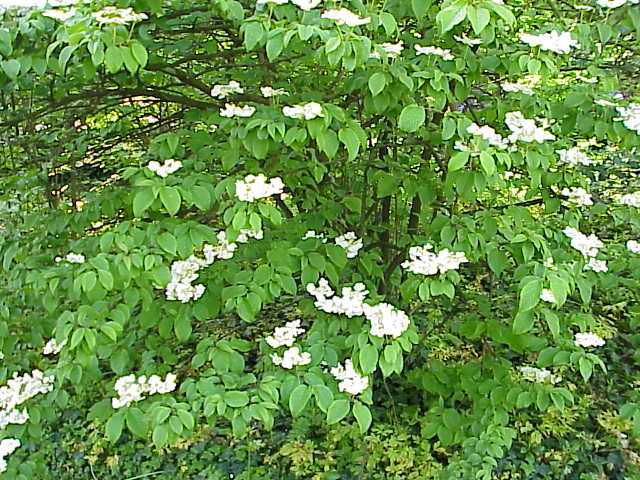
Japanese Snowball
Viburnum plicatum
☀️ Partial Sun 💧 Moderate

Wayfaring Tree
Viburnum lantana
☀️ Full Sun 💧 Low