

African eggplant, known scientifically as Solanum aethiopicum, is a perennial fruiting plant often grown as an annual for its edible fruits and nutrient-dense leaves. It is native to tropical Africa and parts of Asia, where it is distinguished by its small, ribbed fruits that transition from green to a bright scarlet red upon maturity.
This species produces a more bitter fruit than the common eggplant (Solanum melongena), making it a staple in savory stews and traditional soups. It requires significantly higher temperatures to set fruit than most European vegetable crops and fails to thrive if night temperatures drop below 15 °C (59 °F).
Key Facts
- Light: Full sun for 6-8 hours daily
- Temperature: Prefers 20-30 °C (68-86 °F)
- Maturity: 100 to 120 days from sowing
- Soil: Rich, well-drained loamy soil
- Water: Consistent moisture, 2.5-5 cm (1-2 in) weekly
Is African Eggplant Right for Your Garden?
African eggplant is a heat-loving crop that requires a long growing season of at least 100 to 120 days to produce a full harvest. It is best suited for gardeners in tropical or subtropical climates, or those in temperate zones who can provide a heated greenhouse or a very sunny, sheltered patio. Because the plant provides both edible leaves and fruits, it is a space-efficient choice for small urban gardens.
You must ensure your local climate maintains daytime temperatures above 20 °C (68 °F) for the majority of the summer. If your region experiences cool, damp summers, the plant may grow foliage but will likely drop its flowers before fruit can set. It is an excellent alternative to the standard eggplant for those who prefer more bitter, complex flavors in their cooking.
Identifying the African Eggplant
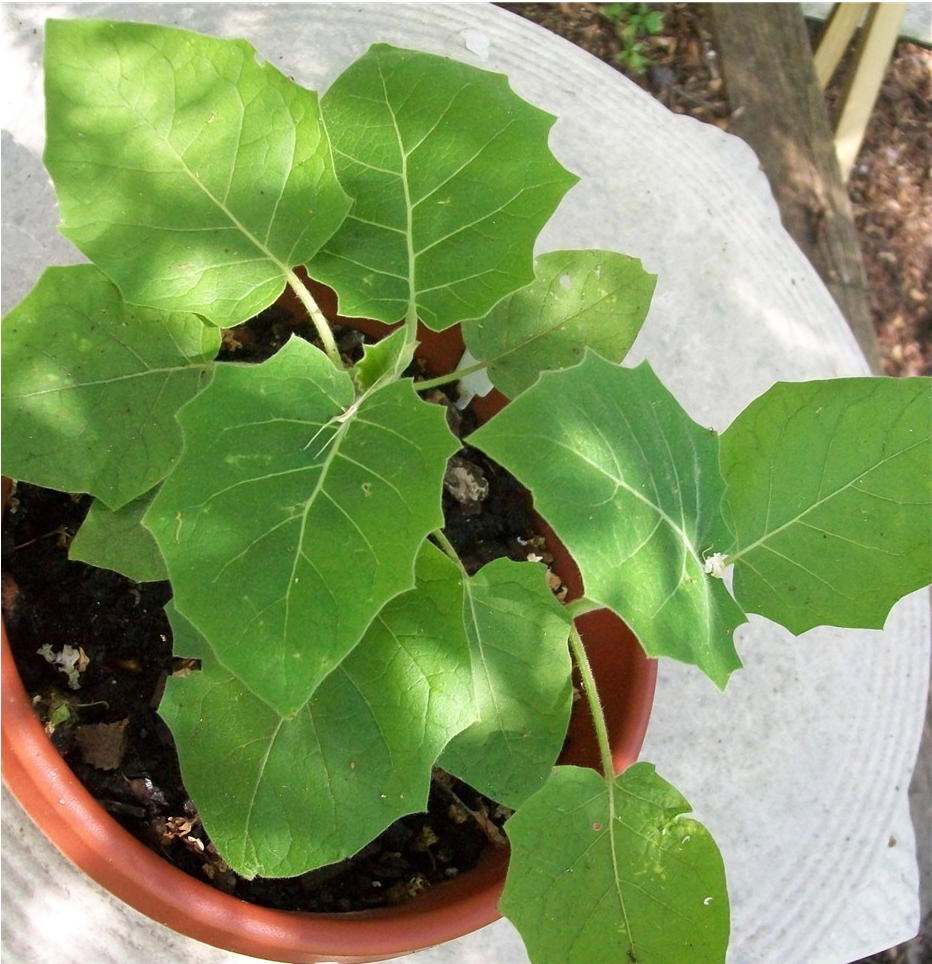
The African eggplant is an upright, bushy herb that typically reaches a height of 60 to 100 cm (2 to 3.3 ft). Its leaves are alternate, ovate, and can grow up to 30 cm (12 in) long, often featuring deeply lobed margins and occasionally small prickles on the midrib. The stems are sturdy and may turn woody at the base as the plant matures through the season.
Flowers appear in small clusters, featuring five-lobed corollas that are usually white or pale purple with prominent yellow anthers. The fruit is the most distinctive feature, measuring 5 to 10 cm (2 to 4 in) in diameter, often heavily ribbed or furrowed. While they start as a pale green or white, they eventually ripen to a bright, glossy scarlet or reddish-orange, resembling a cross between a tomato and a pumpkin.
Ideal Growing Conditions for Scarlet Eggplant
This species requires a position in full sun with protection from strong winds that can snap the fruit-heavy branches. The soil must be deep, fertile, and well-draining, as the plant is susceptible to root rot in waterlogged conditions. Incorporating 5-10 cm (2-4 in) of well-rotted manure or compost into the planting site before sowing will provide the necessary nutrients for the heavy feeding cycle.
Air circulation is vital to prevent fungal issues like powdery mildew, so space plants at least 50 cm (20 in) apart. In containers, use a pot with a minimum volume of 15 liters (4 gallons) to accommodate the extensive root system. If growing in cooler zones, using black plastic mulch can help raise soil temperatures by 2-3 degrees, which significantly accelerates early growth.
Sowing and Planting African Eggplant Seeds
Sow seeds indoors 6 to 8 weeks before the last expected spring frost to give the plants a head start. Place seeds 6 mm (0.25 in) deep in a high-quality seed-starting mix and maintain a consistent soil temperature of 24-29 °C (75-85 °F) using a heat mat. Germination typically occurs within 7 to 14 days under these warm conditions.
- Hardening off seedlings for 10 days is essential before transplanting.
- Transplant outdoors only when night temperatures consistently stay above 15 °C (59 °F).
- Set plants slightly deeper in the soil than they were in their nursery pots to encourage extra root growth.
- Water immediately after transplanting to settle the soil around the roots.
Essential Care for Healthy Plants
Maintain a consistent watering schedule to provide 2.5 to 5 cm (1 to 2 inches) of water per week, especially during the flowering and fruiting stages. Drought stress can cause the fruit to become excessively bitter or lead to blossom end rot. Always water at the base of the plant to keep the foliage dry, which reduces the risk of soil-borne diseases splashing onto the leaves.
Apply a balanced organic fertilizer every 4 weeks once the first flowers appear. Because the fruits can become heavy, providing a small tomato cage or a sturdy stake for each plant prevents the stems from bending or touching the ground. Mulching with straw or shredded leaves will help retain moisture and suppress weeds that compete for the high levels of nitrogen this plant requires.
When and How to Harvest African Eggplant
Harvest the fruits while they are still firm, glossy, and green or slightly yellow for the best culinary texture. Once the fruit turns fully scarlet, the seeds harden and the flesh becomes very bitter, though some traditional recipes specifically call for this mature stage. Use garden snips or a sharp knife to cut the fruit from the stem, leaving about 2 cm (0.8 in) of stalk attached to improve shelf life.
If you are growing the plant for its leaves, you can begin harvesting once the plant reaches 30 cm (12 in) in height. Pick the young, tender top leaves and shoots, as these have the mildest flavor and highest nutritional content. Regular harvesting of the leaves can actually encourage a bushier habit, though it may slightly delay the production of the first fruits.
Culinary Uses and Nutritional Benefits
The African eggplant is traditionally used in stews, soups, and stir-fries, where its slight bitterness complements fatty meats like pork or oily fish. In West Africa, the ‘Gilo’ group of cultivars is often eaten raw or parboiled as a side dish. The leaves, sometimes called ‘Nakati’, are steamed or sautéed similarly to spinach (Spinacia oleracea) and are a significant source of calcium and iron.
Nutritionally, the fruit is low in calories but high in dietary fiber, potassium, and antioxidants like beta-carotene. It has been traditionally used in various cultures to support digestive health and manage blood pressure, though these are historical applications rather than clinical prescriptions. The high water content makes it a hydrating addition to summer meals in hot climates.
Common Pests and Diseases
Watch for flea beetles, which are the most common pest, leaving tiny circular holes in the leaves of young seedlings. These can be managed by using row covers until the plants are established or by applying neem oil. Aphids and whiteflies may also cluster on the undersides of leaves, sucking sap and potentially spreading viruses that can stunt the plant’s growth.
- Spider mites thrive in hot, dry weather; misting the foliage can deter them.
- Verticillium wilt causes yellowing and wilting; affected plants must be removed and destroyed.
- Blossom end rot is caused by calcium deficiency often linked to irregular watering.
- Early blight appears as dark spots with concentric rings on lower leaves.
Storing and Preserving Your Crop
Fresh fruits will stay in good condition for 7 to 10 days when stored in a perforated plastic bag in the vegetable crisper of a refrigerator. For the best flavor, they should be consumed within 3 days of harvest, as the bitterness can intensify over time. Do not wash the fruits until you are ready to use them, as excess moisture on the skin leads to premature molding.
For long-term preservation, the fruits can be sliced thinly and sun-dried or dehydrated until they are brittle; these dried slices can later be reconstituted in boiling water for use in winter stews. The leaves are best eaten fresh but can be blanched and frozen for up to 3 months. Pickling the small, firm green fruits in a vinegar and salt brine is another traditional method used to extend the harvest.
Year-Round African Eggplant Management
| Spring | Sow seeds indoors 8 weeks before frost. Maintain temperatures of 25 °C (77 °F) and transplant only when the soil is warm. |
|---|---|
| Summer | Water deeply twice a week. Apply organic mulch and stake plants as fruits begin to develop to prevent stem breakage. |
| Autumn | Harvest remaining fruits before the first frost. Collect seeds from fully ripe, scarlet fruits for next year's planting. |
| Winter | In zones 10-12, prune back the woody stems. In cooler zones, remove dead plants and compost the remains if disease-free. |
Solving Common African Eggplant Problems
| What you see | Likely cause | What to do |
|---|---|---|
| Flowers falling off without fruiting | Temperature extremes or lack of pollinators | Ensure night temps are above 15 °C (59 °F) and hand-pollinate if necessary. |
| Small holes in leaves | Flea beetles | Apply neem oil or use fine mesh row covers on young plants. |
| Yellowing lower leaves and wilting | Verticillium wilt or overwatering | Improve drainage and rotate crops to avoid soil-borne pathogens. |
Popular Cultivars of Solanum aethiopicum
- ‘Gilo’ – grown for its smooth, round, bitter fruits.
- ‘Kumba’ – features large, highly ribbed fruits used in stews.
- ‘Shum’ – a variety primarily cultivated for its edible leaves.
- ‘Nakati’ – popular in Uganda for its tender, nutritious greens.
Frequently Asked Questions
What are the health benefits of African eggplant?
African eggplant is high in dietary fiber, which aids digestion, and contains significant amounts of potassium and antioxidants like beta-carotene. The leaves are particularly rich in iron and calcium, making them a valuable nutritional supplement in many diets.
How does African eggplant differ from regular eggplant?
African eggplant (Solanum aethiopicum) is generally more bitter and has ribbed, scarlet-red fruits, whereas the regular eggplant (Solanum melongena) is usually larger, purple, and milder in flavor. Additionally, the leaves of the African variety are frequently consumed as a vegetable, which is less common with the standard eggplant.
Can you eat African eggplant leaves?
Yes, the leaves are edible and are a staple green in many African cuisines. They should be harvested when young and tender, then steamed, boiled, or sautéed to reduce their natural bitterness.
Why is my African eggplant so bitter?
Bitterness increases as the fruit matures and turns from green to red. To minimize bitterness, harvest the fruit while it is still firm, glossy, and green or pale yellow.
Information about traditional or historical uses is provided for educational interest only and is not medical advice. Do not use any plant to treat a condition without speaking to a qualified professional.
Sources & Verification
Taxonomy and distribution are checked against the databases below. Care guidance is written for cultivated species only and reviewed by our editor. How We Build Plant Profiles →
More in Solanum

Naranjilla
Solanum quitoense
☀️ Partial Sun 💧 High

Chilean Potato Vine
Solanum crispum
☀️ Full Sun 💧 Moderate

Gboma Eggplant
Solanum macrocarpon
☀️ Full Sun 💧 High
Cocona
Solanum sessiliflorum
☀️ Full Sun 💧 High

Turkey Berry
Solanum torvum
☀️ Full Sun 💧 Moderate

Potato
Solanum tuberosum
☀️ Full Sun 💧 Moderate